
UK Emergency Preparedness Puts Travellers on Alert as Cyber Weather and Conflict Risks Rise
UK Emergency Preparedness Puts Travellers on Alert as Cyber Weather and Conflict Risks Rise

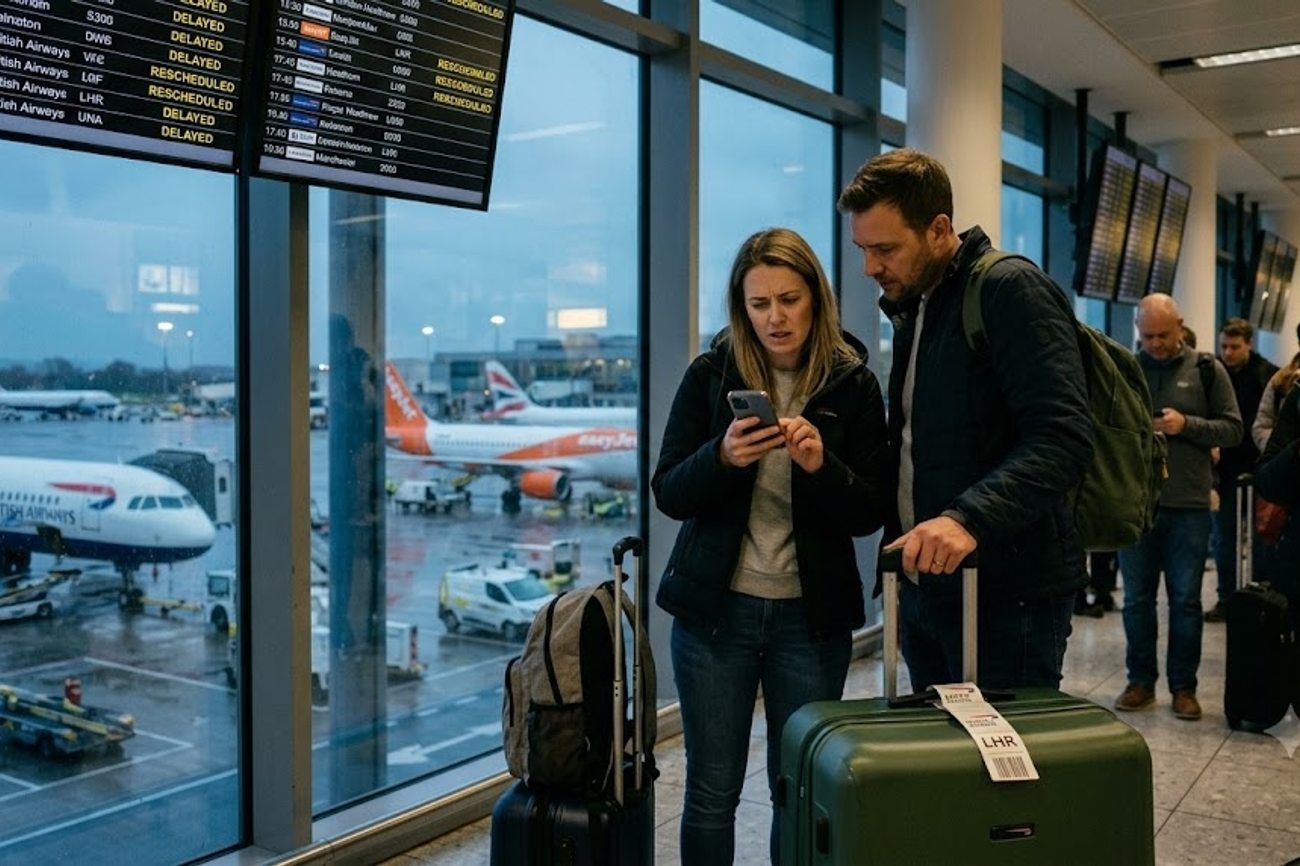
Image generated by AI
68% of adults surveyed believe the frequency of emergencies or disasters within Britain will rise over the next decade. This striking figure, extracted from the UK Public Survey of Risk Perception, Resilience and Preparedness 2026, underscores a fundamental shift in how the British state and its citizens view systemic stability. While the UK remains a primary global tourism hub, the government is no longer treating "black swan" events as anomalies but as integrated variables in national planning.
The Architecture of National Resilience
The current pivot toward heightened emergency preparedness is not a reactionary panic but a structured policy evolution. Central to this is the Cabinet Office National Risk Register 2026, which was released on 14 July and subsequently updated on 12 August. This document serves as the public window into the government’s National Security Risk Assessment, designed to quantify the probability and potential fallout of various crises.
This strategy is rooted in the UK Government Resilience Action Plan, published in July 2025. That plan was the direct result of lessons learned from the COVID-19 pandemic, which exposed the fragility of "just-in-time" logistics and the dangers of over-reliance on centralized digital systems. The government has now codified the understanding that risks are "interconnected." In the context of travel, this means a cyberattack on a power grid does not just darken a city; it freezes airport baggage handling, disables rail signaling, and renders digital payment systems—upon which almost all modern tourists rely—completely inert.
To manage this, the government has launched a national public-awareness campaign alongside the National Risk Register. The goal is to shift the burden of resilience from the state alone to a shared responsibility involving households, businesses, and public authorities. For the international traveler, this signals a transition toward a "self-reliant" travel model where the assumption of seamless service is replaced by the necessity of backup planning.
Quantifying Public Anxiety and Systemic Risk
The gap between the perceived threat and actual readiness is significant. While a majority of the population anticipates more frequent disruptions, only a small fraction feels equipped to handle them. The following data, gathered from 10,791 adults between 27 February and 11 May, highlights the specific pressures currently weighing on the British psyche.
| Risk or Preparedness Indicator | 2026 Finding | Official Source |
|---|---|---|
| Expect emergencies to increase over next 10 years | 68% | Cabinet Office |
| Severe storm considered likely/very likely locally within two years | 51% | Cabinet Office |
| Extreme cold considered likely/very likely | 46% | Cabinet Office |
| Critical-infrastructure cyberattack considered likely/very likely | 42% | Cabinet Office |
| Extreme heat considered likely/very likely | 42% | Cabinet Office |
| Three-day-or-longer power cut considered likely/very likely | 35% | Cabinet Office |
| War considered likely/very likely to affect local area | 28% | Cabinet Office |
| Household largely/totally prepared | 13% | Cabinet Office |
The data reveals a concerning trend in perception. The belief that war could affect local areas rose from 19% in 2025 to 28% in 2026. Similarly, the perceived likelihood of a cyberattack targeting critical infrastructure climbed from 39% to 42%. These are not government predictions of imminent conflict or hacking, but they are indicators of a population that is increasingly skeptical of the permanence of stability.
Expert Analysis: The "Cascading Failure" Risk for Travelers
From an aviation and logistics perspective, the most critical takeaway from the 2026 data is the acknowledgement of "interconnected pressures." For the average traveler, the danger is not a single event, but a cascading failure.
Consider the modern travel stack: a smartphone provides the boarding pass, the hotel reservation, the map, and the payment method. If a "critical-infrastructure cyberattack" (perceived as likely by 42% of the public) hits the UK's digital backbone, the traveler is not just inconvenienced; they are effectively stranded. When digital payments fail, the ability to secure transport or food vanishes instantly.
For those booking routes into the UK, the direct consequence of this policy shift is a need for "analog redundancy." The government's advice to citizens to stockpile battery-powered radios, wind-up torches, and non-perishable food is a tacit admission that the state cannot guarantee 100% uptime for essential services during a crisis.
The pricing pressure created by this shift will likely manifest in the insurance sector. As the International Air Transport Association (IATA) and other bodies track these systemic risks, we can expect travel insurance premiums to rise or for "force majeure" clauses to be tightened, potentially leaving travelers with less recourse during government-declared emergency disruptions. Furthermore, as the UK strengthens its resilience via the Cabinet Office, we may see new requirements for critical infrastructure providers—including airports and rail networks—to invest in costly redundancies, costs that will inevitably be passed down to the consumer through higher airport taxes or ticket surcharges.
Key Takeaways
- Digital Fragility: With 42% of the public fearing cyberattacks on infrastructure, travelers must maintain offline copies of all essential documents and maps.
- Preparation Gap: Only 13% of UK households feel fully prepared for emergencies, suggesting that during a crisis, local support systems (hotels, B&Bs) may be under-equipped.
- Water and Survival: Official guidance aligns with World Health Organization (WHO) standards, suggesting a minimum of 2.5 to 3 litres of water per person per day for survival.
- Systemic Interconnectivity: Disruptions in power or communications will likely cause simultaneous failures across airports, rail networks, and payment gateways.
- Policy Shift: The National Risk Register 2026 indicates that the UK is moving toward a "resilience-first" model, encouraging individual self-reliance over total state dependence.
FAQ: UK Travel Resilience 2026
Is the UK government warning tourists not to visit? No. The resilience drive is designed to improve infrastructure and public safety. The government continues to promote the UK as a premier destination through VisitBritain, and these measures are intended to ensure visitors remain safe during unforeseen disruptions.
What should I carry to be "resilient" while traveling in the UK? Carry a portable power bank, a physical backup of your passport and itinerary, and some local currency (cash) in case digital payment networks experience downtime. A basic first-aid kit is also recommended.
How do I stay informed about emergencies while in Britain? Monitor official government alerts and local news. The government recommends having a way to receive information if the internet fails, such as a battery-powered or wind-up radio.
What does "interconnected risk" mean for my flight? It means a problem in one sector (e.g., a regional power outage) can trigger failures in others (e.g., airport security scanners or rail links to the city), leading to delays even if the airline itself is operating normally.
The era of seamless, invisible infrastructure is ending; the future of travel belongs to the prepared.
Tags: Cabinet Office National Risk Register 2026, UK Government Resilience Action Plan, VisitBritain, UK Critical Infrastructure, UK Cyberattack Preparedness 2026
Related Travel Guides
- Nepal’s Himalayan Tourism Faces Historic Climate Challenge as Glacier Loss and Extreme Weather Transform Mountains
- Australia Follows United Kingdom And Other Nations In New Visa Crackdown With Caps Compliance Rules And Resident Controls
- Florida Dengue Outbreak Claims Death as 152 Local Cases Raise Fresh Travel Health Concerns
Disclaimer
This article is for informational and educational purposes only. It does not constitute legal, financial, or professional advice. While we strive to provide accurate and up-to-date information, travel policies, regulations, and conditions change rapidly. Always verify information with official sources before making travel decisions. Nomad Lawyer makes no representations about the accuracy, reliability, completeness, or suitability of the information provided. Readers should consult qualified professionals for advice specific to their circumstances. The views expressed in this article are those of the author and do not necessarily reflect the views of Nomad Lawyer.
Naina Thakur
Contributor & Travel Specialist
Travel enthusiast and legal writer covering visa regulations, responsible tourism, and cultural journeys across global destinations.
Learn more about our team →