Egypt Winter Travel Alert: Bishkek–Sharm El-Sheikh Flights Suspended Amid New Entry Rules

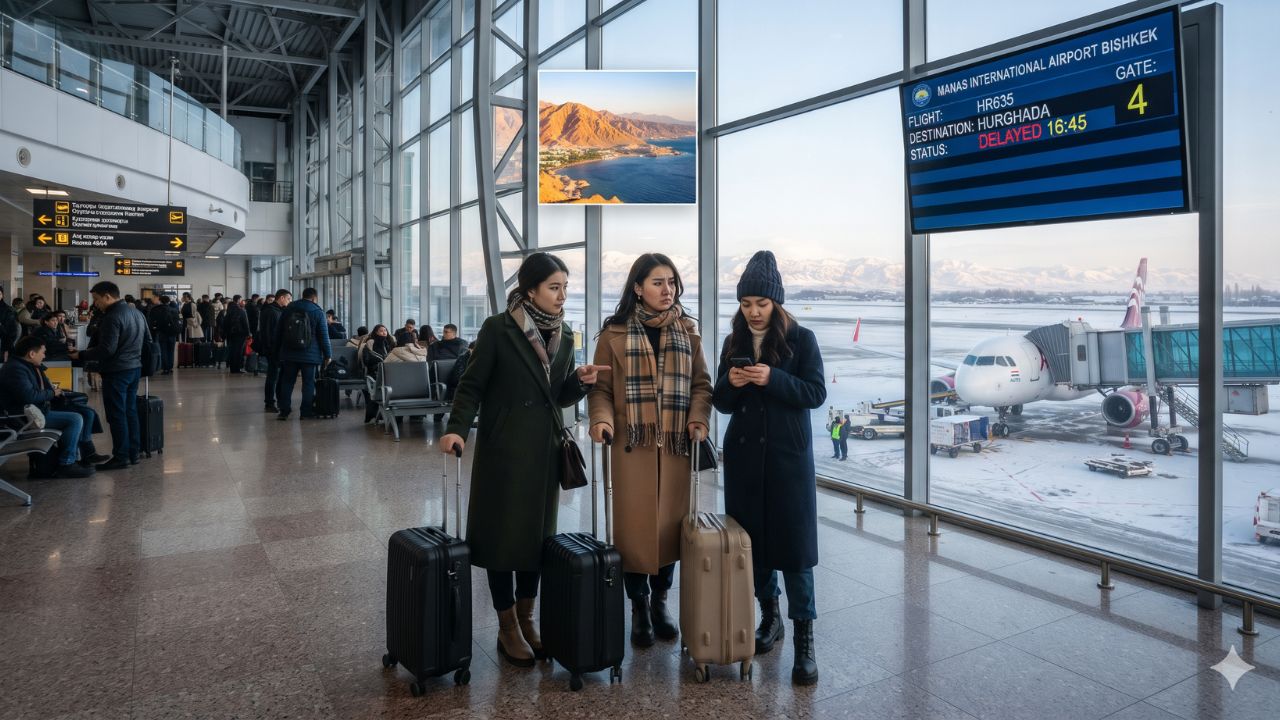
While Sharm El-Sheikh welcomed a leading share of Egypt’s record 19 million visitors in 2025, winter sunseekers departing Central Asia suddenly face an unexpected barrier: proving they carry at least US$3,000 in cash—or US$5,000 for families—alongside mandatory family accompaniment rules for travelers aged 16 to 40. That strict regulatory shift sparked the abrupt cancellation of direct flights connecting Manas International Airport in Bishkek with Sharm El-Sheikh International Airport (SSH) for the entire 2026–2027 winter season. With the final scheduled commercial flight departing on 5 November 2026, thousands of holidaymakers planning warm-weather escapes to the Red Sea must urgently re-evaluate their transit itineraries and consular documentation.
Airports of Kyrgyzstan, the state enterprise managing the country’s aviation gateways, issued the formal route suspension in a statement published by the Kyrgyz National News Agency, Kabar. The announcement confirmed that direct winter services linking Bishkek with the southern tip of the Sinai Peninsula will conclude for the season after the flight on 5 November 2026. The airport authority attributed the suspension directly to modifications in Egypt’s statutory framework governing the entry, movement, and legal stay of foreign nationals.
Bishkek–Sharm El-Sheikh Direct Route Suspended: Timetable and Passenger Rights
For Central Asian travelers escaping freezing sub-zero winter temperatures in the Chuy Valley, the seasonal charter between Bishkek and Sharm El-Sheikh had evolved into a dependable warm-weather corridor. However, airport authorities confirmed that no resumption date has been established, advising ticket holders that potential route reinstatements will be announced independently. Passengers holding unfulfilled tickets must immediately contact their issuing airlines and tour operators to explore statutory refunds, date modifications, or rerouting options.
Crucially, the official airport notification did not publish cancelled seat numbers, passenger counts, or commercial balance sheets. Travel analysts caution against unverified rumors regarding stranded tourists or widespread hotel insolvencies. The concrete development centers on transport logistics: travelers who held confirmed nonstop tickets must now determine whether replacement itineraries via third-country hubs preserve their original travel dates and accommodation arrangements.
| Milestone Date | Operational Event | Primary Agency Involved | Impact on Travelers |
|---|---|---|---|
| 23 October 2026 | Consular travel advisory released | Kyrgyz Ministry of Foreign Affairs | Outlines advance visa and cash mandates |
| 1 November 2026 | Revised foreign entry rules take effect | Egyptian Consular and Immigration Authorities | Mandatory compliance for all arrivals |
| 3 November 2026 | Seasonal flight suspension announced | Airports of Kyrgyzstan (via Kabar News) | Direct charter route cancelled for winter |
| 5 November 2026 | Final scheduled nonstop commercial flight | Bishkek (FRU) – Sharm El-Sheikh (SSH) | Last direct service of 2026–2027 winter |
| Post-5 November 2026 | Indefinite suspension period | Regional charter operators and airlines | All journeys require connecting flights |
Egypt Winter Entry Protocols: Independent Travel vs. Organized Tours
The route cancellation stems from regulatory requirements highlighted in an official advisory released on 23 October 2026 by the Kyrgyz Ministry of Foreign Affairs, which took legal effect on 1 November 2026. The ministerial notice established a sharp distinction between independent individual travelers and tourists booking through licensed travel agencies, imposing rigorous prerequisites across both categories.
Independent travelers originating from Kyrgyzstan can no longer obtain casual entry permissions at border crossings. Instead, they must secure advance visas through accredited Egyptian diplomatic missions, accompanied by formal security approvals obtained prior to purchasing flight tickets. Booking a connecting flight via an intermediary hub such as Istanbul, Dubai, or Cairo does not bypass these statutory requirements; border control officers in Egypt verify consular credentials regardless of whether a passenger arrives on a nonstop or multi-leg itinerary.
For travelers booking packaged beach holidays through tour operators, the Egyptian guidelines introduce extensive administrative checks:
- Mandatory Family Accompaniment: Kyrgyz citizens aged between 16 and 40 traveling on organized tours must be accompanied by a specified close relative.
- Strict Cash Solvency Thresholds: Arriving individual visitors must present a minimum of US$3,000 in physical cash, while family units traveling together must demonstrate a collective cash reserve of at least US$5,000 upon arrival.
- Itinerary and Communication Tracking: Travelers must maintain documented hotel reservations, pre-arranged local transport itineraries, officially registered mobile telephone numbers, and submit to passport custody protocols administered by their host tour operator.
| Travel Category | Visa Application Process | Financial Proof Requirement | Demographic / Custody Conditions | Operational Transit Note |
|---|---|---|---|---|
| Independent Travelers | Mandatory advance consular visa with prior security approval | Verified solvency required by consular mission | Standard passport validation; no relative mandate | Connecting flights do not bypass consular approval |
| Organized Tour Groups | Arranged through licensed travel operators and agencies | US$3,000 in physical cash per person; US$5,000 per family | Travelers aged 16–40 must be accompanied by close relative | Tour operator retains passport custody during stay |
| Central Asia Transit Passengers | Same statutory rules apply based on nationality | Proof of onward connection or Egyptian entry compliance | Subject to transit hub terminal immigration inspections | Transit visas required if leaving international airside |
What Makes Sharm El-Sheikh Different: From Bedouin Coastline to Global Diving Haven
What makes Sharm El-Sheikh irreplaceable for winter travelers is its remarkable geography and climate. Positioned at the desert convergence of the Gulf of Aqaba and the Gulf of Suez, the resort town enjoys daytime winter temperatures averaging 23°C to 25°C, framed by the jagged granite mountains of South Sinai. While northern continental climates endure snow and freezing rain, the southern Sinai coastline offers crystalline waters sheltered by coastal reefs, recognized internationally through the tourism initiatives of Experience Egypt.
Unlike purpose-built desert resorts that feel detached from history, South Sinai carries profound cultural resonance. Just inland from Sharm El-Sheikh lies the UNESCO Saint Catherine Area, where the 6th-century Greek Orthodox Monastery of Saint Catherine sits at the foot of Mount Sinai (Jebel Musa). The surrounding desert valleys remain the ancestral home of the Bedouin tribes—primarily the Bedouin of the Jebeliya and Muziena clans—who have guided travelers across these mountain passes for generations. In town, distinct neighborhoods offer vastly different atmospheres: Naama Bay functions as the energetic pedestrian entertainment hub, Ras Um Sid provides cliffside wall diving over pristine coral gardens, and Hadaba offers quiet residential lodgings overlooking the Strait of Tiran.
National Tourism Expansion vs. Local Route Contraction
The suspension of the Bishkek–Sharm El-Sheikh route occurs against an ironic statistical backdrop: Egypt’s national tourism industry is experiencing historic growth. According to official data published by Egypt’s State Information Service on 3 January 2026, citing the Ministry of Tourism and Antiquities, the nation welcomed nearly 19 million international tourists throughout 2025. This achievement represented a 21 percent year-on-year growth compared to 2024, driven by a 32 percent surge in international charter flight arrivals.
The State Information Service highlighted Sharm El-Sheikh International Airport as one of the country's primary engines of inbound visitor growth. The cancellation of the Bishkek connection does not signal a nationwide downturn in Egyptian tourism, but rather demonstrates how shifting diplomatic compliance and migration oversight can disrupt a specific regional market.
| Egyptian Tourism Performance Metric | Reported Annual Figure | Comparative Measurement Baseline | Primary Regional Hubs Involved |
|---|---|---|---|
| Total International Tourist Arrivals | Nearly 19 million visitors | 2025 calendar year performance | Cairo, Hurghada, Sharm El-Sheikh, Luxor |
| National Tourism Growth Rate | 21% annual expansion | 2025 compared against 2024 results | Nationwide hospitality and heritage sites |
| International Charter Traffic Growth | 32% increase in flight operations | 2025 charter volume surge | Coastal Red Sea airports including SSH and HRG |
| Bishkek Direct Seasonal Corridor | Route suspended after 5 November 2026 | 2026–2027 winter operating season | Bishkek (FRU) to Sharm El-Sheikh (SSH) |
Visitor Insider Tips: Navigating Rerouting, Refunds, and South Sinai Travel
- Demand Written Cancellation Proof Before Booking Alternatives: If your Bishkek–Sharm El-Sheikh departure is cancelled, do not accept informal verbal assurances. Request written confirmation from your travel agency detailing the cancellation, refund entitlement, and exact payment processing timeline as mandated by the International Air Transport Association.
- Audit Total Replacement Holiday Costs: If an agency offers a replacement routing through Istanbul, Sharjah, or Dubai, examine the full itinerary. Confirm whether baggage allowances transfer between carriers, verify layover durations, and check whether rescheduled flight times shorten your paid hotel nights at your Sinai resort.
- Never Rely on Cash-on-Arrival Without Consular Verification: Do not attempt to travel to Egypt under the assumption that carrying US$3,000 cash will automatically guarantee entry. Contact the Embassy of Egypt directly to obtain written confirmation of your visa status and security clearance before paying for alternative non-refundable flights.
- Opt for Shore Diving in Ras Um Sid: Avoid crowded excursion boats departing from the main marina by heading directly to the public beach at Ras Um Sid. For an entry fee of approximately 100 Egyptian pounds, you can snorkel directly off the rocky drop-off where gorgonian fan corals and sea turtles congregate.
- Respect Bedouin Mountain Etiquette: When visiting the Sinai interior, hire local Bedouin guides from the Muziena or Tarabin tribes. In traditional desert camps, always accept Bedouin sage tea (habak) with your right hand, and seek explicit permission before photographing local residents or encampments.
- Keep Exact Cash for Taxi Tariffs: Taxi drivers in Sharm El-Sheikh rarely use meters for foreign tourists. Establish your fare before stepping into the vehicle (a ride between Naama Bay and Hadaba typically runs 100 to 150 Egyptian pounds), and carry small denominations of Egyptian currency to avoid disputes over change.
Cultural and Environmental Context: Fragile Reefs and Bedouin Heritage
The temporary pause in direct flights from Bishkek provides a moment to examine the delicate ecological and cultural balance governing South Sinai. The Red Sea contains some of the most heat-resilient coral reef systems in the world, yet intense mass tourism presents ongoing environmental challenges. Boat anchors, marine litter, and unregulated recreational diving put physical strain on fringing reefs around Ras Mohammed National Park and the Strait of Tiran.
At the same time, the local economy relies heavily on sustainable cultural tourism. The indigenous Bedouin communities of South Sinai possess deep ecological knowledge of desert flora, water conservation, and mountain navigation. Community-led initiatives, such as the Sinai Trail—Egypt’s first long-distance hiking trail managed collaboratively by local tribes—demonstrate how cultural preservation and environmental protection can coexist. Responsible travelers support this heritage by patronizing locally owned desert ecolodges, purchasing traditional Bedouin embroidery, and respecting ancient cultural traditions.
FAQ: Visiting Sharm El-Sheikh & Egypt Winter Travel 2026–2027
When is the final direct flight from Bishkek to Sharm El-Sheikh?
The final scheduled direct flight departs on 5 November 2026, marking the conclusion of the seasonal route for the 2026–2027 winter period.
What cash requirement must organized tour travelers satisfy?
Under the ministerial advisory, arriving travelers on organized tours must present at least US$3,000 in physical cash for individuals, or US$5,000 for families traveling together.
Can independent travelers obtain an Egyptian visa on arrival?
No. Independent Kyrgyz travelers must obtain an advance visa and official security clearance through an authorized Egyptian diplomatic mission before buying flight tickets.
Does Egypt's route cancellation mean all Sharm El-Sheikh tourism is halting?
No. Egypt welcomed nearly 19 million tourists in 2025, and Sharm El-Sheikh remains fully open to international visitors who meet Egyptian entry requirements.
[Across the desert shores of South Sinai, navigating changing entry rules is the essential first step to discovering the wonders of the Red Sea.]
Related Travel Guides
This article is for informational purposes. Flight routes, passenger regulations, visa rules, and transit advisories are subject to change by airlines and aviation authorities. Readers are advised to verify schedules and travel documentation with relevant carriers and border agencies before departure.
Related Stories
Middle East Flight Cancellations and Delays Hit Jeddah, Muscat, and Dubai: Regional Airspace Alert

Asia Flight Cancellations and Delays Hit Riyadh, Bali, and India: Cyclone Murasu and Regional Air Alert