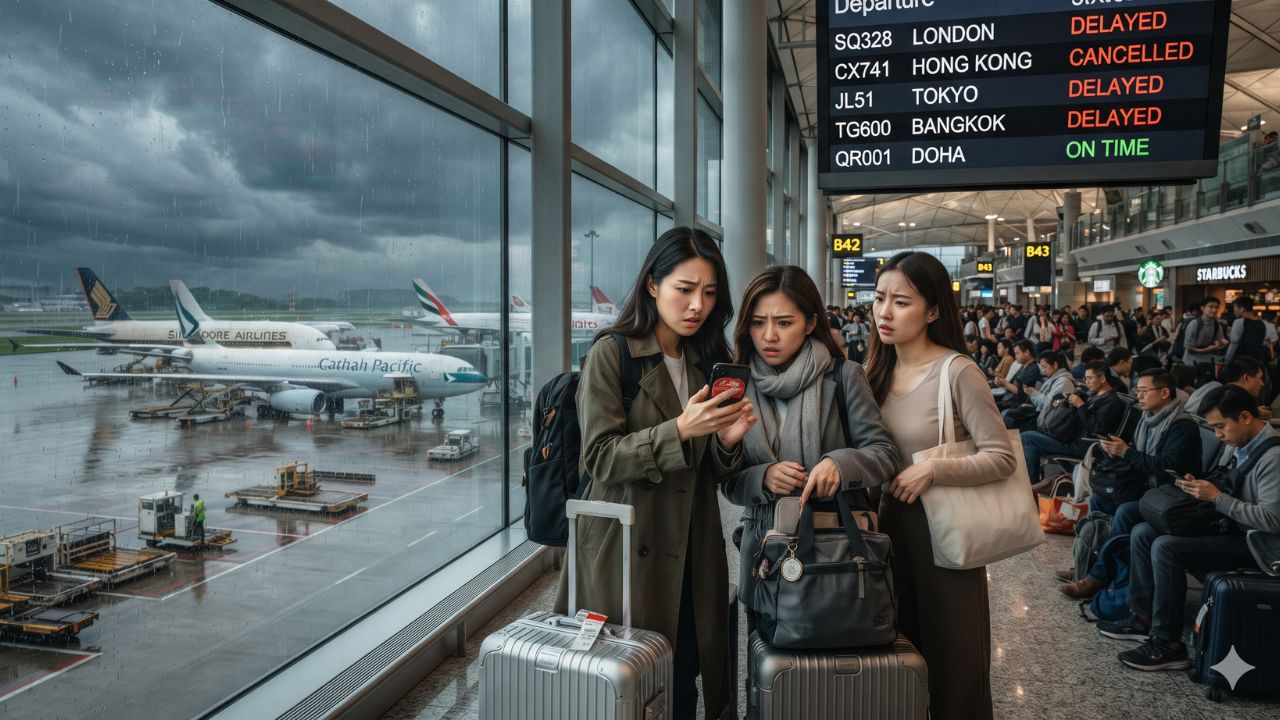
Middle East Flight Alert: Over 1,100 Delays and 110 Cancellations Hit Dubai, Riyadh, and Dammam

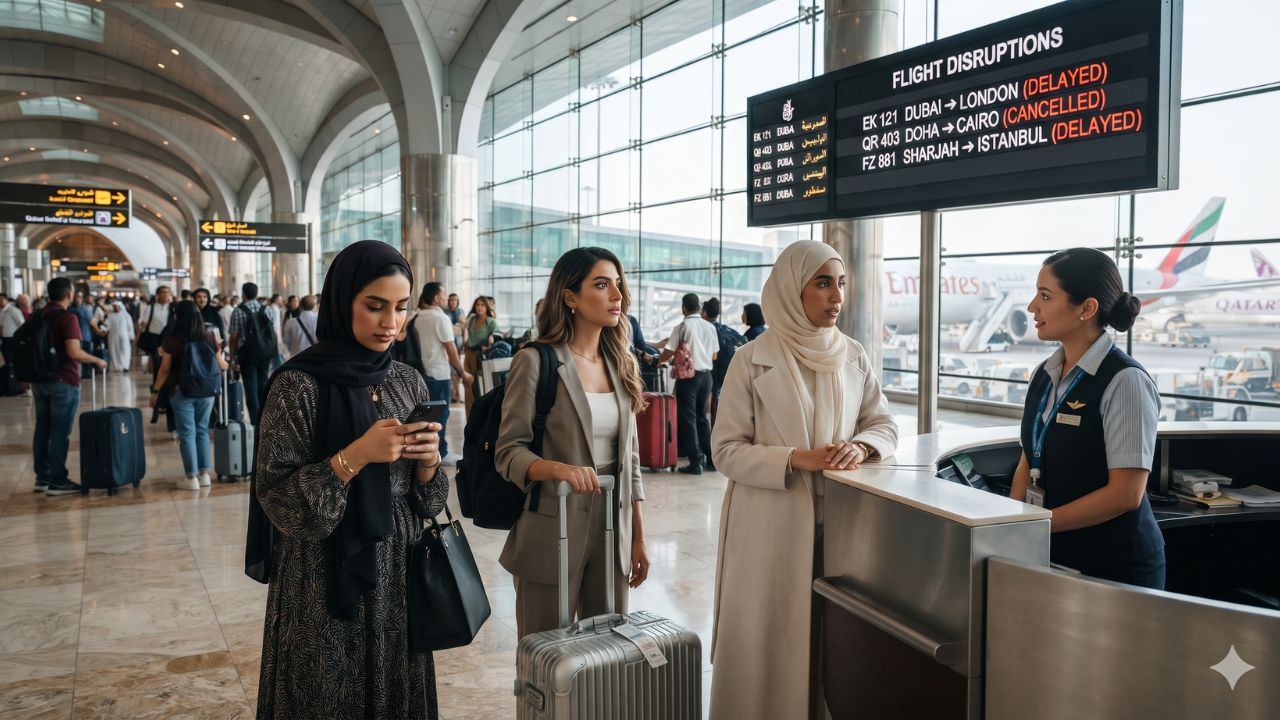
While sovereign airspace across the United Arab Emirates, Qatar, and Oman officially remained fully open to commercial navigation, more than 1,100 flight delays and 110 cancellations swept Middle Eastern hubs on 3–4 November 2026 as cascading regional security detours and conflict-zone bulletins disrupted airline operations. In the wake of active safety notices published by the European Union Aviation Safety Agency across the Persian Gulf and residual flight suspensions following missile strikes on Saudi infrastructure in October, international carriers from Saudia to Pegasus Airlines adjusted flight tracks, creating holding patterns for passengers visiting regional centers promoted by Visit Saudi.
According to real-time aviation statistics compiled across 17 surveyed regional gateways by FlightAware on 3 November at 3:27 pm ET (4 November, 12:27 am GST), a total of 1,213 flight disruptions impacted the region. Dubai International Airport (DXB) absorbed the highest delay tally with 188 flights set back, while King Khalid International Airport in Riyadh recorded 33 cancellations—the highest terminal cancellation count in the dataset.
The Middle East Airspace Picture: Conflict Bulletins, Reroutings, and Open Skies
The underlying friction driving regional delays stems from extensive security advisories rather than outright airport shutdowns. Official travel advisories from the UK Foreign, Commonwealth & Development Office confirm that King Khalid International Airport in Riyadh was struck by a missile on 10 October 2026, sustaining ongoing drone and missile security alerts across Saudi infrastructure. Concurrently, King Fahd International Airport in Dammam resumed flights following an attack on 21 October 2026, though several international carriers chose to extend route suspensions.
Regulatory oversight remains tight. EASA maintains an active conflict-zone information bulletin covering Saudi Arabian airspace, revised on 9 October and valid until 16 November 2026. Similar precautionary warnings cover the Persian Gulf, Gulf of Oman, Jordan, Iraq, and Iran.
However, a verified regional security evaluation on 3 November 2026 established that sovereign airspaces over the UAE, Qatar, Bahrain, Kuwait, and Oman remained completely open, with zero documented strikes within those nations between 30 October and 3 November, outside of isolated maritime incidents in offshore waters. European network carriers have chosen to postpone their return: Lufthansa, SWISS, and Eurowings are targeting a 25 November 2026 resumption for Dubai services, while Austrian Airlines scheduled its return for 12 December 2026.
| Airport Gateway | Country / Region | Flight Cancellations | Flight Delays | Regional Operational Status |
|---|---|---|---|---|
| Dubai International (DXB) | United Arab Emirates | 9 | 188 | Highest delay total in the Middle East |
| Sabiha Gökçen (SAW) | Istanbul, Türkiye | 4 | 159 | Heavy point-to-point European feeder delays |
| Istanbul Airport (IST) | Istanbul, Türkiye | 2 | 124 | International hub sequencing and detour holding |
| Zayed International (AUH) | Abu Dhabi, UAE | 2 | 108 | Inbound fleet rotation and connection delays |
| Hamad International (DOH) | Doha, Qatar | 2 | 103 | Hub transit congestion from African and Asian corridors |
| King Abdulaziz (JED) | Jeddah, Saudi Arabia | 24 | 87 | Elevated domestic and pilgrimage cancellations |
| Cairo International (CAI) | Cairo, Egypt | 1 | 70 | North African connecting flow delays |
| Sharjah International (SHJ) | Sharjah, UAE | 3 | 58 | Low-cost network delays into South Asia |
| Ben Gurion (TLV) | Tel Aviv, Israel | 1 | 52 | Regional corridor restrictions and holding patterns |
| King Fahd (DMM) | Dammam, Saudi Arabia | 6 | 34 | Reopened facility absorbing lingering route suspensions |
| Muscat International (MCT) | Muscat, Oman | 1 | 33 | Regional transit and Gulf bypass holding |
| Prince Mohammad (MED) | Medina, Saudi Arabia | 3 | 31 | Pilgrimage charter and domestic feeder delays |
| King Khalid (RUH) | Riyadh, Saudi Arabia | 33 | 13 | Highest airport cancellations in the dataset |
| Bahrain International (BAH) | Manama, Bahrain | 11 | 13 | High cancellation ratio relative to total volume |
| Larnaka International (LCA) | Larnaca, Cyprus | 1 | 13 | Eastern Mediterranean regional feeder adjustments |
| Queen Alia (AMM) | Amman, Jordan | 2 | 12 | Levant corridor detours and regional holds |
| Kuwait International (KWI) | Kuwait City, Kuwait | 6 | 5 | Concentrated regional carrier cancellations |
Airport Disruption Breakdown: From Dubai and Riyadh to Dammam and Istanbul
The United Arab Emirates absorbed 354 delays and 14 cancellations across its three commercial gateways. While Dubai International processed 188 delayed flights, Abu Dhabi’s Zayed International logged 108 delays and 2 cancellations, and Sharjah recorded 58 delays. This concentration of delays reflects the logistical strain of re-sequencing hundreds of long-haul passenger flights around restricted airspace corridors.
In Saudi Arabia, disruptions manifested as cancellations. Riyadh’s King Khalid International logged 33 cancellations against just 13 delays, while Jeddah’s King Abdulaziz International reported 24 cancellations and 87 delays. Dammam recorded 6 cancellations and 34 delays, while Medina noted 3 cancellations and 31 delays.
In neighboring Gulf states, Bahrain logged 11 cancellations and 13 delays, while Kuwait posted 6 cancellations and 5 delays. In Türkiye, Istanbul’s two airports experienced substantial disruption, logging 283 combined delays (159 at Sabiha Gökçen and 124 at Istanbul Airport) alongside 6 cancellations, serving as the primary northern bypass corridor for passengers moving between Europe and the Middle East.
Airline Performance Matrix: Saudia’s Cancellations vs. Pegasus and Etihad Delays
Disruptions varied sharply across airline business models. Flag carrier Saudia registered 31 cancellations (representing 6 percent of its measured schedule) and 55 delays (12 percent). In contrast, Turkish low-cost carrier Pegasus Airlines recorded the highest delay total among all carriers, with 170 flights delayed (24 percent of operations) but zero cancellations, choosing to absorb lengthy holding patterns over Anatolia rather than cancel flights.
Etihad Airways recorded 84 delays—affecting 25 percent of its scheduled flying—alongside 2 cancellations. Pakistani carrier AirSial posted the highest delay percentage in the region, with 47 percent of its flights delayed (18 flights). Low-cost carriers flydubai and Air Arabia recorded delay rates of 22 percent (60 and 50 delayed flights respectively), while Bahrain’s Gulf Air registered 11 cancellations (7 percent).
| Airline Carrier | Home Base | Flight Cancellations | Cancellation Rate (%) | Flight Delays | Delay Rate (%) |
|---|---|---|---|---|---|
| Saudia | Saudi Arabia | 31 | 6% | 55 | 12% |
| Pegasus Airlines | Türkiye | 0 | 0% | 170 | 24% |
| Turkish Airlines | Türkiye | Reported | — | 101 | 7% |
| Etihad Airways | United Arab Emirates | 2 | 0% | 84 | 25% |
| flydubai | United Arab Emirates | 3 | 1% | 60 | 22% |
| Air Arabia | United Arab Emirates | 4 | 1% | 50 | 22% |
| Gulf Air | Bahrain | 11 | 7% | 6 | 4% |
| Flynas | Saudi Arabia | 1 | 0% | 22 | 14% |
| AirSial | Pakistan | 1 | 2% | 18 | 47% |
| El Al | Israel | 1 | 0% | 8 | 7% |
| Cyprus Airways | Cyprus | 1 | 8% | 1 | 8% |
| Kam Air | Afghanistan | 1 | 4% | 3 | 13% |
| Sunrise Airways | Regional Operator | 2 | 5% | 2 | 5% |
| Iraqi Airways | Iraq | 1 | 3% | 2 | 6% |
Visitor Insider Tips: Navigating Middle Eastern Transit and Extended Layovers
- Leverage Dubai’s 24-Hour Red Line Metro: If facing an extended daytime delay at Dubai International (DXB), take the Dubai Metro Red Line directly from Terminal 1 or Terminal 3. You can reach the Dubai Mall and Burj Khalifa in 24 minutes, escaping crowded transit lounges without dealing with highway taxi queues.
- Understand Riyadh Airport Terminal Transfers: King Khalid International Airport (RUH) in Riyadh spans multiple terminals separated by considerable distances. If your flight is rebooked from an international service to a domestic Saudia connection, Terminal 5 (domestic) requires an inter-terminal shuttle bus from Terminals 3 and 4; allow at least 45 minutes for this transfer.
- Retain All Boarding Stubs for Travel Insurance: When delays stem from civil aviation security advisories, standard European EU261 compensation rules do not mandate cash payouts due to extraordinary circumstances. However, comprehensive travel insurance policies cover hotel lodging, meals, and emergency rebooking expenses if you retain official airline delay letters and itemized receipts.
- Explore Larnaca’s Salt Lake During Cyprus Layovers: If delayed at Larnaka International Airport (LCA), the historic Hala Sultan Tekke mosque and salt lake nature reserve sit just five minutes from the terminal by taxi. Enjoy fresh grilled halloumi and mezze at waterfront tavernas along the Finikoudes promenade while monitoring airline mobile apps.
- Verify Transit Visa Rules on Multi-Carrier Rebookings: If an airline reroutes your journey through an alternative Gulf hub—such as connecting through Manama, Muscat, or Kuwait—ensure your nationality qualifies for visa-free transit or visa-on-arrival before accepting modified ticketing.
Cultural and Environmental Context: Geopolitical Resilience and Aviation Fuel Burn
Commercial aviation in the Middle East functions as an irreplaceable economic bridge linking Africa, Asia, and Europe. Gulf carriers have spent three decades transforming desert hubs into global transit crossroads. However, recurring geopolitical tensions expose the environmental costs of airspace diversions.
When airliners must avoid conflict-zone corridors over the Levant or the northern Red Sea, they must execute wide navigational detours across the Arabian desert or southern Egypt. These rerouted flight paths add between 45 and 90 minutes of airborne flight time per sector, consuming thousands of additional gallons of aviation kerosene per flight. Regional civil aviation authorities and long-haul carriers are deploying digital flight-optimization algorithms to navigate open airspaces dynamically, minimizing excess carbon emissions while upholding rigorous passenger safety standards.
FAQ: Middle East Flight Cancellations & Airspace Delays 2026
What caused the 1,100 flight delays across the Middle East on 3–4 November 2026?
Disruptions were driven by regional security advisories, active EASA conflict-zone notices across the Persian Gulf, and the operational aftermath of October airport security incidents in Saudi Arabia.
Are airports in Dubai, Abu Dhabi, and Doha closed?
No. Sovereign airspaces and passenger terminals in the UAE, Qatar, Bahrain, Kuwait, and Oman remain fully open and operational, though flights experience holding delays due to regional rerouting.
Which airline reported the highest number of cancellations?
Saudia recorded the highest cancellation total with 31 grounded flights (6 percent of operations), followed by Bahrain's Gulf Air with 11 cancellations.
Which airport recorded the most flight delays?
Dubai International Airport (DXB) recorded the highest number of delayed flights in the region, logging 188 delays alongside 9 cancellations.
[Above the ancient desert corridors of the Middle East, safety remains the constant compass guiding modern flight through shifting skies.]
Related Travel Guides
This article is for informational purposes. Flight routes, passenger regulations, visa rules, and transit advisories are subject to change by airlines and aviation authorities. Readers are advised to verify schedules and travel documentation with relevant carriers and border agencies before departure.
Related Stories

Middle East Flight Disruptions: 560 Delays and 95 Cancellations Hit Dubai, Jeddah, Cairo, and Regional Hubs
US CDC Enforces Mandatory Ebola Attestation for India–USA Flights: 21-Day Health Rule and Boarding Guide 2026