Florida Dengue Outbreak Claims Death as 152 Local Cases Raise Fresh Travel Health Concerns

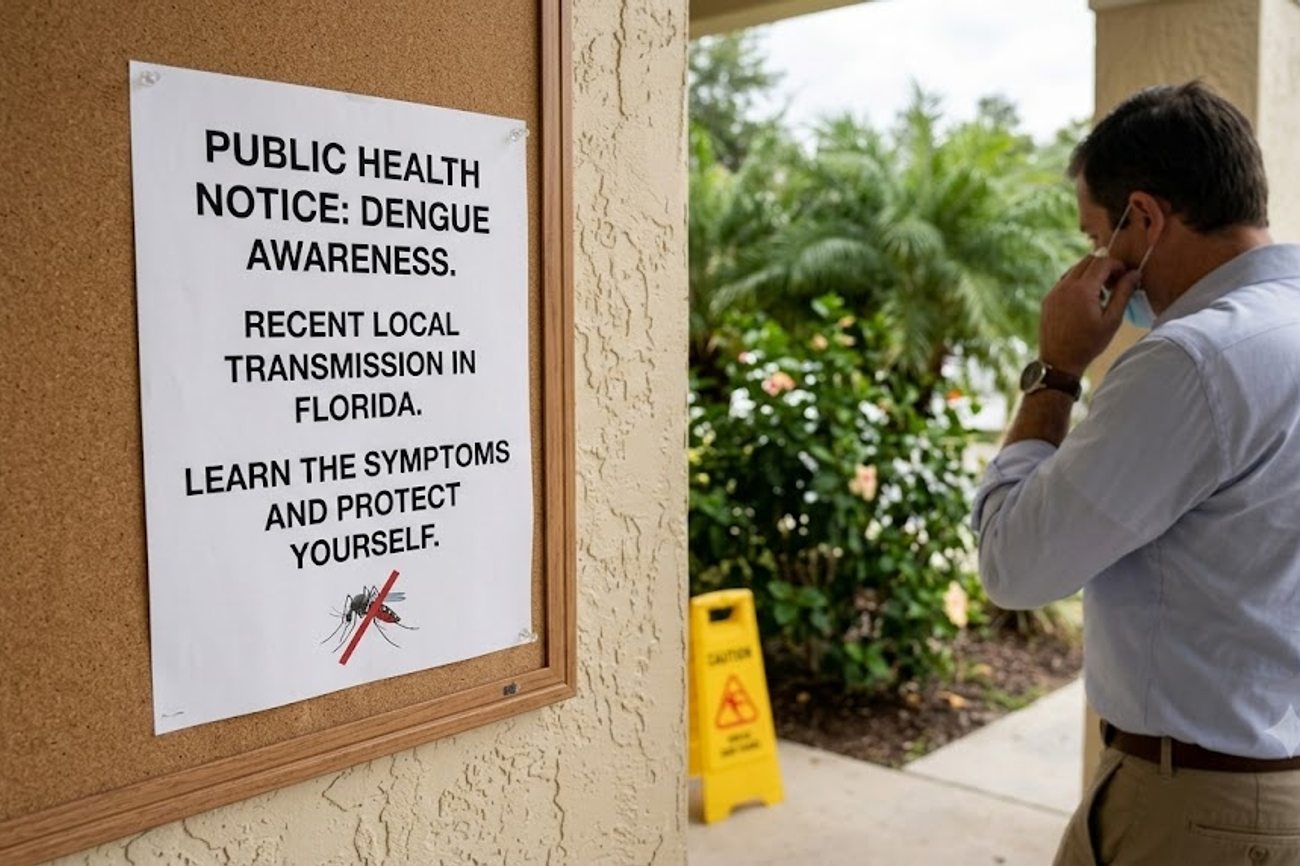
Image generated by AI
A traveler arriving in Tampa for a business conference or family vacation now faces a health risk that was previously negligible in the Sunshine State. With the Florida Department of Health confirming a dengue-related death and a spike in locally acquired infections, the standard "sunscreen and sandals" packing list must now include medical-grade insect repellent.
The 2026 Florida Dengue Outbreak: Timeline and Facts
Florida is currently navigating one of its most severe dengue fever surges in recent history. The state has officially recorded 152 locally acquired cases in 2026. To put this in perspective, this is the second-highest annual total the state has ever seen, trailing only the 172 cases reported in 2023.
The most alarming aspect of this outbreak is its geographic concentration. While the virus is present in multiple areas, Hillsborough County has become the epicenter, recording more than 130 infections. In a region that typically sees only a handful of cases per year, this represents nearly 90% of the state's total infections for 2026.
The severity of the current situation was underscored by the death of an elderly woman in Tampa on September 4. This fatality marks a critical escalation in the public health narrative, shifting the conversation from "travel-related cases" to "local transmission." Local transmission occurs when a mosquito bites an infected person and then transmits the virus to another healthy individual. This cycle is sustained by the Aedes aegypti and Aedes albopictus mosquito species, both of which are well-established across Florida.
While Hillsborough County remains the primary focus, the virus is migrating. As of September 18, Orange County reported two additional locally acquired cases. Furthermore, Pasco County confirmed a case in August, and Miami-Dade issued a formal mosquito-borne illness alert following a locally acquired infection earlier that same month.
Affected Regions and High-Risk Zones
The risk is not uniform across the state, but travelers should exercise heightened caution in the following areas:
- Hillsborough County (Tampa Bay Region): Extreme risk. More than 130 cases reported; primary site of current surveillance and spraying operations.
- Orange County: Elevated risk. Two locally acquired cases confirmed as of September 18.
- Pasco County: Moderate risk. Confirmed case reported in August.
- Miami-Dade County: Moderate risk. Official mosquito-borne illness alert issued in August.
Your Rights and Health Protections as a Traveler
When health outbreaks occur in major tourist destinations, passengers often wonder if they are entitled to refunds or compensation if they choose to cancel their trips.
Flight and Hotel Cancellations Under standard US Department of Transportation (DOT) rules, airlines are generally only required to provide a full refund if the flight is cancelled or significantly changed by the carrier. A public health alert or a "surge" in cases does not typically constitute a "significant change" to the flight itself. If you choose to cancel your trip due to health concerns, you are subject to the fare rules of your ticket (e.g., non-refundable vs. refundable).
However, if you have travel insurance with "Cancel for Any Reason" (CFAR) coverage, you may be eligible for a partial reimbursement of your non-refundable costs. For those traveling from the UK or EU to Florida, UK CAA or EU261/2004 regulations do not provide compensation for cancellations based on destination health risks; these laws apply specifically to flight disruptions (delays/cancellations) caused by the airline.
Medical Rights and Care If you fall ill while in Florida, you have the right to seek emergency medical care. However, the CDC notes that there is no specific antiviral treatment for dengue. Management is supportive (fluids, pain relief). Travelers should be aware that using aspirin or ibuprofen can increase the risk of bleeding in severe dengue cases; acetaminophen (Tylenol) is the recommended fever reducer.
For real-time health updates and prevention guidelines, travelers should consult the CDC Travel Health notices or check the Florida Department of Health for county-level alerts.
Rebooking Strategy and Health Mitigation
If you are currently booked for a trip to the Tampa Bay area and are concerned about the dengue surge, you have several strategic options:
1. Destination Pivot If your trip is flexible, consider shifting your itinerary to regions of Florida currently reporting zero local transmission. While the virus is present in the state, the concentration in Hillsborough County is "wildly unusual," as noted by county spokesperson Chris Wilkerson. Moving your stay to the Panhandle or other less-affected coastal regions may reduce your risk profile.
2. Accommodation Audit If you are staying in short-term rentals (Airbnbs or villas), you must perform a "standing water audit" upon arrival. Check for:
- Clogged gutters and rain barrels.
- Uncovered pools or hot tubs.
- Flower pots, tires, or containers holding rainwater. These are primary breeding grounds for Aedes mosquitoes. If the property is poorly maintained, request a move to a different unit or contact the host to ensure professional mosquito treatment has been performed.
3. Protective Gear Strategy Do not rely on hotel "bug sprays." Bring EPA-registered repellents containing DEET, Picaridin, or Oil of Lemon Eucalyptus. Wear long-sleeved shirts and long pants, especially during dawn and dusk when Aedes mosquitoes are most active.
4. Monitoring and Tracking Use tools like FlightRadar24 to monitor your flight status, but more importantly, monitor local health bulletins. If you develop a fever, severe headache, or joint pain within two weeks of your trip, immediately inform your healthcare provider of your travel history to Florida.
FAQ: Florida Dengue Surge 2026
Am I entitled to a flight refund because of the dengue outbreak? Generally, no. Airlines do not view health alerts as valid grounds for a mandatory refund unless the flight is cancelled. Check your travel insurance policy for "Cancel for Any Reason" (CFAR) clauses or review the US DOT air consumer protections.
Which parts of Florida are the most dangerous right now? Hillsborough County (Tampa area) is the highest-risk zone, accounting for over 130 of the 152 statewide cases. Orange, Pasco, and Miami-Dade counties have also reported local transmission.
What are the warning signs of severe dengue? While most cases involve fever and joint pain, seek emergency care for severe abdominal pain, persistent vomiting, or any signs of internal bleeding (bruising or bleeding gums).
Is there a vaccine or cure for dengue? There is no specific antiviral medication to cure dengue. Treatment focuses on managing symptoms and maintaining hydration. Prevention through mosquito avoidance is the only effective strategy.
Stay vigilant, pack the repellent, and monitor county-level health data before you touch down in the Sunshine State.
Related Travel Guides
- Wisconsin Moves With Michigan as US Flooding Forecast Raises Flash-Flood Risks Across Key Travel Regions
- Australia Issues Fresh Travel Warning For Saudi Arabia As Middle East Tensions Raise New Safety Risks For Travellers
- Uganda Travel Under Attention As Australia Issues New Advisory Amid Border Threats And Security Risks
This article is for informational purposes. Flight routes, passenger regulations, visa rules, and transit advisories are subject to change by airlines and aviation authorities. Readers are advised to verify schedules and travel documentation with relevant carriers and border agencies before departure.
Related Stories

Florida Learjet 60 Crash in Palm Beach County: Travel Disruptions, Military Trail Closures & Investigation

Asia Flight Disruptions: Over 2,270 Delays and 280 Cancellations Hit Bangkok, Beijing, and Mumbai