US Outranks All Countries in Powering Costa Rica's Ecotourism Resurgence: Accounting for Over Half of All Inbound Travelers

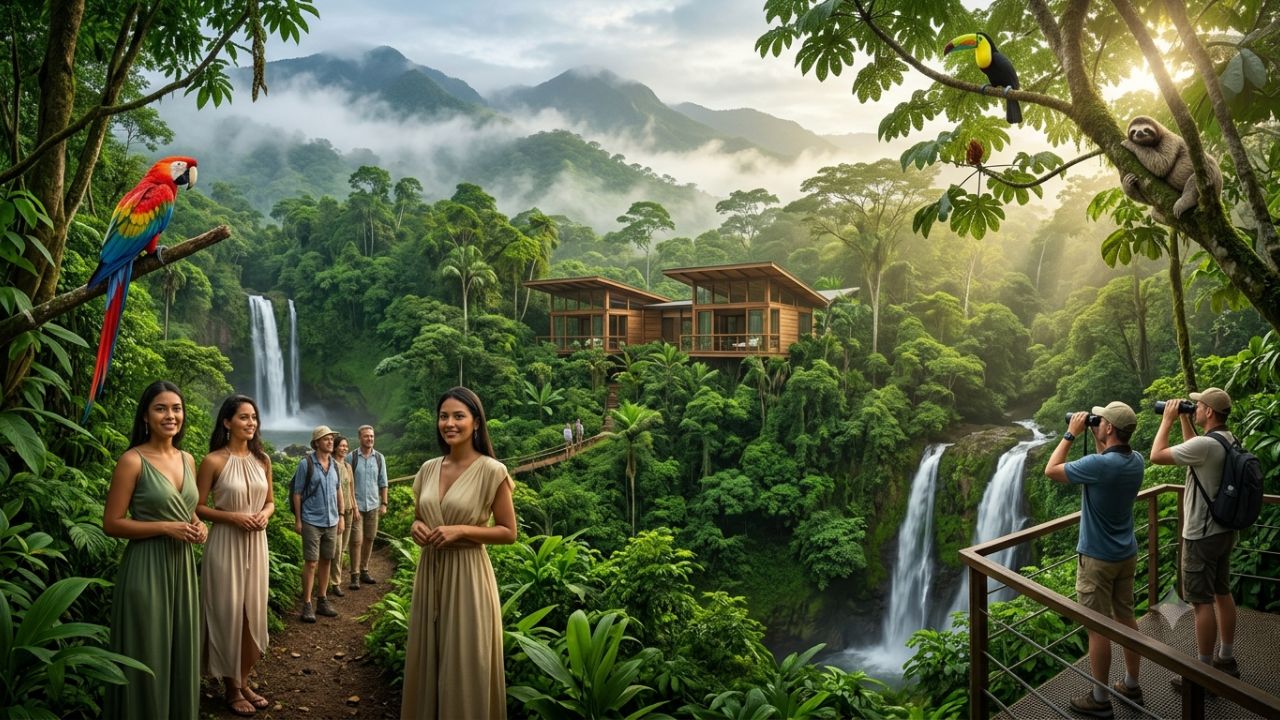
SAN JOSÉ, Costa Rica — In an era when international vacationers are increasingly turning away from overcrowded beach enclaves in pursuit of sustainable, conservation-focused journeys, Costa Rica has solidified its standing as the world’s premier ecological sanctuary, propelled overwhelmingly by travelers from the United States. Covering a modest 0.03 percent of the Earth’s surface while harboring an astonishing six percent of the planet's total terrestrial and marine biodiversity, the Central American republic has transformed wild nature into its primary economic engine. While international eco-explorers arrive from across the globe, official arrival data confirms that the United States outranks all other international source markets by an insurmountable margin, contributing between 50 and 56 percent of all inbound foreign travelers entering the country through its two international airports.
+----------------------------------------------------------------------------------------------------+ | KEY TAKEAWAYS: COSTA RICA ECOTOURISM RESURGENCE & US MARKET DOMINANCE | +----------------------------------------------------------------------------------------------------+ | • Absolute US Market Hegemony: American travelers account for over 50% to 56% of all foreign air | | arrivals, providing the bedrock economic foundation for Costa Rica's sustainable tourism sector. | | • Unrivaled Nonstop Air Bridges: Direct daily flights from over a dozen major US metropolitan hubs | | into San José (SJO) and Liberia (LIR) minimize transit friction and maximize short-break access. | | • The Green Architecture: The nation's conservation model integrates SINAC wildland management, | | CST sustainable certifications, Bandera Azul beach audits, and Payment for Environmental Services.| | • High-Yield Spending Dynamics: US travelers disproportionately patronize high-end CST luxury | | ecolodges, chartered internal flights, and private naturalist guides across remote peninsulas. | | • Global Coalition Balance: Canada (8–10%), Germany (3–4%), the UK (2.5–3.5%), and France | | (2.5–3.5%) provide essential extended stays, winter migrations, and deep-forest nature research. | | • Proactive Protection: The Costa Rican Tourism Board (ICT) deploys the "Los Turis-Ticos" | | educational campaign to protect ecosystems against wildlife feeding, scams, and plastic waste. | +----------------------------------------------------------------------------------------------------+
====================================================================================================
                        COSTA RICA INBOUND SOURCE MARKET ARCHITECTURE
====================================================================================================

      NORTH AMERICAN CORE                            EUROPEAN PARTNERS
     (United States & Canada)                 (Germany, UK, France, Spain, CH, NL)
                 \                                     /
                  \                                   /
                   +---------------------------------+
                                     |
                       [ 100% INBOUND AIR ARRIVALS ]
                                     |
         +---------------------------+---------------------------+
         |                                                       |
         v                                                       v
  [ THE UNITED STATES ]                                 [ THE GLOBAL COALITION ]
  • Market Share: 50% - 56%                             • Canada: 8% - 10% (Winter Snowbirds)
  • Primary Gateways: SJO & LIR                         • Mexico & LatAm: 8% - 12% (MICE & Regional)
  • Nonstop Flight Hubs: 14+ US Cities                  • Germany: 3% - 4% (Botanical / 20-Day Stays)
  • Consumption: CST Luxury Lodges,                     • United Kingdom: 2.5% - 3.5% (Canopy / Rafting)
    Charter Flights, Blue Zone Wellness                 • France: 2.5% - 3.5% (Agritourism / Surfing)
  • Daily Spend: Highest Inbound Yield                  • Spain: 2.0% - 2.8% (Green Season Support)
         |                                                       |
         +---------------------------+---------------------------+
                                     |
                                     v
                       [ THE GREEN REVENUE RECYCLER ]
          • SINAC National Park Maintenance & Anti-Poaching Ranger Patrols
          • FONAFIFO Payment for Environmental Services (Forest Restoration)
          • CST Certification Compliance & Local Indigenous Cooperative Wages
====================================================================================================
The Green Architecture: How Costa Rica Monetized Conservation Over Deforestation
To comprehend why international travelers demonstrate such an intense willingness to invest their financial resources in Costa Rica, one must examine the institutional and legislative framework that transformed an environmentally degraded agricultural state into a global benchmark of environmental regeneration. In the mid-twentieth century, Costa Rica was trapped in an ecological spiral; widespread cattle ranching, timber logging, and uncontrolled agricultural expansion cleared vast tracts of primary rainforest, reducing national forest cover from over 75 percent in 1940 to a catastrophic low of 21 percent by 1987.
The reversal of this ecological collapse represents one of the most remarkable conservation triumphs in modern history. Rather than relying on toothless decrees, the Costa Rican government dismantled its military in 1948, liberating national budget reserves to invest directly in universal education, public healthcare, and environmental preservation. Over the subsequent four decades, the nation constructed a comprehensive four-pillar conservation architecture that converted living forests into high-yield financial assets:
- The SINAC Wildland Shield: Established under the Ministry of Environment and Energy (MINAE), the National System of Conservation Areas (Sistema Nacional de Áreas de Conservación - SINAC) manages an interconnected network of 11 conservation regions spanning over 25 percent of the national landmass. Encompassing more than 30 national parks, active volcanic calderas, biological corridors, and marine reserves, SINAC operates on a self-funding loop. Park admission fees, commercial filming permits, and certified concession charges are channeled directly into trail maintenance, anti-poaching ranger units, and biological monitoring programs.
- The Certification for Sustainable Tourism (CST): Designed and audited by the Costa Rican Tourism Board (Instituto Costarricense de Turismo - ICT), the CST standard is recognized globally by the Global Sustainable Tourism Council (GSTC). Unlike commercial marketing accolades, CST evaluates hospitality establishments across rigorous operational metrics: carbon-neutral power generation, water recycling systems, biological waste management, organic supply chain procurement, and fair local employment standards.
- The Ecological Blue Flag (Bandera Azul Ecológica): Originating as a coastal cleanliness initiative, the program subjects Pacific and Caribbean coastal communities to relentless annual audits. Beaches are evaluated on ocean microbiological purity, drinking water accessibility, beach security, environmental education programs, and municipal waste management, creating intense local community pride and accountability.
- Payment for Environmental Services (PES / Pago por Servicios Ambientales): Administered by the National Forestry Financing Fund (FONAFIFO), this world-first mechanism levies a dedicated fossil fuel tax and water tariff to finance cash transfers directly to rural farmers and indigenous landowners. By paying private landowners regular stipends to preserve standing primary rainforests and restore degraded pastures, the PES program made standing trees far more valuable than timber or cattle pastures, directly driving national forest cover back up to over 57 percent today.
This integrated institutional structure guarantees international travelers that their presence does not contribute to environmental destruction. Instead, every hotel room night, park admission ticket, and guided canopy tour actively funds reforestation, endangered species recovery, and rural economic dignity.
A vital statutory pillar supporting this regeneration was the passage of the landmark 1996 Forestry Law (Law 7575), which explicitly recognized the environmental services provided by intact forest ecosystems, including carbon sequestration, hydrological protection, and biodiversity preservation. The law made it strictly illegal to clear forested land for agricultural purposes without arduous regulatory oversight. In parallel, grassroots non-profit organizations and private philanthropists established an extensive buffer of non-governmental biological reserves. A shining example is the Children's Eternal Rainforest (Bosque Eterno de los Niños), Costa Rica's largest private nature reserve spanning over 54,000 acres of pristine cloud and premontane forest. Funded originally by donations from schoolchildren in over 44 countries through the Monteverde Conservation League, the reserve connects biological corridors across the continental divide, safeguarding critical habitats for jaguars, tapirs, and hundreds of migratory bird species while offering sustainable hiking trails for international visitors.
The American Hegemony: Air Bridges, High-Yield Spending, and the Pura Vida Ethos
While eco-tourists travel from every continent to experience Costa Rica’s wilderness, the United States occupies an uncontested position of market hegemony. Capturing between 50 and 56 percent of all international arrivals disembarking at Juan Santamaría International Airport (SJO) in the Central Valley and Daniel Oduber Quirós International Airport (LIR) in the northwestern province of Guanacaste, American travelers provide the baseline cash flow that sustains the country’s private conservation reserves and boutique ecolodges.
====================================================================================================
                        US POINT-TO-POINT AIRLINE CONNECTIVITY MATRIX
====================================================================================================

  US REGIONAL ORIGIN            MAJOR NONSTOP METROPOLITAN GATEWAYS   OPERATING AIRLINES
----------------------------------------------------------------------------------------------------
  Southeast & Florida           Miami (MIA), Fort Lauderdale (FLL),   American Airlines, Spirit Airlines,
                                Orlando (MCO), Atlanta (ATL)          Delta Air Lines, JetBlue

  Texas & South Central         Houston Intercontinental (IAH),       United Airlines, American Airlines,
                                Dallas/Fort Worth (DFW), Austin (AUS) Southwest Airlines

  Mid-Atlantic & Northeast      New York (JFK), Newark (EWR),         United Airlines, JetBlue,
                                Charlotte (CLT)                       American Airlines, Delta

  Midwest & Mountain West       Chicago O'Hare (ORD), Denver (DEN)    United Airlines, Southwest Airlines

  West Coast & California       Los Angeles (LAX), San Francisco (SFO)Alaska Airlines, United Airlines
----------------------------------------------------------------------------------------------------
  Transpacific / Cross-Border:  Nonstop flight times range from 2.5 hours (Florida) to 5.5 hours (California)
====================================================================================================
The primary engine powering this volume is extraordinary direct flight connectivity. The geographic proximity of Central America to the North American continent allows US legacy carriers (American Airlines, Delta, United) and dynamic low-cost operators (Southwest, JetBlue, Alaska, Spirit) to maintain extensive nonstop networks. Operating from major metropolitan hubs across the Eastern Seaboard, the Midwest, Texas, and the West Coast, these carriers make reaching Costa Rica as straightforward as booking a domestic flight. An eco-traveler can depart a snowy morning in Chicago, Denver, or New York, complete a smooth four- to five-hour flight, and be hiking through the mist-shrouded cloud forests of Monteverde or paddling a kayak through the mangrove lagoons of Manuel Antonio by mid-afternoon.
In addition to flight availability, American travelers possess high spending power that directly matches Costa Rica's premium sustainable offerings. Unlike traditional mass-tourism charter travelers who seek cut-rate all-inclusive packages, the American eco-traveler prioritizes high-value, low-density sustainable experiences. They disproportionately patronize five-star CST-certified retreats—such as Nayara Tented Camp in Arenal, Pacuare Lodge in the Talamanca mountains, and Lapa Rios in the deep Osa Peninsula—where nightly room tariffs often surpass $800 to $1,500.
American visitors spend freely on chartered domestic flights operated by Sansa, private bilingual naturalist guides, deep-sea catch-and-release sportfishing charters, and certified organic canopy zip-line courses. Their willingness to pay top-tier rates for verified conservation experiences injects foreign exchange directly into remote rural communities that historically depended on subsistence logging or destructive agricultural monocultures.
Culturally, the Costa Rican national philosophy of "Pura Vida" (Pure Life) resonates profoundly with American consumers seeking active outdoor wellness. Disillusioned with urban stress and digital burnout, American professionals, remote tech entrepreneurs, and multi-generational families view Costa Rica as an accessible foreign sanctuary. The Nicoya Peninsula—globally celebrated as one of the planet’s five blue zones where residents regularly live active lives past the age of 100—has become a pilgrimage site for wellness seekers pursuing farm-to-table nutrition, daily yoga, world-class surf breaks, and restorative immersion in coastal wilderness.
The Global Coalition: Country-by-Country Breakdown of International Source Markets
While the United States provides the bedrock volume of Costa Rica’s inbound arrivals, relying exclusively on a single source market exposes any destination economy to severe geopolitical and macroeconomic risks. Recognizing this vulnerability, the Costa Rican Tourism Board has cultivated a diversified global coalition of secondary and tertiary feeder markets.
These international cohorts play an indispensable role in smoothing out seasonal fluctuations, extending hotel lengths of stay, and distributing visitor expenditures across secondary rural destinations that standard American weekend vacationers rarely reach.
====================================================================================================
                    INTERNATIONAL AIR ARRIVALS BY MARKET SHARE (BENCHMARK)
====================================================================================================

  COUNTRY / REGION        SHARE OF AIR ARRIVALS  AVG LENGTH OF STAY  PRIMARY STRATEGIC BENEFIT
----------------------------------------------------------------------------------------------------
  United States           50.0% - 56.0%          8.5 - 9.5 Days      High-volume baseline; maximum spend
  Canada                  8.0% - 10.0%           14.0 - 18.0 Days    Winter snowbird refuge; self-drive
  Mexico & Latin America  8.0% - 12.0%           4.5 - 6.5 Days      Regional MICE, wellness, and medical
  Germany                 3.0% - 4.0%            18.0 - 22.0 Days    Deep botanical nature; public transit
  United Kingdom          2.5% - 3.5%            12.0 - 15.0 Days    Ethical wildlife; adventure rafting
  France                  2.5% - 3.5%            14.0 - 16.0 Days    Agritourism homestays; wave surfing
  Spain                   2.0% - 2.8%            11.0 - 14.0 Days    Summer "Green Season" occupancy buffer
  Switzerland & Holland   1.5% - 2.5%            16.0 - 20.0 Days    Carbon-neutral purists; Corcovado
====================================================================================================
Canada: The Northern Lifeline of Extended Stays
Ranking firmly as Costa Rica’s second-largest individual source country, Canada supplies between 8 and 10 percent of total inbound air arrivals. Operating primarily as a seasonal winter migration, Canadian arrivals swell between November and April, driven by high-capacity direct air corridors operated by Air Canada, WestJet, and Air Transat connecting Toronto, Montreal, and Calgary with both San José and Liberia.
Unlike American travelers who average an eight- to nine-day holiday window, Canadian visitors typically stay for 14 to 21 days. Escaping sub-zero arctic winters, Canadians often rent rugged four-wheel-drive vehicles to undertake extensive overland circuits, dispersing their spending into family-owned eco-villas, beachfront bungalow rentals, and roadside groceries across the Guanacaste coastline, Samara, and the Nicoya Peninsula. Their prolonged presence stabilizes independent tourism entrepreneurs throughout the high winter season.
European Ecological Specialization: Deep-Nature Stays, Ethical Wildlife, and Agritourism
European travelers represent the intellectual and conservation vanguard of Costa Rica’s visitor economy. While accounting for a smaller percentage of overall arrivals compared to North America, European eco-tourists stay substantially longer, venture deeper into pristine wilderness frontiers, and demand the most stringent ecological standards.
Germany: The Academic and Botanical Explorers
German eco-travelers represent an ecological heavyweight, contributing three to four percent of total arrivals. Drawn by Costa Rica’s scientific and botanical reputation, Germans are avid ornithologists and biological researchers. They travel equipped with professional spotting scopes and biological field guides, spending weeks exploring high-altitude cloud forests in San Gerardo de Dota to observe the Resplendent Quetzal, or surveying ancient fern corridors in Braulio Carrillo National Park.
German tourists consistently register some of the longest lengths of stay in the country, often exceeding 18 to 22 days. They deliberately avoid luxury resorts, preferring modest, CST-certified eco-lodges, rural community homestays, and shared shuttle transit. Because they hire local certified naturalist guides for multi-day botanical tracking, their financial contribution flows directly into the pockets of rural biological experts and certified park rangers.
====================================================================================================
                    EUROPEAN ECOTOURIST BEHAVIORAL FOOTPRINTS
====================================================================================================

      GERMAN ENTHUSIAST                             BRITISH ADVENTURER
   • 18 - 22 Day Length of Stay                  • Direct London Gatwick Flights
   • High-Altitude Cloud Forest Focus            • Soft Adventure (Pacuare Rafting)
   • Professional Birding & Botany               • Absolute Demands for Ethical Wildlife Care
   • Modest, High-Integrity CST Lodges           • Canopy Exploration in Monteverde
                 \                                     /
                  \                                   /
                   +---------------------------------+
                                     |
                                     v
                       [ CONTINENTAL TRAILBLAZERS ]
                                     |
         +---------------------------+---------------------------+
         |                                                       |
         v                                                       v
   [ FRENCH AGRITOURIST ]                               [ SPANISH KINSHIP VOYAGER ]
   • Organic Shade Coffee Co-ops                        • Zero Language Barrier; Uses Sodas
   • Bribri Indigenous Chocolate Workshops              • Peaks in July/August (Wet Season)
   • Surf Outposts: Santa Teresa & Pavones              • Buffers Rural Hotels During Green Season
====================================================================================================
United Kingdom: The Adventurers and Ethical Wildlife Protectors
Supported by direct flights connecting London Gatwick with San José operated by British Airways, the British travel market accounts for 2.5 to 3.5 percent of inbound arrivals. British travelers lean heavily toward active soft adventure combined with uncompromising wildlife welfare ethics. They flock to white-water rafting expeditions along the class-IV rapids of the Pacuare River, midnight sea turtle nesting patrols in Tortuguero National Park, and canopy zip-lines in Monteverde.
British holidaymakers maintain a notoriously strict stance regarding animal welfare. Their refusal to patronize roadside animal selfie attractions has played a direct role in elevating Costa Rica’s wildlife rescue centers to international ethical standards. In response to British and European traveler pressure, the Costa Rican government launched the global "Stop Animal Selfies" campaign, outlawing direct physical contact with captive wildlife and closing substandard roadside menageries.
France: Champions of Rural and Community-Based Tourism
Contributing 2.5 to 3.5 percent of international arrivals, French travelers bring an authentic cultural and rural immersion to Costa Rica’s interior valleys. French eco-tourists are the primary consumers of community-based rural tourism (Turismo Rural Comunitario). They actively seek out organic shade-grown coffee cooperatives in the Orosi Valley, sustainable permaculture cooperatives, and indigenous Bribri chocolate-making workshops in the Talamanca mountain range.
Outside the interior agricultural valleys, young French travelers gravitate toward world-class surf outposts like Santa Teresa, Pavones, and Puerto Viejo on the Caribbean coast, blending low-impact beach living with marine conservation ethics.
Spain: Cultural Kinship and the Green Season Lifeline
Accounting for two to 2.8 percent of air arrivals, Spanish visitors represent Costa Rica’s primary cultural bridge to continental Europe, supported by consistent direct flights connecting Madrid Barajas with San José via Iberia and Iberojet.
Enjoying zero linguistic barrier, Spanish travelers navigate off-the-beaten-path public bus routes, patronize small neighborhood eateries (sodas), and engage directly with non-English-speaking rural farming families. Most importantly, Spanish visitors arrive in peak volumes during July and August—the traditional European summer holiday period. This timing provides an invaluable financial lifeline to Costa Rican hoteliers, keeping occupancy healthy during the tropical "green season" when North American winter bookings decline.
Switzerland and the Netherlands: Carbon-Neutral Wilderness Purists
Though representing smaller domestic populations, Swiss and Dutch travelers generate an exceptionally high-value ecological footprint, accounting for 1.5 to 2.5 percent of arrivals. These travelers actively audit the carbon footprint of their journeys, patronizing hotels equipped with solar micro-grids, rainwater collection systems, and closed-loop permaculture composting.
They are heavily overrepresented in expeditions to Corcovado National Park on the Osa Peninsula. Described by National Geographic as "the most biologically intense place on Earth," Corcovado offers no luxury roads or commercial infrastructure; visitors must hike deep through tropical primary rainforest, sleep in primitive ranger bunkhouses at Sirena Station, and ford tidal rivers populated by bull sharks and American crocodiles—a pristine challenge perfectly aligned with Dutch and Swiss wilderness purism.
Regional Latin American Dynamism: MICE, Medical Travel, and Short-Break Escapes
Rounding out the international visitor profile is the vibrant regional Latin American market, contributing eight to 12 percent of total air arrivals. Originating primarily from Mexico, Colombia, Panama, Guatemala, and Peru, these travelers bring essential geographic balance and economic diversification to the capital city of San José.
Unlike long-haul holidaymakers who bypass the urban Central Valley immediately for the rainforest, regional Latin American visitors spend substantial time in San José. The state-of-the-art Costa Rica National Convention Center (Centro de Convenciones de Costa Rica)—an architectural showcase of sustainable design utilizing solar panels, natural ventilation, and native flora landscaping—regularly hosts major international congresses, renewable energy symposiums, and trade assemblies. Business travelers routinely combine conference schedules with weekend ecotourism add-ons, booking white-water rafting day trips or tours of the active Poás and Irazú volcanoes.
====================================================================================================
               REGIONAL LATIN AMERICAN ECONOMIC CONTRIBUTIONS
====================================================================================================

  COMMERCIAL SECTOR             TARGET DEMOGRAPHIC                   PRIMARY ECONOMIC IMPACT
----------------------------------------------------------------------------------------------------
  MICE & International          Corporate Delegates from Mexico,     Fills Urban San José Hotels &
  Business Congresses           Colombia, Panama, and Guatemala      Convention Facilities Year-Round

  Medical & Healthcare          Regional Patients Seeking High-End   Multi-Week Stays in Private Clinics;
  Wellness Tourism              Surgical, Dental, & Holistic Care    Combines Medical Care with Hot Springs

  Short-Break Eco-Getaways      Affluent Urbanites Taking Advantage  Maintains High Weekend Occupancy
                                of 2- to 3-Hour Regional Flights     at Arenal and Manuel Antonio Lodges
====================================================================================================
In addition, Costa Rica has emerged as a premier hub for high-end medical and dental tourism. Regional visitors take advantage of the country’s world-renowned private hospitals—such as Hospital CIMA and Clinica Biblica—to undergo complex surgical procedures, cosmetic dentistry, and regenerative wellness therapies at a fraction of North American costs. These medical journeys frequently transition into restorative recovery retreats in the geothermal mineral hot springs of Tabacón and EcoTermales in La Fortuna, creating a lucrative intersection between medical spending and ecological hospitality.
Protecting the Sanctuary: The "Los Turis-Ticos" Initiative and Overtourism Mitigation
As the United States and international feeder markets continue to pump record visitor volumes into Costa Rica, national park administrators and environmental scientists face a delicate management dilemma: how to accommodate booming tourist demand without degrading the fragile ecosystems visitors come to admire. Popular hubs like Manuel Antonio National Park have historically experienced intense crowding, with high foot traffic eroding forest trails and disruptive visitors feeding wild white-faced capuchin monkeys.
Rather than implementing heavy-handed bureaucratic bans or military-style policing, the Costa Rican Tourism Board has pioneered innovative, culturally attuned educational programs. A premier manifestation of this philosophy is the nationwide "Los Turis-Ticos" campaign.
====================================================================================================
                     "LOS TURIS-TICOS" ENVIRONMENTAL EDUCATION FRAMEWORK
====================================================================================================

  ANIMATED CHARACTER        CONSERVATION SPECIALTY                  PUBLIC EDUCATION MANDATE
----------------------------------------------------------------------------------------------------
  Pepe the Guide            Professional Guiding Standards          Urges Hiring Licensed ICT Naturalists;
                                                                    Discourages Uncertified Rogue Guides

  Chisco the Volcano        Outdoor Adventure & Safety              Educates Travelers on Safe Hiking
                                                                    Tracks & Respecting Seismic Barriers

  Mila the Cacao Seed       Cultural & Indigenous Heritage          Promotes Authentic Agritourism
                                                                    & Fair-Trade Indigenous Handcrafts

  Jacinto Basurilla         Zero-Waste & Plastic Elimination        Enforces Single-Use Plastic Bans
                                                                    in National Parks & Watersheds
====================================================================================================
The campaign utilizes a charming blend of live-action narrative featuring the fictional "Los Vargas" traveling family alongside animated native animal companions:
- Pepe the Certified Guide: Emphasizes the legal and ecological importance of hiring only accredited, certified ICT naturalist guides who respect wildlife approach boundaries and prevent habitat trampling.
- Chisco the Adventurous Volcano: Informs travelers about volcanic safety, hiking trail regulations, and the deadly dangers of ocean rip currents along the Pacific coastline.
- Mila the Cacao Seed: Champions cultural respect, encouraging visitors to patronize authentic indigenous cooperatives and fair-trade organic cacao farms.
- Jacinto Basurilla: Serves as the guardian of zero waste, educating domestic and foreign travelers on the strict nationwide ban on single-use plastic bottles, bags, and straws inside all national parks.
By embedding conservation ethics directly into lighthearted, accessible media, Costa Rica achieves voluntary compliance from international visitors. Travelers are educated to understand that feeding a monkey junk food disrupts wildlife foraging behaviors, and entering wild ocean breaks without consulting local lifeguards risks lives. This forward-thinking educational model proves that mass traveler awareness is far more effective at preserving primary wilderness than reactive enforcement.
Technical Benchmark: Source Market Profiles, Length of Stay, and Economic Impact
To visualize how different international visitor segments interact with Costa Rica’s tourism infrastructure, the following technical benchmark compares the primary feeder markets across average duration of stay, daily expenditure profiles, preferred accommodation standards, and geographical dispersal patterns.
| International Feeder Market | Average Length of Stay (Nights) | Average Daily Expenditure (USD) | Primary Transport Mode Within Costa Rica | Preferred Accommodation Certification Standard | Geographic Distribution Footprint |
|---|---|---|---|---|---|
| United States (50% - 56% Market Share) |
8.5 to 9.5 Nights | $220 to $380 / Day (Highest Daily Yield) |
Private chauffeured vans, domestic Sansa flights, rental SUVs | Luxury CST Level 4/5 Lodges, 5-Star Blue Zone Wellness Resorts | High-density transit: Arenal, Manuel Antonio, Papagayo, Monteverde |
| Canada (8% - 10% Market Share) |
14.0 to 18.0 Nights | $140 to $190 / Day | Independent 4x4 rental vehicles (Self-drive overland circuits) | Mid-tier CST Eco-Villas, beachfront residential vacation rentals | Coastal concentration: Tamarindo, Samara, Nosara, Central Pacific |
| Germany (3% - 4% Market Share) |
18.0 to 22.0 Nights (Longest Stay Duration) |
$110 to $160 / Day | Public regional buses, shared collective vans, certified guide transport | Small family-run CST Eco-Hostels, remote scientific biological stations | Deep dispersal: San Gerardo de Dota, Sarapiquí, Corcovado, Talamanca |
| United Kingdom (2.5% - 3.5% Market Share) |
12.0 to 15.0 Nights | $170 to $240 / Day | Organized small-group tour coaches, regional river transport | Boutique heritage lodges, riverside wilderness tented camps | Adventure corridors: Pacuare River, Tortuguero, Monteverde Cloud Forest |
| France (2.5% - 3.5% Market Share) |
14.0 to 16.0 Nights | $130 to $180 / Day | Rental compact 4x4s, local public transit lines | Community rural homestays, agro-ecological farm cooperatives | Agritourism belts: Orosi Valley, Turrialba, Santa Teresa, Puerto Viejo |
| Spain (2.0% - 2.8% Market Share) |
11.0 to 14.0 Nights | $140 to $200 / Day | Rental sedans, regional domestic bus lines | Standard CST-certified tourist hotels, traditional town lodgings | Broad distribution: Central Valley towns, Arenal, Caribbean coast |
| Switzerland & Netherlands (1.5% - 2.5% Market Share) |
16.0 to 20.0 Nights | $190 to $260 / Day | Shared carbon-offset shuttles, foot trekking, boat transfers | Off-grid, 100% solar micro-grid ecolodges, primitive park bunkhouses | Remote wild frontiers: Osa Peninsula, Drake Bay, Corcovado, Golfo Dulce |
The data confirms the harmonious synergy between North American financial volume and European trip duration. While the United States supplies the massive commercial revenues that fund luxury ecolodges and infrastructure investments, European travelers sustain the rural, independent, and scientific conservation sectors that keep secondary communities prosperous throughout extended stays.
Practical Field Guide for Eco-Voyagers: National Park Permits, CST Certification, and Seasonal Rhythms
For prospective travelers planning an expedition to Costa Rica, understanding the operational mechanics of the country’s park reservation systems, eco-labels, and seasonal weather will guarantee an unforgettable and friction-free experience.
====================================================================================================
                        ECO-VOYAGER OPERATIONAL CHECKLIST
====================================================================================================

 [ ] Pre-Book SINAC Park Tickets Online: National parks (Manuel Antonio, Poás, Corcovado) require
     advance ticket reservations via the official SINAC digital portal; no cash tickets sold at gates.

 [ ] Verify CST Certification: When selecting jungle ecolodges, verify their official Certification
     for Sustainable Tourism rating on the ICT portal to ensure authentic environmental compliance.

 [ ] Pack for Micro-Climates: Tropical rainforests require quick-drying synthetics, waterproof dry
     bags, breathable rain shells, and high-traction, closed-toe trail boots.

 [ ] Respect Single-Use Plastic Bans: Disposable plastic beverage bottles and plastic shopping bags
     are legally prohibited within all national parks; carry insulated stainless steel water flasks.

 [ ] Hire Certified Naturalist Guides: Always check that your guide displays official ICT photo
     credentials; certified naturalists carry high-powered spotting scopes and obey approach limits.

 [ ] Embrace the "Green Season": Traveling between May and November brings lower lodge rates, fewer
     crowds, lush blooming rainforests, and optimal sea turtle nesting observation conditions.
====================================================================================================
Navigating the SINAC Digital Park Reservation System
To prevent ecological trampling, SINAC strictly limits daily visitor quotas across its premier national parks. Cash ticket sales at park entrances have been completely eliminated. Travelers must create an account on the official SINAC online portal (serviciosenlinea.sinac.go.cr) prior to their visit, selecting their specific date, entry time slot, and submitting passport identification details for each visitor.
For high-demand destinations like Manuel Antonio National Park or the summit crater trail of Poás Volcano, entry time slots routinely sell out weeks in advance during the dry winter high season (December through April). Travelers booking expeditions to Corcovado National Park must arrange entry through a licensed, registered tour operator, as solo, unaccompanied trekking within Corcovado is strictly illegal under Costa Rican conservation law.
Deciphering the Green Season Advantage
While the dry "Golden Season" (Verano) running from December through April draws the largest influx of North American travelers, experienced eco-explorers frequently prioritize the tropical "Green Season" (Invierno) running from May through November.
During the green season, mornings are typically sunny, clear, and warm, with refreshing tropical rain showers rolling in during late afternoon or evening. Traveling during this period offers immense practical advantages: luxury ecolodge room rates drop by 30 to 50 percent, national park trails are peaceful and uncrowded, and the rainforest comes alive with active wildlife, blooming orchids, and rushing waterfalls. In addition, the green season coincides with prime nesting seasons for endangered green sea turtles in Tortuguero and giant leatherbacks on the Pacific coast, providing wildlife encounters that dry-season travelers miss.
Navigating transportation across rural Costa Rica requires careful vehicle selection. While paved highway arteries connect San José with Puntarenas and Liberia, reaching premier biological lodges in Monteverde, the Osa Peninsula, or the southern Nicoya Peninsula involves traversing unpaved mountain switchbacks, loose volcanic gravel, and seasonal river fords. Travelers opting for self-drive itineraries should reserve a high-clearance four-wheel-drive (4WD / 4x4) vehicle equipped with manual low-range transmission options rather than standard all-wheel-drive crossovers. In addition, foreign visitors must account for Costa Rica's mandatory government liability insurance (Seguro Obligatorio), which must be purchased directly from car rental agencies regardless of third-party credit card collision damage waivers. Local digital navigation apps like Waze operate with exceptional precision throughout Costa Rica, though purchasing a local physical prepaid SIM card or eSIM (through national telecom providers such as Kolbi, Liberty, or Claro) ensures uninterrupted GPS connectivity across deep rainforest valleys.
Through the unyielding financial backing of the United States and the passionate commitment of a diverse global coalition of eco-travelers, Costa Rica has demonstrated to the world that preserving natural heritage is vastly more profitable than exhausting it. By marrying visionary public policy with authentic sustainable hospitality, the nation ensures that the spirit of "Pura Vida" remains an enduring global sanctuary for generations to come.
Related Travel Guides
- Delta's Austin–Arkansas Flights Reshape Regional Tourism Economics
- Vietnam Airlines Expands Osaka–Hanoi Route: New Afternoon Flights and Europe Links
- Air Tahiti Nui Equips Boeing 787-9 Fleet with Free Starlink Wi-Fi from 2027
- European Flight Bomb Threats: 7 Emergency Landings, Military Escorts, and EU261 Rights
This article is for informational purposes. Flight routes, passenger regulations, visa rules, and transit advisories are subject to change by airlines and aviation authorities. Readers are advised to verify schedules and travel documentation with relevant carriers and border agencies before departure.
Related Stories
Oaxaca Puerto Escondido Highway: How the Barranca Larga–Ventanilla Tollway Is Transforming Mexico Coast Tourism

Belize Tourism Board Appoints FINN Partners for Global Rebrand Across US and Major European Markets