Nepal's Pokhara Seeks Tourism Breakthrough: Overcoming Highway Bottlenecks, Airport Debt, and Operating Cost Pressures

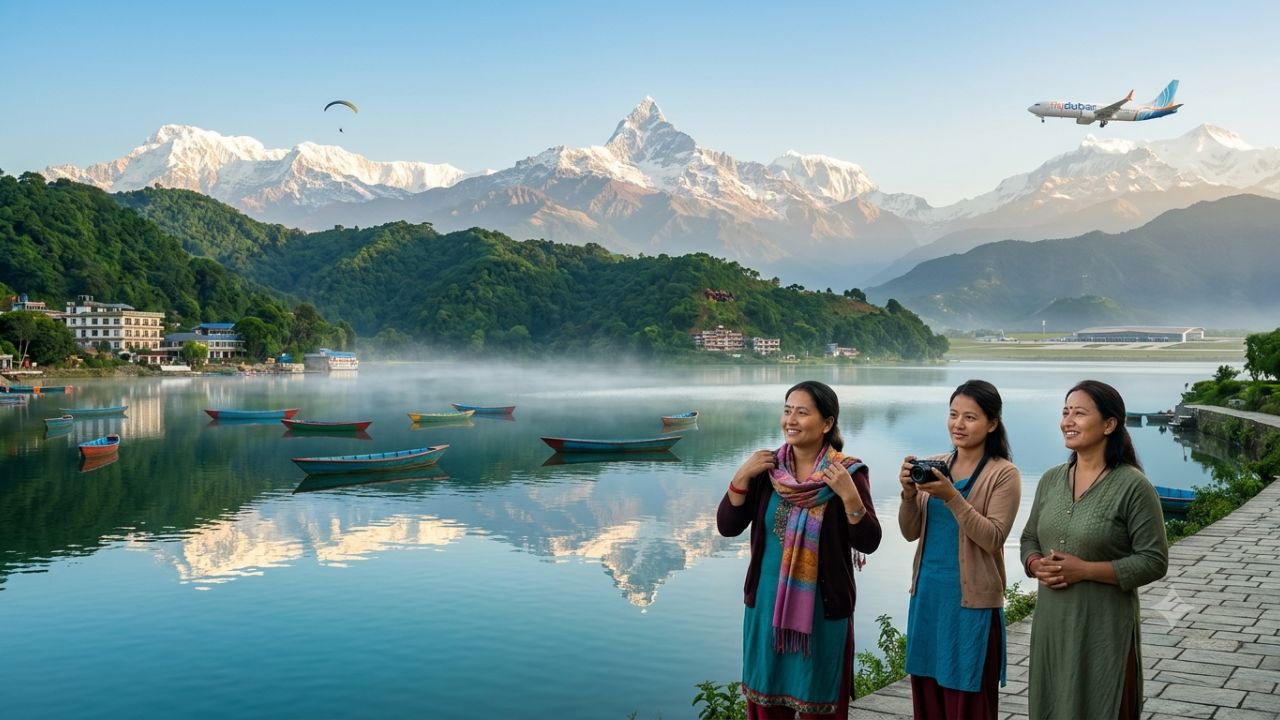
POKHARA, Nepal — Framed by the jagged, snow-capped ramparts of the Annapurna massif and the sacred double summit of Machapuchare, Nepal’s premier resort city of Pokhara stands at a defining crossroads in its modern economic history. Officially designated as Nepal’s "Tourism Capital" on March 17, 2024, the picturesque Himalayan valley has long captivated international mountaineers, Hindu pilgrims, and adventure seekers drawn to its serene lakes and world-class paragliding launches. Yet beneath its scenic grandeur, Pokhara’s hospitality and travel industries are grappling with acute structural headwinds: punishing debt servicing on overbuilt luxury accommodations, chronic highway bottlenecks along the landslide-prone Prithvi Highway, fragile ecological pressures surrounding Phewa Lake, and the complicated geopolitics of establishing sustained international flight operations at its newly constructed NPR 22 billion international airport.
+----------------------------------------------------------------------------------------------------+ | KEY TAKEAWAYS: POKHARA TOURISM INFRASTRUCTURE & ECONOMIC TRANSFORMATION | +----------------------------------------------------------------------------------------------------+ | • Official National Status: Formally declared Nepal's Tourism Capital on March 17, 2024, shifting | | policy focus toward measuring average visitor expenditure, employment, and length of stay. | | • The Mugling Highway Milestone: The eastern section of the Mugling–Pokhara road upgrade reached | | completion in early November 2026, with the western section hitting 86% physical progress. | | • International Aviation Breakthrough: Flydubai inaugurated daily Boeing 737 MAX flights from | | Dubai on September 23, 2026, opening Pokhara's first sustained scheduled long-haul feeder link. | | • Hotel Overcapacity Crisis: Over 1,200 properties offering 40,000+ beds face severe off-season | | occupancy plunges and mounting bank loan obligations, requiring multi-day itinerary pivots. | | • Beyond Lakeside Dispersal: Strategic development expands visitor traffic toward Begnas Lake, | | Rupa Lake, Kaski Kot heritage fortress, and the 51-foot colossal Pumdikot Shiva pilgrimage site. | | • Urgent Ecological Shield: Stricter environmental enforcement targets siltation, urban sewage, | | and commercial encroachment threatening the biological survival of iconic Phewa Lake. | +----------------------------------------------------------------------------------------------------+
====================================================================================================
                        POKHARA STRATEGIC CONNECTIVITY & ACCESS ARTERIES
====================================================================================================

      INTERNATIONAL AVIATION CORRIDOR                       TERRESTRIAL HIGHWAY ARTERY
      (Dubai Mega-Hub / Flydubai)                       (Kathmandu to Pokhara Trunk Road)
                 \                                                   /
                  \                                                 /
                   +-----------------------------------------------+
                                           |
                                [ INBOUND VISITOR STREAMS ]
                                           |
                   +-----------------------+-----------------------+
                   |                                               |
                   v                                               v
    [ POKHARA INTL AIRPORT (PIA) ]                 [ PRITHVI HIGHWAY UPGRADE ]
    • NPR 22B Capital Investment                   • 80 km Mugling–Pokhara Project
    • Opened Jan 1, 2023                           • Eastern Section (41.4 km): COMPLETED
    • Flydubai Daily B737 MAX Direct Link          • Western Section (38.8 km): 86% Done
    • Bypasses Kathmandu Transit Congestion        • Cuts Driving Time from 10+ to 4.5 Hours
                   |                                               |
                   +-----------------------+-----------------------+
                                           |
                                           v
                          [ POKHARA TOURISM CAPITAL HUB ]
                                           |
         +---------------------------------+---------------------------------+
         |                                 |                                 |
         v                                 v                                 v
  [ LAKESIDE COMMERCIAL CORE ]      [ REGIONAL DISPERSAL ]          [ ADVENTURE & TREKKING ]
  • Phewa Lake Boating & Cafes     • Begnas & Rupa Nature Lakes     • Sarangkot Paragliding
  • Tal Barahi Island Temple       • Kaski Kot Medieval Fortress    • Annapurna Circuit Gateway
  • 1,200+ Hotels & Eco-Resorts    • Pumdikot Giant Shiva Shrine    • Seti River Kayaking & Bungee
====================================================================================================
The Tourism Capital Designation: Economic Expectations Versus Commercial Reality
When former Prime Minister Pushpa Kamal Dahal officially proclaimed Pokhara as the tourism capital of Nepal during a grand civic declaration at the Barahi Ghat along Phewa Lake on March 17, 2024, the announcement was met with widespread celebration across Gandaki Province. The title was intended to serve as a national recognition of Pokhara’s singular role in the country’s tourism economy. For more than half a century, the city has functioned as the primary staging ground for the world-renowned Annapurna Circuit and Annapurna Sanctuary trekking routes, a magnet for global backpackers, and a tranquil domestic retreat for urbanites escaping the dust and congestion of the Kathmandu Valley.
However, moving from ceremonial recognition to measurable economic progress has exposed significant operational friction. Tourism leadership across the Gandaki Provincial Government, the Pokhara Chamber of Commerce and Industry (PCCI), and the Nepal Tourism Board (NTB) acknowledge that promotional labels alone cannot pay hotel payrolls or service bank mortgages. A destination’s true tourism vitality is measured through concrete economic indicators: average daily visitor expenditure, length of stay, job creation, and sustainable business profitability.
For decades, Pokhara has operated under a high-volume, low-duration tourism paradigm. The average international visitor spends between 2.2 and 2.8 days in the city, using Lakeside merely as a temporary transit dormitory to sleep before commencing an eight-day mountain trek into the Himalayas or flying back to Kathmandu. Consequently, despite hosting hundreds of thousands of domestic and foreign travelers annually, the local economy captures only a fraction of its potential revenue yield. The core development challenge facing Pokhara today is transforming the valley from a transient mountain trailhead into a self-contained multi-day destination where visitors linger for five to seven days, immersing themselves in regional culture, culinary arts, spiritual wellness, and surrounding rural valleys.
Subterranean Debt and Seasonality: The Hotel Sector’s Operating Cost Crisis
The most acute economic crisis gripping Pokhara’s private tourism sector is the dangerous imbalance between accommodation supply, seasonal demand fluctuations, and aggressive commercial bank financing. Following the end of the global pandemic and the anticipated opening of Pokhara International Airport, local entrepreneurs and institutional investors embarked on an unprecedented hotel building frenzy.
Driven by optimistic forecasts of millions of inbound international tourists, developers poured billions of Nepalese rupees into constructing expansive four- and five-star luxury resorts, boutique heritage properties, and multi-story tourist hotels. Today, the Pokhara valley boasts more than 1,200 registered hotels, lodges, and guesthouses, providing an aggregate bed capacity exceeding 40,000 nightly spaces.
====================================================================================================
                 POKHARA HOSPITALITY SECTOR SEASONAL UTILIZATION CYCLE
====================================================================================================

  OPERATIONAL SEASON            MONTHS ACTIVE          OCCUPANCY RATE     REVENUE STATUS
----------------------------------------------------------------------------------------------------
  Autumn Peak (Festival Season) October - November     75% - 90%          Highly Profitable / Overflows
  Spring Peak (Trekking Season) March - April          65% - 80%          Healthy Operating Margins
  Winter Trough (Off-Peak)      December - February    20% - 35%          Severe Debt-Servicing Losses
  Monsoon Trough (Low Season)   June - August          15% - 25%          Severe Cash Flow Deficits
----------------------------------------------------------------------------------------------------
  STRUCTURAL CHALLENGE: Fixed overhead costs (payroll, commercial bank interest rates at 11-14%,
  electricity tariffs, and building maintenance) continue year-round despite 6 months of low demand.
====================================================================================================
This massive accommodation inventory has outstripped actual visitor demand, sparking brutal price wars among hoteliers competing for guests during off-peak periods. The fundamental structural flaw in Pokhara’s tourism economy is extreme seasonality. The valley experiences two brief golden windows: the autumn peak (October to November), when clear post-monsoon mountain skies align with the major Hindu festivals of Dashain and Tihar, and the spring peak (March to April), when blooming rhododendron forests draw international trekkers. During these four months, hotel occupancy rates soar to 80 or 90 percent, and rooms command premium rates.
However, during the freezing winter months (December through February) and the torrential monsoon summer (June through August), international arrivals decline sharply. Hotel occupancy routinely collapses below 25 percent across the valley. Yet hoteliers must continue paying permanent staff salaries, maintaining expensive swimming pools and landscaped grounds, and servicing bank construction loans carrying commercial interest rates of 11 to 14 percent.
The Hotel Association Nepal (HAN) Pokhara chapter has sounded the alarm that dozens of small and medium-sized hoteliers are sliding into non-performing loan status, with properties facing foreclosure by commercial banks. Without aggressive destination marketing, corporate conference diversification, and structured off-season wellness packages, expanding hotel capacity will continue to cannibalize local businesses rather than generate sustainable prosperity.
The Prithvi Highway Transformation: Overcoming the Mugling–Pokhara Bottleneck
While air connectivity captures global headlines, overland road transport remains the undisputed economic backbone of Nepalese tourism. More than 80 percent of domestic travelers, budget foreign backpackers, and almost all overland Indian tourists—who represent Pokhara’s largest and most lucrative regional demographic—reach the city by road via the historic Prithvi Highway.
Connecting the federal capital of Kathmandu with Pokhara across 200 kilometers of rugged river valleys, the Prithvi Highway has historically stood as an infamous symbol of infrastructure fragility. Carved along the unstable geological cliffs of the Trishuli and Marsyangdi river basins, the narrow two-lane road has been chronically paralyzed by devastating monsoon landslides, mudflows, and fatal vehicle accidents. In recent years, a massive four-lane road-widening project backed by the Asian Development Bank (ADB)—the Mugling–Pokhara Road Project—turned the corridor into a dusty, unpaved obstacle course, stretching what should be a five-hour drive into an agonizing 10- to 14-hour physical ordeal that deterred thousands of prospective visitors.
====================================================================================================
                 MUGLING–POKHARA HIGHWAY UPGRADE PROGRESS (NOVEMBER 2026)
====================================================================================================

  PROJECT SECTION               CORRIDOR LENGTH        COMPLETION STATUS  OPERATIONAL IMPROVEMENT
----------------------------------------------------------------------------------------------------
  Eastern Section               41.45 Kilometers       100% COMPLETED     Fully paved four-lane divided
  (Aanboo Khaireni to Jamune)                          (Early Nov 2026)   expressway; smooth transit

  Western Section               38.88 Kilometers       86% PHYSICAL       Major asphalt paving active;
  (Jamune to Pokhara Prithvi)                          PROGRESS           Final bridge & drain completion
----------------------------------------------------------------------------------------------------
  TRANSIT IMPACT: Total driving time between Kathmandu and Pokhara projected to drop from
  10 - 14 hours down to approximately 4.5 to 5 hours once final western surfacing concludes.
====================================================================================================
Fortunately, years of construction disruption are finally yielding transformative engineering results. According to official project progress bulletins issued by the Ministry of Physical Infrastructure and Transport, the eastern section of the Mugling–Pokhara road upgrade—spanning 41.45 kilometers from Aanboo Khaireni to Jamune—was officially completed in early November 2026. The new four-lane divided highway features smooth asphalt surfacing, modern concrete median barriers, reinforced drainage culverts, and dedicated climbing lanes designed to prevent slow-moving commercial cargo trucks from choking passenger traffic.
Concurrently, the western section—spanning 38.88 kilometers from Jamune through Dulegaunda and Kotre into the entrance of Pokhara—reached approximately 86 percent physical progress by November 3, 2026. Heavy asphalt paving machines are working continuously on the remaining dual-carriageway segments, with full project completion anticipated within the coming months.
The completion of this highway modernization represents an absolute economic game-changer for Pokhara. Slashing driving times between Kathmandu and Pokhara down to a predictable 4.5 to five hours restores passenger confidence, eliminates catastrophic landslide stranding risks outside the monsoon core, and unlocks spontaneous weekend highway escapes for millions of middle-class Kathmandu residents and Indian cross-border self-drive tourists originating from Uttar Pradesh and Bihar.
Pokhara International Airport: Flydubai’s Direct Link and the Geopolitical Struggle
The aviation crown jewel of western Nepal is Pokhara International Airport (PIA). Constructed by China CAMC Engineering under a concessional loan agreement worth approximately NPR 22 billion ($166 million USD) provided by the Export-Import Bank of China, the airport was officially inaugurated with immense national pride on January 1, 2023. Equipped with a 2,500-meter concrete runway, modern passenger terminal buildings, and Category 4D aircraft handling capabilities, PIA was engineered to liberate western Nepal from its historic dependency on Kathmandu’s congested Tribhuvan International Airport (TIA).
However, during its first three years of operation, the airport languished as an international white elephant. Entangled in complex geopolitical rivalries, PIA struggled to attract scheduled foreign carriers. India, viewing the facility’s Chinese financing and Belt and Road Initiative (BRI) associations with strategic suspicion, refrained from granting reciprocal cross-border air navigation routes and airspace entry clearances over northern Indian territory, while Indian carriers avoided launching scheduled commercial flights into the terminal. Aside from sporadic charter flights carrying athletes, pilgrims, or diplomatic delegations from China and Bhutan, international boarding gates remained locked, leaving the Civil Aviation Authority of Nepal (CAAN) facing heavy operational losses and mounting loan repayment obligations to Beijing.
====================================================================================================
                 POKHARA INTERNATIONAL AIRPORT (PIA) OPERATIONAL MILESTONES
====================================================================================================

  MILESTONE EVENT               CALENDAR DATE          AIRCRAFT / CARRIER OPERATIONAL SIGNIFICANCE
----------------------------------------------------------------------------------------------------
  Official Airport Opening      January 1, 2023        Domestic Fleets    Inaugurated Category 4D facility;
                                                       (Buddha, Yeti Air) Replaced legacy domestic airstrip

  Sichuan Airlines Charter      June 21, 2023          Airbus A319        First historic international
                                                       (Chengdu to PKR)   charter carrying dragon boat teams

  Flydubai Scheduled Service    September 23, 2026     Boeing 737 MAX 8   FIRST DAILY INTERNATIONAL
  (Daily Dubai to Pokhara)                             (DXB to PKR)       COMMERCIAL SCHEDULED ROUTE
----------------------------------------------------------------------------------------------------
  LONG-HAUL FEEDER VALUE: Direct connection to Dubai International Airport (DXB) unlocks
  single-ticket transit for European, British, American, and Gulf-based Nepalese diaspora travelers.
====================================================================================================
A long-awaited commercial breakthrough arrived on September 23, 2026, when Flydubai officially launched daily scheduled commercial operations connecting Dubai International Airport (DXB) directly with Pokhara. Operating modern Boeing 737 MAX 8 aircraft, the daily service represents the first sustained scheduled international air link in Pokhara’s history.
The Flydubai connection delivers profound strategic value. For the hundreds of thousands of Nepalese migrant workers originating from Gandaki Province who labor across the United Arab Emirates, Saudi Arabia, Qatar, and Kuwait, the flight eliminates the expensive, exhausting detour through Kathmandu, allowing workers to land directly in their home valley.
Equally important, Flydubai’s extensive interline and codeshare partnership with Emirates unlocks a seamless global booking channel. Adventure travelers departing London Heathrow, Frankfurt, Paris, or New York can now book a single through-ticket, check their trekking backpacks straight through in Europe or America, make a brief transfer in Dubai, and land directly beneath the Annapurnas without braving Kathmandu’s congested terminal shifts.
Nevertheless, aviation economists emphasize that maintaining this service requires sustained commercial viability. Tourism authorities and hoteliers must partner with Flydubai to design competitive all-inclusive travel packages, promote Pokhara actively across Gulf travel agencies, and resolve restrictive ground-handling tariffs. A single daily international flight cannot service an NPR 22 billion debt; CAAN must actively court scheduled regional carriers from Thailand, Bangladesh, Malaysia, and Sri Lanka to establish Pokhara as a genuine regional aviation crossroads.
Expanding Beyond Lakeside: Begnas, Rupa, and the Rural Himalayan Hinterlands
To achieve a true economic breakthrough, Pokhara must deliberately dismantle its hyper-concentration around the commercial tourist strip of Lakeside and Phewa Lake. While Lakeside offers a lively promenade of cafes, trekking equipment shops, live-music bars, and rooftop lounges, this narrow geographical focus has concentrated traffic congestion, accelerated environmental degradation, and concentrated tourism wealth in the hands of a small urban merchant class.
Regional planners and sustainable tourism advocates are aggressively promoting the geographic diversification of visitor flows across the wider Kaski district. Two underutilized natural gems anchoring this expansion are Begnas Lake and Rupa Lake, located approximately 15 kilometers east of central Pokhara:
- Begnas Lake: Spanning over 3.2 square kilometers, Begnas represents a tranquil, uncommercialized alternative to Phewa Lake. Surrounded by emerald forested hills and traditional Gurung and Magar farming hamlets, Begnas offers serene wooden boat rowing, clean freshwater swimming, and sustainable freshwater fish farming. The lake’s perimeter is home to high-end eco-wellness retreats where international travelers participate in silent meditation, Ayurvedic cleansing, and forest bathing away from urban commercial noise.
- Rupa Lake: Situated in a steep, secluded valley adjacent to Begnas, Rupa Lake remains one of the most ecologically intact wetland ecosystems in the Annapurna foothills. Rich in avian biodiversity, Rupa serves as a sanctuary for migrating waterfowl, making it a premier destination for European birdwatchers and nature photographers. Community-managed aquaculture cooperatives provide visitors with authentic farm-to-table culinary experiences centered around organic freshwater carp and local millet bread.
====================================================================================================
                 POKHARA REGIONAL TOURISM DIVERSIFICATION CIRCUITS
====================================================================================================

      WESTERN CULTURAL RIDGE                            EASTERN WETLAND BASIN
   (Kaski Kot & Sarangkot Ridge)                       (Begnas Lake & Rupa Lake)
                 \                                                   /
                  \                                                 /
                   +-----------------------------------------------+
                                           |
                                [ REGIONAL HERITAGE CORE ]
                                           |
                   +-----------------------+-----------------------+
                   |                                               |
                   v                                               v
    [ PUMDIKOT RELIGIOUS COMPLEX ]                 [ INDIGENOUS GUEST CIRCUITS ]
    • 51-Foot Colossal Shiva Statue                • Gurung Homestays in Dhampus & Sikles
    • Elevated Glass Skybridge Vista               • Traditional Honey Hunting Heritage
    • Panoramic View of Fewa & Annapurna           • Community Agritourism & Organic Tea
====================================================================================================
Cultural and religious tourism provides an equally powerful catalyst for regional dispersal. High on a southern ridge overlooking the valley stands Pumdikot, which has rapidly transformed into one of Nepal’s premier pilgrimage attractions following the consecration of a monumental 51-foot-tall seated statue of Lord Shiva. Surrounded by 108 sacred water spouts, an elevated glass walkway, and panoramic 360-degree viewing platforms showcasing the entire Annapurna range and Phewa Lake below, Pumdikot attracts tens of thousands of devout Hindu pilgrims from India and southern Nepal, generating substantial transport and hospitality revenue for surrounding hillside villages.
To the northwest, the medieval fortress ridge of Kaski Kot—the ancestral seat of the Shah dynasty before their unification of Nepal—offers rich historical exploration combined with ancient stone-paved hiking trails. By linking these regional anchors into structured five-day regional itineraries that combine heritage fortresses, sacred shrines, rural homestays, and tranquil lakes, Pokhara can extend visitor stays while ensuring tourism expenditures flow directly into rural family economies.
Ecological Preservation: Siltation, Urbanization, and the Battle for Phewa Lake
No issue poses a more existential threat to Pokhara’s tourism identity than the environmental degradation of Phewa Lake. As the iconic body of water that mirrors the reflection of Machapuchare and hosts the sacred Tal Barahi island temple, Phewa Lake is the visual soul of the destination. However, decades of rapid, unmanaged urban expansion, commercial encroachment, and agricultural watershed erosion have placed the lake under severe ecological stress.
Environmental limnologists and conservation agencies have documented alarming siltation rates along the lake’s western watershed. During intense monsoon cloudbursts, the Harpan Khola river cascades down denuded agricultural hillsides, carrying hundreds of thousands of metric tons of gravel, silt, and clay directly into the lake basin. Scientific studies indicate that Phewa Lake’s surface area has shrunk from over 10 square kilometers in the mid-twentieth century to less than 4.5 square kilometers today, with water depth diminishing at an alarming rate.
====================================================================================================
                    PHEWA LAKE ECOLOGICAL THREATS & MITIGATION MATRIX
====================================================================================================

  ECOLOGICAL STRESSOR           PRIMARY DRIVER / IMPACT              CONSERVATION INTERVENTION
----------------------------------------------------------------------------------------------------
  Harpan Khola Watershed        Deforestation & Unpaved Roads;       Construction of Upstream Siltation
  Siltation & Soil Erosion      Dumps 175,000+ m³ Silt Annually      Check Dams & Sedimentation Basins

  Urban Sewage Runoff &         Hotels & Residential Encroachment;   Mandatory Sewage Treatment Plants;
  Greywater Discharge           Algal Blooms & Eutrophication        Underground Lakeside Trunk Sewer Lines

  Water Hyacinth Weed           Agricultural Fertilizer Leaching;    Mechanized Harvester Boats &
  Infestations (Jalkumbhi)      Chokes Boating Channels & Oxygen     Community Biomass Composting Programs

  Shoreline Construction        Commercial Building Encroachment;    Supreme Court 65-Meter Setback Rule;
  Encroachment                  Destroys Wetland Bird Breeding Beds  Demolition of Illegal Concrete Structures
====================================================================================================
Compounding the siltation crisis is the uncontrolled discharge of untreated urban wastewater and commercial greywater. Inadequate municipal sewage infrastructure has allowed nitrogen- and phosphorus-rich runoff from Lakeside hotels and residential developments to seep into the water table, triggering massive seasonal outbreaks of invasive water hyacinth weeds (Eichhornia crassipes). These thick green weed carpets choke boating channels, suffocate indigenous fish species, and destroy the mirror-like scenic vistas that tourists travel across the globe to admire.
Preserving Phewa Lake has consequently emerged as a matter of supreme economic survival. Following a landmark ruling by the Supreme Court of Nepal, the federal government and Pokhara Metropolitan City have been legally mandated to enforce a strict 65-meter building setback boundary around the entire perimeter of the lake. Authorities have begun the arduous process of surveying boundary markers, identifying illegal concrete encroachments, and preparing demolition orders for unauthorized commercial buildings erected within the protected wetland buffer.
Upstream along the Harpan Khola, engineers have constructed massive multi-tiered siltation check dams and settling basins to trap river gravel before it enters the lake. Concurrently, municipal authorities have deployed specialized aquatic weed-harvester boats to clear water hyacinth infestations, while installing central sewage interceptor pipes along the Lakeside boulevard. Tourism leaders recognize that if Phewa Lake degenerates into a stagnant, silted wetland, Pokhara's international brand will suffer irreparable damage.
Safety Standards and Professionalism: Modernizing Adventure Tourism Governance
As Pokhara expands its profile as the adventure sports capital of South Asia, establishing and enforcing professional safety standards is essential to safeguarding international visitor confidence. The valley has gained global fame for aerial and aquatic adventures, hosting dozens of licensed commercial paragliding operators launching from Sarangkot, ultralight aviation flights operating out of the old domestic airport, bungee jumping towers in Hemja, high-velocity zip-lines descending from high mountain ridges, and white-water kayaking along the Class III and IV rapids of the Seti River.
However, the rapid proliferation of adventure operators has occasionally exposed regulatory vulnerabilities. Unregulated airspace congestion over Sarangkot, inconsistent maintenance of paragliding harnesses and reserve parachutes, and unlicensed tandem pilots operating during volatile midday thermal wind conditions have resulted in occasional fatal accidents that triggered temporary flight suspensions by CAAN.
====================================================================================================
                 ADVENTURE TOURISM SAFETY & GOVERNANCE FRAMEWORK
====================================================================================================

  ADVENTURE DISCIPLINE          REGULATORY OVERSIGHT AGENCY          MANDATORY SAFETY STANDARDS
----------------------------------------------------------------------------------------------------
  Commercial Tandem             Civil Aviation Authority of Nepal    Bi-Annual Pilot Recertification;
  Paragliding (Sarangkot)       (CAAN) & Nepal Airsports Assoc.      Mandatory Reserve Parachute Repacking

  Ultralight & Gyrocopter       Flight Operations Directorate,       Strict Weather Minimums (VFR Rules);
  Mountain Sightseeing          Civil Aviation Authority of Nepal    Automated Aircraft Tracking Transponders

  Seti River Kayaking &         Nepal Association of Rafting         Swiftwater Rescue Certified Guides;
  White-Water Rafting           Agencies (NARA)                      Mandatory Type-V PFD Lifejackets

  Commercial Bungee &           Ministry of Tourism & Civil          Rigorous Structural Engineering Audits;
  High-Velocity Zip-Lining      Aviation Inspection Bureau           Redundant Steel Cable Braking Systems
====================================================================================================
To protect its international reputation, the Nepal Airsports Association (NAA), in close coordination with CAAN, has instituted aggressive regulatory modernizations. Commercial tandem pilots are now subjected to mandatory bi-annual flight competency evaluations, strict pre-flight drug and alcohol screenings, and digitized pilot logbook audits. Airspace over Pokhara has been divided into strict segregated flight corridors, separating commercial paragliders from ultralight aircraft and incoming passenger jets landing at Pokhara International Airport.
In addition, adventure operators are now required to maintain comprehensive, third-party liability insurance policies that provide adequate medical evacuation and hospitalization coverage for international passengers. By elevating technical training, standardizing transparent equipment inspections, and maintaining zero tolerance for cowboy operators, Pokhara is successfully reassuring global travelers that world-class adrenaline sports can be enjoyed with uncompromising safety oversight.
Technical Benchmark: Infrastructure Interventions Across Nepal’s Tourism Corridors
To contextualize the scale and transformative impact of Pokhara’s ongoing modernization, the following benchmark examines how Pokhara’s infrastructure and connectivity compare to Nepal’s other major international tourism gateways.
| Tourism Gateway & Hub | Primary Transport Access Route | Core Aviation Infrastructure | Typical Visitor Length of Stay | Primary Economic Bottleneck | Key Infrastructure Milestone Achieved |
|---|---|---|---|---|---|
| Pokhara Valley (Gandaki Province) |
Upgraded Prithvi Highway (Mugling–Pokhara 4-Lane) |
Pokhara Intl Airport (PIA) Category 4D / Flydubai Daily |
2.5 to 3.0 Days (Targeting 5 to 7 Days) |
Hotel overcapacity; Off-season occupancy troughs; High bank debt | Eastern Mugling highway 100% complete; Flydubai daily link active |
| Kathmandu Valley (Federal Capital Hub) |
Tribhuvan Highway / BP Highway (Heavily congested urban corridors) |
Tribhuvan Intl Airport (TIA) Primary National International Hub |
3.0 to 4.0 Days (Cultural & heritage hub) |
Runway slot saturation; Severe flight holding delays; Urban pollution | TIA runway taxiway expansion; New international terminal planning |
| Bhairahawa / Lumbini (Birthplace of Buddha) |
East-West Highway (Mahendra) & Belahiya Cross-Border Corridor |
Gautam Buddha Intl Airport Category 4E / Regional Charters |
1.2 to 1.8 Days (Short cross-border day-trips) |
Underutilized airport; Lack of high-end leisure hotel infrastructure | Operational international airport; Modern cross-border ICP terminal |
| Chitwan National Park (Sauraha Wildlife Hub) |
Narayanghat–Mugling Highway & Bharatpur Domestic Airstrip |
Bharatpur Domestic Airport (Short-runway regional turboprops) |
2.0 to 2.5 Days (Jungle safari focus) |
Highway landslide risks; Limited runway length for larger jet airliners | Narayanghat highway stabilization; Bharatpur runway expansion study |
As the comparative matrix illustrates, Pokhara possesses the most balanced, diverse tourism ecosystem in Nepal. Unlike Lumbini, which suffers from ultra-short pilgrimage transit times, or Chitwan, which is restricted to seasonal wildlife safaris, Pokhara combines high-end urban hospitality, world-class outdoor recreation, rich cultural heritage, and dual access via a modernized four-lane expressway and an international airport. This comprehensive infrastructure foundation positions Pokhara uniquely to lead Nepal's post-pandemic economic resurgence.
Practical Field Guide for Himalayan Voyagers: Routes, Flight Bookings, and Permits
For travelers planning an expedition to Pokhara and the Annapurna mountains, strategic planning will ensure an effortless, enriching, and culturally respectful journey through the valley.
====================================================================================================
                        HIMALAYAN TRAVELER OPERATIONAL CHECKLIST
====================================================================================================

 [ ] Route Selection: Fly direct from Dubai via Flydubai for seamless international transit, or take
     the newly upgraded four-lane Prithvi Highway from Kathmandu for scenic river views.

 [ ] Secure ACAP Trekking Permits: Trekkers entering the Annapurna region must obtain the Annapurna
     Conservation Area Project (ACAP) permit and TIMS card at the Nepal Tourism Board in Damside.

 [ ] Book Morning Adventure Flights: Paragliding and ultralight flights should be scheduled between
     09:00 AM and 11:30 AM when atmospheric thermals are calm and mountain visibility is sharp.

 [ ] Diversify Your Base: Split your holiday between the energetic cafe culture of Lakeside and the
     peaceful, unhurried eco-lodges overlooking Begnas Lake or the Pumdikot ridge.

 [ ] Respect Wetland Conservation: Never dispose of plastics or waste near Phewa or Begnas lakes;
     patronize certified eco-friendly sodas and restaurants that utilize proper water filtration.

 [ ] Off-Season Value Hunting: Visit during the winter (December-January) or green season (May-June)
     to secure 40% to 60% discounts on five-star luxury resorts while enjoying quiet trails.
====================================================================================================
Accessing the Valley: Flight Versus Highway
Travelers arriving from overseas can choose between two modern transport options:
- Direct International Flight: Flying with Flydubai directly into Pokhara International Airport allows travelers to bypass Kathmandu completely, avoiding capital city transit traffic and luggage transfers. Flights operate daily with state-of-the-art Boeing 737 MAX aircraft.
- Overland Tourist Coach / Private Vehicle: With the eastern half of the Mugling–Pokhara highway upgrade fully completed and the western half nearing completion, road travel along the Prithvi Highway has become dramatically smoother and faster. Deluxe tourist coaches equipped with air conditioning, reclining seats, and Wi-Fi depart daily from Sorhakhutte in Kathmandu at 07:00 AM, arriving in Pokhara by early afternoon.
Mandatory Trekking Permits and Documentation
Travelers venturing beyond the Pokhara valley into the Annapurna foothills must secure required government permits before hitting the trail:
- Annapurna Conservation Area Project (ACAP) Permit: Foreign nationals must obtain an ACAP entry permit, which costs NPR 3,000 (approximately $23 USD) per person. SAARC nationals pay a subsidized rate of NPR 1,000.
- Trekkers' Information Management System (TIMS) Card: All foreign trekkers are legally required to carry a TIMS card issued by the Trekking Agencies' Association of Nepal (TAAN). Following national safety regulations enacted in 2023, solo, unaccompanied trekking without a licensed, certified trekking guide is strictly prohibited throughout the Annapurna Conservation Area. Permits can be secured effortlessly at the Nepal Tourism Board office located in the Damside district of Pokhara.
By resolving historical highway bottlenecks, unlocking direct intercontinental flight connections with Dubai, and embracing uncompromising environmental conservation for its sacred lakes, Pokhara is actively laying the foundation for its long-awaited economic breakthrough. As the tourism capital of Nepal balances modern infrastructure with timeless Himalayan heritage, the valley stands ready to welcome the world with renewed confidence, warmth, and enduring Pura Vida spirit under the shadows of the Annapurnas.
Related Travel Guides
This article is for informational purposes. Flight routes, passenger regulations, visa rules, and transit advisories are subject to change by airlines and aviation authorities. Readers are advised to verify schedules and travel documentation with relevant carriers and border agencies before departure.
Related Stories

Saudi Arabia Maintains Ebola Travel Ban on Kenya Despite Africa CDC Plea for Lift

Backroads Reports 20% Surge in Multigenerational Family Adventure Bookings for Winter 2026