
Sweden’s Food Festivals Transform Travel With Authentic Nordic Flavours and Cultural Experiences
Sweden’s Food Festivals Transform Travel With Authentic Nordic Flavours and Cultural Experiences

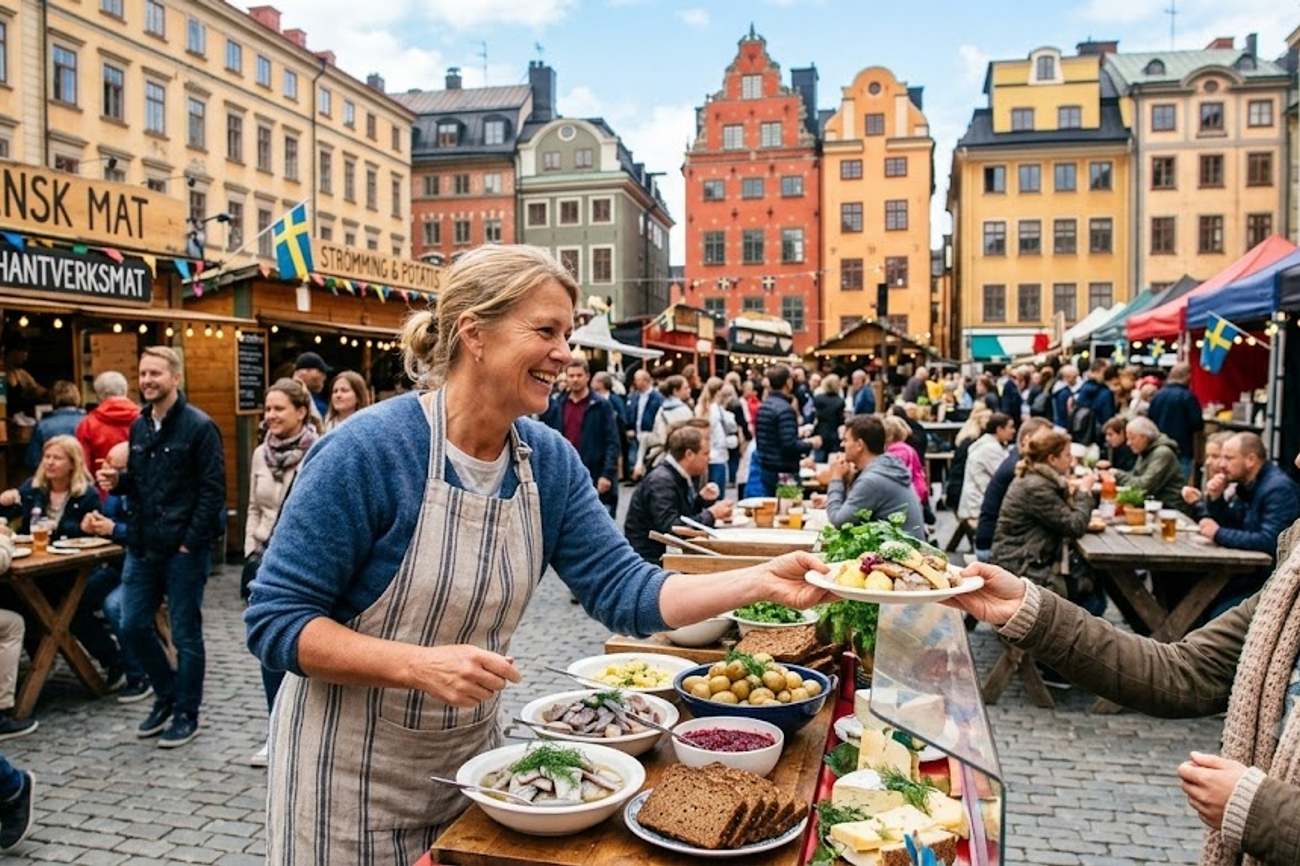
Image generated by AI
Sweden's culinary tourism sector has evolved from a niche interest into a primary driver of regional dispersal, with food festivals now serving as the anchor for travel itineraries in Umeå, Stockholm, and Malmö. While traditional sightseeing once concentrated nearly all international arrivals in the capital, the rise of gastronomy-led travel is shifting the geographic distribution of tourists toward the northern Västerbotten region and the southern Scania province.
The Nordic Gastronomy Pivot in Numbers
The current trajectory of Swedish tourism indicates a systemic move toward "experiential" or "meaningful" travel. This is evidenced by the strategic placement of major culinary events across three distinct geographic poles: the North (Umeå), the Center (Stockholm), and the South (Malmö).
In Umeå, the Taste Festival at Rådhustorget has transitioned from a local gathering to a regional economic driver. By integrating street food vendors, breweries, and regional producers, the event leverages the "Nordic Food" brand—a movement that prioritizes sustainability and seasonal sourcing. This aligns with broader data from the World Tourism Organization (UNWTO), which shows a global increase in demand for sustainable and community-based tourism.
Stockholm remains the primary international gateway, utilizing its food festivals to bridge the gap between high-end Nordic gastronomy and accessible street food. The capital's strategy is to use culinary events as a "hub" that encourages visitors to spend more time in historic districts and waterfront areas, thereby increasing the average length of stay.
Meanwhile, Malmö is positioning itself as the multicultural culinary bridge of Scandinavia. The Malmö International Food Festival utilizes the city's diverse demographic to offer a global palate, creating a competitive advantage for travelers who are combining Swedish visits with trips to Copenhagen. This cross-border synergy is a key metric in Nordic tourism growth, as it allows for "multi-destination" itineraries that increase overall spending per visitor.
Regional Culinary Benchmarks and Market Shifts
The shift in Swedish tourism is not merely about food, but about the redistribution of tourist footfall. Historically, the "Stockholm route" dominated the market. However, the emergence of the Umeå Taste Festival and Malmö's international offerings suggests a diversification of the Swedish tourism product.
The following table illustrates the strategic positioning of these three culinary hubs and how they differentiate their market offerings to attract different traveler profiles.
| Feature | Umeå (Northern Hub) | Stockholm (Capital Hub) | Malmö (Southern Hub) |
|---|---|---|---|
| Primary Value Proposition | Sustainability & Arctic Ingredients | Modern Nordic & Urban Innovation | Multiculturalism & Global Fusion |
| Key Event Focus | Regional Producers & Breweries | Chef-led Concepts & Food Trucks | International Vendors & Diversity |
| Tourist Profile | Nature/Eco-conscious Travelers | Luxury & Culture Seekers | Urban Explorers & EU Cross-border |
| Strategic Goal | Regional Dispersal (Away from Capital) | Increasing Average Stay Duration | Integration with Copenhagen Market |
| Core Experience | Västerbotten Traditions | National Culinary Capital | Global-Swedish Hybridity |
This regional specialization is a response to a wider trend identified by the World Travel & Tourism Council (WTTC), where travelers are increasingly avoiding "over-tourism" in primary capitals in favor of secondary cities that offer authentic cultural immersion.
What This Means for Travelers
For the modern traveler, the data suggests that the most value is found by moving away from the traditional "top 10" landmark lists and instead building itineraries around the culinary calendar.
1. Strategic Timing and Booking: If you are planning a trip to northern Sweden for the Umeå Taste Festival, booking accommodation in the Västerbotten region 3-4 months in advance is now essential. Because these festivals are concentrated in specific areas like Rådhustorget, local hotel capacity reaches a tipping point quickly.
2. Budget Optimization: For those visiting Stockholm, food festivals offer a data-backed way to reduce dining costs. By utilizing street food and culinary festivals, travelers can access high-quality, chef-driven Swedish cuisine at a fraction of the cost of traditional sit-down restaurants in the city center.
3. Itinerary Expansion: The connectivity between Malmö and Copenhagen should be leveraged to maximize travel spend. Travelers should treat Malmö not as a stopover, but as a primary destination. Combining the Malmö International Food Festival with a Copenhagen visit allows for a comprehensive Nordic experience without the need for multiple expensive flights.
4. Verification Protocols: Given that festival dates and ticket requirements are fluid, travelers must rely on official destination tourism platforms rather than third-party blogs. Checking official sites for Rådhustorget events or Stockholm’s culinary calendars is the only way to ensure accuracy regarding opening times and entry fees.
Projections for Swedish Culinary Tourism
Based on current growth patterns, Sweden is likely to see a further "decentralization" of its tourism industry. We can project that the success of the Umeå Taste Festival will lead to the creation of similar "micro-festivals" in other northern municipalities, further pushing international arrivals into the Arctic circle.
Furthermore, the integration of sustainability into food festivals is no longer a marketing gimmick but a core requirement. As IATA continues to track the shift toward greener travel, Swedish festivals will likely implement more rigorous "farm-to-table" certifications to attract the high-spending, eco-conscious demographic.
We expect to see a rise in "culinary corridors"—curated travel routes that link Malmö, Stockholm, and Umeå. These corridors will likely be supported by improved rail connectivity, allowing travelers to experience the transition from the multicultural south to the sustainable north in a single journey.
FAQ: Sweden Food Tourism 2024-2025
Will food festival prices be higher than standard restaurants? Generally, no. Festivals in Stockholm and Malmö are designed to be accessible, offering street food and market-style dining that serves as an affordable alternative to traditional Swedish restaurant pricing.
Is it better to visit Umeå or Stockholm for food? It depends on the goal. For sustainability and authentic Nordic traditions, Umeå is the superior choice. For a mix of global innovation and high-end gastronomy, Stockholm is the primary destination.
Which city is easiest to access for international travelers? Stockholm remains the easiest via direct flights. However, Malmö is highly accessible for those already in Europe due to its direct link to Copenhagen.
Do I need to book tickets for these festivals in advance? While many are open-access, specific workshops or tasting events often require pre-registration. Always verify the current year's requirements on the official festival website.
The shift from sightseeing to tasting is transforming Sweden from a collection of landmarks into a living map of gastronomic experiences.
#SwedenCulinaryGrowth2024 #UmeaTasteFestival #NordicGastronomyTrends #SwedenRegionalTourism #SustainableFoodTravel #MalmoInternationalFoodFestival
Related Travel Guides
Disclaimer
This article is for informational and educational purposes only. It does not constitute legal, financial, or professional advice. While we strive to provide accurate and up-to-date information, travel policies, regulations, and conditions change rapidly. Always verify information with official sources before making travel decisions. Nomad Lawyer makes no representations about the accuracy, reliability, completeness, or suitability of the information provided. Readers should consult qualified professionals for advice specific to their circumstances. The views expressed in this article are those of the author and do not necessarily reflect the views of Nomad Lawyer.
Naina Thakur
Contributor & Travel Specialist
Travel enthusiast and legal writer covering visa regulations, responsible tourism, and cultural journeys across global destinations.
Learn more about our team →