Ocean Living Realities: How Ageing Hulls, Bunker Spikes, and Maritime Insolvency Law Challenge Residential Cruising

WASHINGTON / LONDON / SINGAPORE — The romantic ambition of perpetual residential ocean living has collided with the unforgiving realities of international maritime commerce, exposing systemic fractures in the financing, engineering, and regulatory oversight of extended passenger shipping. Across the global maritime industry, a widening gulf has emerged between conventional mass-market vacation cruising, ultra-luxury residential yachts, and speculative mid-tier residential conversions. While commercial vacation fleets leverage massive economies of scale and institutional fuel hedges, and luxury vessel associations rely on multi-million-dollar resident cash reserves, mid-market continuous-voyage enterprises are succumbing to technical degradation, spot-market bunker fuel shocks, and an absence of statutory consumer insolvency protections.
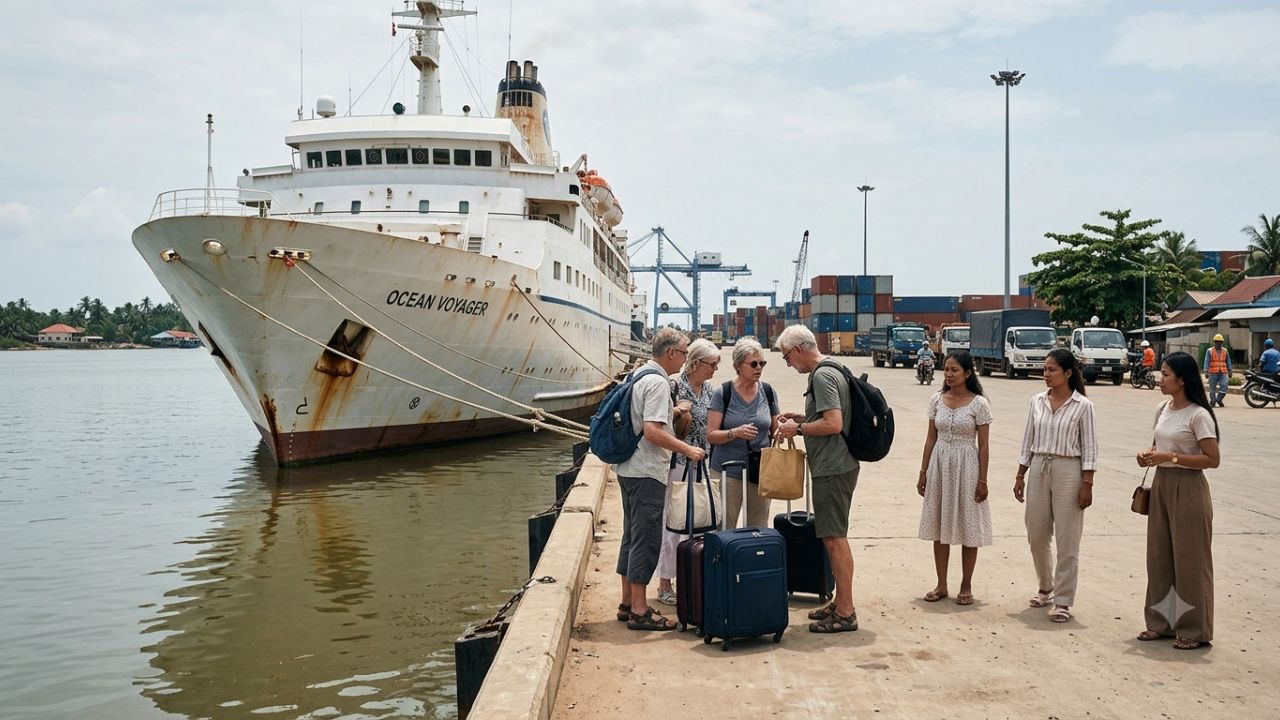
The vulnerability of this emerging lifestyle sector reached a flashpoint on October 27, 2026, when the residential cruise vessel Villa Vie Odyssey abruptly suspended operations while docked in Sihanoukville, Cambodia. Approximately two hundred international residents—many of whom had sold terrestrial homes, liquidated retirement portfolios, and committed their life savings to purchase cabins under multi-year subscription contracts—were given seven hours' notice to pack their belongings and disembark into a foreign port as the thirty-three-year-old vessel entered a warm lay-up. The crisis underscores a critical legal and financial reality: when a residential passenger ship encounters operational insolvency, international admiralty law treats resident homeowners not as protected consumers or property owners, but as unsecured corporate creditors with zero maritime lien against the physical hull.
       TAXONOMY OF COMMERCIAL PASSENGER SHIPPING OPERATING MODELS (2026)
       =================================================================

       [ TRADITIONAL VACATION FLEETS ]
       * Carnival, Royal Caribbean, MSC, Norwegian
       * 1–2 Week Voyage Turnover; 50+ Turnarounds Annually
       * Institutional Fuel Hedging (12–36 Month Derivatives)
       * Statutory FMC 46 CFR Part 540 Performance Bonds / Escrow
       * Systematic Vessel Decommissioning at 20–25 Years
                        |
                        +---> [ ULTRA-LUXURY RESIDENTIAL YACHTS ]
                        |     * MS The World (IMO 9219331)
                        |     * Direct Resident Equity Ownership (Condo HOA)
                        |     * High-Net-Worth Cash Reserves & Special Capital Levies
                        |     * Custom-Built Tonnage Maintained to Bespoke Standards
                        |
                        +---> [ MID-MARKET RESIDENTIAL CONVERSIONS ]
                              * Villa Vie Odyssey, Life at Sea (Defunct)
                              * Secondhand Hulls Exceeding 30 Years in Service
                              * Unhedged Spot Bunker Purchasing (Asian Ports)
                              * Regulatory Vacuum: Contractual Leases, No Escrow
                              * Residents Classified as General Unsecured Creditors
Structural Taxonomy: Vacation Fleets, Luxury Residential Yachts, and Mid-Market Conversions
The commercial passenger shipping sector has diversified into three distinct operating frameworks, each defined by contrasting capital structures, target demographics, and liability exposures:
The Mass-Market Vacation Cruise Fleet
The traditional vacation cruise model is engineered around high-volume passenger turnover, short voyage cycles spanning three to fourteen days, and aggressive monetization of non-ticket onboard spending. Modern mega-vessels carrying 4,000 to 7,000 passengers function as floating resort destinations. By operating fifty or more turnaround cycles annually, operators generate predictable, recurring cash flows. Advanced booking curves allow corporate treasurers to deploy sophisticated financial risk management strategies, locking in institutional credit facilities and securing bunker fuel hedging derivatives twelve to thirty-six months in advance. To avoid escalating steel replacement costs and machinery obsolescence, commercial operators systematically retire, reassign, or scrap passenger vessels once they reach twenty to twenty-five years of service.
The Ultra-Luxury Residential Yacht
At the apex of maritime real estate sits the ultra-luxury residential model, pioneered in 2002 by MS The World (IMO 9219331, flying the flag of the Bahamas). Comprising 165 privately owned residential apartments, the vessel operates under an equity-backed homeowner association structure managed by ROW Management Ltd. Residents on MS The World are ultra-high-net-worth individuals who purchased their apartments outright for millions of dollars and pay substantial annual maintenance dues running into hundreds of thousands of dollars per residence. The vessel maintains significant corporate cash reserves. When geopolitical supply disruptions push marine gasoil prices higher in remote bunkering ports, the governing board can issue special capital assessments or draw down dedicated contingency funds without compromising the ship’s circumnavigation schedule.
The Mid-Market Continuous-Voyage Conversion
The mid-market continuous-voyage segment emerged to capitalize on the growing demographic of remote digital nomads, retirees, and lifestyle wanderers seeking affordable global circumnavigation. Rather than investing hundreds of millions of dollars to commission purpose-built luxury tonnage, promoters in this sector acquire secondhand passenger ships that have reached or exceeded three decades of commercial service. To make ocean living accessible to individuals with middle-class savings, operators offer interior and oceanview cabins under fractional purchase models starting from $100,000 to $300,000, supplemented by monthly maintenance subscription fees ranging between $2,500 and $4,500. However, by attempting to finance the continuous operation of an aging commercial ship solely through fixed monthly subscriptions without substantial capital reserves, operators introduce severe structural vulnerabilities that threaten corporate survival whenever external operating costs spike.
COMPARATIVE OPERATING MODEL & CAPITAL STRUCTURE MATRIX
| Entity / Facility | Delays | Cancellations | Details |
|---|---|---|---|
| Operational Vector | Mass-Market Fleets | Luxury Residential | Mid-Market Conversion |
| Primary Demographic | Vacationers (1–2wk) | Ultra-High-Net-Worth | Retirees, Nomads |
| Revenue Architecture | Ticket + Onboard | Multi-Million Buy | Fractional Buy + Subs |
| Asset Profile | Modern (0–20 yrs) | Bespoke Luxury Hull | Secondhand (30+ yrs) |
| Fuel Strategy | Multi-Year Hedging | Deep Cash Reserves | Unhedged Spot Market |
| Passenger Protection | Statutory FMC/PTR | Asset Equity Deed | Unsecured Contract |
| Average Capacity | 3,000–6,500 pax | 150–300 residents | 200–450 residents |
| Onboard Spend Yield | High (Casino/Bars) | Internalized Dues | Negligible Retail Margin |
Naval Architecture Demographics and the Mechanical Realities of Ageing Hulls
In naval architecture and marine engineering, vessel age serves as the primary determinant of operating expenditure, drydock frequency, and regulatory compliance. Commercial passenger vessels are designed with an economic service life of twenty to twenty-five years. Beyond this threshold, the physical physics of the marine environment—galvanic corrosion, hull stress fatigue, piping deterioration, and auxiliary machinery wear—inflicts an exponential increase in maintenance overhead.
When an ocean liner enters its fourth decade of service, retaining classification society certification requires extensive non-destructive thickness testing of structural steel plating, complete overhauls of sea-chest valves, tail-shaft surveys, and rudder stock inspections. These technical challenges become acute when aging tonnage is committed to perpetual circumnavigation. Conventional cruise ships undergo scheduled seasonal maintenance lay-ups and periodic drydockings where equipment is overhauled. In contrast, continuous residential cruising demands that auxiliary electrical generators, reverse-osmosis desalination evaporators, wastewater treatment plants, and air conditioning chillers operate continuously under full passenger load.
The mechanical challenges inherent in operating legacy tonnage were demonstrated during the multi-month refit of the Villa Vie Odyssey. Originally delivered in 1993 as the Crown Dynasty and later operated as the Braemar by Fred. Olsen Cruise Lines, the vessel had endured extended warm and cold lay-ups during the global pandemic. Upon entering the Harland & Wolff shipyard in Belfast, Northern Ireland, for conversion into a perpetual residential ship, classification surveyors from DNV and safety inspectors from the UK Maritime and Coastguard Agency (MCA) uncovered extensive mechanical deficiencies. Worn rudder stocks, deteriorated greywater drainage piping, defective fire-suppression valves, and structural steel thinning delayed the vessel's maiden world departure by four months, consuming millions of dollars in operating capital before the circumnavigation had even commenced.
ENGINEERING & REGULATORY RECOVERY HURDLES FOR AGING HULLS
| Entity / Facility | Delays | Cancellations | Details |
|---|---|---|---|
| Engineering Domain | Thirty-Year Wear | Operational Hazard | Financial Impact |
| Structural Steel | Plate wastage | Bulkhead failure | Expensive shipyard drydock |
| Propulsion Shafting | Tail-shaft fatigue | Loss of steering | Specialized machining |
| Potable Water Plants | Biofilm & scaling | CDC VSP violations | Mandatory tank lining |
| Sewage Treatment | Biological fouling | Port MARPOL arrest | Fines and denied entry |
| Main Electrical Grid | Switchboard aging | Blackout risk | Custom component fab |
| Auxiliary Generators | Crankshaft wear | HVAC shutdown | Lost hotel load support |
Naval architecture hurdles extend directly into onboard public health engineering. Continuous passenger habitation places severe strain on sanitary systems designed for transient vacationers. During health inspections conducted under the United States Centers for Disease Control and Prevention (CDC) Vessel Sanitation Program (VSP), older residential conversions face recurring inspection failures related to potable water chlorination, galley refrigeration temperature holdovers, and cross-connection contamination between potable water lines and technical cooling loops. Remediating complex marine plumbing systems while hundreds of residents remain living in their cabins requires logistically complex engineering interventions that rapidly exhaust operating margins.
Marine Energy Volatility, Fuel Hedging, and Spot-Market Fragility
Marine fuel represents the single largest and most unpredictable operating cost in commercial shipping. For large commercial cruise conglomerates such as Carnival Corporation, Royal Caribbean Group, and Norwegian Cruise Line Holdings, bunker fuel expenditures are managed through centralized corporate treasury desks. These institutional operators protect operating margins by executing complex over-the-counter financial derivatives, including commodity swaps, call options, and zero-cost collars. By hedging between 40 and 70 percent of their projected fuel consumption twelve to thirty-six months in advance, mainstream lines establish predictable energy expenses, protecting passenger itineraries against sudden geopolitical oil shocks.
In contrast, mid-tier residential cruise ventures operate with near-total exposure to the spot market. Because mid-market residential operators rely on fixed monthly maintenance subscriptions collected from retirees and remote workers, their business models cannot absorb sudden spikes in bunker fuel benchmarks. When geopolitical tensions in the Middle East and Eastern Europe drove global energy benchmarks higher in late 2026, local bunker premiums across Asian bunkering hubs escalated rapidly.
The price of Very Low Sulfur Fuel Oil (VLSFO) and Marine Gasoil (MGO) across bunkering stations in Singapore, Hong Kong, and Southeast Asia rose sharply. For the Villa Vie Odyssey, operating an unhedged thirty-three-year-old diesel propulsion system with lower thermal efficiency than modern dual-fuel engines, monthly bunker outlays escalated by hundreds of thousands of dollars beyond baseline financial projections. Because the operator could not legally or contractually pass sudden $3,000-per-month fuel surcharges onto residents living on fixed retirement pensions, the venture's liquid working capital evaporated.
       BUNKER FUEL PROCUREMENT EXPOSURE AND CASH-FLOW IMPACT
       =====================================================

       [ MAINSTREAM VACATION FLEETS ]
       Forward Commodity Swaps + Options Collars (12–36 Months)
       ===> Stable Fuel Price Baseline: Operating Margins Insulated

       [ ULTRA-LUXURY YACHTS (MS THE WORLD) ]
       Direct Asset Ownership + Unencumbered Treasury Reserves
       ===> Special HOA Capital Levies: Fuel Inflation Instantly Absorbed

       [ MID-MARKET RESIDENTIAL CONVERSIONS ]
       100% Spot-Market Bunker Purchasing + Fixed Monthly Resident Fees
       ===> Sudden Crude Spike ===> Working Capital Exhausted
       ===> Lay-Up in Sihanoukville ===> 7-Hour Disembarkation Crisis
The resulting cash-flow crisis culminated in the October 27, 2026 abandonment in Sihanoukville. Unable to fund upcoming bunkering stems required to transit the Indian Ocean and facing impending maritime port charges, the operator had no choice but to halt the voyage, enter the ship into a warm lay-up, and strand two hundred residents thousands of miles from their home countries. The episode demonstrates that continuous residential cruising cannot survive on optimistic cash-flow projections without balance-sheet resilience and disciplined commodity hedging.
Regulatory Decarbonization: IMO MARPOL Annex VI, EEXI, and the CII Squeeze
Compounding the physical and economic challenges of operating aging tonnage is an evolving web of international maritime environmental regulations. Enforced by the International Maritime Organization (IMO) under Annex VI of the International Convention for the Prevention of Pollution from Ships (MARPOL), global decarbonization rules apply equally to legacy passenger conversions and modern eco-designed newbuilds.
Under MARPOL Annex VI Regulations 23 and 25, commercial passenger vessels of 400 gross tonnage and above must verify compliance with the Energy Efficiency Existing Ship Index (EEXI). The EEXI establishes a technical energy efficiency threshold based on propulsion power, vessel deadweight, and design service speed. Vessels that fail to satisfy baseline EEXI formulas must install permanent Engine Power Limitation (EPL) systems or shaft power limiters that restrict maximum fuel delivery to the main propulsion engines. For thirty-year-old passenger vessels, derating engine output by 15 to 30 percent significantly impairs operational flexibility, reducing maximum cruising speeds and making it difficult to maintain transoceanic schedules or outrun severe tropical weather systems.
IMO MARPOL ANNEX VI REGULATORY COMPLIANCE SQUEEZE
| Entity / Facility | Delays | Cancellations | Details |
|---|---|---|---|
| Regulatory Measure | Statutory Basis | Mechanism & Mandate | Legacy Tonnage Threat |
| EEXI | MARPOL VI Reg 23/25 | Technical engine | Forced Engine Power |
| power limitation | Limitation (EPL) | ||
| CII Rating System | MARPOL VI Reg 28 | Operational carbon | Grade D/E triggers |
| intensity grade A–E | mandatory SEEMP audits | ||
| SEEMP Part III | MARPOL VI Reg 26 | 3-Year Corrective | Escalating compliance |
| Action Plan | costs or port bans | ||
| EU ETS Maritime | Directive 2023/959 | Carbon allowance | Financial surrender for |
| surrender for EU | voyages touching EU | ||
| Shore Power Mandates | FuelEU Maritime | Zero-emission port | Millions required for |
| Regulation 2023 | berthing by 2030 | high-voltage retrofits |
An even more acute operational obstacle is the IMO's operational Carbon Intensity Indicator (CII). Enacted under MARPOL Annex VI Regulation 28, the CII assesses an annual operational efficiency grade (ranging from A to E) based on reported fuel consumption, distance sailed, and gross tonnage. Commercial vessels that record a D rating for three consecutive years or an E rating for a single calendar year are legally classified as non-compliant. Under international maritime law, a non-compliant vessel must submit a revised Ship Energy Efficiency Management Plan (SEEMP Part III) containing an audited, corrective plan of action to regain compliant status.
Older residential passenger vessels face structural disadvantages under the CII framework:
- Early-1990s diesel-mechanical propulsion plants emit substantially higher carbon dioxide emissions per nautical mile than modern dual-fuel liquefied natural gas (LNG) or hybrid battery systems.
- Residential itineraries involve extended port dwell times where auxiliary generators burn marine gasoil to support passenger hotel loads without generating nautical transport work, artificially worsening the vessel's calculated carbon intensity.
- Single-ship residential operators lack the corporate capital required to retrofit selective catalytic reduction systems, air lubrication hulls, or high-voltage shore connection infrastructure.
As international port state control authorities, flag states, and regional regulatory bodies—such as the European Union under its Emissions Trading System (EU ETS Maritime) and FuelEU Maritime regulation—tighten enforcement, low-efficiency residential conversions face escalating carbon taxes, denied port clearances, and accelerated economic obsolescence.
Statutory Consumer Protection, Escrow Deficits, and Maritime Lien Realities
When a commercial vacation cruise line cancels a voyage, passengers are shielded by comprehensive consumer protection legislation. In stark contrast, when a residential cruise venture collapses, residents find themselves trapped in an unregulated legal vacuum, stripped of statutory protections and subordinate to commercial maritime creditors.
STATUTORY CONSUMER SAFEGUARDS VS. RESIDENTIAL VACUUM
| Entity / Facility | Delays | Cancellations | Details |
|---|---|---|---|
| Regulatory Regime | Governing Statute | Mandated Protections | Residential Reality |
| US Federal Maritime | 46 CFR Part 540 | Escrow accounts, | Bypassed by non-US |
| Commission (FMC) | Subpart A | surety bonds (FMC) | embarkations & leases |
| UK Package Travel | PTR 2018 | Full trust bonding, | Excluded as residential |
| Regulations | (SI 2018/634) | emergency rescue | long-term tenancy |
| EU Package Travel | Directive (EU) | Mandatory refund, | Denied coverage due to |
| Directive | 2015/2302 | organizer liability | non-leisure duration |
| Admiralty Lien Order | International | Crew, fuel, banks | Residents rank last as |
| Maritime Law | hold in rem liens | unsecured creditors |
The US Federal Maritime Commission Framework: 46 CFR Part 540
In the United States, commercial passenger vessel operators are regulated by the Federal Maritime Commission (FMC) under Title 46 of the Code of Federal Regulations (46 CFR Part 540 Subpart A), enacted pursuant to 46 U.S.C. Chapter 441. Under 46 CFR § 540.3, no passenger vessel with berth or stateroom accommodations for fifty or more passengers may embark travelers at United States ports without obtaining an official FMC Certificate (Performance).
To secure this certification, operators must demonstrate financial responsibility to cover unearned passenger revenue—defined under 46 CFR § 540.2(i) as all funds collected from passengers for water transportation, port charges, and onboard services prior to the full performance of the voyage. Operators must establish commercial surety bonds (Form FMC-132A), irrevocable letters of credit, corporate guaranties (Form FMC-133A), or dedicated bank escrow agreements conforming to 46 CFR § 540.5. Under an approved escrow structure, customer funds are held by an independent bank trustee and cannot be disbursed to the cruise carrier until the transportation has been completed. If an operator defaults, the trustee refunds passenger funds directly.
However, residential cruise operators deliberately circumvent the FMC consumer protection framework through three regulatory loopholes:
- Foreign Embarkation Ports: FMC statutory jurisdiction applies exclusively to voyages that embark passengers at ports located within the United States or its territories. By staging their maiden voyages from European, Caribbean, or Asian ports (such as Belfast, Freeport, or Singapore), operators operate entirely outside FMC performance bonding mandates.
- Statutory Bonding Caps: Under 46 CFR § 540.9(j), the FMC imposes a statutory maximum financial responsibility cap across a carrier's fleet. While this cap protects short-term vacationers, an aggregate bond of that level cannot begin to secure hundreds of multi-year residential contracts running into tens of millions of dollars.
- Contractual Reclassification: Promoters avoid standard passenger ticket contracts by drafting complex legal instruments labeled as "fractional residential club memberships," "perpetual licenses to occupy," or "subordinated long-term commercial leases." By stripping passenger ticket terminology from the contract, operators argue that their offerings fall outside maritime transportation statutes, eliminating mandatory escrow obligations.
The UK and European Consumer Protection Void
A parallel statutory failure exists across Europe. Under the United Kingdom Package Travel and Linked Travel Arrangements Regulations 2018 (SI 2018/634) and the European Union Package Travel Directive (Directive (EU) 2015/2302), travel organizers must provide robust financial security via trust accounts, insurance policies, or bonding associations (such as ABTA and ATOL) to guarantee passenger refunds and emergency repatriation. However, Regulation 2 explicitly limits these protections to packages sold for leisure travel. Long-term residential leases exceeding several months and involving perpetual housing fall outside the scope of package holiday directives, leaving residents without formal recourse through national consumer protection bodies.
       MARITIME CREDITOR HIERARCHY IN ADMIRALTY VESSEL ARRESTS
       =======================================================

       [ 1. SPECIAL MARITIME LIENS (Absolute Priority) ]
       Court Admiralty Custody Expenses (In Custodia Legis)
       Master and Seafarers' Unpaid Wages & Repatriation Costs
                                   |
                                   v
       [ 2. MARITIME LIENS FOR NECESSARIES (In Rem Claims) ]
       Bunker Fuel Physical Suppliers (Fuel arrest claims)
       Stevedoring, Tug Assistance, Port Authority Berth Dues
                                   |
                                   v
       [ 3. PREFERRED SHIP MORTGAGES ]
       Primary Commercial Banks and Marine Mortgage Lenders
                                   |
                                   v
       [ 4. GENERAL UNSECURED CREDITORS (Zero Maritime Lien) ]
       ===> RESIDENTIAL CABIN BUYERS AND LEASEHOLDERS
       (Hold only unsecured corporate claims; zero recovery at auction)
Admiralty Law and Maritime Liens: Why Residents Stand Last in Line
When a residential cruise ship defaults on its obligations, the legal vulnerability of cabin residents becomes stark. In admiralty jurisdiction, a commercial vessel is treated as a distinct legal entity capable of incurring liabilities and being arrested in rem. When unpaid debts mount, international creditors initiate maritime arrest proceedings through local admiralty courts.
Under international maritime lien conventions, claims against an arrested vessel are satisfied in a strict statutory order of priority:
- Expenses of Custody and Justice: Court marshals, port conservancy fees, and custodial maintenance incurred while the vessel is under arrest (in custodia legis).
- Special Maritime Liens: Master and crew wage claims and repatriation expenses, which hold sacred priority under maritime law.
- Maritime Liens for Necessaries: Claims by bunker fuel suppliers, repair yards, tug operators, and pilotage authorities. In many jurisdictions, physical bunker suppliers hold maritime liens against the vessel itself, permitting them to force the judicial sale of the ship.
- Preferred Ship Mortgages: Registered maritime banks and financial institutions holding first-lien mortgages over the vessel's hull.
- General Unsecured Creditors: Cabin residents and leaseholders hold zero proprietary interest or maritime lien against the physical ship. In the eyes of admiralty courts, residents are merely unsecured corporate creditors of the bankrupt operating shell. When an aging vessel is sold at a judicial auction, the proceeds rarely cover preferred mortgage debt, leaving residential cabin holders with an absolute recovery of zero.
Strategic Reform: Rebuilding Ocean Living on Solid Foundations
The collapse of mid-market residential ventures illustrates that the concept of perpetual ocean living cannot survive on promotional enthusiasm alone. If residential cruising is to establish a credible future without stranding retirees in foreign ports, the sector requires structural regulatory, technical, and corporate reform:
- Mandatory Escrow Protection for All Multi-Year Passenger Capital: International maritime regulators and port state authorities must eliminate the jurisdictional loopholes that allow operators to bypass consumer bonding. Any commercial entity marketing extended residential sea voyages—regardless of embarkation port or contractual framing—must be legally required to deposit all unearned subscription capital into independently managed bank escrow accounts. These funds must remain protected from general operating overhead until services are delivered.
- Stricter Technical Class Standards and Mandatory Capital Reserves: Classification societies (such as DNV, Lloyd’s Register, and Bureau Veritas) and port state control regimes (Paris MoU and Tokyo MoU) must establish enhanced survey protocols for vessels exceeding thirty years of age deployed in perpetual service. Operating permits for continuous circumnavigations should be contingent on verified drydock maintenance schedules and designated capital reserve funds specifically allocated for major mechanical repairs.
- Adoption of Equity-Backed Homeowner Association Governance: The sustained operational success of MS The World confirms that long-term ocean living functions best when residents hold direct equity ownership in the underlying physical asset. Future residential ventures must discard speculative lease models, structuring ownership through resident-controlled corporate holding entities where capital assessments and operational spending are fully transparent.
Until mandatory escrow structures, rigorous engineering oversight, and direct asset equity become universal industry standards, mid-market residential cruising will remain an extraordinarily risky venture, where the dream of ocean living can be abruptly terminated by volatile energy markets and the cold arithmetic of admiralty law.
Related Travel Guides
- Carnival Freedom Expands Western Mediterranean Itinerary with Malta as Barcelona Redevelops Terminals
- Amtrak Expands Thanksgiving Train Services Nationwide as Record Holiday Rail Demand Surges
- France Rail Strike Grips Paris Terminals and Shuts Regional Train Networks Ahead of Peak Autumn Travel
- Prague Emerges as Europe's Top Solo Travel Hub as Kraków and Istanbul Expand Budget Transit
- Venice Simplon-Orient-Express Expands Luxury Rail Network with Historic Paris to Monaco Route for 2027
This article is for informational purposes. Flight routes, passenger regulations, visa rules, and transit advisories are subject to change by airlines and aviation authorities. Readers are advised to verify schedules and travel documentation with relevant carriers and border agencies before departure.
Related Stories
Texas Cruise Market Shift: Why 76 Percent of Travellers Choose Human Advisors Over Digital Booking Engines
Dominican Republic Opens Port Samaná as Caribbean Nations Invest Billions in Cruise Ports and Homeports