
China Travel Rules 2026 Tighten Global Mobility With New Exit Bans, Tech Controls and Passport Restrictions
China Travel Rules 2026 Tighten Global Mobility With New Exit Bans, Tech Controls and Passport Restrictions

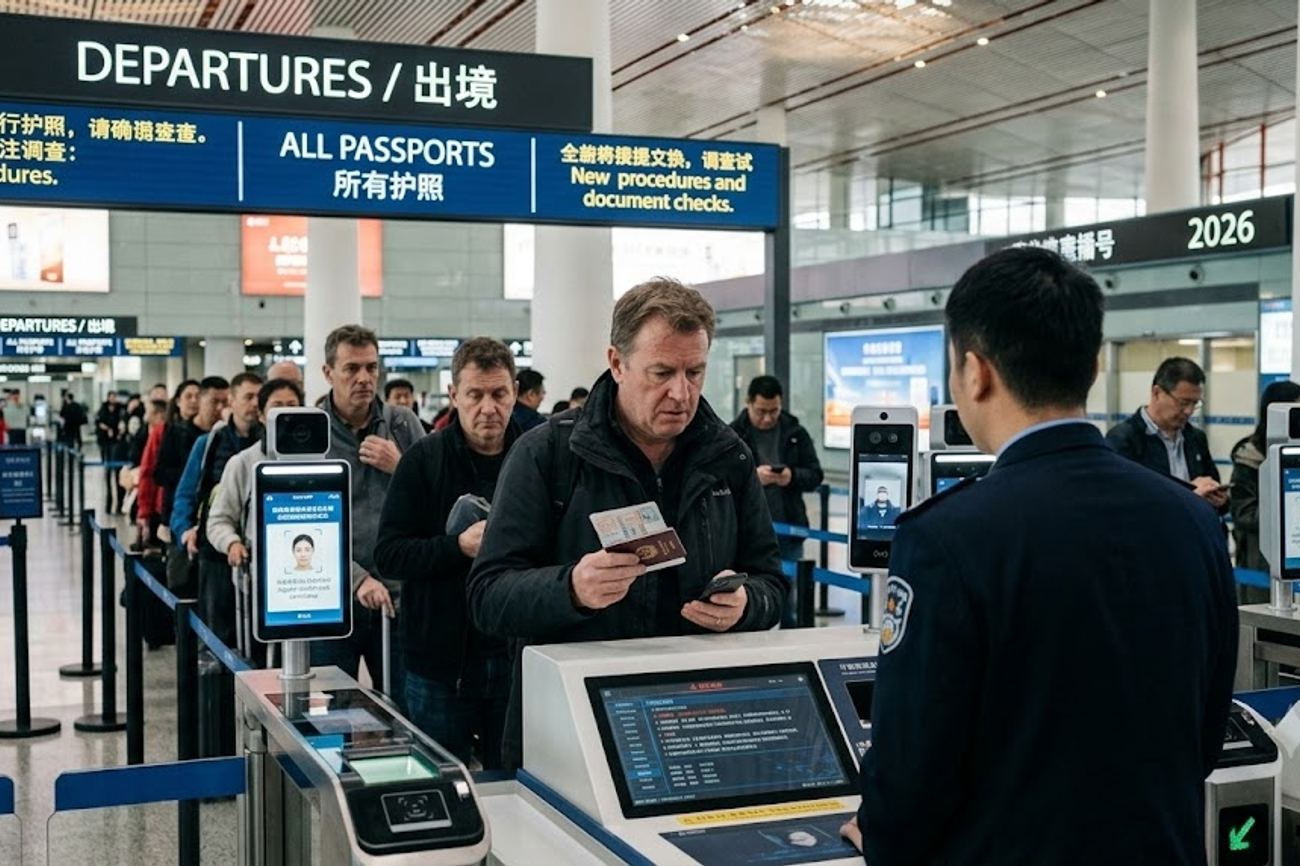
Image generated by AI
[Beijing, September 15, 2026] — Chinese authorities have implemented a restrictive new border control framework that grants the government broad powers to ban citizens from leaving the country for up to three years. The regulations, which take effect today, link international mobility directly to national security, industrial stability, and the protection of sensitive technology.
The updated entry and exit mandates empower border officials to restrict the movement of Chinese nationals if their overseas conduct is deemed detrimental to China's sovereignty, development, or national interests. These measures represent the most significant overhaul of China's travel controls in recent years, transitioning previous administrative practices into a formalized national legal structure. The Ministry of Foreign Affairs of the People's Republic of China and border security agencies will now oversee a system that integrates technology export compliance with individual travel eligibility.
National Security and Technology Protection Triggers
The immediate catalyst for these regulations is the escalating global competition over strategic industries. The Chinese government is explicitly linking the ability to travel abroad with the protection of "industrial security," specifically targeting the leakage of sensitive data and intellectual property.
Under the new rules, individuals involved in the unauthorized export of technology—particularly in fields such as artificial intelligence, semiconductors, and advanced manufacturing—face immediate restrictions on their ability to depart the country. This move aligns with a broader trend of tightening controls on the movement of human capital within high-tech sectors to prevent the transfer of strategic knowledge to foreign entities.
Additionally, border authorities are now formally tasked with issuing "high-risk" warnings to departing citizens. These warnings serve as official government advisories against visiting specific overseas destinations that the state considers dangerous or contrary to national interests, adding a layer of state surveillance to outbound tourism and business travel.
Impacted Travelers and Sectors
The new framework does not apply uniformly but targets specific profiles of travelers and professional classes. The following groups face the highest risk of scrutiny and restriction:
| Affected Group | Primary Trigger for Restriction | Potential Penalty |
|---|---|---|
| Tech Professionals | Violations of technology import/export laws | Indefinite departure restrictions |
| National Security Risks | Overseas activities harming state interests | Exit bans from 6 months to 3 years |
| Foreign Nationals | Submission of fraudulent visa information | Entry bans from 1 to 5 years |
| State Employees | Handling of sensitive state information | Mandatory passport surrender/approval |
| Legal Defendants | Active administrative or civil court cases | Restricted overseas travel |
Beyond individuals, the regulations create a ripple effect for global organizations. Multi-country corporations, international universities, and research institutions relying on Chinese specialists may find their talent pipelines disrupted. Academic partnerships and international conferences are expected to see a decline in participation from Chinese researchers in sensitive STEM fields due to the risk of sudden exit bans.
What This Means for Travelers
For the average traveler, these regulations introduce a high degree of unpredictability. The most critical impact is the "blind" nature of the exit ban: many Chinese citizens may not know they are restricted until they reach the airport boarding gate or a border checkpoint.
For Chinese Nationals: Travelers should expect increased scrutiny of their professional backgrounds and destination choices. Those working in "sensitive" industries (AI, semiconductors, biotech) must now treat international business trips as high-risk activities that could lead to a multi-year ban if their overseas interactions are flagged by state security.
For International Businesses: Companies employing Chinese nationals in technical roles should update their compliance protocols. There is now a tangible risk that a key engineer or executive may be unable to leave China for a scheduled overseas assignment, potentially jeopardizing project timelines and international contracts.
For the Global Tourism Industry: Airlines, luxury hotels, and destination marketing organizations—particularly in regions heavily dependent on Chinese spending—must prepare for volatility in booking patterns. If the government increases "high-risk" warnings for specific countries, those destinations could see an immediate drop in arrivals.
Expansion of State Surveillance and Legal Trends
These regulations formalize a trend that has been accelerating within the Chinese judicial system. Data from the Supreme People's Court of the People's Republic of China indicates a massive surge in the use of exit bans as a legal tool.
Research provided by Safeguard Defenders reveals a staggering increase in recorded exit-ban references. In 2016, Supreme Court records showed only 89 such instances. By contrast, recent reports indicate 188,760 recorded cases. The share of civil verdicts involving exit bans has climbed from approximately 0.23% in 2019 to roughly 7.3% today.
While the government claims these measures are designed to eliminate fraudulent activity and streamline border management, international observers note a lack of transparency. Many affected individuals report a total absence of clear explanations or legal recourse when their travel is blocked.
Future Outlook and Compliance Challenges
The integration of border control with industrial security suggests that travel is now being used as a tool of economic statecraft. As the World Trade Organization (WTO) continues to monitor global trade barriers, the restriction of human mobility for "industrial security" may become a new point of contention in international trade disputes.
In the coming months, international firms are expected to implement more rigorous "mobility audits" for their Chinese staff to ensure that business travel does not inadvertently trigger a national security flag. We expect to see a rise in the use of virtual collaboration tools as a hedge against the risk of physical travel bans.
FAQ: China Travel Controls 2026
How long can a Chinese citizen be banned from leaving the country? Depending on the severity of the perceived threat to national security or industrial interests, exit bans can range from six months up to three years.
Who is most likely to be affected by these new rules? Professionals in advanced technology, AI, semiconductors, and manufacturing, as well as government employees and those involved in sensitive state-linked research.
Can foreign nationals be impacted by these regulations? Yes. Foreigners who provide false information on visa applications can face entry bans ranging from one to five years.
How will I know if I have an exit ban? Currently, there is limited transparency. Many travelers only discover they are banned upon attempting to clear border control or applying for travel documents.
Global mobility is now a matter of national security.
#ChinaTravel2026 #ExitBans #TechExportControl #BeijingBorderPolicy #IndustrialSecurity #ChinaBusinessTravel
Related Travel Guides
Disclaimer
This article is for informational and educational purposes only. It does not constitute legal, financial, or professional advice. While we strive to provide accurate and up-to-date information, travel policies, regulations, and conditions change rapidly. Always verify information with official sources before making travel decisions. Nomad Lawyer makes no representations about the accuracy, reliability, completeness, or suitability of the information provided. Readers should consult qualified professionals for advice specific to their circumstances. The views expressed in this article are those of the author and do not necessarily reflect the views of Nomad Lawyer.
Naina Thakur
Contributor & Travel Specialist
Travel enthusiast and legal writer covering visa regulations, responsible tourism, and cultural journeys across global destinations.
Learn more about our team →