Amtrak Expands Thanksgiving Train Services Nationwide as Record Holiday Rail Demand Surges in 2026

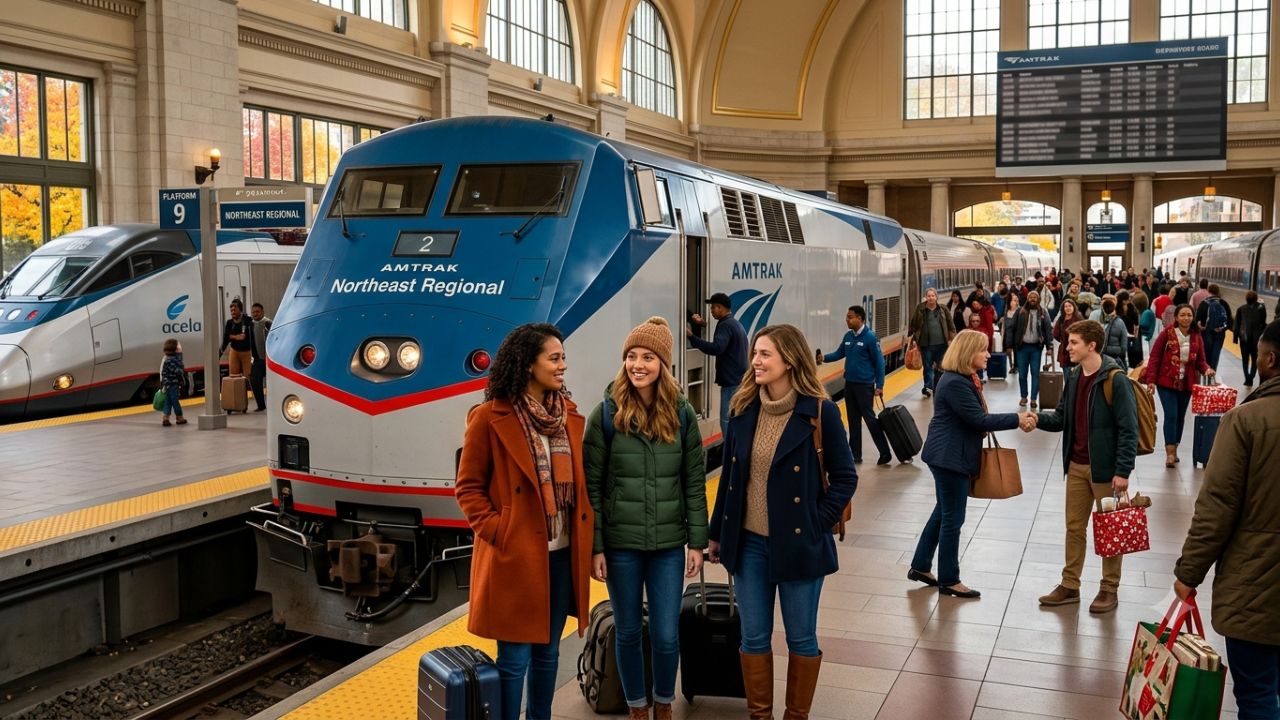
WASHINGTON — National passenger rail operator Amtrak has enacted an aggressive nationwide operational expansion for the Thanksgiving 2026 holiday travel window, deploying lengthened train formations, supplemental Northeast Corridor frequencies, and its newest rolling stock to capture surging intercity demand. As millions of American families, university students, and independent holidaymakers prepare for the peak autumn travel period, the carrier is positioning intercity passenger rail as the premier alternative to highway traffic jams and congested commercial airport terminals. Following a historic milestone in 2025—when Amtrak carried more than 1.2 million passenger journeys during Thanksgiving week, marking a 6 percent year-on-year increase—the railway operator has reinforced its network to accommodate an unprecedented volume of holiday travelers between November 20 and November 30, 2026.
The 2026 Thanksgiving mobilization marks a decisive operational phase in Amtrak’s long-term fleet modernization strategy. In addition to adding passenger carriages to high-density Northeast Regional services and introducing dedicated holiday return trains between Washington Union Station and New York Penn Station, Amtrak has expanded revenue passenger service for its brand-new train fleets. Fifteen NextGen Acela high-speed trainsets are now in scheduled service along the Northeast Corridor, while the newly introduced Amtrak Airo fleet has commenced daily operations on the Pacific Northwest’s scenic Cascades route. By combining expanded seat capacity with upgraded onboard passenger amenities, Amtrak is challenging the traditional dominance of commercial aviation and automobile travel during America's most demanding travel week.
       AMTRAK NATIONWIDE THANKSGIVING CAPACITY EXPANSION ARCHITECTURE (2026)
       =====================================================================

                                [ NORTHEAST CORRIDOR ]
                   Boston (BOS) <===> New York (NYP) <===> Washington (WAS)
                                          |
                +-------------------------+-------------------------+
                |                                                   |
       [ NEXTGEN ACELA ]                                  [ NORTHEAST REGIONAL ]
       (15 Trainsets in Service)                          (Lengthened Consists)
       160 mph Active Tilt Operations                     Extra Passenger Coaches
       Premium First & Business Class                     2 Extra WAS-NYP Round Trips
                |                                         (Nov 24–25 & Nov 28–29)
                |                                                   |
                +-------------------------+-------------------------+
                                          |
                        +-----------------+-----------------+
                        |                                   |
             [ PACIFIC NORTHWEST ]                 [ STATE-SUPPORTED FEEDERS ]
             (Amtrak Cascades Corridor)            (Keystone, Empire, Midwest)
             New Siemens Airo Fleet                High-Density Student Travel
             4 Daily Scheduled Rotations           Connections to Major Hubs
             Eugene - Portland - Seattle           Downtown Station Accessibility
                        |                                   |
                        +-----------------+-----------------+
                                          |
                             [ NATIONAL LONG-DISTANCE ]
                             (15 Transcontinental Routes)
                             Viewliner & Superliner Sleepers
                             Zero Baggage Surcharges (2 Free)
Northeast Corridor Capacity Strategy: Lengthened Consists and Added Frequencies
The Northeast Corridor (NEC), stretching 457 miles from Boston South Station through New York Penn Station to Washington Union Station, forms the financial backbone and operational epicenter of passenger rail in the United States. During Thanksgiving week, the corridor experiences intense demand as dense metropolitan populations, suburban commuters, and college students move across the Mid-Atlantic and New England states. To absorb this demand, Amtrak has implemented a dual-action capacity plan focusing on rolling-stock consist lengthening and supplementary train frequencies.
Between November 20 and November 30, 2026, Amtrak operations managers have scheduled additional Amfleet passenger coaches onto selected high-demand Northeast Regional departures. Standard weekday train formations, which typically run with seven or eight passenger cars, are being extended to nine and ten coaches on peak travel days. This selective car-lengthening strategy adds several hundred available seats to each train departure without requiring additional operational crews, locomotive power units, or scarce rail corridor slots through congested bottlenecks such as the North River Tunnels under the Hudson River.
To provide schedule flexibility during the heaviest travel crush, Amtrak is operating two additional Northeast Regional return services between Washington Union Station and New York Penn Station. These supplementary round-trip trains are scheduled for Tuesday, November 24, and Wednesday, November 25—the two peak pre-holiday departure days—as well as Saturday, November 28, and Sunday, November 29, when millions of holidaymakers make their return journeys.
These supplementary services serve key intermediate stations along the southern NEC, including New Carrollton, BWI Thurgood Marshall Airport Rail Station, Baltimore Penn Station, Wilmington, Philadelphia 30th Street Station, Trenton Transit Center, Metropark, and Newark Penn Station. By scheduling these departures during midday and late-afternoon travel windows, Amtrak relieves congestion on regular hourly departures and ensures suburban passengers have reliable regional connectivity without depending on Interstate 95.
NORTHEAST CORRIDOR HOLIDAY CAPACITY ENHANCEMENT MATRIX
| Entity / Facility | Delays | Cancellations | Details |
|---|---|---|---|
| Route / Service | Normal Operating Consist | Holiday Enhancement | Operating Dates |
| Northeast Regional | 7–8 Amfleet Coaches | Lengthened to 9–10 | Nov 20 – Nov 30, 2026 |
| Supplemental WAS-NYP | None (Base schedule) | 2 Added Round Trips | Nov 24–25 & Nov 28–29 |
| NextGen Acela High-Speed | Legacy Acela Sets | 15 New Trainsets | Daily Revenue Service |
| Keystone Service | 4–5 Push-Pull Cars | Lengthened Consists | Peak holiday weekends |
| Springfield Shuttles | 3–4 Rail Coaches | Added coach capacity | Regional connections |
Amtrak’s operational deployment also reflects heavy investment in passenger management at major terminals. At New York Penn Station and the adjacent Moynihan Train Hall, dedicated customer service ambassadors and ticketing staff have been deployed to coordinate passenger flow through the spacious concourse. Advance boarding queues for regional and high-speed services are being organized to minimize platform crowding, while digital departure boards provide real-time platform track announcements to streamline train boarding.
The operational scaling of the Northeast Corridor during Thanksgiving also occurs against the backdrop of historic federal capital investments authorized under the Bipartisan Infrastructure Law. Major construction work programs—including the multi-billion-dollar Gateway Program constructing new dual-track tunnels beneath the Hudson River, the replacement of the century-old Portal Bridge with the new high-level Portal North Bridge over New Jersey's Hackensack River, and the replacement of the historic Baltimore and Potomac Tunnel with the modern Frederick Douglass Tunnel in Maryland—are progressing alongside active passenger operations. By coordinating track outages and scheduling maintenance windows strictly during overnight hours outside peak daytime passenger movements, Amtrak dispatchers in Wilmington, Delaware, ensure that vital capital expansion works do not compromise holiday timetable reliability.
The NextGen Acela Era: Fifteen High-Speed Trainsets in Revenue Service
Thanksgiving 2026 serves as a major national showcase for Amtrak’s flagship high-speed rail modernization. The carrier has confirmed that 15 NextGen Acela trainsets (Avelia Liberty models manufactured by Alstom at its Hornell, New York production facility) are now in daily commercial revenue service along the Boston–New York–Washington spine. This operational milestone represents the most substantial upgrade to Northeast Corridor premium rail operations in more than two decades, gradually replacing the first-generation Acela equipment that entered service in late 2000.
The NextGen Acela trainsets provide tangible capacity and performance advantages during the high-volume holiday period. Each new trainset features a streamlined, aerodynamic trainset design that accommodates approximately 25 percent more passengers than its predecessor, providing 386 total passenger seats configured across first class and business class cars. This capacity expansion directly relieves holiday booking pressure on premium services, enabling corporate business travelers, remote professionals, and holidaymakers to secure reservations on convenient high-speed departures that historically sold out weeks in advance.
TECHNICAL SPECIFICATIONS: NEXTGEN ACELA VS. LEGACY ACELA
| Feature / Metric | Legacy Acela Fleet | NextGen Acela Fleet | Holiday Advantage |
|---|---|---|---|
| Manufacturer | Bombardier / Alstom | Alstom (Hornell, NY) | Modernized electronics |
| Maximum Design Speed | 150 mph (240 km/h) | 160 mph (260 km/h) | Faster transit segments |
| Passenger Capacity | 304 seats | 386 seats | +27% more seat volume |
| Active Tilt System | Hydraulic Tilt | Advanced Tiltronix | Smoother curve handling |
| Onboard Connectivity | Basic Wi-Fi | High-Speed 5G Wi-Fi | Reliable remote working |
| Power & Device Ports | 120V AC Outlets | 120V AC, USB-A & C | Universal device charge |
| Food Service | Traditional Café | Contactless Bistro | Faster service flow |
Technically, the NextGen Acela trains are engineered with advanced Tiltronix active tilt technology, allowing the equipment to lean into the sharp curves that characterize the historic track geometry of the NEC between New York and Boston. This enables higher operating speeds through curved territory while maintaining exceptional passenger ride quality. The trainsets are certified to operate at commercial speeds of up to 160 miles per hour on upgraded stretches of track in New Jersey, Delaware, and Rhode Island, shaving travel times between metropolitan centers.
Inside the passenger cabins, the NextGen Acela fleet introduces an elevated standard of travel comfort tailored to modern holiday travelers. Passengers benefit from wide leather seats with adjustable headrests, footrests, and expanded legroom. Every seat is equipped with individual 120V alternating current electrical outlets, USB-A and USB-C charging ports, personal reading lamps, and integrated winged headrests for privacy. High-speed 5G-enabled Wi-Fi connectivity allows passengers to stream entertainment or complete work uninterrupted throughout the journey.
The onboard café car has been redesigned into a modern bistro-style environment, offering touchless digital ordering displays, artisan coffee roasts, locally sourced craft beers, and seasonal gourmet snacks. For First Class ticket holders, chef-designed multi-course meals paired with fine wines are served directly at passenger seats, while complimentary access to Amtrak Metropolitan Lounges in Washington, Philadelphia, New York, and Boston provides quiet retreat spaces during terminal rush hours.
Pacific Northwest Fleet Evolution: The Amtrak Airo Transformation
While the Northeast Corridor receives the NextGen Acela, passenger rail operations in the western United States are experiencing their own generational upgrade. In the Pacific Northwest, Amtrak Cascades—operated in joint partnership with the Washington State Department of Transportation (WSDOT) and the Oregon Department of Transportation (ODOT)—has deployed the brand-new Amtrak Airo train fleet into daily scheduled passenger service.
Four daily scheduled Cascades departures between Eugene, Oregon, Portland, Seattle King Street Station, and Vancouver, British Columbia, are now operated using the state-of-the-art Airo trainsets. Manufactured by Siemens Mobility at its solar-powered facility in Sacramento, California, the Airo fleet represents the vanguard of a massive nationwide rolling-stock procurement program that will eventually replace aging Amfleet I and Horizon passenger cars across state-supported routes nationwide.
AMTRAK AIRO FLEET SPECIFICATIONS: CASCADES SERVICE 2026
| Entity / Route | Metrics | Operational Status |
|---|---|---|
| Design Specification | Operational Parameter | Passenger Experience |
| Propulsion System | Dual-Powered Diesel / Battery-Electric | Lower carbon emissions |
| Top Operating Speed | 125 mph (201 km/h) | Faster regional run |
| Window Configuration | Panoramic Wide-Format Viewports | Scenic sightlines |
| Seating Architecture | Ergonomic Cushioning with Lumbar Support | Long-distance comfort |
| Accessibility (ADA) | Level-Boarding Retractable Ramps | Rapid wheelchair access |
| Food & Beverage | Northwest Artisan Café / Regional Beers | Authentic local flavors |
For Thanksgiving travelers moving throughout the Pacific Northwest corridor, the Airo trainsets deliver an exceptional travel experience along one of North America’s most picturesque rail alignments. The coaches feature panoramic windows designed to optimize views of Puget Sound, Mount Rainier, and the Columbia River Gorge. Interior cabins incorporate modern acoustic dampening materials, substantially lowering ambient wheel-rail noise and providing a peaceful environment for family travel.
The Airo trainsets also establish new benchmarks for accessibility and environmental efficiency under the Americans with Disabilities Act (ADA). The cars incorporate spacious, accessible restrooms, tactile directional signage with Braille lettering, audio-visual destination alert displays, and automated level-boarding boarding bridges that deploy at station platforms to enable wheelchair users to board seamlessly without manual conductor lifts. Dual-power propulsion technology reduces particulate and greenhouse gas emissions, aligning with regional decarbonization goals across Washington and Oregon.
The success of the Airo deployment on the Cascades route provides a blueprint for upcoming service rollouts. Over the coming years, identical Airo trainsets will enter service on major regional routes throughout the Midwest, New York State (Empire Service), Pennsylvania (Keystone Service), and New England (Downeaster), standardizing modern rail comfort across North America.
Multimodal Economics: Rail vs. Aviation vs. Highway Travel
The annual Thanksgiving holiday consistently exposes the structural vulnerabilities of American transport infrastructure. Long-distance highways become choked with millions of personal automobiles, while commercial airports struggle with crowded security checkpoints, delayed flight turnarounds, and volatile airfares. In this environment, Amtrak’s value proposition during Thanksgiving 2026 centers on operational reliability, downtown-to-downtown convenience, and overall travel value.
A detailed analysis of travel logistics along the key Northeast Corridor and Mid-Atlantic travel routes illustrates the financial and practical advantages of passenger rail over driving or flying during peak holiday periods:
THANKSGIVING TRAVEL COMPARISON: WASHINGTON UNION TO NEW YORK PENN
| Factor / Metric | Amtrak Rail | Personal Vehicle | Commercial Airline |
|---|---|---|---|
| Center-to-Center Time | 2h 45m – 3h 15m | 4h 30m – 7h 00m | 3h 45m – 5h 00m |
| Travel Predictability | High (Dedicated ROW) | Low (Severe I-95 jam) | Moderate (ATC delays) |
| Baggage Allowance | 2 Carry-on + 2 Pers. | Vehicle Trunk Space | 1 Personal (Fees apply) |
| Extra Luggage Surcharge | $0 (Up to 50 lbs) | $0 | $35–$45 per bag each way |
| Arrival Location | Moynihan / Penn | Manhattan Parking | JFK / LGA / EWR Airport |
| Urban Ground Transfer | $0 (Subway at hub) | $50–$90 Daily Park | $15–$85 Airport Transit |
| Onboard Productivity | 100% (Wi-Fi, desks) | 0% (Driver focus) | Intermittent |
| Booking Flexibility | No change fees | N/A | Basic Economy lockouts |
Consider the transit comparison between Washington, D.C., and New York City during the Wednesday afternoon before Thanksgiving. A passenger driving an automobile along Interstate 95 routinely faces bumper-to-bumper congestion through northern Virginia, Maryland, Delaware, and New Jersey. Travel times that normally average four hours frequently stretch past six or seven hours, accompanied by substantial highway tolls (such as the Delaware Turnpike, New Jersey Turnpike, and Port Authority river crossings) and expensive parking garages in Midtown Manhattan that exceed $70 per day. In addition, major highway rest stops and service plazas along the turnpikes experience severe vehicular queuing for gasoline and food, adding friction to road trips.
Air travel between Washington (Reagan National or Dulles) and New York (LaGuardia or JFK) presents its own friction points. Although the scheduled airborne flight duration is approximately 65 minutes, the complete door-to-door journey consumes nearly four hours when accounting for advance airport arrivals, security screening at Transportation Security Administration (TSA) checkpoints, tarmac delays, and ground transit from outlying airports into Manhattan. In addition, commercial airlines impose strict baggage surcharges, charging $35 to $45 for the first checked suitcase on basic economy tickets. During Thanksgiving week, airport parking facilities at JFK, LaGuardia, and Newark regularly reach 100 percent capacity by Tuesday evening, forcing travelers without advance parking reservations into distant overflow lots or expensive rideshare services.
By contrast, an Amtrak Northeast Regional or Acela train carries passengers directly from Washington Union Station to Moynihan Train Hall at New York Penn Station in 2 hours and 45 minutes to 3 hours and 15 minutes. Passengers step off the train directly into Midtown Manhattan, with immediate underground connections to New York City Subway lines A, C, E, 1, 2, and 3, Long Island Rail Road (LIRR), and NJ Transit. Additionally, Amtrak’s generous baggage policy allows every passenger to bring two personal items and two full-sized carry-on bags up to 50 pounds each completely free of charge, saving families and university students significant travel funds. Onboard passengers enjoy continuous productivity with standard 120V electrical outlets at every seat, stable cellular connectivity, and zero restrictions on using electronic devices throughout the entire journey.
       THANKSGIVING HIGHWAY GRIDLOCK VS. DEDICATED RAIL EFFICIENCY (2026)
       ==================================================================

       [ AUTOMOBILE ON I-95 CORRIDOR ]
       Washington D.C. ===> Baltimore ===> Philadelphia ===> New York City
       [4 to 7 Hours: Tolls + Fuel + Bottlenecks + $70/Day Manhattan Parking]
                                         vs.
       [ AMTRAK NORTHEAST CORRIDOR RAIL ]
       Washington Union ===> 30th St Station ===> Moynihan Train Hall
       [2h 45m to 3h 15m: 100% Productive Time + Downtown Arrival + $0 Baggage]
State-Supported Corridors and the National Long-Distance Network
While the Northeast Corridor handles the densest concentration of holiday travelers, Amtrak’s state-supported regional corridors and long-distance national network play a critical role in reuniting families across the American heartland. Funded through state-federal partnerships under Section 209 of the Passenger Rail Investment and Improvement Act (PRIIA), state-supported routes connect major university towns with major metropolitan economic centers.
During Thanksgiving week, high volumes of university students depend on state-supported routes to travel home for holiday celebrations. In the Midwest, the Lincoln Service connecting Chicago and St. Louis, the Wolverine running between Chicago and Detroit/Pontiac, and the Hiawatha linking Chicago and Milwaukee operate at near-capacity passenger loads. Amtrak and state transportation departments coordinate consist lengthening on these routes, utilizing high-capacity Siemens Venture coaches and Horizon cars to meet student travel demand.
In Virginia, state-sponsored Northeast Regional extensions connecting Roanoke, Norfolk, Newport News, and Richmond directly to Washington, New York, and Boston provide direct, transfer-free rail travel for thousands of residents across the Commonwealth. In Pennsylvania, the Keystone Service between Harrisburg and Philadelphia 30th Street Station offers frequent, electrified rail frequencies that feed directly into the Northeast Corridor main line.
AMTRAK STATE-SUPPORTED & LONG-DISTANCE NETWORK METRICS
| Entity / Facility | Delays | Cancellations | Details |
|---|---|---|---|
| Route / Network Spine | Operating Partners | Key Target Markets | Holiday Demand Profile |
| Midwest Hub Services | IDOT, MDOT, WisDOT | Chicago, St. Louis, | High student volume; |
| (Lincoln, Wolverine) | Detroit, Milwaukee | Consists lengthened | |
| Virginia Services | VPRA (Virginia) | Richmond, Norfolk, | High family travel; |
| (Roanoke, Norfolk) | Roanoke to D.C./NY | Direct corridor links | |
| Keystone Service | PennDOT (PA) | Harrisburg, Lancaster | Suburban feed into |
| to Philadelphia | 30th Street Station | ||
| National Network | Amtrak National | Chicago to Coast | Superliner sleepers |
| (Empire Builder etc.) | Operation | Transcontinental | Sold out months ahead |
Concurrently, Amtrak’s 15 storied long-distance routes—such as the Empire Builder (Chicago to Seattle/Portland), the California Zephyr (Chicago to San Francisco Bay Area), the Southwest Chief (Chicago to Los Angeles), and the Silver Meteor / Crescent along the East Coast—provide cross-country transportation during Thanksgiving. Private sleeper accommodations, including Viewliner and Superliner roomettes and full bedrooms, typically sell out months in advance of Thanksgiving. These sleeper accommodations include complimentary traditional hot meals in the dining car, dedicated sleeping car attendant service, and access to the panoramic Sightseer Lounge car, transforming holiday travel into a scenic journey across the American landscape.
A notable specialized service experiencing heavy seasonal demand is Amtrak’s non-stop Auto Train, which operates daily between Lorton, Virginia (just south of Washington, D.C.) and Sanford, Florida (near Orlando). The Auto Train allows passengers to transport personal automobiles, SUVs, vans, and motorcycles inside enclosed auto-carrier rail cars while passengers relax in coach seats or private sleeper cabins. For thousands of East Coast families and winter vacationers traveling south for Thanksgiving, the service eliminates more than 850 miles of arduous driving along the congested Interstate 95 corridor through Virginia, North Carolina, South Carolina, and Georgia. By bypassing highway tolls, fuel stops, and overnight roadside motels, travelers arrive in central Florida refreshed and with their personal vehicles ready for local holiday driving.
Strategic Holiday Travel Playbook for Thanksgiving 2026
For passengers planning journeys aboard Amtrak’s expanded network during Thanksgiving 2026, proper preparation and timing make a measurable difference in travel comfort and cost. The following practical strategies help travelers optimize their holiday rail experience:
- Book Early to Secure Competitive Fares: Amtrak utilizes dynamic algorithmic revenue management pricing. Ticket prices rise steadily as seats sell out across individual train departures. Passengers who reserve their tickets weeks in advance obtain the most competitive Coach Value and Flex fares. Additionally, Amtrak’s modern ticketing structure includes zero change fees on standard Value and Flex tickets, allowing travelers to modify their itinerary without punitive penalties if family plans shift.
- Utilize Off-Peak Travel Windows: Passenger crowding peaks on Wednesday afternoon (November 25) and Sunday afternoon/evening (November 29). Travelers with flexible work or academic schedules can secure lower fares and experience less crowded trains by departing early on Tuesday morning, traveling on Thanksgiving Day morning itself (when rail traffic drops sharply and tickets are often priced at bottom-tier rates), or delaying return journeys to Monday, November 30.
- Download and Monitor the Amtrak Mobile App: The official Amtrak smartphone application provides live journey tracking, automated gate and track notifications at major stations, and contact-free electronic QR-code ticket scanning. Travelers can also use the app to track their train’s real-time GPS location, observe station arrival estimates, and manage onboard dining preferences.
- Take Full Advantage of Generous Baggage Rules: Avoid airline baggage fees by bringing your seasonal wardrobe, holiday gifts, and university supplies aboard the train. Each ticketed passenger is permitted two personal items (up to 25 pounds each, such as a backpack or laptop bag) and two carry-on suitcases (up to 50 pounds each, sized up to 28 x 22 x 14 inches). Overhead luggage racks aboard Amfleet, Airo, and Acela coaches readily accommodate standard roller bags, while end-of-car luggage towers hold bulky gear.
- Arrive Prepared at Major Gateway Stations: Arrive at primary urban hubs like Washington Union Station, Philadelphia 30th Street, or New York Moynihan Train Hall at least 45 minutes before scheduled departure (or 60 minutes if checking baggage on long-distance trains). Look for uniformed Amtrak Red Cap customer service personnel; these staff members provide complimentary baggage assistance and escorted early boarding for senior citizens, passengers with disabilities, and families traveling with small children (customary tips are appreciated).
Through strategic operational planning, targeted frequency additions, and the commercial debut of its next-generation rolling stock, Amtrak is demonstrating how modernized passenger rail can rise to the challenge of America’s busiest holiday travel season.
Related Travel Guides
- France Rail Strike Grips Paris Terminals and Shuts Regional Train Networks Ahead of Peak Autumn Travel
- Prague Emerges as Europe's Top Solo Travel Hub as Kraków and Istanbul Expand Budget Transit
- Venice Simplon-Orient-Express Expands Luxury Rail Network with Historic Paris to Monaco Route for 2027
- Angola Expands 102 Visa-Free Access Regimes Alongside New Luanda International Airport Hub
- UK Strengthens Aviation Alliances with Oman as Sultanate Targets 10 Percent Tourism Expansion
This article is for informational purposes. Flight routes, passenger regulations, visa rules, and transit advisories are subject to change by airlines and aviation authorities. Readers are advised to verify schedules and travel documentation with relevant carriers and border agencies before departure.
Related Stories
Amtrak Expands Loyalty Reach With Bilt Partnership Bringing Housing-Based Rewards to Rail Travellers