
Chile Tightens Visa Checks as Travellers Face New Stricter Entry Rules
Chile Tightens Visa Checks as Travellers Face New Stricter Entry Rules

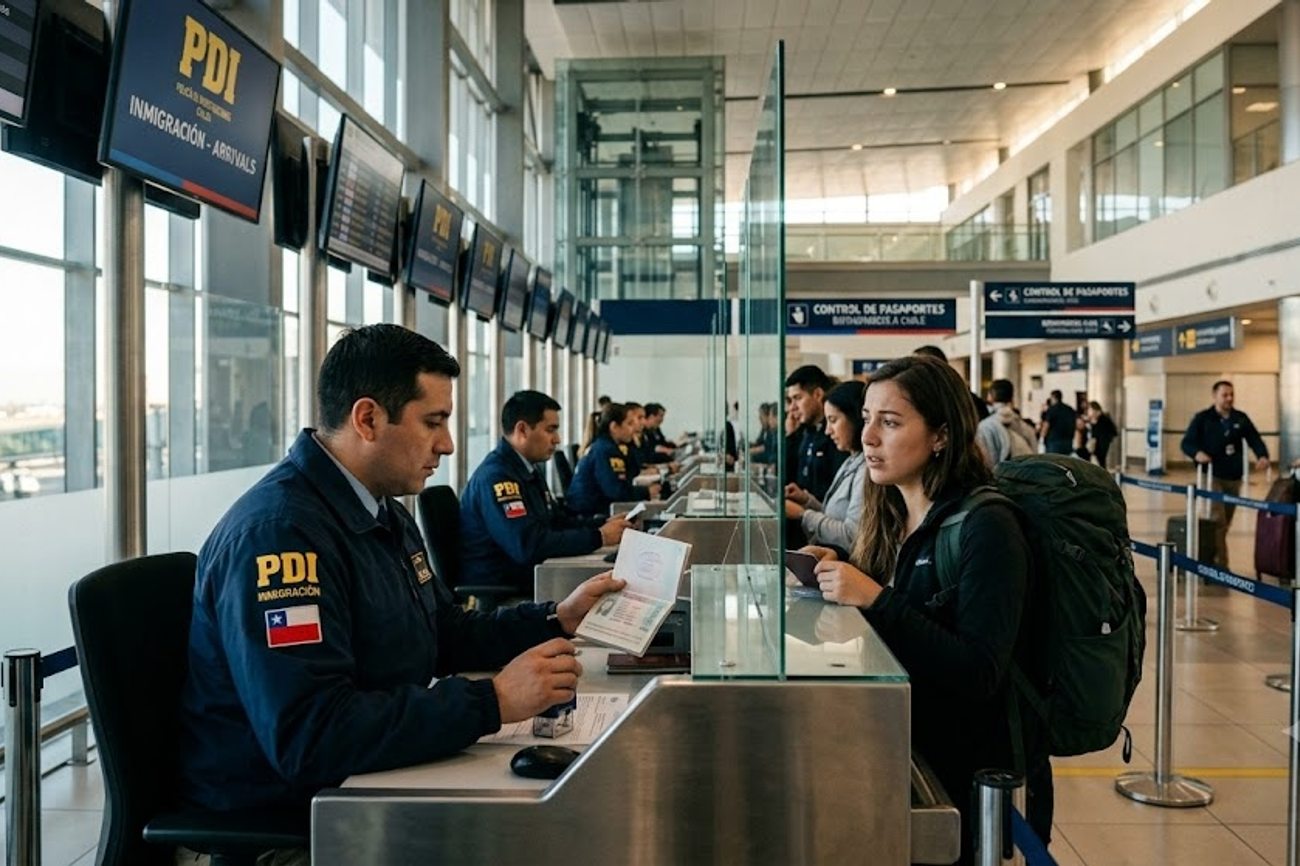
Image generated by AI
Are you planning a trip to Chile for the September 2026 spring season? Before you book your flights to Santiago or Patagonia, you must verify your specific immigration status to avoid being denied boarding at the airport.
The Permanencia Transitoria Framework
For the vast majority of international visitors, entry into Chile falls under the legal category of Permanencia Transitoria. Managed by the National Migration Service (SERMIG), this status is designed for individuals entering the country for short-term purposes, including tourism, business meetings, sports competitions, or visiting family and friends.
Under standard conditions, the Chilean government grants a stay of up to 90 continuous days. It is a common misconception that this period is fixed; SERMIG reserves the right to reduce this window based on the specific circumstances of the traveler or the documentation provided at the border. For those who find 90 days insufficient for a full tour of the Atacama and Patagonia, it is possible to apply for a single extension of another 90 days. To secure this extension, the request must be submitted before the initial period expires, and the current processing fee is US$100.
Route and Schedule Details
While specific flight numbers vary by carrier, the following table outlines the primary transit hubs and regional connections essential for a September 2026 itinerary.
| Route | Frequency | Primary Aircraft | Duration (Approx.) | Status |
|---|---|---|---|---|
| International $\rightarrow$ Santiago (SCL) | Daily | Long-haul Widebody | Varies by Origin | Active |
| Santiago $\rightarrow$ Calama (CJC) | Multiple Daily | Narrowbody Jet | 2h 00m | Active |
| Santiago $\rightarrow$ Punta Arenas (PUQ) | Daily | Narrowbody Jet | 3h 30m | Active |
| Santiago $\rightarrow$ Puerto Natales (PNT) | Seasonal | Regional Jet | 3h 15m | Active (Sept-Mar) |
Traveler Logistics Guide
Navigating Chilean entry requirements requires a proactive approach, as the rules differ significantly based on your nationality.
1. Visa Verification for Indian Nationals There is a dangerous assumption among some travelers that a valid US visa serves as a universal key for entry into Chile. For Indian citizens, this is not the case. Official Chilean visa and fee tables explicitly list India as a nationality subject to visa requirements. You must not rely on a third-country visa to grant you access. Before purchasing non-refundable tickets, you must contact the nearest Chilean consulate to determine your specific eligibility and the required documentation.
2. Digital Application Procedures Chile has aggressively shifted its consular services online. If you are required to obtain a visa prior to arrival, you should avoid third-party agents and use the official Sistema de Atención Consular (SAC) managed by the Ministry of Foreign Affairs. This digital portal is the primary vehicle for tourism visa applications. Ensure all uploaded documents are high-resolution scans to avoid processing delays.
3. Arrival and Customs Protocols Upon landing, your immigration status is distinct from your customs obligations. Chile maintains some of the strictest agricultural inspections in the world. You are required to declare all plant and animal products. Failure to do so can result in heavy fines, regardless of your visa status.
4. Connection Strategies for September September is a peak period due to the Fiestas Patrias (September 18–20, 2026). If you are transiting through Santiago during this window, expect increased congestion at Arturo Merino Benítez International Airport. I recommend a minimum layover of 4 hours for international-to-domestic transfers to account for customs and the movement between terminals.
5. Ground Transport and Regional Hubs To reach the Atacama Desert, you will fly into Calama Airport (CJC). From there, you must arrange ground transport for the 100-kilometer journey to San Pedro de Atacama. For Patagonia, Punta Arenas (PUQ) is the primary gateway, though Puerto Natales (PNT) is more convenient for those heading directly to Torres del Paine.
Regional Connectivity Impact
The timing of a September visit creates a unique logistical flow across the country. This period marks the transition into spring, which dictates how you should sequence your route to optimize weather and accessibility.
In the central region, Santiago and the surrounding wine valleys are at their most accessible in September. The city's infrastructure is geared toward the national holidays, meaning hotels and local transport will be at maximum capacity between September 18 and 20. Travelers should book central accommodations at least six months in advance.
Moving north, the Atacama Desert remains a year-round destination, but September offers a stable climate for high-altitude excursions to geysers and salt flats. Because Calama is the only major entry point for this region, flight availability can tighten during the spring surge.
The south presents the most significant logistical challenge. Patagonia is generally difficult to access in winter, but from October onwards, trails and tourism services begin to reopen. A September arrival allows you to position yourself in the south just as the milder conditions emerge, making it the ideal time to transition from the central valleys to the fjords and glaciers of the south. By utilizing SERMIG's official guidelines, travelers can ensure their stay is legally extended to cover this north-to-south progression.
FAQ: Chile Transit 2026
Do I need a transit visa for Chile? This depends on your nationality. While many enter under Permanencia Transitoria, Indian nationals and others listed in the official fee tables must apply via the SAC portal. Always check with a Chilean consulate before flying.
How long can I stay in Chile as a tourist? Most visitors are granted up to 90 days. You can apply for a one-time extension of an additional 90 days through SERMIG for a fee of US$100, provided you apply before your first permit expires.
Can I use my US visa to enter Chile? No, especially for Indian nationals. A US visa is not a substitute for a Chilean visa. You must verify your specific nationality requirements through official consular channels to ensure you are not denied boarding.
What are the customs rules for bringing food into Chile? Chile has very strict agricultural laws. You must declare all plant and animal commodities upon arrival. Failure to declare these items can lead to significant fines during the mandatory inspection process.
Secure your documentation now to ensure the only surprise on your trip is the beauty of the Andes.
#ChileVisa2026 #SERMIG #SantiagoTransit #AtacamaLogistics #PatagoniaTravel #SACVisa
Related Travel Guides
- Cross-Border Travel Snag: Port Dispute Derails New Montevideo–Buenos Aires Ferries
- Memphis Alongside Oakland, Detroit and More Among America’s Most Dangerous Cities in 2026 as Violent Crime Rates Shock Travelers
- South Africa Overtakes Egypt And More African Countries In Lifting Emirates Passenger Boom With 8 Million Travellers As Demand And Booking Rises
Disclaimer
This article is for informational and educational purposes only. It does not constitute legal, financial, or professional advice. While we strive to provide accurate and up-to-date information, travel policies, regulations, and conditions change rapidly. Always verify information with official sources before making travel decisions. Nomad Lawyer makes no representations about the accuracy, reliability, completeness, or suitability of the information provided. Readers should consult qualified professionals for advice specific to their circumstances. The views expressed in this article are those of the author and do not necessarily reflect the views of Nomad Lawyer.
Naina Thakur
Contributor & Travel Specialist
Travel enthusiast and legal writer covering visa regulations, responsible tourism, and cultural journeys across global destinations.
Learn more about our team →