Carnival Freedom Expands Western Mediterranean Itinerary with Malta as Barcelona Redevelops Cruise Terminals

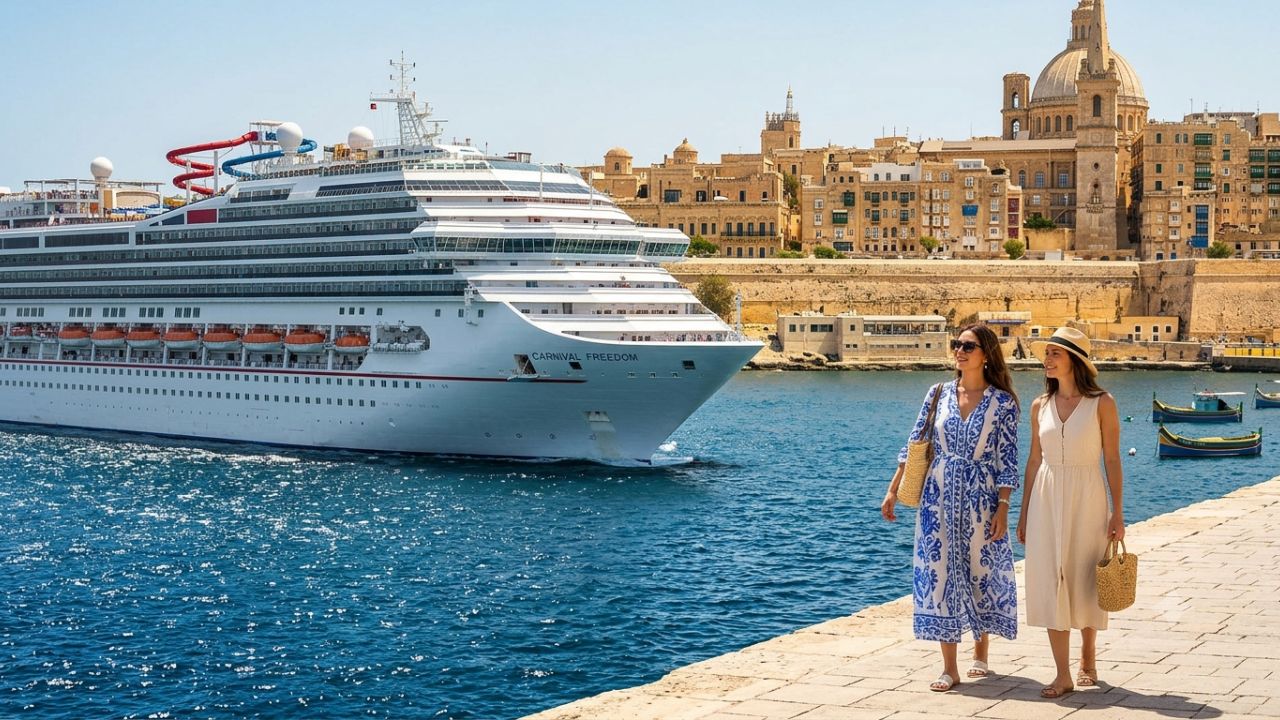
BARCELONA / VALLETTA — A detailed economic and logistical examination of Carnival Cruise Line’s Western Mediterranean deployment aboard Carnival Freedom demonstrates how the strategic addition of Valletta, Malta, reshapes passenger value, shore transit expenses, and port-side dwell times. Sailing round-trip from the Port of Barcelona's Adossat wharf, the eight-night voyage spanning nine calendar days between October 9 and October 17, 2026, carried thousands of international guests across five historic ports of call: Marseille in southern France; Livorno, Civitavecchia, and Naples in Italy; and Valletta in Malta. The voyage provides a clear case study in modern cruise pricing, shore excursion logistics, maritime terminal infrastructure investments, and European Union border compliance.
The cruise industry across the Western Mediterranean operates within a delicate framework of maritime port capacity, consumer protection regulations, and municipal tourism management. By scrutinizing advertised headline fares against mandatory disclosure rules under the European Union Package Travel Directive, independent travellers can identify the true outlays required to turn a budget cabin booking into a seamless multi-country holiday. Concurrently, major capital works underway at the Port of Barcelona—including a €104.5 million concession restructuring for a replacement Terminal C and long-term wharf consolidation—signal a structural shift in how European homeports handle passenger traffic while curbing port-side carbon emissions.
          CARNIVAL FREEDOM WESTERN MEDITERRANEAN LOGISTICS CORRIDOR (2026)
          ================================================================

                               [ BARCELONA (Homeport) ]
                         (Terminal E, Adossat Wharf Departure)
                         Port Throughput: 3.29M Movements (+6.9%)
                                          |
                                          +-------------------------------+
                                          |                               |
                                [ MARSEILLE (France) ]          [ LIVORNO (Italy) ]
                                Môle Léon Gourret Pier          Pisa: 20 km (Easy)
                                Shuttle to Vieux-Port (~8 km)   Florence: 90 km (4.5x Farther)
                                          |                     Train: 1h 30m Each Way
                                          |                               |
                                          +-------------------------------+
                                          |
                                [ CIVITAVECCHIA (Italy) ]
                                Gateway to Rome (~80 km)
                                Shuttle Bus to Station: €6 Each Way (€24 for Two)
                                Regional FL5 Train to Roma Termini
                                          |
                                          +-------------------------------+
                                          |                               |
                                 [ NAPLES (Italy) ]              [ VALLETTA (Malta) ]
                                 Stazione Marittima Pier         Pinto Wharf Berth
                                 Direct City Walk (0 km)         Barrakka Lift: 500m (€1 Lift)
                                 Ferry to Capri / Sorrento       Immediate UNESCO Core Access
                                          |                               |
                                          +-------------------------------+
                                          |
                               [ 2 FULL DAYS AT SEA ]
                               (Schengen Rule: 9 Calendar Days Counted)
Pricing Anatomy: Headline Fares and EU Package Travel Directive Transparency
The financial baseline of the October 2026 Carnival Freedom sailing was established by an advertised promotional rate of €530 per person based on double occupancy in an entry-level interior stateroom. For a traveling couple sharing an inside cabin, this base fare translated to a combined upfront cost of €1,060 before discretionary and mandatory onboard extras. Over the course of the eight-night voyage, this worked out to an operational accommodation and dining expense of €132.50 per night per cabin, or €66.25 per person per night.
When compared against equivalent land-based travel through Spain, France, Italy, and Malta—where mid-range city center hotels routinely exceed €180 to €250 per night during the pleasant autumn shoulder season—the headline cruise fare appears exceptionally competitive. For international passengers booking from northern and central Europe, tour operators packaged the voyage with round-trip commercial flights from Germany at €958 per person, or €1,916 for two people sharing a cabin. This package represented an €856 aggregate price premium over the cruise-only fare, covering bundled air transit, airport-to-pier ground transfers, and administrative ticketing coordination.
CARNIVAL FREEDOM 8-NIGHT WESTERN MEDITERRANEAN COST MODEL
| Cost Component | Rate Per Person | Cost for Couple | Accounting Status |
|---|---|---|---|
| Base Inside Cabin | €530.00 | €1,060.00 | Included in basic fare |
| Nightly Base Cost | €66.25 / night | €132.50 / night | 8 nights total |
| Fly-Cruise (Germany) | €958.00 | €1,916.00 | Bundled air & transfer |
| Service Gratuities | ~$16.00 / day | ~$256.00 total | Mandatory onboard charge |
| CHEERS! Drinks Pkg | ~$59.95 / day +18% | ~$1,130.00 total | Optional beverage addon |
| Shore Excursions (5) | €75.00 avg / port | €750.00 total | Independent vs Ship |
| Specialty Dining (2) | €49.00 / meal | €196.00 total | Optional steakhouse |
| Real Total Outlay | ~€1,100 to €1,650 | ~€2,200 to €3,300 | Full holiday budget |
However, evaluating the true economic outlay of a Mediterranean cruise requires applying the statutory consumer protection standards defined under Directive (EU) 2015/2302 (the European Union Package Travel and Linked Travel Arrangements Directive). Under EU package travel law, travel organizers and cruise sellers must disclose the total inclusive price—incorporating all mandatory port taxes, passenger handling fees, and government levies—prior to booking finalization. The directive also mandates clear itemization of what services are legally included in the contract and which elements require independent settlement.
Aboard Carnival Freedom, the base fare included assigned stateroom lodging, daily cabin steward servicing, three daily meals in the formal Main Dining Rooms and the casual Lido Marketplace buffet, basic continental breakfast room service, poolside entertainment, stage productions, and complimentary beverage stations serving iced water, standard drip coffee, hot tea, and lemonade. Conversely, items excluded from the headline fare encompassed automatic daily hotel service charges (onboard gratuities averaging $16.00 to $18.00 per person per day depending on stateroom category), alcoholic and specialty caffeinated drinks, carbonated soft drinks, Wi-Fi satellite connectivity packages, shore excursions, specialty restaurant covers (such as the Fahrenheit 555 Steakhouse or Seafood Shack), medical services, and travel cancellation insurance. When these essential onboard expenses are integrated, the realistic out-of-pocket expenditure for a couple embarking on the eight-night voyage commonly ranges between €2,200 and €3,300.
Shore Transit Logistics: Pier-to-City Distance and Ground Travel Friction
A fundamental consideration in evaluating Mediterranean cruise itineraries is the physical distance between the commercial ship berth and the cultural attractions advertised in marketing brochures. While cruise lines frequently promote iconic inland historical cities, ships dock at industrial marine terminals that require significant ground transit. Across the five ports of call on Carnival Freedom’s itinerary, the logistical friction and out-of-pocket expenses required to reach city centers varied dramatically.
PORT-TO-SIGHT GROUND TRANSIT LOGISTICS & EXPENSE MATRIX
| Entity / Facility | Delays | Cancellations | Details |
|---|---|---|---|
| Port of Call | Distance to Sights | Primary Transit Options | Realistic Transit Cost |
| Valletta, Malta | 0.5 km (City Wall) | Barrakka Lift / Walk | €1.00 (Lift up, free down) |
| Naples, Italy | 0 km (Urban Core) | Walking / Metro Line 1 | €0.00 (Walk) / €1.30 metro |
| Marseille, France | ~8 km (Vieux-Port) | Port Shuttle / Bus 35T | €13.00 shuttle / €1.70 bus |
| Livorno, Italy (Pisa) | ~20 km (Leaning Twr) | Shuttle + Train to Pisa | ~€18.00 per person |
| Livorno (Florence) | ~90 km (Duomo core) | Shuttle + Train to Firenze | ~€28.00 per person |
| Civitavecchia (Rome) | ~80 km (Colosseum) | Port Bus + FL5 Train | €20.60 per person ret. |
Valletta, Malta: The Modern Port-Side Advantage
The addition of Valletta represented the operational highlight of the revised itinerary. Berthed at Pinto Wharf along the historic deep-water Grand Harbour at the Valletta Cruise Port, Carnival Freedom was positioned mere footsteps from the Maltese capital. Passengers disembarking the gangway faced a level 500-meter walk along the restored baroque waterfront warehouses to the base of the Upper Barrakka Lift. For a nominal fee of €1.00 to ride up (and completely free of charge to descend), visitors were transported 58 vertical meters to the Upper Barrakka Gardens in less than thirty seconds. Stepping directly onto the plateau of St. Peter and Paul Bastion, travellers found themselves immediately inside Valletta's UNESCO World Heritage core, within easy walking distance of St. John's Co-Cathedral, Republic Street, and the Grandmaster's Palace. Guests had zero requirement to purchase expensive shipboard shore excursion coaches or negotiate complex intercity train schedules, allowing them to maximize their eight hours alongside.
Naples, Italy: Seamless Urban Fabric Integration
Similarly, calling at Naples offered immediate pedestrian access. Carnival Freedom docked at the Stazione Marittima di Napoli, an expansive maritime passenger terminal situated directly in the heart of the municipal harbor directly opposite the medieval Castel Nuovo. Guests could walk directly from the ship into the active streets of the historic center (Spaccanapoli) or access the contemporary Municipio station on Naples Metro Line 1 in under five minutes. For passengers electing to travel to the ruins of Pompeii, the Circumvesuviana suburban commuter train was easily accessible via a short tram or metro connection to Napoli Piazza Garibaldi, while high-speed passenger catamarans and hydrofoils departed directly from the adjacent Molo Beverello pier to the islands of Capri and Ischia.
Marseille, France: Industrial Port Distance
In Marseille, cruise vessels of Carnival Freedom’s dimensions cannot dock in the historic Vieux-Port. Instead, the ship berthed at the Môle Léon Gourret cruise terminal complex within the industrial Port de Marseille Fos, situated approximately eight kilometers north of the city center. Reaching the historic quarter required either purchasing the cruise line’s dedicated round-trip transfer shuttle (typically priced around €13.00 to €15.00 per person), securing an expensive taxi, or undertaking a 15-minute walk to the port gates to catch municipal bus route 35T connecting to Place de la Joliette and the Marseille underground metro network.
Livorno, Italy: The Tuscan Distance Dilemma
The Italian port of Livorno presented passengers with a sharp geographic dilemma. While cruise itineraries often market Livorno as the gateway to Tuscany, the actual distances to regional attractions diverge sharply. Pisa lies approximately 20 kilometers northeast of the dock, whereas Florence is situated roughly 90 kilometers inland—four and a half times farther than Pisa. Reaching Florence independently required passengers to board a commercial port shuttle from the ship to Livorno Piazza Grande, take a local city bus or taxi to Livorno Centrale railway station, and board a regional Trenitalia train to Firenze Santa Maria Novella. The rail journey alone consumed 1 hour and 15 minutes to 1 hour and 30 minutes in each direction at a round-trip cost of approximately €20.80 per passenger. Independent travelers attempting to visit Florence had to allocate between 3.5 and 4 hours purely to transit logistics, leaving a constrained window of roughly 3 to 4 hours to view the Uffizi Gallery, Ponte Vecchio, and Piazza del Duomo before rushing back to avoid missing the ship's mandatory all-aboard call.
Civitavecchia, Italy: The Rome Rail Bottleneck
The call at Civitavecchia illustrated the financial overhead of secondary gateway ports. Positioned on the Tyrrhenian coast roughly 80 kilometers northwest of Rome, Civitavecchia serves as the primary maritime entry point for the Italian capital. To travel independently to the Vatican or the Colosseum, passengers first had to exit the secure harbor perimeter. Local municipal transit authorities operate a dedicated port shuttle connecting the cruise docks to the Civitavecchia railway station, charging €6.00 per person each way. For two travelers making the return journey, bus transfers alone totaled €24.00 before purchasing rail tickets. From the station, passengers boarded Trenitalia FL5 regional commuter trains to Roma San Pietro (approximately 45 to 55 minutes) or Roma Termini (70 to 80 minutes). A combined regional day transit pass (the BIRG ticket) cost €12.00 per person, bringing total transport expenditure to over €24.00 per person. When compared against shipboard Rome excursions priced between €90 and €180 per person, independent rail travel saved substantial money but demanded strict timetable discipline to navigate chronic Italian regional rail delays.
Port Traffic Analysis: Barcelona and Malta Cruise Movements in 2026
The operational performance of Carnival Freedom unfolded against a broader regional expansion in Mediterranean maritime passenger traffic during 2026. Official port authority statistics from Spain and Malta illustrate the sheer scale of visitor flows and highlight the distinct economic roles played by turnaround homeports versus transit ports of call.
MARITIME CRUISE TRAFFIC BENCHMARKS: JAN–SEP 2026
| Metric / Indicator | Port of Barcelona | Malta National Ports | Comparative Analysis |
|---|---|---|---|
| Total Passenger Flow | 3,291,963 movements | 647,237 passengers | Barcelona 5.1x Malta |
| Year-on-Year Growth | +6.9% increase | -6.4% contraction | Divergent volume trends |
| Total Vessel Calls | ~620 port calls | 298 port calls | Malta +4 calls YoY |
| Average Pax / Call | ~5,300 movements | 2,172 passengers | Lower vessel density ML |
| Homeport Movements | 1,995,850 (60.6%) | ~114,500 (17.7%) | BCN dominates turns |
| Transit Share | 1,296,113 (39.4%) | 532,676 (82.3%) | Malta heavily transit |
| Direct City Visitors | 1,838,342 (+2.5%) | High-density core | Luggage vs dwell gap |
Official traffic records published by the Port Authority of Barcelona (Autoritat Portuària de Barcelona) show that between January and September 2026, the Catalan capital processed 3,291,963 cruise passenger movements, reflecting a solid 6.9 percent increase compared to the equivalent nine-month period in 2025. Significantly, the composition of these movements underlines Barcelona's status as Europe's premier turnaround hub. Embarkations accounted for 998,779 passenger movements, while disembarkations totaled 997,071 movements. Combined, turnaround homeport operations represented 1,995,850 movements—making up 60.6 percent of total port traffic.
This mathematical dynamic illustrates how passenger throughput figures are calculated. A couple embarking on Carnival Freedom on Friday, October 9, at Terminal E generated two embarkation movements. When they disembarked at the same terminal on Saturday, October 17, they generated two disembarkation movements, resulting in four total passenger movements recorded in port ledgers. Recognizing this multiplier effect, port authorities track a distinct metric: actual cruise visitors who spent time exploring Barcelona city. During the same nine months of 2026, direct city cruise visitors totaled 1,838,342 individuals, a more modest 2.5 percent annual rise. This differentiation highlights the economic gap between transit passengers actively patronizing local businesses and homeport travelers who merely transfer between Barcelona-El Prat Airport (BCN) and the cruise terminal with their luggage.
Across the Mediterranean in Malta, the National Statistics Office (NSO) reported a contrasting maritime dynamic. During the first nine months of 2026, Maltese ports welcomed 647,237 cruise passengers across 298 cruise vessel calls. Although Malta hosted four more ship calls than during the same period in 2025, total passenger volume declined by 6.4 percent year-on-year. Consequently, the average passenger load per vessel call dropped from 2,351 passengers in 2025 to 2,172 in 2026, reflecting the deployment of smaller luxury ships or lower average occupancy levels.
In addition, Malta's traffic is overwhelmingly dominated by short-duration port visits. During the third quarter of 2026, 82.3 percent of all cruise passengers arrived in Malta and departed on the exact same ship on the same day. Because transit visitors spend an average of six to eight hours ashore, local merchants, heritage sites, and restaurants in Valletta rely heavily on dense foot traffic from large-capacity vessels like the 2,980-passenger Carnival Freedom to drive retail and dining revenue.
Barcelona Terminal Infrastructure: The €104.5M Adossat Wharf Restructuring
The logistical backdrop of Carnival Freedom's departure from Barcelona is shaped by a comprehensive reorganization of the port's cruise infrastructure. On October 30, 2026, the Port Authority of Barcelona formally approved a major concession amendment governing the construction and operation of a replacement Terminal C along the Adossat wharf (Moll d'Adossat).
       PORT OF BARCELONA ADOSSAT WHARF REORGANIZATION MASTER PLAN
       ==========================================================

       [ OLD INFRASTRUCTURE (Pre-Nov 2026) ]
       Terminal A  |  Terminal B  |  Old Terminal C  |  Terminal D  |  Terminal E
       --------------------------------------------------------------------------
          [DEMOLITION PLANNED]         [CLOSED NOV 1]     [EXPANDED HELIX HUBS]

                                         |
                                         v

       [ FUTURE CONSOLIDATED ARCHITECTURE (Post-2027) ]
       5 Dedicated Mega-Terminals  <===>  €104.5M Replacement Terminal C
       Onshore Power Supply (OPS)  <===>  Rooftop Solar PV & Elevated Walkways
       €42M Wharf Rebuilding       <===>  660m Quay Reconstruction (Late 2029)
Under the approved project framework, the port established November 1, 2026, as the permanent cessation of passenger operations inside the existing, outdated Terminal C building. In its place, a €104.5 million capital investment will erect a modern terminal facility designed to meet stringent environmental and passenger flow benchmarks. Key design specifications of the replacement Terminal C include:
- Fully enclosed, climate-controlled elevated passenger boarding walkways (passerelles) that separate passenger embarkation flows from quayside stevedoring, provisioning, and baggage operations.
- Extensive rooftop photovoltaic solar panels generating renewable electric power to support terminal operations and administrative facilities.
- Advanced Onshore Power Supply (OPS) systems, commonly known as cold ironing. This electrical grid infrastructure allows berthed cruise ships equipped with compatible shore connections to plug into municipal electric power, permitting them to shut down their auxiliary marine diesel engines while docked and eliminating local nitrogen oxide (NOx), sulfur oxide (SOx), and particulate emissions.
The replacement of Terminal C represents a cornerstone of the broader strategic agreement between the Port of Barcelona and the Barcelona City Council (Ajuntament de Barcelona) to relocate all cruise activity away from the urban center at the World Trade Center piers (Moll de Barcelona) and concentrate operations exclusively along the outer Adossat wharf. Under this consolidation pact, the total number of cruise terminals operating in Barcelona will be permanently reduced from seven facilities down to five. Once the replacement Terminal C opens, the older Terminals A and B are slated for complete demolition.
In addition, the port authority has outlined an associated €42 million maritime civil engineering project to reconstruct and reinforce 660 meters of the Adossat quay structure. Construction on the quay reconstruction is scheduled to commence in late 2029 and will require approximately two years to complete. For passengers traveling on future Mediterranean departures, these infrastructure changes underscore the necessity of verifying the exact boarding terminal printed on their travel documents. Because the Adossat wharf extends for more than two kilometers into the commercial port basin, walking between terminals with heavy luggage is impractical, and city taxis charge premium port surcharges for each drop-off.
Schengen Border Compliance: Calculating the 90/180-Day Rule
Navigating a multi-country Mediterranean cruise requires rigorous compliance with the European Union's immigration and border control framework. Spain, France, Italy, and Malta are all full signatories to the Schengen Agreement, operating under the unified legal architecture of Regulation (EU) 2016/399 (the Schengen Borders Code).
SCHENGEN BORDER COMPLIANCE & ENTRY CALCULATION MATRIX
| Entity / Facility | Delays | Cancellations | Details |
|---|---|---|---|
| Requirement / Rule | Statutory Standard | Cruise Application | Travel Hazard |
| Short-Stay Allowance | 90 days in 180 days | Single pool across | Exceeding limit leads |
| rolling window | all 4 countries | to entry ban & fines | |
| Voyage Duration | 8 nights on board | Counts as 9 days | Embark & disembark days |
| Extended Stay Model | 10 nights in hotel | Counts as 11 days | Pre/post hotel nights |
| Passport Validity | 3 months post-exit | Beyond Oct 17/18 | Boarding denial at pier |
| Maximum Passport Age | Within 10 years | Issued <10 yrs ago | Invalid even if unexp. |
| Visa Type Required | Uniform Short-Stay | Covers ES, FR, IT, | Checking entry stamps |
| Schengen (Type C) | and MT seamlessly | at connecting airports |
For non-EU citizens traveling under visa-waiver agreements (such as passport holders from the United States, Canada, the United Kingdom, Australia, and New Zealand), travel throughout the Schengen Area is capped at a strict cumulative total of 90 days within any rolling 180-day window. Importantly, time spent in Spain, France, Italy, and Malta all drains from the exact same 90-day allocation. Because the ship remains within territorial waters and docks only at ports belonging to Schengen member states, an eight-night cruise does not constitute international travel outside the zone and does not pause the Schengen clock.
The mathematical calculation of days is a common point of confusion for international travelers. Under Article 6 of the Schengen Borders Code, both the calendar day of arrival and the calendar day of departure are counted as full individual days of presence, regardless of the time of arrival or departure:
- A passenger who entered Spain on Friday, October 9, embarked on Carnival Freedom, and disembarked on Saturday, October 17, consumed nine calendar days of their 90-day Schengen allowance.
- A traveler who arrived in Barcelona on Thursday, October 8, to enjoy an overnight pre-cruise hotel stay and flew home on Sunday, October 18, after disembarkation utilized eleven calendar days.
For travelers who require a consular visa prior to departure—such as passport holders from India, China, the Philippines, or South Africa—a single Uniform Schengen Short-Stay Visa (Type C) issued by the Spanish consulate (as the principal destination and point of entry) covered the entire itinerary across Spain, France, Italy, and Malta. However, visa holders must distinguish between the overall validity window of the visa sticker and the specific number of permitted days of stay (durée de séjour) printed on the document. If a visa grants only ten days of permitted stay, arriving two days before the cruise will result in an unlawful overstay upon disembarkation on day eleven, subjecting the traveler to severe administrative fines and potential entry bans.
Additionally, international border regulations dictate where immigration processing takes place. A traveler flying from New Delhi, London, or New York to Barcelona via an intermediate European transfer hub (such as Paris-Charles de Gaulle, Frankfurt, or Amsterdam Schiphol) completes formal immigration entry into the Schengen Area at the transit airport in France, Germany, or the Netherlands. Their official entry stamp is applied at that transfer point, initiating their Schengen stay before they board their connecting flight to Barcelona.
Finally, travelers must ensure their physical passports comply with two non-negotiable statutory rules:
- The Three-Month Rule: The passport must remain valid for at least three months beyond the intended date of departure from the Schengen territory.
- The Ten-Year Rule: The travel document must have been issued within the previous ten years on the day of entry. Passports that have been renewed with extended validity beyond the initial ten-year period from issuance are legally invalid for entry into the Schengen Area.
Strategic Planning Blueprint for Mediterranean Cruise Guests
For travelers organizing future Western Mediterranean voyages departing from Barcelona, careful advance planning can prevent unforeseen expenses and logistical complications:
- Conduct a Comprehensive Bottom-Line Fare Comparison: When evaluating attractive base cruise fares, immediately calculate mandatory daily hotel service charges (gratuities), estimated beverage packages, and shore transit outlays. Adding €100 to €150 per day for an inside cabin provides a realistic baseline for your total holiday budget.
- Target High-Efficiency Ports for Independent Sightseeing: Take full advantage of ports like Valletta and Naples, where the ship berths immediately adjacent to the historic center. In these destinations, independent walking tours provide superior cultural immersion at near-zero transit cost. In ports like Livorno and Civitavecchia, calculate the strict transit times to Florence and Rome; if rail timetables leave less than four hours of useful dwell time ashore, consider exploring closer coastal towns such as Pisa, Lucca, or Tarquinia instead.
- Verify Terminal Assignments on the Adossat Wharf: Always cross-reference the specific terminal code (Terminal C, D, or E) listed on your final cruise boarding pass before scheduling a taxi or private transfer. Because the Port of Barcelona's Adossat wharf is an elongated industrial spit, getting dropped off at the wrong terminal can result in an arduous 1.5-kilometer walk with luggage.
- Audit Schengen Travel History Before Booking Flights: If you have traveled within Europe during the six months preceding your cruise, utilize the European Commission’s official online Schengen Short-Stay Calculator to verify your remaining days. Ensure your return flight departs well before your 90-day ceiling is breached.
- Manage Port Return Buffers Disciplinedly: When touring independently in distant cities like Florence or Rome, aim to board return regional trains that arrive at the port railway station at least two hours before the ship’s published all-aboard time. This safety buffer shields you against unexpected locomotive breakdowns, track switch failures, or taxi shortages that could leave you stranded on the pier.
By integrating rigorous budget forecasting, smart transit selection, and precise border compliance, independent cruise passengers can experience the historic ports of Spain, France, Italy, and Malta with complete financial clarity and peace of mind.
Related Travel Guides
- Amtrak Expands Thanksgiving Train Services Nationwide as Record Holiday Rail Demand Surges
- France Rail Strike Grips Paris Terminals and Shuts Regional Train Networks Ahead of Peak Autumn Travel
- Prague Emerges as Europe's Top Solo Travel Hub as Kraków and Istanbul Expand Budget Transit
- Venice Simplon-Orient-Express Expands Luxury Rail Network with Historic Paris to Monaco Route for 2027
- Angola Expands 102 Visa-Free Access Regimes Alongside New Luanda International Airport Hub
This article is for informational purposes. Flight routes, passenger regulations, visa rules, and transit advisories are subject to change by airlines and aviation authorities. Readers are advised to verify schedules and travel documentation with relevant carriers and border agencies before departure.
Related Stories
Carnival Freedom Shifts to Mediterranean and Bahamian Routes Following 2026 Marseille Drydock
Texas Cruise Market Shift: Why 76 Percent of Travellers Choose Human Advisors Over Digital Booking Engines