
Cross-Border Travel Snag: Port Dispute Derails New Montevideo–Buenos Aires Ferries
Cross-Border Travel Snag: Port Dispute Derails New Montevideo–Buenos Aires Ferries

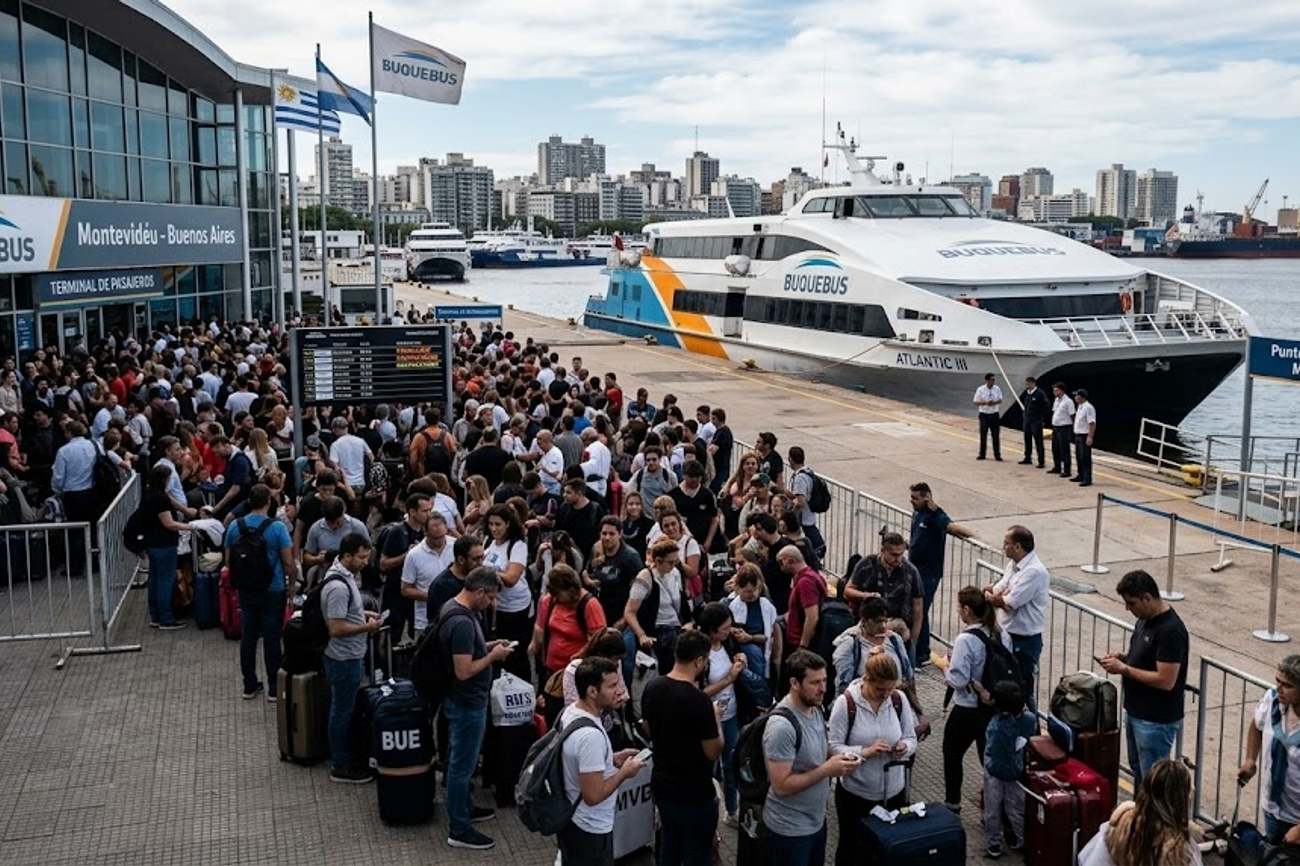
Image generated by AI
Imagine you have booked a direct vehicle ferry from Montevideo to Buenos Aires for the spring season, only to discover that while your ticket is valid, the ship cannot physically dock to load your car. This is the current reality for travelers caught in the middle of a high-stakes infrastructure battle at the Port of Montevideo, where a lack of access to a single vehicle-loading pontoon has paralyzed the entry of a second operator into the market.
The Montevideo Port Standoff: Infrastructure vs. Authorization
A significant legal and logistical conflict has emerged at the Maciel port in Montevideo, effectively blocking the expansion of direct ferry services between Uruguay and Argentina. While the Ministry of Transport and Public Works has officially granted Colonia Express the authorization to operate direct sailings to Buenos Aires, the company is unable to launch the service. The bottleneck is purely physical: the only available vehicle-loading pontoon at the port is owned and controlled by the incumbent operator, Buquebus.
Colonia Express argues that this essential piece of infrastructure should be treated as a shared utility to allow for market competition. Buquebus, however, maintains exclusive control over the facility. The National Ports Administration has distanced itself from the conflict, classifying the dispute as a private matter between two corporate entities rather than a failure of public infrastructure.
The situation is further complicated by the state of the Maciel pier itself. The structure, which measures approximately 380 meters in length with a five-meter draught, has suffered from dredging and maintenance deficiencies. To address this, Buquebus has submitted a private proposal to modernize and rebuild the pier—an investment estimated between US$66 million and US$100 million. In exchange for this capital injection, Buquebus is seeking a concession that could last up to 50 years, which would likely solidify its dominance over the route for decades.
Affected Routes and Logistics
The disruption does not involve a cancellation of existing services, but rather a failure to launch new, direct competition.
- Impacted Route: Direct Montevideo (MVD) to Buenos Aires (BUE) vehicle ferry.
- Affected Operator: Colonia Express (Authorized but unable to operate direct vehicle sailings).
- Operational Operator: Buquebus (Currently the sole provider of direct vehicle ferry services).
- Critical Bottleneck: The vehicle-loading pontoon at Maciel Port.
- Alternative Corridor: The Buenos Aires – Colonia del Sacramento route remains fully operational.
Your Rights as a Passenger
Because this is a dispute over the launch of a service rather than a sudden cancellation of a scheduled flight or voyage, the legal frameworks differ from standard disruption claims like EU261. However, passengers navigating this corridor should be aware of their protections under Uruguayan and Argentine consumer laws.
1. Right to Information and Transparency Under general consumer protection principles, operators must clearly disclose if a "direct" journey actually involves a multi-modal connection. If you booked a "direct" service with Colonia Express and it is fulfilled via a bus-ferry combination, you are entitled to a clear breakdown of the itinerary. You can verify current operational statuses via the Ministry of Transport and Public Works (MTOP).
2. Refund Rights for Service Changes If a passenger booked a direct vehicle ferry based on promotional materials, but the service is unavailable due to the pontoon dispute, the passenger is entitled to a full refund if the alternative (bus transfer) is not acceptable. Under standard maritime transport norms, if the carrier cannot provide the specific class of service booked (i.e., vehicle transport), they must offer a refund or a comparable alternative.
3. Contractual Liability Since the National Ports Administration has labeled this a "private dispute," the liability rests with the operator. If you are delayed due to a lack of infrastructure that the operator claimed to have access to, you may have grounds for a claim regarding "failure to provide service." For those tracking real-time vessel movements to see if new berths are being utilized, Flightradar24 (which tracks maritime vessels in some regions) or FlightAware for air alternatives can provide clarity.
Rebooking Strategy and Alternatives
If you are planning a trip between Montevideo and Buenos Aires during the high-demand spring months (September through November), do not rely on the promise of new direct ferry capacity. Instead, utilize the following strategies:
The Colonia del Sacramento Pivot This is currently the most reliable method for those using Colonia Express. The company operates five daily sailings from Buenos Aires to Colonia del Sacramento and five return trips. To reach Montevideo, you must take an onward bus connection.
- Route: Buenos Aires (Puerto Madero Sur) $\rightarrow$ Colonia del Sacramento (Ferry) $\rightarrow$ Montevideo (Bus).
- Estimated Time: Approximately 3 hours and 30 minutes total.
- Departure Point in Montevideo: Tres Cruces terminal.
The Air Bridge Alternative For those who cannot afford the time loss of a multi-modal ferry trip, the aviation sector is currently more progressive than the maritime sector. On September 2, the Uruguayan and Argentine governments signed a new air services agreement to liberalize flights between the two nations. This is the most efficient way to bypass the port dispute entirely.
The Vehicle Dilemma If you are traveling with a vehicle, your options are currently limited. Since Buquebus controls the only viable pontoon, they are the only option for direct vehicle transport. If their prices are prohibitive due to the lack of competition, consider leaving your vehicle in a secure parking facility in Montevideo and using the bus-ferry combination via Colonia, or renting a separate vehicle upon arrival in Buenos Aires.
FAQ: Montevideo-Buenos Aires Ferry Dispute 2026
Am I entitled to compensation for the lack of direct ferries? No. Compensation typically applies to cancellations of existing flights or voyages. Since the Colonia Express direct service has not yet officially commenced operations, there is no "cancelled" voyage to claim against. You are, however, entitled to a refund if a booked service is unavailable.
Can I still take my car from Montevideo to Buenos Aires? Yes, but only via Buquebus. They currently hold exclusive access to the vehicle-loading pontoon at the Maciel port. Colonia Express cannot transport vehicles directly from Montevideo at this time.
What is the fastest way to travel between the two cities right now? The fastest option is flying, following the liberalized air services agreement signed on September 2. For sea travel, the combination of a ferry to Colonia del Sacramento and a bus to Montevideo is the standard alternative.
Will the situation resolve by the spring season? It is uncertain. While Colonia Express is seeking judicial intervention, the proposed US$66M–$100M investment by Buquebus to modernize the pier may further solidify their exclusive control over the infrastructure.
Check your tickets carefully: a "direct" route on paper may currently be a bus ride in reality.
#MontevideoPort #Buquebus #ColoniaExpress #RioDeLaPlata #MaritimeLaw #UruguayArgentinaTravel
Related Travel Guides
- Memphis Alongside Oakland, Detroit and More Among America’s Most Dangerous Cities in 2026 as Violent Crime Rates Shock Travelers
- South Africa Overtakes Egypt And More African Countries In Lifting Emirates Passenger Boom With 8 Million Travellers As Demand And Booking Rises
- Scotland Pairs Up With Ireland And More Independence Alliance Partners As Tourism Watches Historic UK Self Determination Move
Disclaimer
This article is for informational and educational purposes only. It does not constitute legal, financial, or professional advice. While we strive to provide accurate and up-to-date information, travel policies, regulations, and conditions change rapidly. Always verify information with official sources before making travel decisions. Nomad Lawyer makes no representations about the accuracy, reliability, completeness, or suitability of the information provided. Readers should consult qualified professionals for advice specific to their circumstances. The views expressed in this article are those of the author and do not necessarily reflect the views of Nomad Lawyer.
Naina Thakur
Contributor & Travel Specialist
Travel enthusiast and legal writer covering visa regulations, responsible tourism, and cultural journeys across global destinations.
Learn more about our team →