
South Africa Overtakes Egypt And More African Countries In Lifting Emirates Passenger Boom With 8 Million Travellers As Demand And Booking Rises
South Africa Overtakes Egypt And More African Countries In Lifting Emirates Passenger Boom With 8 Million Travellers As Demand And Booking Rises

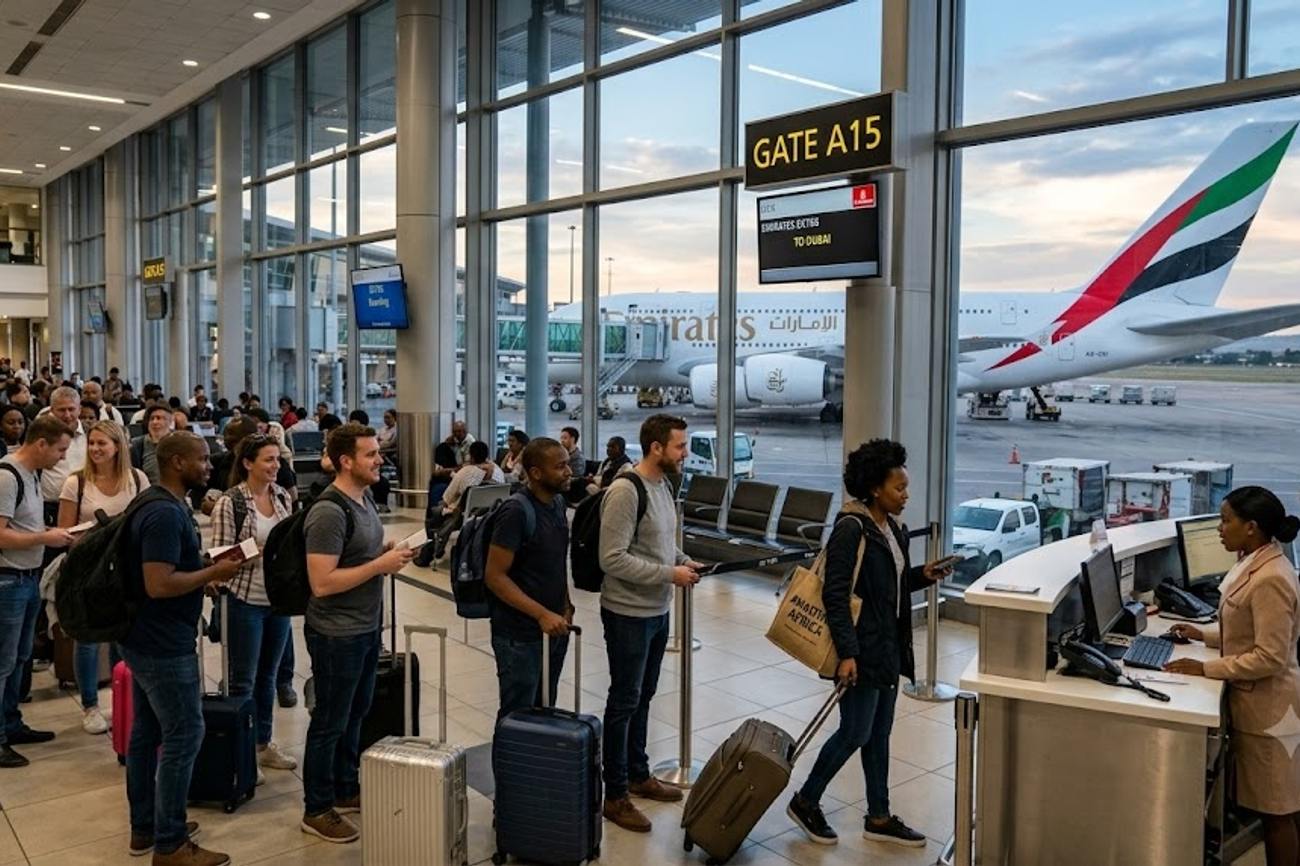
Image generated by AI
Emirates passenger volumes reached 8.6 million during the July-August 2026 window, a surge driven by aggressive capacity expansion and a strategic pivot toward African outbound markets. This growth represents a significant shift in load factor distribution, as the carrier leverages the Dubai hub to capture increasing demand from South Africa, Egypt, and Ghana to fuel its winter 2026 trajectory.
The African Growth Engine in Numbers
The data indicates that Africa has transitioned from a secondary market to a primary pillar of Emirates' global recovery strategy. With 8 million travelers contributing from African markets, the region is providing the necessary volume to sustain high seat load factors across the carrier's entire network, including Asia, Europe, and the Americas.
The July-August 2026 period serves as a critical benchmark, with 8.6 million passengers transported. This volume is not merely a result of organic demand but a calculated outcome of fleet modernization and consumer-centric policy shifts. The airline has implemented specific levers to lower the barrier to entry for long-haul travelers, including one free date change across the global network and unlimited free date changes specifically for journeys terminating or originating in Dubai.
From a capacity standpoint, the airline's aggressive fleet acquisition since January 2026 has provided the hardware necessary to support this influx. The addition of 11 Airbus A350s and 7 Boeing 777 Freighters—totaling 18 new aircraft—has expanded the available seat kilometers (ASK) available to the African market. With an additional six Airbus A350s slated for delivery before the end of 2026, the carrier is positioning itself to absorb further growth in outbound traffic from West and South Africa.
Regional Performance Benchmarks
When analyzing the 2026 winter bookings, a clear pattern emerges: African markets are outperforming previous year benchmarks. South Africa remains the dominant contributor, acting as the primary conduit for leisure travel to the Middle East and corporate transit to Asia and Europe. Egypt follows closely, leveraging its strategic position to funnel passengers through Dubai toward global destinations. In West Africa, Ghana has emerged as a high-growth node, particularly in the corporate and diaspora segments.
The following table breaks down the specific growth drivers across these three key African hubs compared to the previous operational cycle.
| Market | Primary Growth Driver (2026) | Strategic Impact | Booking Trend vs. Previous Year |
|---|---|---|---|
| South Africa | Premium Economy & Long-haul Transit | High-value passenger growth | Tracking Ahead |
| Egypt | Tourism Recovery & Hub Connectivity | Increased outbound volume | Tracking Ahead |
| Ghana | Corporate Links & Diaspora Travel | Expanded West African footprint | Tracking Ahead |
This regional surge aligns with broader data from the International Air Transport Association (IATA), which has noted a steady increase in connectivity across the African continent. By integrating these markets into a seamless hub-and-spoke model via Dubai, Emirates is capturing a market share that previously relied on fragmented regional carriers or legacy European hubs.
What This Means for Travelers
For the individual traveler, the data suggests a shift in both pricing dynamics and cabin availability. The expansion of Premium Economy is the most actionable data point here. With 137 aircraft now featuring the latest cabin products and 104 aircraft having completed retrofit upgrades, the "middle ground" between Economy and Business Class is now available on routes to 90 destinations.
Booking Advice for Q4 2026:
- Target Premium Economy: Because the fleet retrofit is now widespread (104 aircraft completed), travelers from Africa can now book Premium Economy with higher confidence in aircraft consistency. If you are traveling from Accra, Cairo, or Johannesburg, this cabin offers a strategic cost-to-comfort ratio for long-haul legs.
- Leverage Flexibility: The introduction of reduced refund fees and unlimited date changes for Dubai-specific travel removes the traditional risk associated with booking far in advance. Travelers should lock in winter 2026 rates now, knowing the flexibility policies mitigate the risk of itinerary changes.
- Monitor Hub Congestion: With passenger volumes hitting 8.6 million in a two-month window, Dubai International (DXB) will experience peak loads. Travelers should allocate additional time for transit, as the sheer volume of African outbound traffic connecting to Asia and Europe increases terminal density.
Fleet Trajectory and Capacity Projections
The current trajectory suggests that Emirates is moving toward a more fuel-efficient, high-capacity fleet to sustain its African growth. The deployment of the Airbus A350 is a calculated move to lower the cost per seat while increasing passenger comfort. This shift is essential for maintaining profitability on long-haul routes from Africa, where fuel costs and airport taxes can fluctuate.
Based on the current addition of 18 aircraft since January and the pending delivery of six more A350s, the airline is increasing its capacity by roughly 24 aircraft in a single calendar year. This suggests that the airline expects the "African Boom" to continue well into 2027. The focus on "premiumization"—evidenced by the 90 destinations now served by Premium Economy—indicates a move away from volume-only growth toward yield-based growth, targeting the growing affluent middle class in markets like Ghana and South Africa.
For deeper insights into global aviation capacity and aircraft movements, data from OAG confirms that the shift toward wide-body efficiency is a global trend, but Emirates is applying it more aggressively in the African corridor than its competitors.
FAQ: Emirates African Market Trends 2026
Will ticket prices increase due to higher demand in Africa? While demand is tracking ahead of last year, the addition of 18+ aircraft increases total seat capacity. This supply increase typically offsets demand spikes, keeping prices stable, though Premium Economy may see tighter availability.
Is now a good time to book winter 2026 travel? Yes. With the new flexibility policies—including unlimited free date changes for Dubai journeys—the risk of early booking is minimized while the benefit of securing current rates is maximized.
Which African routes are seeing the most expansion? South Africa, Egypt, and Ghana are the primary growth drivers. Specifically, the Accra-Dubai corridor is seeing strengthened services to support increased West African connectivity.
How does the new fleet affect the passenger experience? The 104 retrofitted aircraft and the new A350s introduce updated cabin products and a dedicated Premium Economy class, significantly improving comfort on long-haul flights from Africa to Asia and Europe.
The shift in aviation gravity toward African outbound markets is no longer a projection—it is a documented data reality.
Tags: Emirates-Africa-Growth-2026, Dubai-Hub-Passenger-Volume, Airbus-A350-Fleet-Expansion, South-Africa-Outbound-Travel, Premium-Economy-Market-Share
Related Travel Guides
- Scotland Pairs Up With Ireland And More Independence Alliance Partners As Tourism Watches Historic UK Self Determination Move
- Norway Stands Firmly With Turkey And More As Italy Updates Travel Advisory With Safety Warnings On Protests And Digital Conduct
- South Korea Aligns With Japan And More To Drive Autumn Travel As Fall Destinations Gain Attention
Disclaimer
This article is for informational and educational purposes only. It does not constitute legal, financial, or professional advice. While we strive to provide accurate and up-to-date information, travel policies, regulations, and conditions change rapidly. Always verify information with official sources before making travel decisions. Nomad Lawyer makes no representations about the accuracy, reliability, completeness, or suitability of the information provided. Readers should consult qualified professionals for advice specific to their circumstances. The views expressed in this article are those of the author and do not necessarily reflect the views of Nomad Lawyer.
Preeti Gunjan
Contributor & Community Manager
A passionate traveller and community builder. Preeti helps grow the Nomad Lawyer community, fostering engagement and bringing the reader experience to life.
Learn more about our team →