
Scotland Pairs Up With Ireland And More Independence Alliance Partners As Tourism Watches Historic UK Self Determination Move
Scotland Pairs Up With Ireland And More Independence Alliance Partners As Tourism Watches Historic UK Self Determination Move

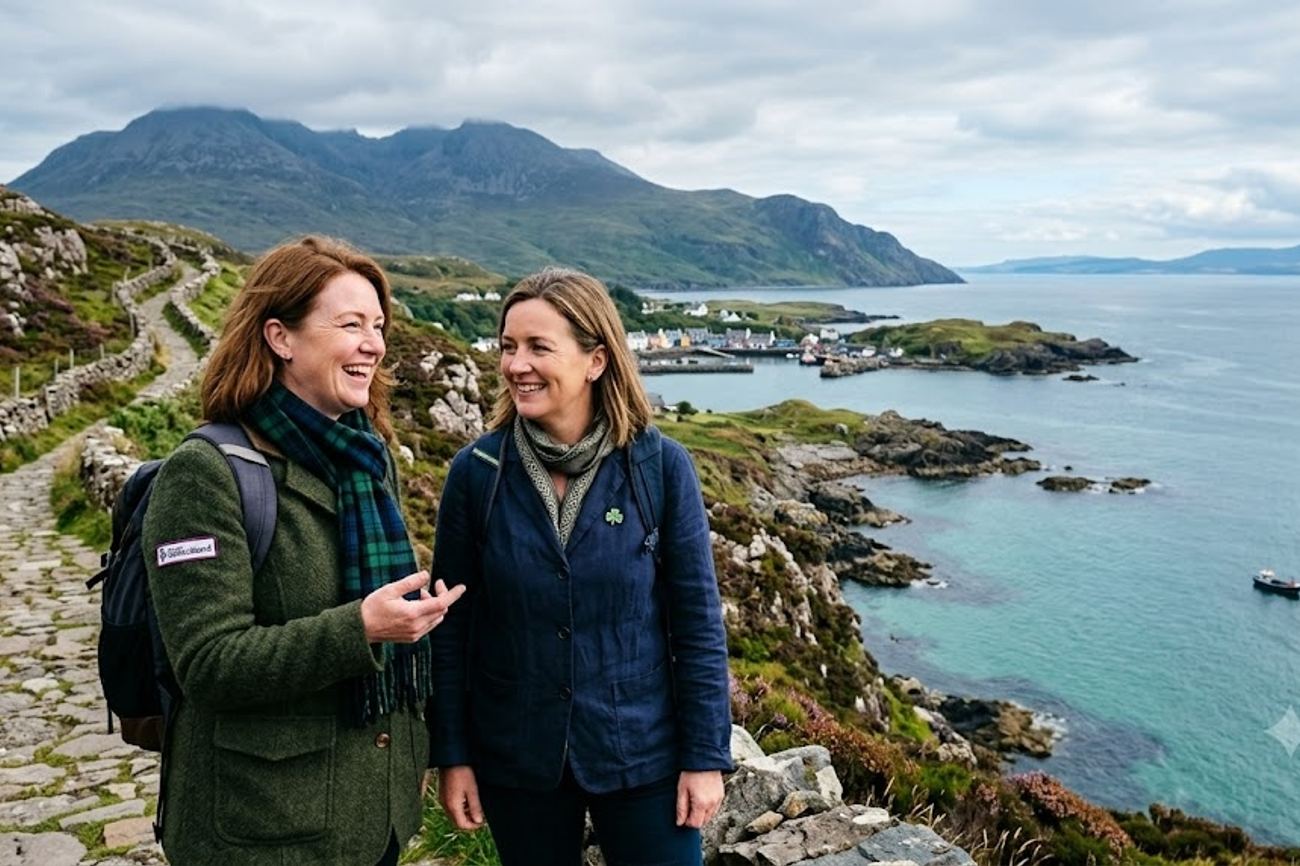
Image generated by AI
14 September 2026 marks the date three nations—Scotland, Wales, and Northern Ireland—formally aligned their political trajectories in a coordinated challenge to the authority of the United Kingdom's central government. This memorandum, signed during a high-level summit in Cardiff, does not represent an immediate secession from the UK, but it establishes a strategic bloc focused on self-determination and constitutional reform. For the travel industry, this is not merely a political curiosity; it is a signal that the administrative and promotional framework of "Visit Britain" may be facing a slow-motion fragmentation.
The Cardiff Alignment and the Push for Autonomy
The summit in Cardiff brought together a potent coalition of nationalist and republican leadership. The signatories included John Swinney of the Scottish National Party (SNP), Rhun ap Iorwerth of Plaid Cymru, and the Sinn Féin leadership duo of Michelle O’Neill and Mary Lou McDonald. By formalizing a partnership based on national identity and European relationships, these leaders are attempting to shift the center of gravity away from Westminster.
While the UK government, led by Prime Minister Andy Burnham, has dismissed calls for immediate referendums, the legal mechanisms for change vary wildly across the three regions. Northern Ireland operates under the specific border poll mechanism established by the Good Friday Agreement, providing a clear, albeit high-bar, legal path toward Irish reunification. In contrast, Scotland remains in a legal stalemate; despite the SNP's persistent demands, any binding vote requires the explicit approval of the UK Parliament. Wales occupies the most ambiguous position, as there is currently no established legal process for a Welsh independence referendum.
Data Breakdown: Constitutional Pathways and Historical Precedents
The divergence in legal standing creates a fragmented risk profile for travel operators and investors. While the political rhetoric is unified, the actual probability of border changes differs by region.
| Nation | Primary Political Driver | Legal Pathway to Change | Key Tourism Asset |
|---|---|---|---|
| Scotland | SNP | Requires Westminster Approval | Highlands & Edinburgh |
| Northern Ireland | Sinn Féin | Border Poll (Good Friday Agreement) | Giant's Causeway & Belfast |
| Wales | Plaid Cymru | No Established Process | Snowdonia & Coastal Routes |
The volatility of this movement is best understood through the lens of the 2014 Scottish independence referendum. At that time, the electorate was split 55.3% in favor of remaining in the UK and 44.7% in favor of independence. However, the subsequent 2016 Brexit vote fundamentally altered the data set, as Scotland's preference diverged sharply from the UK's national trajectory, fueling the current drive for a second vote.
Expert Analysis: The Deconstruction of the "UK Brand"
For travelers and tour operators, the direct consequence of the Cardiff declaration is the potential erosion of the "United Kingdom" as a monolithic tourism product. For decades, the UK has been marketed as a single entity, allowing visitors to bundle London, the Scottish Highlands, and the Welsh coast into a single itinerary under one visa regime and one currency.
The pricing pressure this creates is subtle but significant. If Scotland, Wales, or Northern Ireland move toward independent destination marketing, the cost of international promotion will rise. Currently, the International Air Transport Association (IATA) manages aviation standards that assume a unified UK regulatory environment. A shift toward separate national identities could lead to fragmented aviation agreements or divergent visa policies, particularly if one nation seeks a faster return to European Union frameworks than others.
Furthermore, we are seeing the emergence of a "Celtic Corridor" strategy. By aligning with Ireland, Scotland and Wales can pivot away from the London-centric model to promote a heritage-based circuit focusing on Gaelic and Celtic roots. This would shift the flow of high-spend tourists from the English south to a northern and western arc. For the traveler, this means a likely increase in multi-country itineraries that bypass England entirely, focusing instead on shared linguistic and cultural ties.
Key Takeaways
- Political Bloc Formed: Scotland, Wales, and Northern Ireland have signed a memorandum in Cardiff (Sept 14, 2026) advocating for self-determination and closer cooperation.
- Legal Disparity: Northern Ireland has a defined path to a border poll; Scotland requires Westminster's consent; Wales has no formal referendum mechanism.
- Marketing Pivot: There is a strategic shift toward "Celtic" branding, potentially decoupling the tourism identities of Scotland, Wales, and Ireland from the broader UK brand.
- Regulatory Risk: While no immediate borders are appearing, future constitutional shifts could impact visa requirements, aviation agreements, and currency stability.
- Government Resistance: Prime Minister Andy Burnham has officially rejected immediate referendum pressure, prioritizing national stability over political declarations.
FAQ: UK Constitutional Changes and Travel 2026
Will I need a passport to travel between Scotland, Wales, and England? No. The Cardiff declaration is a political memorandum, not a legal separation. Current movement arrangements remain unchanged, and no new borders have been established.
How does this affect my current UK tourist visa? Your visa remains valid for the entire United Kingdom. Any changes to visa policies would require formal legislation and lengthy transition periods; they would not result from a political summit.
Are flight routes between these regions changing? There are no scheduled changes to flight paths or aviation agreements. However, long-term shifts in national identity may lead to more direct international flights into Edinburgh, Cardiff, or Belfast.
What is the "Celtic Corridor" in tourism? It is a conceptual travel route that links the shared heritage of Ireland, Scotland, and Wales, focusing on music, language, and landscapes rather than the centralized UK identity.
The map of the British Isles is no longer a static document, but a draft subject to constant revision.
Tags: Cardiff Summit 2026, Scottish National Party, Sinn Féin, Plaid Cymru, UK Constitutional Reform, Celtic Tourism Route
Related Travel Guides
- Norway Stands Firmly With Turkey And More As Italy Updates Travel Advisory With Safety Warnings On Protests And Digital Conduct
- South Korea Aligns With Japan And More To Drive Autumn Travel As Fall Destinations Gain Attention
- United Arab Emirates Aligns With Dubai Tourism Growth As NH Collection Ibn Battuta Reimagines City Stays
Disclaimer
This article is for informational and educational purposes only. It does not constitute legal, financial, or professional advice. While we strive to provide accurate and up-to-date information, travel policies, regulations, and conditions change rapidly. Always verify information with official sources before making travel decisions. Nomad Lawyer makes no representations about the accuracy, reliability, completeness, or suitability of the information provided. Readers should consult qualified professionals for advice specific to their circumstances. The views expressed in this article are those of the author and do not necessarily reflect the views of Nomad Lawyer.
Raushan Kumar
Founder & Lead Developer
Full-stack developer with 11+ years of experience and a passionate traveller. Raushan built Nomad Lawyer from the ground up with a vision to create the best travel and law experience on the web.
Learn more about our team →