
US Tourists Defy Paris Chaos as 6.4 Million Visitors Trigger a Stunning French Tourism Surge in 2026
US Tourists Defy Paris Chaos as 6.4 Million Visitors Trigger a Stunning French Tourism Surge in 2026

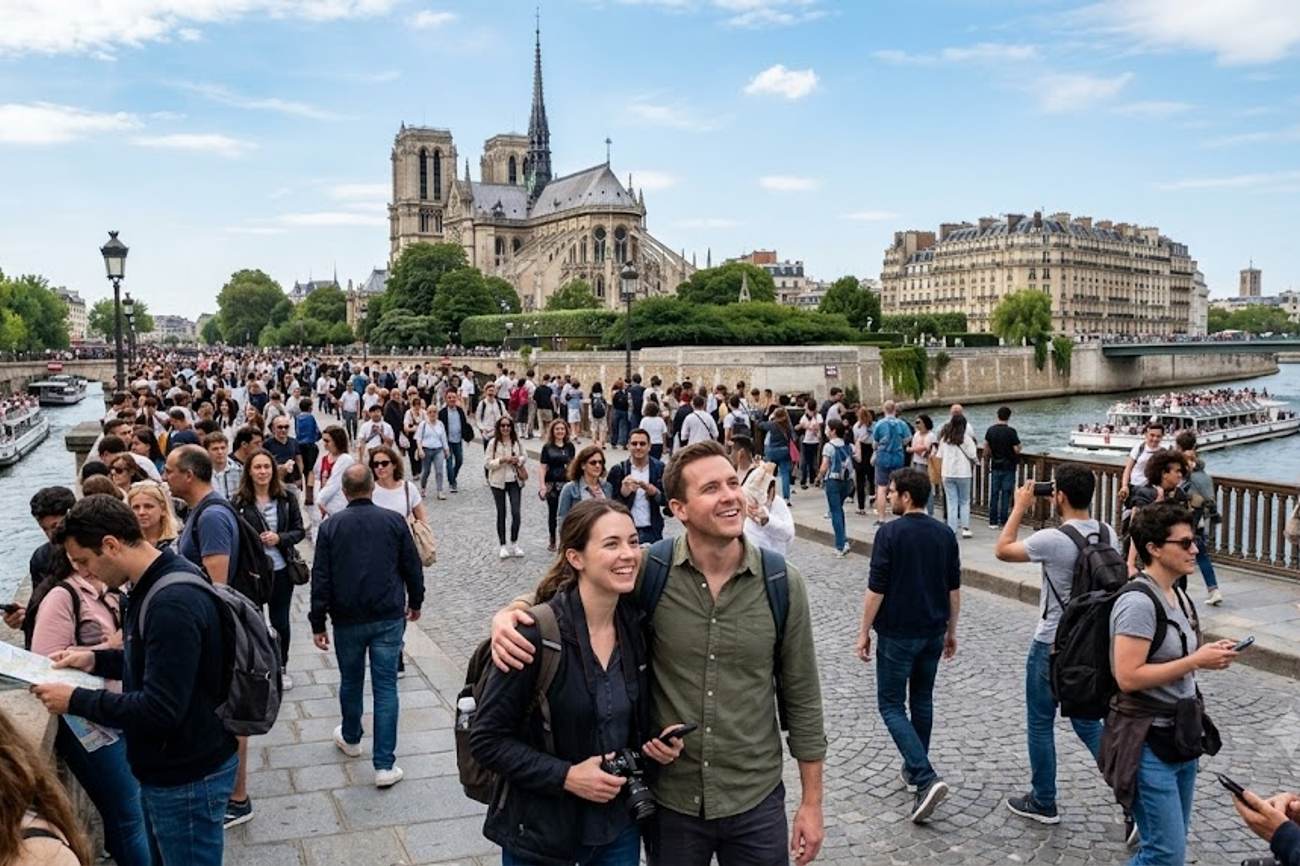
Image generated by AI
title: Paris Summer 2026: Heatwaves, Esports, and the Evolution of the City of Light description: An insider's look at how Paris navigated a record-breaking summer in 2026, from the rise of gaming tourism at Porte de Versailles to the resilience of the Seine.
Paris just endured its hottest summer in nearly 80 years, with 47 days recording temperatures above 30°C, surpassing the previous record set in 1947. Yet, despite this oppressive heat and a volatile global climate, the city proved its resilience by welcoming 6.4 million tourists across Greater Paris between July 1 and August 28.
The New Pulse of Parisian Tourism
The traditional image of Paris—strolling through the Tuileries or queuing for the Louvre—is shifting. While the core appeal remains, the summer of 2026 revealed a city capable of pivoting its draw toward high-energy, modern spectacles. The most striking shift was the emergence of "gaming tourism." The Esport World Cup 2026, hosted at Paris Expo Porte de Versailles – VIPARIS from July 6 to August 20, fundamentally altered how visitors moved through the city.
This wasn't just a niche gathering; it was a massive economic engine. The event sold 175,000 tickets, a staggering 94% increase over 2025, and drew 2 million cumulative visits to its venues. The digital reach was even more immense, with 850 million viewers tuning in globally and 440 million hours watched, marking a 26% rise from the previous year. The League of Legends tournament alone peaked at 4.3 million viewers. For the first time, we saw a significant migration of tourists away from the 1st and 7th arrondissements toward the southern edges of the city.
What Makes Paris Different Right Now
Paris is currently balancing a delicate act: maintaining its status as a global luxury and culture hub while adapting to extreme environmental pressures. The 2026 data shows that while international demand remains robust, the "type" of visitor is diversifying. The United States continues to be the primary international market, recording approximately 400,000 air arrivals between July 1 and August 23 (a slight 0.7% dip from the previous year). However, the growth is now coming from unexpected directions.
We are seeing a surge in visitors from Poland (+38.5%), Portugal (+24%), and Mexico (+12%). This diversification suggests that Paris is no longer relying on a few legacy markets but is becoming a primary destination for a broader spectrum of global travelers. Even more telling is the shift in local geography. The Porte de Versailles area, usually a business and trade district, saw hotel occupancy rise by 2.9% compared to 2025, with rates in that specific zone sitting 3.7% higher than the city average. This was fueled by a massive influx of visitors from Saudi Arabia (+97.3%), the Netherlands (+38.5%), and the UAE (+32%).
The city's ability to maintain an overall hotel occupancy of 80.9%—a 1.2% increase over 2025—despite the heat, speaks to a sophisticated infrastructure. The introduction of swimming opportunities along the Seine has become a vital relief valve, attracting hundreds of thousands of people and transforming the river from a scenic backdrop into a functional urban beach.
Visitor Insider Tips
Having navigated the city during these peak shifts, there are a few things the brochures won't tell you about surviving a Parisian summer.
Timing the Heat: The 2026 data proves that heatwaves hit in concentrated bursts. If you see a spike in temperatures, avoid the "museum marathon." Between July 7 and July 13, tourist presence dropped by 7.2% because the heat became unbearable. Instead, mimic the locals: retreat to air-conditioned galleries or the cinema between 1:00 PM and 4:00 PM, and emerge only after 6:00 PM.
Neighborhood Strategy: While most visitors cling to the center, base yourself in the 15th arrondissement if you are attending events at Porte de Versailles. It is more residential, offers better value for money, and allows you to avoid the gridlock of the city center. For those seeking the "real" Paris, explore the periphery of Greater Paris; of the 6.4 million visitors this summer, 4.6 million (71.5%) stayed in Paris proper, meaning the outer suburbs are significantly less crowded.
Transport Hacks: When the heat hits, the Metro can become a sauna, particularly on the older lines. Use the city's expanding bike-share networks or stick to the bus lines where you can see the city and occasionally catch a breeze. For official transit updates and planning, always check the RATP official site.
Etiquette Note: During extreme heat, patience is a local currency. Service in cafes may slow down, and the "Parisian chill" can intensify. A simple "Bonjour" and a smile go a long way when the temperature is hitting 35°C.
Cultural and Environmental Context
The record-breaking 47 days of heat above 30°C are not just a statistic; they are a catalyst for change in how Paris manages its heritage. The cancellation of major events like Solidays and the Marche des Fiertés on June 27 highlighted the vulnerability of the city's traditional outdoor celebrations.
There is a growing tension between the desire to welcome millions of tourists and the need to protect the quality of life for residents. Pierre Rabadan of the Paris je t’aime Tourist Office has emphasized the need to accommodate tourism while respecting the daily rhythms of the locals. This is why you see a push toward "de-densification"—encouraging visitors to explore areas like Porte de Versailles or the wider Greater Paris region to relieve pressure on the historic center.
Furthermore, the push to make the Seine swimmable is more than a tourist attraction; it is a massive environmental project aimed at urban cooling and ecological restoration. By transforming the river into a recreational space, the city is attempting to combat the "urban heat island" effect that makes the center of Paris significantly hotter than the surrounding countryside. For those interested in the city's commitment to preserving its historic core amidst these changes, the UNESCO World Heritage listings for the banks of the Seine provide a vital context for why these preservation efforts are so critical.
FAQ: Visiting Paris 2026
What is the best time to visit Paris to avoid extreme heat? While summer is peak season, the data from 2026 suggests that late June and mid-July can be dangerously hot. For a balance of weather and crowd levels, consider the "shoulder seasons" of May or September.
How do I get to the Porte de Versailles area from the city center? The area is well-connected via the Metro Line 12 and Tramway T3a. If you are staying in the center, the tram is often a more pleasant, scenic route that avoids the underground heat.
Is Paris safe for solo travelers during major events? Yes, Paris is generally safe for solo travelers. However, during massive events like the Esport World Cup, expect heavy crowds in specific districts. Stick to well-lit areas and use official ride-sharing apps at night.
Do I need a visa for France in 2026? Visa requirements depend on your nationality. US, Canadian, and UK citizens typically do not need a visa for short stays (under 90 days), but always check the official French government portal for the most current ETIAS or visa requirements.
Paris is no longer just a museum of the past; it is a living laboratory for the future of urban resilience.
Tags: Paris-Travel-2026, Porte-de-Versailles, Esport-World-Cup-Paris, Greater-Paris-Tourism, Seine-Swimming
Related Travel Guides
- Kenya Stuns Romanian Tourists With a Wild New Travel Boom From Malindi Beaches to Africa’s Legendary Safari Heartland
- Brazil and Colombia are Focusing to Build a Powerful Tourism Future Through Aviation, Digital Technology and Economic Growth
- South Africa Tourism Enters Tough Phase as Nearly 9% Rise in Oil Prices Raises Flight Prices and Puts Holiday Plans at Risk
Disclaimer
This article is for informational and educational purposes only. It does not constitute legal, financial, or professional advice. While we strive to provide accurate and up-to-date information, travel policies, regulations, and conditions change rapidly. Always verify information with official sources before making travel decisions. Nomad Lawyer makes no representations about the accuracy, reliability, completeness, or suitability of the information provided. Readers should consult qualified professionals for advice specific to their circumstances. The views expressed in this article are those of the author and do not necessarily reflect the views of Nomad Lawyer.
Kunal K Choudhary
Co-Founder & Contributor
A passionate traveller and tech enthusiast. Kunal contributes to the vision and growth of Nomad Lawyer, bringing fresh perspectives and driving the community forward.
Learn more about our team →