
Global Sustainable Tourism Surges in 2026 as Nature Escapes and Scenic Rail Journeys Drive Greener Travel Growth
Global travel data reveals 75.4% of travelers prioritize sustainability in 2026, driving nature exploration, scenic rail, and green policy across 8 nations.

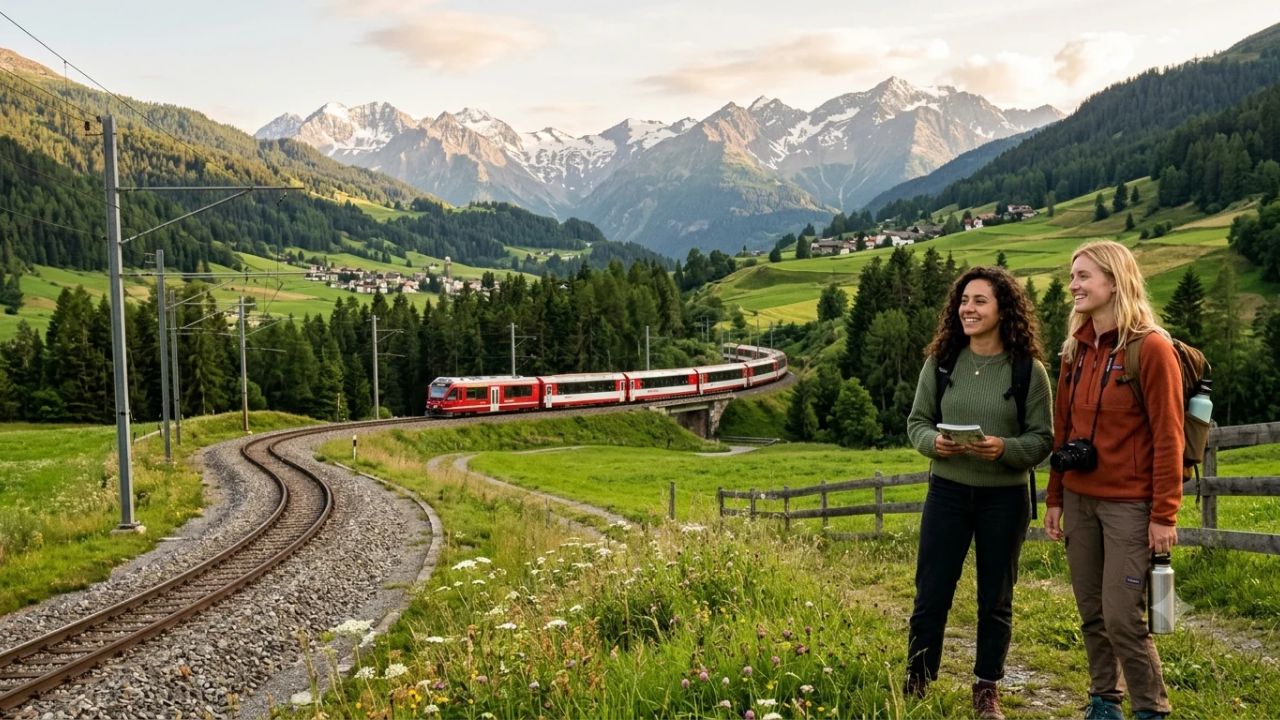
Image generated by AI
Global sustainable tourism has expanded decisively in 2026 as nature escapes, scenic rail journeys, and regional visitor dispersal reshape travel demand across eight key markets spanning the United Kingdom, Australia, Singapore, Japan, Hong Kong, South Korea, Thailand, and Germany.
LONDON, United Kingdom — Comprehensive consumer research published in the 2026 Sustainable Travel Consumer Report by Trip.com Group reveals that environmental responsibility is no longer viewed as an isolated ethical consideration, but as a primary driver of holiday quality. Surveying 8,777 international respondents across 29 markets in four global regions, the study establishes that 75.4% of global travelers consider sustainability an important factor in their travel decisions, with 56.8% actively and intentionally booking greener alternatives.
This consumer evolution coincides with structural policy shifts spearheaded by national tourism authorities, including VisitBritain, Tourism Australia, and the Japan National Tourism Organization. From countryside heritage trails and low-emission electric passenger rail to strict ecological visitor limits on coastal geotrails, national governments are aligning climate resilience with regional economic vitality to preserve delicate environmental and cultural assets for future generations.
          2026 GLOBAL SUSTAINABLE TOURISM: CONSUMER SHIFTS & POLICY ENGINES
          ==================================================================

    [ GLOBAL CONSUMER SENTIMENT (TRIP.COM 8,777-RESPONDENT BENCHMARK) ]
    • 75.4% Prioritize Sustainability in Travel Decisions
    • 56.8% Intentionally Select Greener Holiday Options
    • Core Drivers: Nature Exploration (41.6%) & Scenic Rail Journeys (34.1%)
    • Primary Barrier: Price Sensitivity (37.1% Cite Cost Hurdles)
                        │
                        ▼
    [ EUROPEAN RAIL & COUNTRYSIDE MODELS ]
    • United Kingdom: £3.38M Connected Destinations Fund & 50M Visitor Target
    • Germany: 40,000 km Rail Grid, 5,700 Stations & Black Forest Scenic Line
                        │
                        ▼
    [ ASIA-PACIFIC REGIONAL DISPERSAL & INNOVATION ]
    • Australia: THRIVE 2030 (A$230B Total / A$95B Regional Expenditure Target)
    • Singapore: Tourism 2040 Blueprint & Sustainable Hospitality Accreditations
    • Japan: Kurobe Gorge Scenic Railway, Takayama Crafts & Hakuba Nature
    • Hong Kong: Sai Kung Geotrail Visitor Caps & "Four Peaks" Green Initiative
    • South Korea: Busan Haeundae Blueline Park (4.8 km) & Santa Village Rail
    • Thailand: "Tourism Next" Direction & Krabi / Chiang Mai Green Prototypes
Global Survey Data: 75.4% of Travelers Prioritize Sustainability in 2026
The findings of the 2026 Sustainable Travel Consumer Report document a fundamental transformation in how international travelers perceive value. Rather than viewing sustainable travel as a series of restrictive compromises, travelers increasingly associate eco-friendly options with superior comfort, deeper cultural immersion, and improved personal well-being.
Outdoor nature exploration emerged as the single most desirable sustainable experience, identified by 41.6% of respondents as a factor that directly elevates holiday quality. Scenic railway journeys ranked second at 34.1%, highlighting the surging popularity of train travel as a leisurely and picturesque alternative to short-haul commercial flights. In addition, 32.7% of travelers expressed a clear preference for lesser-known, low-density destinations, signaling growing resistance to overtourism in congested global gateway cities.
| Sustainable Travel Experience | Global Consumer Preference Share | Key Behavioral Driver |
|---|---|---|
| Nature and Outdoor Exploration | 41.6% | Seeking physical well-being, fresh air, and biodiversity |
| Scenic Railway Journeys | 34.1% | Experiencing travel as a scenic, low-stress journey |
| Lesser-Known Destinations | 32.7% | Avoiding crowd congestion and discovering authentic cultures |
| Hotels with Sustainability Practices | 31.9% | Preferring verified energy efficiency and zero-waste lodging |
| Off-Season Travel | 29.6% | Seeking calm seasonal timing and reduced destination pressure |
Motivations Versus Barriers: Navigating the Affordability and Transparency Gap
While consumer enthusiasm for environmentally responsible travel is elevated, the study identifies a significant gap between traveler intentions and final booking conversions.
The primary motivations driving sustainable choices are rooted in ethical stewardship:
- Environmental Responsibility: 52.5% of surveyed travelers cite personal ecological responsibility as their primary motivation.
- Inter-Generational Preservation: 50.8% state a desire to protect and preserve natural landscapes and cultural heritage for future generations.
- Authenticity of Experience: 44.4% believe that sustainable tourism practices yield more authentic, community-connected interactions.
However, commercial barriers continue to impede broader adoption. Higher prices represent the leading obstacle, with 37.1% of consumers citing the premium cost of green options as a barrier to booking. When selecting travel, 64.1% of respondents rank price as a primary decision factor, followed closely by quality and comfort at 61.8%.
In addition, 29.8% of travelers point to inconvenience or extra planning effort, while 27.1% struggle to distinguish genuinely sustainable operators from unsubstantiated corporate marketing, creating an urgent demand for clear, standardized sustainability certifications.
| Sustainable Travel Metric | Survey Percentage | Industry Implication |
|---|---|---|
| Environmental Responsibility as Motivation | 52.5% | Ethical values drive initial destination consideration |
| Preserving Destinations for the Future | 50.8% | Long-term stewardship influences family travel choices |
| Seeking Authentic Local Experiences | 44.4% | Green travel perceived as richer in cultural value |
| Higher Prices as a Primary Barrier | 37.1% | Green premiums discourage budget-conscious holidaymakers |
| Inconvenience or Additional Effort as Barrier | 29.8% | Low-carbon transport requires seamless digital booking |
| Difficulty Identifying Verified Green Options | 27.1% | Operators must adopt third-party eco-certifications |
| Price as a Leading Travel Consideration | 64.1% | Affordability remains the paramount booking filter |
| Quality and Comfort as Leading Consideration | 61.8% | Sustainable products must match or exceed standard luxury |
Generational Divergence: Gen Z and Millennials Lead the Green Tourism Shift
The research reveals stark demographic variations in consumer adoption. Younger demographics demonstrate a substantially higher commitment to booking sustainable travel compared to older generations:
- Generation Z (Ages 18–27): 69.5% intentionally choose sustainable travel options, representing the highest adoption rate among all age groups.
- Millennials (Ages 28–43): 63% (63.0%) actively book environmentally conscious lodging, transport, and excursions.
- Baby Boomers (Ages 60+): 40.6% intentionally select sustainable options, displaying greater reliance on traditional, price-oriented travel models.
This generational divergence creates a commercial imperative for hospitality brands, airlines, and tour operators. As Gen Z and Millennial travelers expand their disposable income and travel frequency, travel providers must substantiate environmental claims with transparent operational data, independent audit reports, and accessible booking badges.
| Demographic Cohort | Intentionally Selecting Sustainable Travel | Primary Media & Information Channel |
|---|---|---|
| Generation Z | 69.5% | Social media, mobile apps, digital carbon trackers |
| Millennials | 63.0% | Online travel platforms (OTAs), verified eco-labels |
| Baby Boomers | 40.6% | Traditional travel agencies, printed destination guides |
United Kingdom: Regional Dispersal and the Connected Destinations Fund
In the United Kingdom, sustainable tourism policy focuses on spreading economic gains into rural communities while protecting fragile heritage environments. In August 2026, the UK government confirmed £3.38 million in targeted funding through the Connected Destinations Fund, supporting collaboration between regional destination management organizations across England.
The initiative supports the government's long-term objective of welcoming 50 million international visitors annually by 2030, directing inbound travelers away from overcrowded central London corridors into the Lake District, the Cotswolds, and coastal Cornwall.
Concurrently, Scotland is executing the Scottish Highlands' Sustainable Tourism Strategy 2024–2030. The framework addresses severe summer infrastructure bottlenecks along scenic driving routes like the North Coast 500, introducing community parking infrastructure, electric vehicle charging corridors, and expanded regional public bus connections.
Australia: Regional Dispersal and First Nations Heritage Under THRIVE 2030
Australia's national strategy is anchored in the THRIVE 2030 (The Re-imagined Visitor Economy) framework, supported by an updated national action plan unveiled on 11 February 2026.
The federal strategy establishes ambitious economic and geographic targets:
- National Expenditure Target: Achieving A$230 billion in annual visitor expenditure by 2030.
- Regional Dispersal Mandate: Directing A$95 billion of that total into regional and rural Australia.
Central to Australia's sustainable tourism vision is the integration of First Nations cultural heritage. National tourism bodies provide practical toolkits for indigenous-led walking tours, rainforest conservation experiences, and marine stewardship programs along the Great Barrier Reef. The Australian Sustainable Tourism Indicators Dashboard received comprehensive updates in 2026, providing state and territory authorities with localized environmental and visitor dispersal metrics.
Singapore: Urban Eco-Resilience and the Tourism 2040 Blueprint
Operating within a compact island geography, Singapore is developing an urban model of sustainable tourism that blends architectural innovation with environmental efficiency. Under the Singapore Tourism Board's Tourism 2040 roadmap (updated in June 2026), the city-state projects tourism receipts to reach S$47–50 billion (S$47 to S$50 billion) by 2040.
The Tourism Sustainability Programme, refreshed in August 2026, channels financial incentives to hotels adopting water-recycling systems, solar facades, and zero-food-waste protocols. Findings from the board's 2025 Overseas Visitors Survey indicate that international business delegates and leisure travelers are increasingly patronizing eco-certified hotels, solar-powered biophilic attractions, and organic dining venues.
Japan: Scenic Mountain Railways and Protected Heritage Exploration
Japan combines its extensive passenger railway network with community-led heritage preservation to deliver sustainable regional tourism. The Japan National Tourism Organization promotes responsible travel across historic towns such as Nara and Takayama, alongside outdoor alpine preserves like Hakuba.
Scenic railway holidays represent a signature product within Japan's green travel portfolio. A premier example highlighted by tourism authorities is the Kurobe Gorge Railway in Toyama Prefecture. Operating small open-sided carriages through deep granite canyons, the railway provides zero-impact passenger access to remote hot spring valleys and mountain hiking paths without requiring private automobile infrastructure.
Hong Kong: Nature Trails, Visitor Caps, and the Four Peaks Initiative
Despite its reputation as a densely populated financial capital, over 40% of Hong Kong's land area is designated as protected country parks. The government's 2026 Policy Address explicitly prioritizes green tourism and ecological conservation.
In September 2026, authorities introduced a trial reservation system for the High Island Geo Trail–Po Pin Chau Section in Sai Kung. By establishing daily visitor caps, the system mitigates soil erosion and protects delicate volcanic rock formations from overtourism. Concurrently, the territory is advancing its "Four Peaks" green initiative, marketing panoramic hiking circuits across Victoria Peak, Lantau Peak, Sai Kung Hoi, and Tai Mo Shan, complemented by public access to over 200 government-owned historic monuments and graded heritage buildings.
South Korea: Themed Coastal Trains and Haeundae Blueline Park
South Korea is pioneering the revitalization of legacy transportation corridors for sustainable tourism. The Korea Tourism Organization's 2026 portfolio highlights specialized themed tourist trains, including the East Sea and Santa Village Train connecting Gangneung in Gangwon State with Buncheon in Gyeongsangbuk-do.
In Busan, the Haeundae Blueline Park has transformed a 4.8 kilometres (4.8-kilometer) disused coastal railway corridor into an eco-friendly sightseeing attraction. Operating low-speed electric Beach Trains and elevated Sky Capsules powered by clean energy, the park allows travelers to absorb dramatic coastline vistas without generating automotive emissions or highway congestion.
Thailand: 'Tourism Next' and the Krabi Community Prototype
Thailand is pivoting from mass-market arrival numbers toward value-driven, low-impact tourism. The Tourism Authority of Thailand introduced its "Thailand Tourism Next" direction in January 2026, targeting up to THB 3 trillion in total tourism revenue while prioritizing environmental protection.
At the Thailand Travel Mart Plus in June 2026, the authority showcased 19 destinations certified by the international Green Destinations Foundation. Central to this strategy is the Krabi Prototype, a collaborative governance model that unites fishing villages, diving operators, and luxury resorts to enforce marine mangrove conservation and eliminate single-use plastics. Thailand is extending this prototype to Chiang Mai as a dedicated Chiang Mai Prototype to foster sustainable highland agritourism.
Germany: Extensive Rail Connectivity and Black Forest Heritage
Germany provides one of the world's most comprehensive integrations of passenger rail and rural nature tourism. Promoted by the German National Tourist Board, the national railway network encompasses approximately 40,000 route kilometers, serving around 5,700 stations through more than 800 daily passenger connections.
The historic Black Forest Railway (Schwarzwaldbahn) between Offenburg and Singen stands as an exemplar of low-carbon leisure travel. Winding through dense pine forests, tunnels, and dramatic mountain ravines, the line connects international travelers to outdoor hiking, cycling, and traditional timber villages while dramatically reducing highway vehicle emissions across Baden-Württemberg.
| Destination | Primary Policy Framework | Key Sustainable Asset / Target |
|---|---|---|
| United Kingdom | Connected Destinations Fund (£3.38M) | 50M annual visitors by 2030; Scottish Highlands Strategy 2024–2030 |
| Australia | THRIVE 2030 (Updated Feb 2026) | A$230B total / A$95B regional spending target; First Nations heritage |
| Singapore | Tourism 2040 & Sustainability Programme | S$47–50B tourism receipts by 2040; green hotel accreditations |
| Japan | JNTO Sustainable Destination Strategy | Kurobe Gorge Railway; heritage conservation in Nara and Takayama |
| Hong Kong | 2026 Policy Address & Four Peaks | High Island Geo Trail visitor limits; 200+ accessible heritage monuments |
| South Korea | KTO Themed Tourist Rail Program | Haeundae Blueline Park (4.8 km); East Sea and Santa Village Train |
| Thailand | Thailand Tourism Next Strategy | THB 3 Trillion revenue target; Krabi and Chiang Mai Green Prototypes |
| Germany | GNTB Rail & Nature Holiday Campaign | 40,000 km rail network; 5,700 stations; Black Forest Railway |
Why This Matters: Realigning Aviation, Rail, and Local Economies for Resilient Tourism
The convergence of global consumer sentiment and national tourism policy around sustainability represents an essential restructuring of the international visitor economy. As climate-induced heatwaves, storm surges, and biodiversity loss threaten traditional holiday destinations, reliance on seasonal, high-density coastal tourism has become an untenable financial risk.
Nature escapes and scenic rail journeys decouple tourism growth from environmental degradation. Rail-based itineraries encourage travelers to extend their trip durations and disperse their expenditures into small family-run guesthouses, artisan workshops, and rural transport operators that rarely benefit from international airport terminal spending.
While long-haul international aviation remains indispensable for global connectivity, integrating intercity rail networks with regional eco-lodges creates a balanced, multi-modal travel model. Destinations that invest in transparent green certifications, affordable low-carbon transit, and authentic community partnerships are securing a decisive competitive advantage in the global travel economy of 2026 and beyond.
Frequently Asked Questions: Sustainable Tourism Trends in 2026
What percentage of travelers prioritize sustainability when booking holidays?
According to Trip.com Group's 2026 report surveying 8,777 travelers across 29 markets, 75.4% of respondents consider sustainability important, and 56.8% intentionally choose eco-friendly travel options.
What are the most popular sustainable travel experiences in 2026?
Nature and outdoor exploration leads global demand at 41.6%, followed by scenic railway journeys at 34.1% and trips to lesser-known, uncrowded destinations at 32.7%.
What is the biggest barrier preventing consumers from booking sustainable travel?
Higher prices remain the primary obstacle, with 37.1% of travelers citing added cost as a barrier, while 64.1% identify overall price as their leading travel consideration.
Which demographic generation is leading the adoption of sustainable tourism?
Generation Z leads global adoption, with 69.5% intentionally selecting sustainable options, compared to 63.0% of Millennials and 40.6% of Baby Boomers.
Related Travel Guides
- UK Issues Comprehensive Travel Advisories for Turkey, Switzerland, and Denmark Citing Security Risks, Border Biometrics, and Airport Queues
- Turkey Expands Aegean Heritage Tourism Across Izmir, Cesme, and Ayvalik Linking Greek Cultural History with Modern Industrial Growth
- Japan's Shonan Candle 2026 Illuminates Enoshima Island with 10,000 Flame Displays, Creative Workshops, and Autumn Cultural Performances
Disclaimer
This article is for informational and educational purposes only. It does not constitute legal, financial, or professional advice. While we strive to provide accurate and up-to-date information, travel policies, regulations, and conditions change rapidly. Always verify information with official sources before making travel decisions. Nomad Lawyer makes no representations about the accuracy, reliability, completeness, or suitability of the information provided. Readers should consult qualified professionals for advice specific to their circumstances. The views expressed in this article are those of the author and do not necessarily reflect the views of Nomad Lawyer.
Naina Thakur
Contributor & Travel Specialist
Travel enthusiast and legal writer covering visa regulations, responsible tourism, and cultural journeys across global destinations.
Learn more about our team →