
Kenya Stuns Romanian Tourists With a Wild New Travel Boom From Malindi Beaches to Africa’s Legendary Safari Heartland
Kenya Stuns Romanian Tourists With a Wild New Travel Boom From Malindi Beaches to Africa’s Legendary Safari Heartland

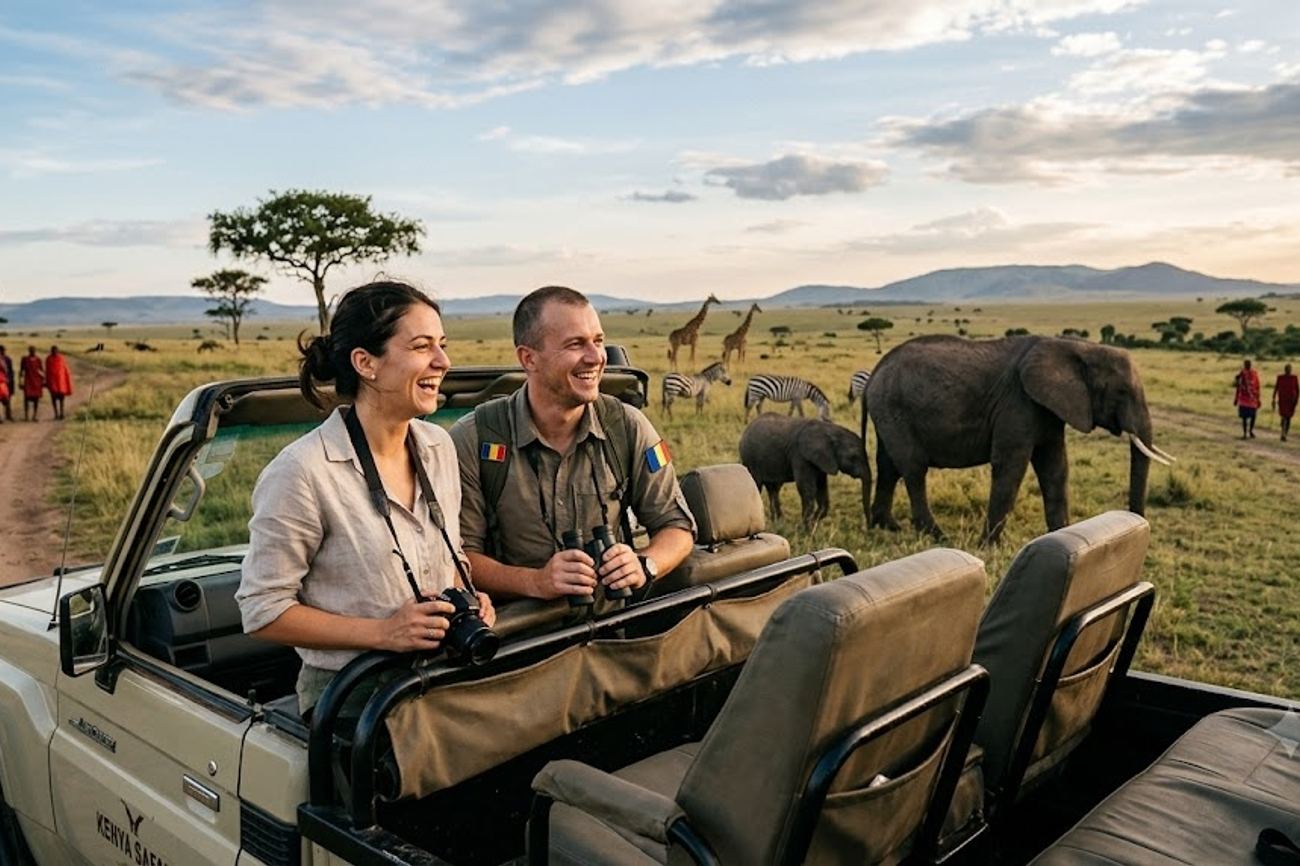
Image generated by AI
Kenya's projected investment agreements for 2026 have reached $2.9 billion USD, a figure that underscores a massive pivot toward diversified foreign capital compared to previous cycles focused solely on aid. This surge in targeted investment—spanning agriculture, manufacturing, ICT, health, energy, and real estate—signals a systemic shift in how East African markets are being positioned for European entrepreneurs, specifically those from Romania.
The East African Investment Pivot in Numbers
The current influx of capital into Kenya is not a random occurrence but a calculated expansion into specific high-growth sectors. The Kenyan government's publication of $2.9 billion USD in investment agreements for 2026 serves as the primary benchmark for this growth. When analyzing the distribution of this capital, the focus is heavily weighted toward infrastructure and service-based economies.
In the hospitality sector, the emergence of the Q Boutique Resort in Malindi, which officially opened in August 2025, serves as a critical data point for Romanian capital deployment. This project represents a transition from traditional large-scale hotel chains to "premium tourism assets" that leverage degraded properties for high-yield redevelopment. This model focuses on "destination identity" rather than just room capacity, a trend that aligns with broader shifts in luxury travel where authenticity is converted into commercial value.
Beyond hospitality, the investment mission highlighted three distinct urban hubs, each representing a different economic lever:
- Nairobi: The epicenter for digital services, telecommunications, banking, and financing.
- Mombasa: The primary gateway for logistics, trade cargo, and regional East African market penetration.
- Malindi: The focus for real estate, HoReCa (Hotel/Restaurant/Cafe), and SME microfinance.
Comparative Market Analysis: Kenya vs. Regional Benchmarks
Kenya's current investment trajectory suggests a strategic move to decouple its economy from a reliance on traditional agriculture, moving instead toward a service-and-tech-led model. While many East African nations are competing for foreign direct investment (FDI), Kenya is differentiating itself through its "technological ecosystem" and logistics infrastructure.
The following table illustrates the shift in investment focus areas as highlighted by the 2026 agreements and the recent Romanian investment mission.
| Investment Sector | Previous Primary Driver | 2026 Strategic Focus | Market Objective |
|---|---|---|---|
| Tourism | Mass-market Safari | Premium Boutique/Heritage | Higher ADR (Average Daily Rate) |
| Real Estate | Residential/Commercial | Asset Transformation | Value-add Redevelopment |
| Trade | Domestic Consumption | Regional Logistics Hub | East African Market Access |
| Services | Basic Banking | Fintech/Digital Services | Financial Inclusion & Efficiency |
This shift is mirrored in global data provided by the World Travel & Tourism Council (WTTC), which indicates a rising demand for experiential travel over standardized luxury. By integrating European hospitality standards with the Kenyan coast's tropical vegetation and Swahili architecture, investors are targeting a higher-spending demographic that prioritizes cultural immersion.
What This Means for Travelers
The transition of Kenya's tourism infrastructure from mass-market to boutique and premium assets will fundamentally change the visitor experience. For those planning trips to the coast, the data suggests a move toward "complete destination experiences" rather than isolated hotel stays.
Actionable Booking Advice:
- Diversify Your Itinerary: The integration of safari and coast experiences is becoming more seamless. Travelers should now book "hybrid" itineraries that combine the African savannah (wildlife encounters with elephants, lions, and giraffes) with the Indian Ocean coast.
- Target Emerging Hubs: While Nairobi remains the business hub, Malindi and Watamu are seeing a surge in high-end, boutique developments. Travelers seeking authenticity should look toward these areas, specifically exploring the Malindi Marine National Park and the Marafa Depression (Hell’s Kitchen).
- Timing Your Visit: With the opening of new premium assets like the Q Boutique Resort in August 2025, the "shoulder seasons" in the Kenyan coast are becoming more viable for luxury travel. Booking 12-16 weeks in advance for boutique properties is now recommended, as these assets have lower inventory than traditional resorts.
Forward Projection: The Regional Base Strategy
The data from the Mombasa mission suggests that Kenya is no longer being viewed as a terminal destination but as a "regional base." For the individual traveler and the entrepreneur alike, this means that infrastructure improvements in Mombasa's seaport and logistics networks will likely lead to easier transit and more diverse travel options into neighboring East African countries.
As the $2.9 billion USD in agreements begins to materialize through 2026, we can expect a significant upgrade in the "digital layer" of travel. The focus on ICT and telecommunications in Nairobi will likely result in better integrated booking systems, smarter city navigation, and a more robust fintech environment for international payments. According to data patterns often tracked by IATA, improved regional logistics usually correlate with an increase in secondary flight routes, potentially making the journey from Nairobi to coastal hubs like Malindi more efficient.
The Romanian model of identifying "degraded properties" and transforming them into "premium assets" is likely to be replicated across other coastal towns. This will lead to a fragmentation of the hotel market, where small, high-quality boutique options will outcompete aging, large-scale resorts.
FAQ: Kenya Investment & Travel 2026
Will hotel prices increase in Malindi and Watamu? Yes. The shift toward "premium tourism assets" and boutique resorts focuses on higher commercial value per guest. Travelers should expect an increase in Average Daily Rates (ADR) as degraded properties are replaced by high-end European-standard hospitality.
Is now a good time to invest in Kenyan real estate? The 2026 government agreements of $2.9 billion USD suggest a strong growth trajectory. The "value-add" model—buying degraded assets and restoring them with local expertise—is currently showing a high potential for ROI in the tourism sector.
Which cities offer the best infrastructure for business travelers? Nairobi remains the leader for digital and financial services. However, for those in logistics or import-export, Mombasa provides the critical infrastructure needed to access the broader East African market via its seaport.
How does the "Safari + Coast" trend affect travel planning? It simplifies the trip. Instead of choosing between wildlife and beaches, the industry is moving toward integrated packages. Travelers should seek operators that can link the savannah experience directly with coastal boutique stays in Malindi.
The shift from aid-dependency to targeted $2.9 billion USD investment agreements marks Kenya's evolution into a sophisticated hub for European capital and high-yield experiential travel.
Tags: Kenya-FDI-2026, Romanian-Investment-East-Africa, Malindi-Hospitality-Growth, Mombasa-Logistics-Hub, Boutique-Tourism-Trends-Kenya
Related Travel Guides
- Brazil and Colombia are Focusing to Build a Powerful Tourism Future Through Aviation, Digital Technology and Economic Growth
- South Africa Tourism Enters Tough Phase as Nearly 9% Rise in Oil Prices Raises Flight Prices and Puts Holiday Plans at Risk
- 10 Emerging Destinations Changing the Future of Global Travel in 2027
Disclaimer
This article is for informational and educational purposes only. It does not constitute legal, financial, or professional advice. While we strive to provide accurate and up-to-date information, travel policies, regulations, and conditions change rapidly. Always verify information with official sources before making travel decisions. Nomad Lawyer makes no representations about the accuracy, reliability, completeness, or suitability of the information provided. Readers should consult qualified professionals for advice specific to their circumstances. The views expressed in this article are those of the author and do not necessarily reflect the views of Nomad Lawyer.
Preeti Gunjan
Contributor & Community Manager
A passionate traveller and community builder. Preeti helps grow the Nomad Lawyer community, fostering engagement and bringing the reader experience to life.
Learn more about our team →