
Brazil and Colombia are Focusing to Build a Powerful Tourism Future Through Aviation, Digital Technology and Economic Growth
Brazil and Colombia are Focusing to Build a Powerful Tourism Future Through Aviation, Digital Technology and Economic Growth

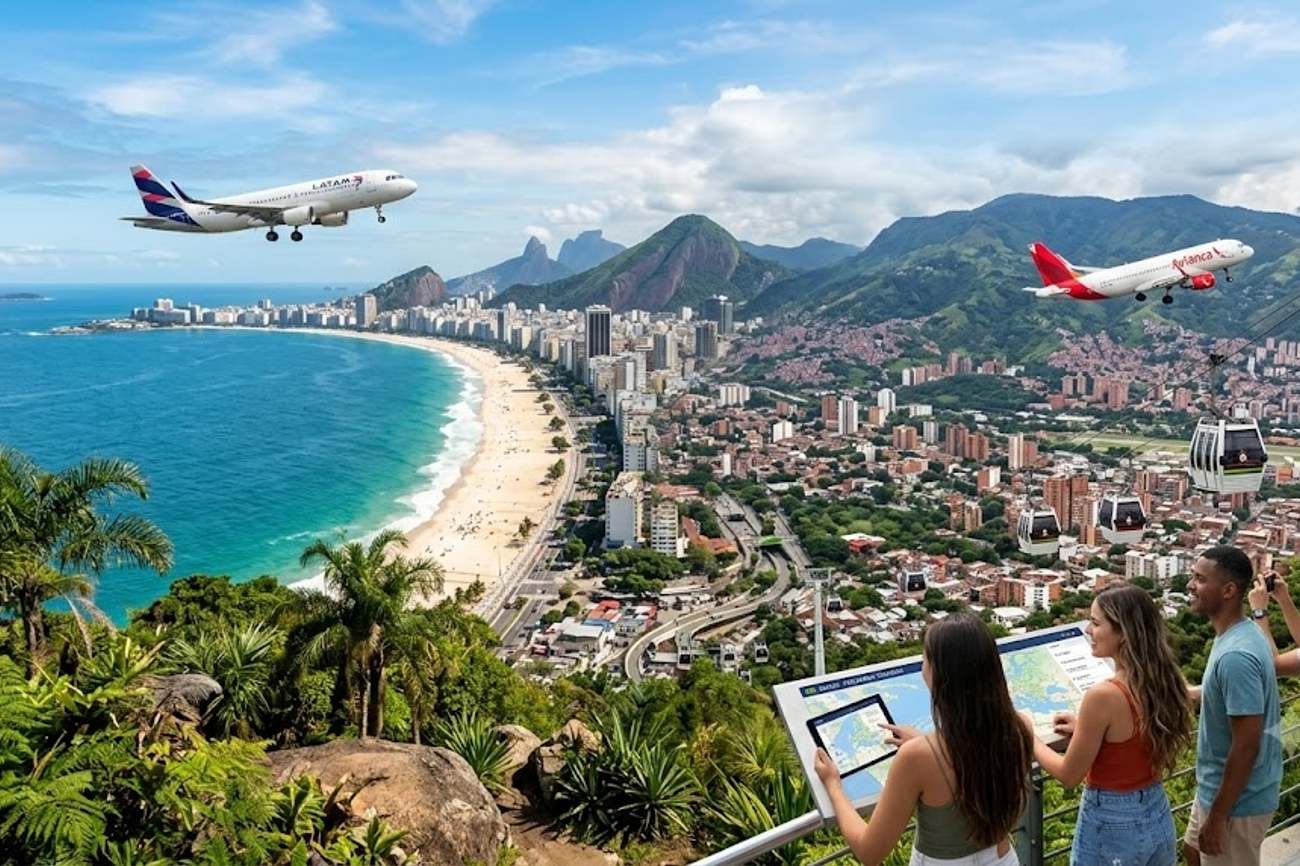
Image generated by AI
The 15,000 additional passenger seats arriving weekly in Colombia as of September 2026 mark a definitive shift in South American aviation dynamics. This surge is not an isolated spike but the result of a calculated, bilateral strategy between Brazil and Colombia to dismantle the fragmented networks that historically isolated the continent. By synchronizing digital infrastructure and aviation policy, these two nations have transitioned from being secondary "bucket list" destinations to primary global hubs, leveraging a unified front to capture high-value travelers from North America, Europe, and the Middle East.
The Architecture of a Regional Tourism Bloc
The current renaissance in South American travel is rooted in a systemic departure from the independent, fragmented marketing strategies of the past. Historically, Brazil leaned on the global recognition of the Amazon and the Rio Carnival, while Colombia focused on a narrative of urban regeneration and biodiversity. By 2026, this siloed approach was replaced by a strategic alliance between Embratur and ProColombia.
This shift represents a move toward data-driven, targeted acquisition. Rather than casting a wide net, the two governments have aligned their overarching goals to create a formidable tourism bloc. This cooperation is anchored by the Ministry of Tourism (MTur) in Brazil and the Ministry of Commerce, Industry and Tourism (MINCIT) in Colombia. Their objective is clear: transform the logistical experience of the traveler to match the quality of the destination. By sharing tourism intelligence and digital marketing frameworks, they have effectively reduced the cost of customer acquisition in distant markets, particularly in Asia and the Middle East, where a unified South American brand carries more weight than individual national campaigns.
Aviation Expansion and Logistical Throughput
The most tangible evidence of this transformation is found in the flight manifests of 2026. Aviation connectivity serves as the primary engine for this growth, with Colombia executing one of the most aggressive route expansions in its history to ensure the continent is accessible.
The scale of this expansion is detailed in the following breakdown of the September 2026 aviation surge:
| City/Airport | New International Routes | Key Airlines | Primary Source Markets |
|---|---|---|---|
| Medellín (MDE) | 6 | Viva Aerobus, Wingo, JetSmart | Mexico City, Montego Bay, Guatemala City, Buenos Aires |
| Cartagena (CTG) | Multiple | United Airlines, World2Fly | Houston, Washington, Madrid |
| Barranquilla (BAQ) | Multiple | Wingo, Avianca, JetBlue, Air Europa | Aruba, Fort Lauderdale, Madrid |
| Bogotá (BOG) | High-Value | Qatar Airways | Doha (Middle East/Asia) |
In total, Colombia has introduced 20 new international air routes operated by ten different airlines. These routes link six domestic cities with ten global source markets, injecting over 15,000 seats into the market every week. This is complemented by Brazil's International Tourism Acceleration Programme (PATI). A joint effort between MTur, the Ministry of Ports and Airports, and Embratur, PATI has focused on subsidizing and capturing tens of thousands of new airline seats to increase the volume of foreign arrivals.
The operational efficiency of these flights is supported by digital upgrades at critical hubs. The integration of joint customs and border control systems at Guarulhos International Airport in São Paulo and El Dorado International Airport in Bogotá has significantly reduced passenger wait times, removing the bureaucratic friction that previously deterred high-net-worth travelers.
Expert Analysis: The Geopolitics of Accessibility
For the modern traveler, the direct consequence of this Brazil-Colombia axis is a drastic reduction in "travel friction." In the aviation industry, friction is any barrier—visa requirements, lack of direct flights, or inefficient customs—that discourages a booking. By implementing visa-free entry for citizens of both nations for stays up to 90 days, Brazil and Colombia have created a reciprocal source market. This means a traveler is no longer choosing between Brazil or Colombia, but is instead booking a multi-country South American itinerary.
The pricing pressure created by this expansion is equally significant. When ten different airlines compete to fill 15,000 new weekly seats, the result is typically a stabilization or reduction in airfares due to increased capacity. However, the strategic pivot toward "high-value tourism" suggests that these governments are not seeking budget travelers, but rather those from the Middle East and North America who spend more per capita. The introduction of the Qatar Airways connection to Bogotá is the clearest signal of this intent; it opens a direct pipeline from Doha, bypassing the traditional European or North American layovers.
Furthermore, the move to distribute international flights across multiple cities—such as Barranquilla and Medellín—rather than funneling everything through the capitals of Bogotá and Brasília is a sophisticated move to prevent "over-tourism" in primary hubs while stimulating economic growth in secondary cities. This decentralization of arrivals ensures that the economic benefits of tourism are spread across a wider geographic area, making the growth model more sustainable.
Key Takeaways
- Capacity Surge: Colombia has added 20 new international routes across 10 airlines, resulting in 15,000+ additional weekly seats.
- Strategic Alliance: Brazil and Colombia have shifted from independent marketing to a unified bloc via MINCIT and MTur.
- High-Value Targeting: New connections, specifically the Qatar Airways route to Bogotá, target lucrative Middle Eastern and Asian markets.
- Frictionless Borders: Visa-free 90-day stays for citizens of both nations and digital customs upgrades have accelerated intra-regional movement.
- Decentralized Growth: International connectivity is being expanded beyond capitals to cities like Medellín, Cartagena, and Barranquilla.
FAQ: South American Travel 2026
Do I need a visa to travel between Brazil and Colombia? No. As of 2026, citizens of Brazil and Colombia benefit from visa-free entry for tourism and short-term business purposes for stays of up to 90 days.
Which airlines now offer direct flights to Medellín? Medellín’s José María Córdova Airport has seen an expansion including Viva Aerobus (from Mexico City), Wingo (to Montego Bay and Guatemala City), and JetSmart (from Buenos Aires).
How has the arrival process changed at major South American airports? Digital upgrades to joint customs and border control at El Dorado (Bogotá) and Guarulhos (São Paulo) have significantly reduced wait times and streamlined the entry process for international passengers.
What is the International Tourism Acceleration Programme (PATI)? PATI is a Brazilian government initiative involving MTur and the Ministry of Ports and Airports designed to increase foreign visitor capacity by subsidizing and securing tens of thousands of new airline seats.
The era of the South American detour is over; the continent has officially become the destination.
Tags: MINCIT, MTur, El Dorado International Airport, Guarulhos International Airport, Colombia Aviation Expansion 2026, Brazil-Colombia Tourism Pact
Related Travel Guides
- South Africa Tourism Enters Tough Phase as Nearly 9% Rise in Oil Prices Raises Flight Prices and Puts Holiday Plans at Risk
- 10 Emerging Destinations Changing the Future of Global Travel in 2027
- Global Destinations Compete for Saudi Arabia's Projected US$60 Billion Outbound Travel Market Driven by Young High-Spending Travelers
Disclaimer
This article is for informational and educational purposes only. It does not constitute legal, financial, or professional advice. While we strive to provide accurate and up-to-date information, travel policies, regulations, and conditions change rapidly. Always verify information with official sources before making travel decisions. Nomad Lawyer makes no representations about the accuracy, reliability, completeness, or suitability of the information provided. Readers should consult qualified professionals for advice specific to their circumstances. The views expressed in this article are those of the author and do not necessarily reflect the views of Nomad Lawyer.
Kunal K Choudhary
Co-Founder & Contributor
A passionate traveller and tech enthusiast. Kunal contributes to the vision and growth of Nomad Lawyer, bringing fresh perspectives and driving the community forward.
Learn more about our team →