
South Africa Tourism Enters Tough Phase as Nearly 9% Rise in Oil Prices Raises Flight Prices and Puts Holiday Plans at Risk
South Africa Tourism Enters Tough Phase as Nearly 9% Rise in Oil Prices Raises Flight Prices and Puts Holiday Plans at Risk

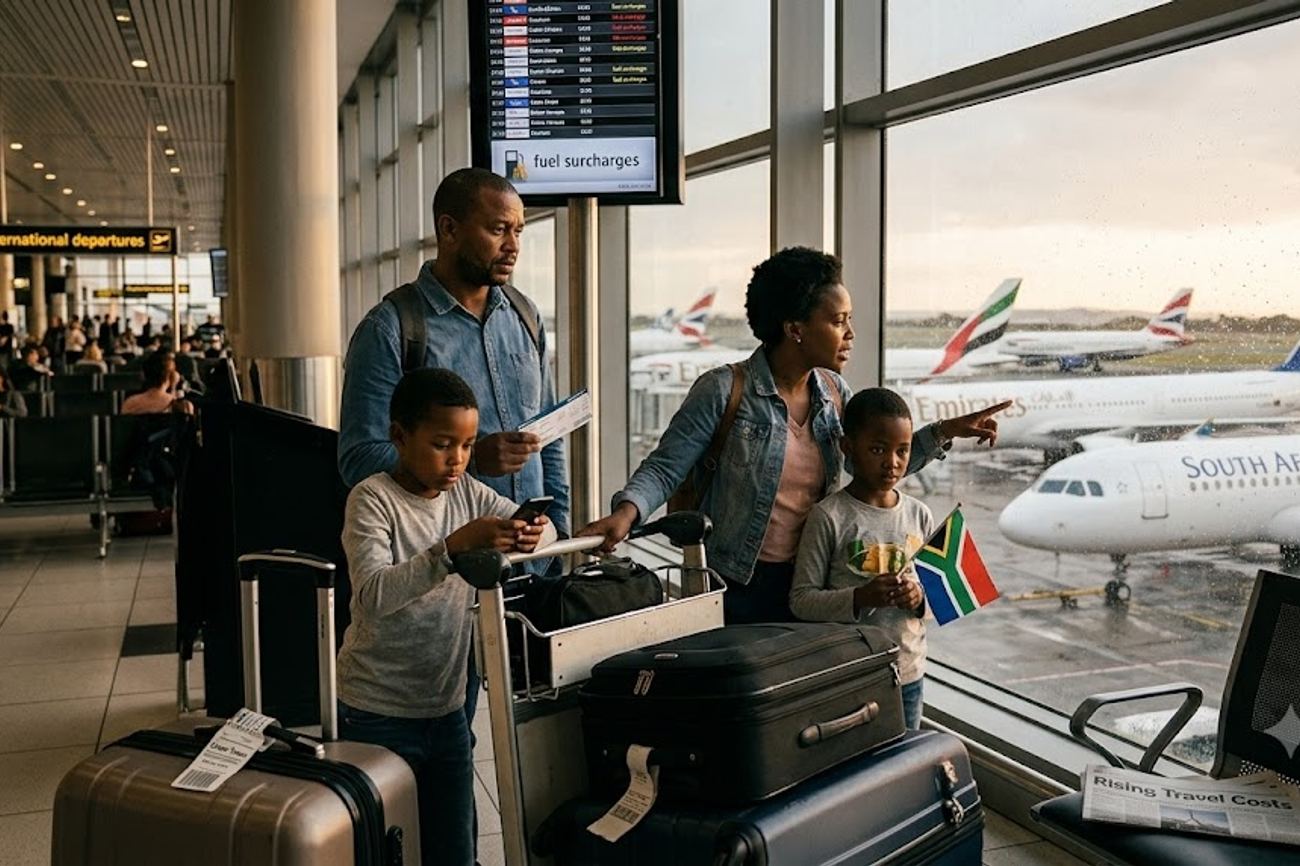
Image generated by AI
[Johannesburg, September 2026] — South Africa’s tourism recovery is facing a severe threat as a sudden spike in global crude oil prices triggers a surge in aviation fuel costs, forcing airlines to hike ticket prices. The price escalation is stalling travel plans for leisure tourists and hospitality operators, jeopardizing the growth gains achieved since the pandemic.
The crisis stems from geopolitical instability and supply chain bottlenecks in major oil-producing regions, which have pushed international energy benchmarks higher. This volatility has created an immediate financial ripple effect: rising crude prices have led to increased refined jet fuel costs, which airlines are now passing on to consumers through higher fares and fuel surcharges. This shift arrives just as the sector was reporting record-breaking arrivals for the first half of 2026.
The September 2026 Energy Shock
The current crisis is driven by extreme volatility in global energy markets. By mid-September 2026, international benchmark Brent crude surged to nearly $98 per barrel. This price jump was catalyzed by military conflicts and operational disruptions at critical oil transit chokepoints, effectively removing millions of barrels of daily supply from the global market.
Because the Department of Mineral and Petroleum Resources oversees domestic fuel determinations, the global spike filtered rapidly into the South African market. For a country dependent on fuel imports, the cost of Jet A-1 fuel—one of the highest operational expenses for any carrier—has seen weekly volatility as high as 70%.
The financial mechanism is direct: as Brent crude rises, refined aviation fuel costs climb, forcing airlines to implement domestic and international surcharges to maintain viability. This has created an immediate budgetary squeeze for travelers, leading many to place bookings on hold.
Markets and Routes Under Pressure
The price hikes are impacting a diverse array of travel corridors, threatening both high-volume regional trade and high-yield international tourism.
- Long-Haul International Corridors: High-yield markets from North America, Western Europe (specifically the United Kingdom, Germany, and the Netherlands), and key Asian hubs are seeing the most significant fare increases. These visitors typically support luxury safari lodges in Mpumalanga and boutique hotels in the Western Cape.
- SADC Regional Networks: The Southern African Development Community (SADC) remains the largest source of visitor volume. Increased costs for transborder transport networks are threatening the retail and cross-border commerce that relies on these arrivals.
- Domestic Hospitality: From urban centers to coastal networks, hospitality businesses are reporting a slowdown in bookings as the cost of reaching these destinations becomes prohibitive for the middle-class leisure traveler.
What This Means for Travelers
For passengers and travel agents, the corporate language of "operational cost adjustments" translates to immediate, tangible losses in affordability.
First, expect a sharp increase in the final checkout price of flight bookings. Many airlines are introducing "fuel surcharges" as separate line items, meaning a ticket price that looked affordable a month ago may now be 10% to 20% more expensive.
Second, the "Rand advantage" is eroding. While the foreign exchange value of the South African Rand previously made the country an attractive, low-cost destination for international visitors, the surge in transport costs is offsetting those savings. Travelers are now spending a larger portion of their budget on the flight itself, leaving less for local spending on hotels and tours.
Third, flexibility is disappearing. As airlines struggle with thin margins due to fuel volatility, promotional fares and discounted "early bird" packages are being withdrawn or replaced with restrictive, non-refundable tickets.
The Road to Recovery and Current Risks
This energy crisis is a significant setback for a sector that has spent three years in a structural recovery. Between 2023 and early 2026, South Africa successfully restored visitor confidence through systematic interventions in airport infrastructure and visa facilitation.
Official data from Statistics South Africa (Stats SA) and the Department of Tourism confirmed that tourist arrivals expanded dramatically during the first half of 2026. The national destination strategy was meeting or exceeding growth targets, positioning tourism as a primary catalyst for foreign direct investment and job creation.
The current volatility creates a dangerous paradox: while the demand for South African destinations remains high, the physical and financial means of reaching them are becoming restricted. Policymakers in the transport and tourism sectors are now facing an urgent need to mitigate these costs to prevent a total stagnation of the 2026 growth trajectory. If Brent crude remains near the $98 mark, the industry risks a "hard landing" where the post-pandemic rebound is erased by macroeconomic headwinds.
FAQ: South Africa Travel Costs 2026
Why are flight prices to South Africa increasing suddenly? Prices are rising because global Brent crude oil has surged to nearly $98 per barrel. Since aviation fuel is a primary cost for airlines, these companies are adding surcharges to tickets to cover the increased cost of Jet A-1 fuel.
Which traveler groups are most affected by these changes? Both long-haul international travelers from Europe and North America and regional travelers from SADC countries are affected. High-yield luxury tourism and essential cross-border regional trade are seeing the most significant impact on budgets.
Will this affect hotel and safari lodge prices? While the fuel spike directly hits airfares, the overall tourism economy is feeling the pressure. Some hospitality businesses may see a drop in occupancy as travelers cancel trips due to the high cost of flights.
Is this a permanent price increase? The current spike is linked to geopolitical instability and supply chain bottlenecks. Prices will fluctuate based on the stability of oil-producing regions and the price of Brent crude on the global market.
Aviation fuel volatility is now the primary gatekeeper for South Africa's tourism ambitions.
#SouthAfricaTourism2026 #BrentCrudeOil #SADCtravel #JetA1Fuel #JohannesburgAviation #StatsSA
Related Travel Guides
Disclaimer
This article is for informational and educational purposes only. It does not constitute legal, financial, or professional advice. While we strive to provide accurate and up-to-date information, travel policies, regulations, and conditions change rapidly. Always verify information with official sources before making travel decisions. Nomad Lawyer makes no representations about the accuracy, reliability, completeness, or suitability of the information provided. Readers should consult qualified professionals for advice specific to their circumstances. The views expressed in this article are those of the author and do not necessarily reflect the views of Nomad Lawyer.
Naina Thakur
Contributor & Travel Specialist
Travel enthusiast and legal writer covering visa regulations, responsible tourism, and cultural journeys across global destinations.
Learn more about our team →