
United Kingdom British Airways Restores Dubai Flights as Travellers Gain More Winter Travel Choices From November
United Kingdom British Airways Restores Dubai Flights as Travellers Gain More Winter Travel Choices From November

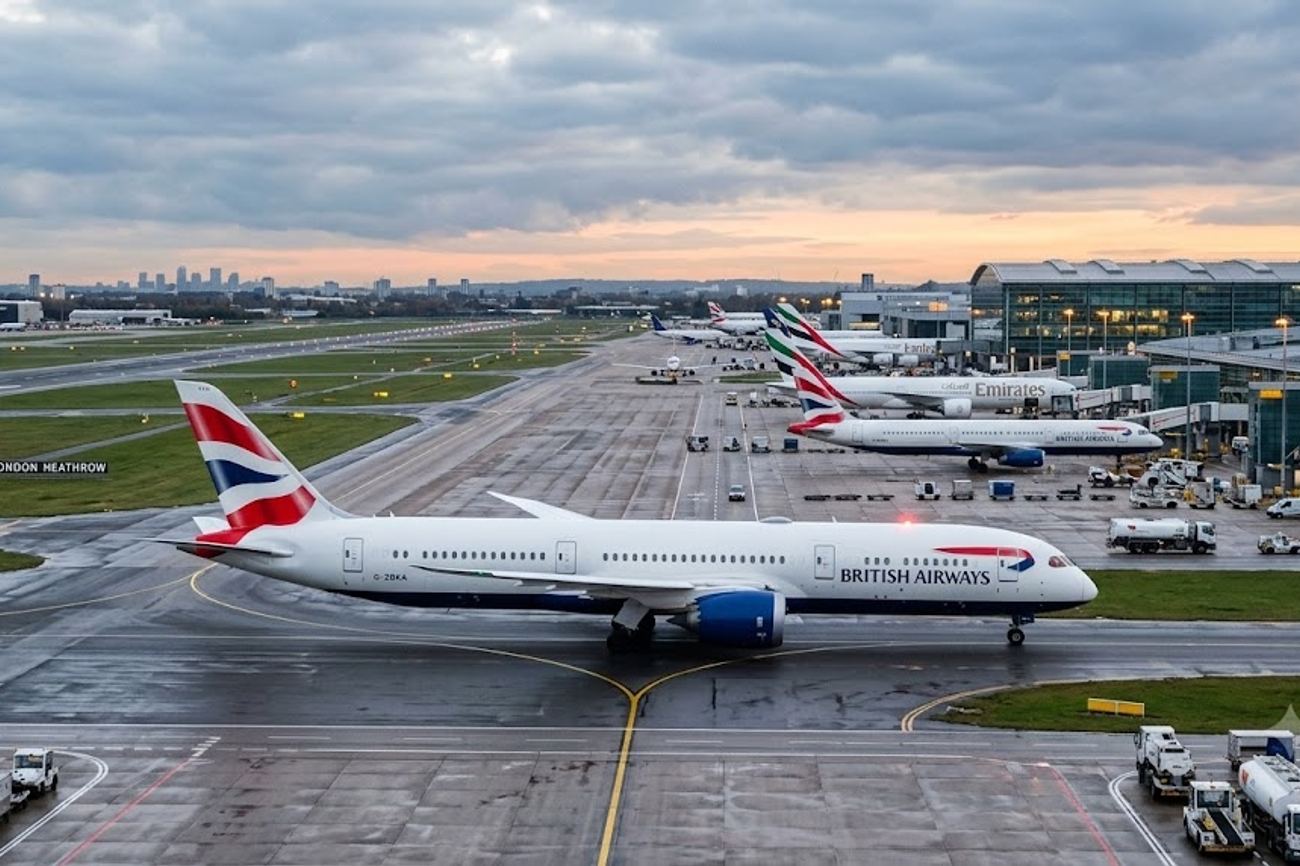
Image generated by AI
While Dubai International Airport (DXB) has consistently ranked as the world's busiest airport for international passenger traffic, the restoration of British Airways' daily service on November 3 signals a strategic pivot back to high-frequency capacity during the Q4 peak. This move follows a period of regional schedule adjustments and reflects a broader industry trend where legacy carriers are aggressively reclaiming market share in the Gulf corridor to compete with the dominance of state-backed giants.
The Dubai-London Corridor in Numbers
The restoration of the London to Dubai route is not a mere schedule update but a calculated capacity injection. Starting November 3, British Airways will initiate a baseline of one daily flight. The airline has already signaled a secondary phase of expansion, moving from one flight per day to two daily flights.
This frequency shift is designed to capture the surge in winter demand, a period where the UAE experiences its highest influx of European tourists due to favorable weather. By increasing capacity by 100% during the expansion phase, British Airways is positioning itself to capture a larger slice of the high-yield business and luxury leisure segments. According to data from IATA, the Middle East remains one of the fastest-growing aviation markets globally, and the London-Dubai route is one of the most competitive "premium" corridors in the world.
The timing of this restoration is critical. By launching on November 3, the carrier aligns its capacity with the onset of the UAE's peak tourism season. This allows the airline to maximize load factors as corporate travel resumes in earnest and winter holiday bookings peak.
Comparative Connectivity and Market Benchmarks
To understand the significance of this move, one must look at the competitive landscape of the London-Dubai route. For years, this corridor has been a battleground between British Airways and Emirates. While Emirates operates multiple daily flights from both London Heathrow (LHR) and Gatwick (LGW), British Airways' decision to restore and then double its frequency indicates a refusal to cede the market.
Historically, the London-Dubai route serves as a primary artery for both "point-to-point" travelers and those using Dubai as a transit hub for Asia and Africa. The shift from zero or reduced frequency back to two daily flights represents a significant recovery in seat capacity.
| Metric | Initial Phase (Nov 3) | Expansion Phase | Year-over-Year Shift |
|---|---|---|---|
| Daily Flight Frequency | 1 Flight | 2 Flights | Increase from previous reduced schedule |
| Service Type | Daily | Daily (Double Frequency) | Restoration of consistent connectivity |
| Primary Target Segment | Winter Leisure/Business | High-Frequency Corporate | Shift toward capacity growth |
| Route Status | Restored | Expanded | Recovery of market presence |
When compared to other European hubs, London's connectivity to Dubai remains superior, though it faces increasing competition from other Gulf carriers expanding into secondary European cities. The data provided by OAG suggests that capacity on Gulf routes is returning to, and in some cases exceeding, 2019 levels, driven by a surge in "revenge travel" and the expansion of Dubai's business infrastructure.
What This Means for Travelers
For the individual traveler, the increase from one to two daily flights is the most critical data point. In aviation, frequency equals flexibility. When a route operates only once per day, a flight cancellation or a missed connection becomes a 24-hour setback. With two daily flights, the risk is mitigated, and scheduling options for business travelers—who often require "out-and-back" efficiency—are vastly improved.
Booking Strategy for Q4: If you are planning a trip to the UAE between November and February, the introduction of this capacity may temporarily stabilize ticket prices by increasing the total seat supply. However, because this is the peak winter season, the "capacity cushion" provided by British Airways may be absorbed quickly by demand.
Travelers should monitor fare fluctuations immediately following the November 3 launch. Historically, the introduction of new frequency on a competitive route can lead to short-term promotional pricing as the airline seeks to fill the new slots. Booking 8-12 weeks in advance remains the gold standard for this route during the winter window to avoid the steep price hikes seen in December.
Forward Projection: The Gulf Capacity Race
The trajectory of British Airways' Middle East strategy suggests that the Dubai restoration is a precursor to wider regional adjustments. We are seeing a pattern where legacy carriers are moving away from "lean" schedules and returning to "aggressive" capacity to combat the growth of low-cost long-haul options and the expansion of the "Super-Hub" model.
Based on current market movements, we can project that the London-Dubai corridor will see further optimization of aircraft models. To maximize the profitability of two daily flights, airlines typically deploy higher-capacity wide-body aircraft. The move to double frequency suggests that British Airways expects the load factor to remain high enough to justify the operational cost of a second daily rotation.
Furthermore, the integration of Dubai as a gateway means this route will likely see an increase in "interlining" passengers—those booking a single ticket from London to a destination in Southeast Asia via Dubai. As Statista data indicates a rise in outbound travel from the UK to Asian markets, the restoration of this route serves as a vital link in a larger global chain.
FAQ: London-Dubai Connectivity 2024
Will the increase in flights lower ticket prices? Increased capacity generally puts downward pressure on fares. However, because this expansion coincides with the peak winter season, any price drops may be offset by high seasonal demand. Comparing fares across multiple carriers is recommended.
Is this the best time to book winter travel to Dubai? Yes. With the restoration of daily flights starting November 3 and the subsequent increase to two daily flights, there is more inventory available. Booking now avoids the December price surge.
Which airlines currently dominate the London-Dubai route? Emirates remains the primary operator with the highest frequency, but British Airways is now strengthening its position as the leading legacy alternative for passengers preferring a UK-based carrier.
How does the November 3 start date affect travel planning? It provides a concrete window for those who previously avoided British Airways due to schedule gaps. Travelers can now lock in daily connectivity for the entire winter period.
The restoration of the London-Dubai link is a clear indicator that the appetite for high-frequency, premium connectivity in the Gulf is stronger than ever.
#BritishAirwaysCapacity #DubaiAviationGrowth2024 #LondonDubaiRouteRecovery #UAEWinterTravelDemand #GulfMarketShareShift
Related Travel Guides
- Kuwait Travel Takes Off as Jazeera Airways Unveils First Winter Flights to Prague During ATM Dubai 2026
- Kenya and Georgia Emerge Alongside a Rising Travel Movement as 2027 Lesser-Known Escapes Challenge Overtourism
- Cambodia Creates a New Tourism Attraction in Phnom Penh With Massive 75-Hectare Boeung Tamok Green Zone
Disclaimer
This article is for informational and educational purposes only. It does not constitute legal, financial, or professional advice. While we strive to provide accurate and up-to-date information, travel policies, regulations, and conditions change rapidly. Always verify information with official sources before making travel decisions. Nomad Lawyer makes no representations about the accuracy, reliability, completeness, or suitability of the information provided. Readers should consult qualified professionals for advice specific to their circumstances. The views expressed in this article are those of the author and do not necessarily reflect the views of Nomad Lawyer.
Naina Thakur
Contributor & Travel Specialist
Travel enthusiast and legal writer covering visa regulations, responsible tourism, and cultural journeys across global destinations.
Learn more about our team →