
Kenya and Georgia Emerge Alongside a Rising Travel Movement as 2027 Lesser-Known Escapes Challenge Overtourism
Kenya and Georgia Emerge Alongside a Rising Travel Movement as 2027 Lesser-Known Escapes Challenge Overtourism

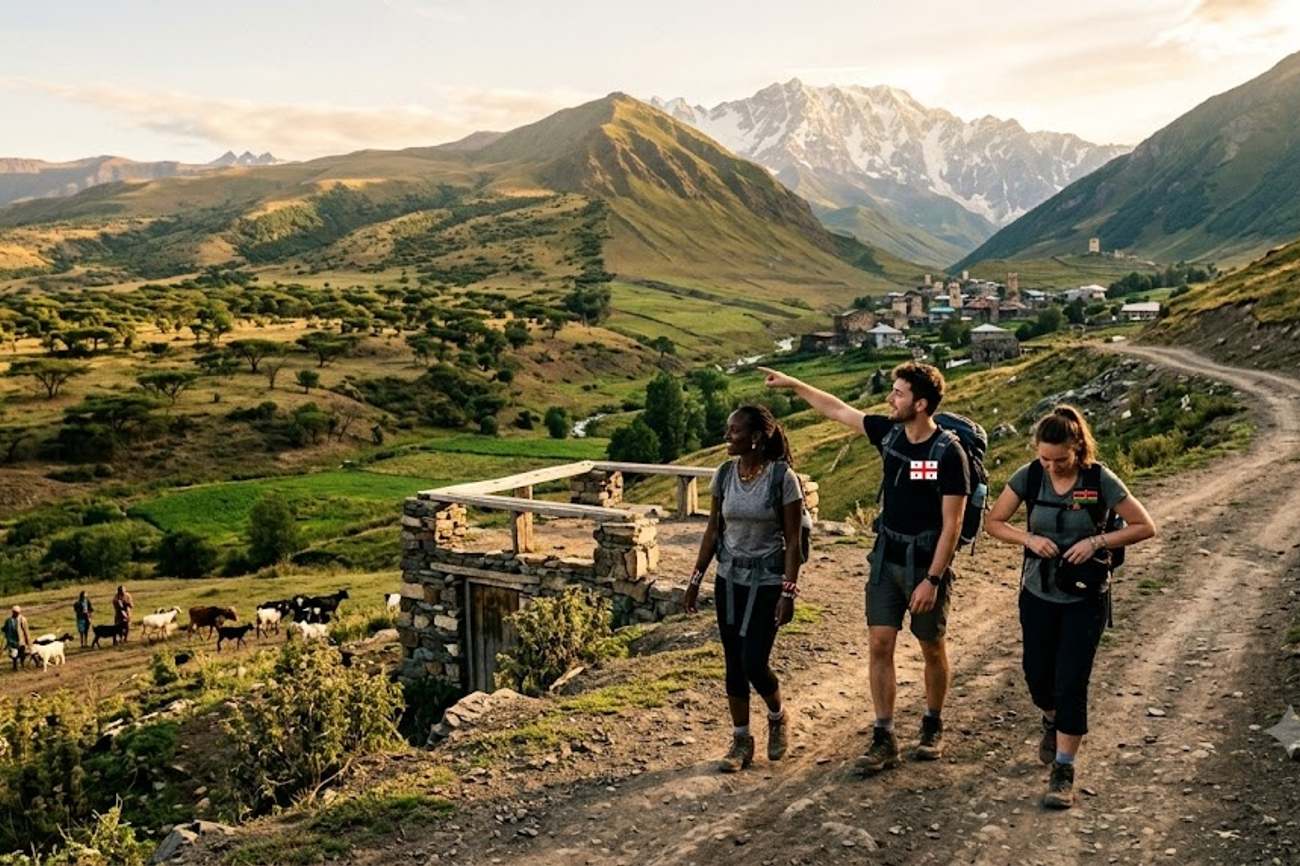
Image generated by AI
[London, October 2024] — Global travel patterns are shifting toward "under-the-radar" destinations for 2027 as a critical mass of tourists actively seek to avoid overcrowded hotspots. New data indicates a systemic move away from traditional tourism hubs in favor of regions where visitor growth can directly fund community conservation and regional economic stability without triggering the negative effects of overtourism.
The trend is driven by a combination of climate uncertainty, a desire for authentic local engagement, and a growing rejection of "mass tourism" environments. Research from Booking.com, involving 32,500 travelers across 35 global markets, reveals that 43% of international travelers now plan to avoid overcrowded destinations—an 11 percentage point increase over the previous year. Furthermore, 42% of travelers intend to shift their trips outside of traditional peak seasons to mitigate crowds and environmental pressure.
The Catalyst for Destination Diversification
The pivot toward lesser-known regions is not merely a preference for the obscure but a calculated shift in how travelers define "value." According to the Booking.com 2026 Travel & Sustainability Report, 85% of global travelers now categorize sustainable travel as "important" or "very important." This ideological shift is manifesting in concrete booking behaviors, with 44% of those choosing quieter destinations explicitly stating their goal is to avoid contributing to overtourism.
Industry analysts note that this shift is being accelerated by extreme weather events. Approximately 26% of travelers reported experiencing a natural disaster or extreme weather while on a trip, and 31% have already changed or canceled travel plans due to weather risks. This has led 25% of travelers to specifically seek "cooler" destinations, further diversifying the map beyond traditional summer hotspots.
For destination management organizations, this presents a precarious balance. While increased demand can bolster local transport, guiding services, and hospitality infrastructure, unmanaged growth risks replicating the same congestion that is currently driving travelers away from primary hubs.
Impacted Regions and 2027 Growth Triggers
The following destinations have been identified as having the necessary "tourism readiness" and infrastructure to handle increased volume responsibly while providing new incentives for visitation.
| Destination | Country | Primary Appeal | 2027 Growth Trigger |
|---|---|---|---|
| Samburu National Reserve | Kenya | Wildlife & Conservation | Lower pressure than Maasai Mara |
| Mestia | Georgia | Mountain Culture/Skiing | Expansion of year-round tourism |
| Northern Highlands | Jordan | Heritage & Birdwatching | Diversification beyond Petra/Wadi Rum |
| Whitehorse | Canada | Arctic/Indigenous Culture | Community-led adventure tourism |
| Alonnisos | Greece | Marine Tourism & Diving | Sustainability & protected waters |
| Dili | Timor-Leste | Reefs & Mountains | Improved international flight links |
| Pekoe Trail | Sri Lanka | Village Tourism/Hiking | Community-led trail development |
| Liepāja | Latvia | Music & Baltic Beaches | European Capital of Culture 2027 |
| Carretera Austral | Chile | Patagonia Road Trips | Major investment in Route 7 |
| Dalsland | Sweden | Lakes & Forests | Enhanced rail accessibility |
What This Means for Travelers
For the average traveler, this shift means a transition from "bucket-list" tourism to "impact" tourism. The practical implications for booking and planning are as follows:
1. New Infrastructure Access Travelers can expect easier access to remote areas. For example, the Swedish Transport Administration and similar bodies are improving rail links to regions like Dalsland, while Chile is investing heavily in the Carretera Austral (Route 7) to make Patagonia more accessible via road.
2. Shift in Seasonal Timing With 42% of travelers avoiding peak seasons, there is a growing trend toward "shoulder season" travel. This typically results in lower accommodation costs and shorter wait times at attractions, though it may require more flexible flight bookings.
3. Diversified Wildlife Experiences In Kenya, the push toward Samburu National Reserve offers a viable alternative to the Maasai Mara. Samburu currently sees only about 10% of the visitor volume of the Mara, meaning travelers can experience high-quality wildlife encounters with significantly less competition for sightings.
4. Cultural Programming as a Driver Events are becoming primary reasons for visiting secondary cities. The designation of Liepāja as the European Capital of Culture in 2027—with programming starting in January—means travelers will find a concentrated surge of arts and music events in a city that previously saw far fewer visitors than Riga.
Economic and Regulatory Trajectories
The economic data suggests that these "alternative" destinations are already seeing significant momentum. In Kenya, international arrivals surged to 2.42 million in the 2024/25 financial year, up from 1.65 million in 2022/23. This growth translated to a massive increase in earnings, rising from KSh297.3 billion to KSh458.2 billion.
Jordan is seeing similar trends. The country welcomed approximately 6.1 million visitors in 2024, generating JOD5.1 billion in income. By the first eight months of 2025, tourism income had already hit US$5.33 billion, with visitor numbers increasing by 14.9% year-on-year. The push toward the Northern Highlands is a strategic move to spread this wealth into forests and Roman heritage sites, reducing the burden on the Jordan Tourism Board managed sites like Petra.
In Europe, Latvia is attempting to break the "Riga monopoly." While total accommodation visitors in Latvia rose to 2.8 million in 2025 (a 4.5% increase), Riga historically absorbed 71.8% of all foreign visitors. The 2027 cultural push in Liepāja is a direct regulatory and promotional attempt to redistribute that 71.8% share across the country.
Meanwhile, Georgia continues its aggressive growth, recording 7.8 million international non-resident arrivals in 2025, a 5.9% increase. The focus on Mestia is designed to move this volume into the Caucasus mountains to sustain a year-round economy rather than a seasonal peak.
FAQ: Emerging Destinations 2027
Are these destinations more expensive than traditional hotspots? Generally, no. Many of these regions offer lower costs of living and accommodation. However, because they are "lesser-known," there may be fewer budget flight options, potentially increasing the initial transport cost.
How do I ensure my visit to a "quiet" destination is sustainable? Prioritize community-led tourism. Choose locally owned lodges over international chains and utilize certified local guides. In regions like Samburu or the Pekoe Trail, spending directly within the community ensures the economic benefits stay local.
Will these areas become overcrowded by 2027? The goal of "tourism readiness" is to prevent this. By diversifying routes (e.g., using the Carretera Austral instead of central Patagonia), authorities aim to spread the footprint of tourism across a larger geographic area.
Do I need special permits for these emerging regions? Requirements vary. While most are open, some protected areas like Alonnisos in Greece or specific Indigenous lands in Canada may have specific environmental or cultural guidelines. Always check the official government tourism portal before booking.
The map of global travel is being redrawn by a passenger base that values silence over status.
#SamburuNationalReserve #Liepaja2027 #CarreteraAustral #MestiaGeorgia #Overtourism2027 #SustainableTravelTrends
Related Travel Guides
- Cambodia Creates a New Tourism Attraction in Phnom Penh With Massive 75-Hectare Boeung Tamok Green Zone
- China Follows India as Myanmar Extends Visa on Arrival Access to Drive Tourism Growth With Easier Entry Rules
- Shanghai Follows Beijing and Other Leading Cities as Tanzania Safari Travel Expands in Northern Serengeti
Disclaimer
This article is for informational and educational purposes only. It does not constitute legal, financial, or professional advice. While we strive to provide accurate and up-to-date information, travel policies, regulations, and conditions change rapidly. Always verify information with official sources before making travel decisions. Nomad Lawyer makes no representations about the accuracy, reliability, completeness, or suitability of the information provided. Readers should consult qualified professionals for advice specific to their circumstances. The views expressed in this article are those of the author and do not necessarily reflect the views of Nomad Lawyer.
Naina Thakur
Contributor & Travel Specialist
Travel enthusiast and legal writer covering visa regulations, responsible tourism, and cultural journeys across global destinations.
Learn more about our team →