
Cambodia Creates a New Tourism Attraction in Phnom Penh With Massive 75-Hectare Boeung Tamok Green Zone
Cambodia Creates a New Tourism Attraction in Phnom Penh With Massive 75-Hectare Boeung Tamok Green Zone

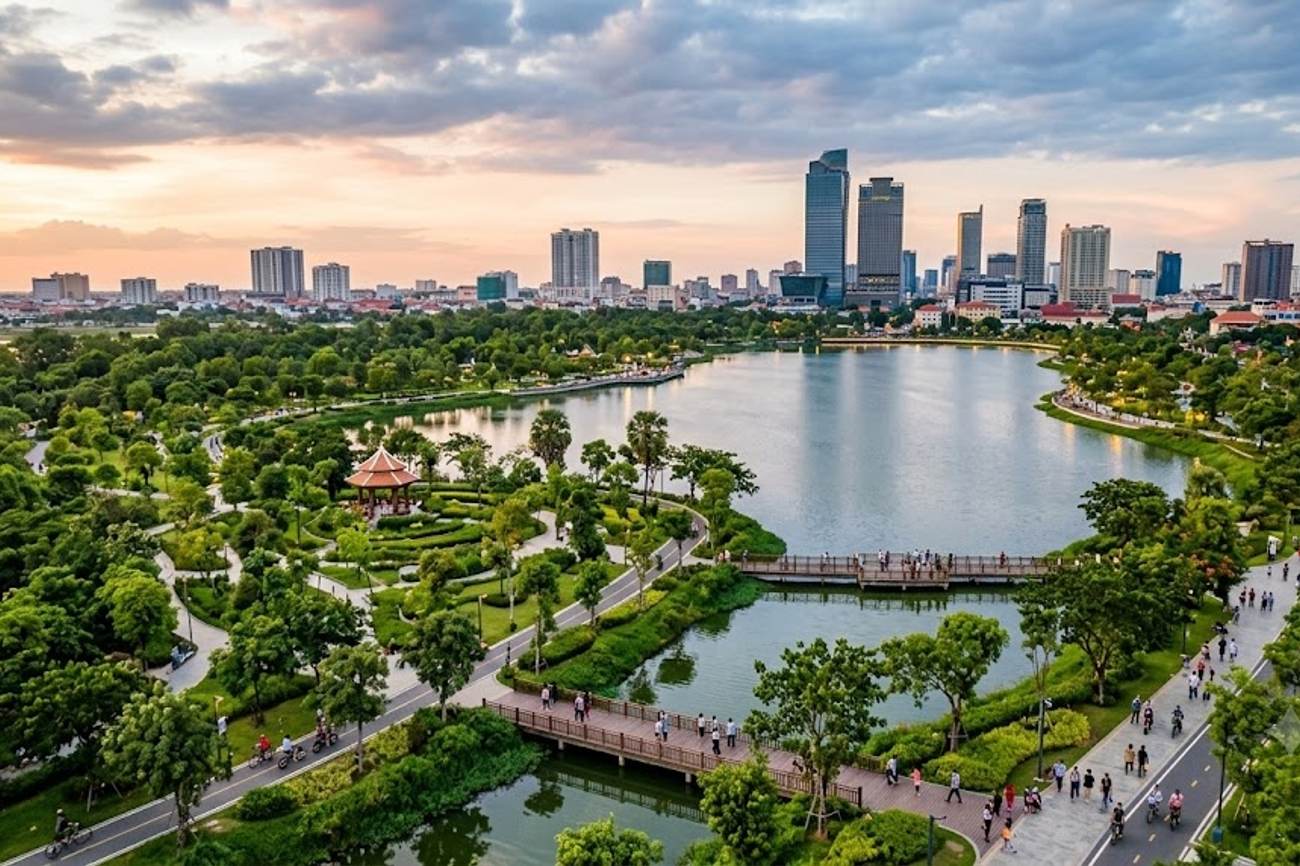
Image generated by AI
75 hectares of reclaimed land are being converted into a massive green zone at Boeung T amok, signaling a strategic pivot in how Phnom Penh manages its urban density and tourist appeal. This large-scale transformation of the capital's geography is not merely a landscaping project but a calculated effort to diversify Cambodia's tourism product beyond its historical and cultural anchors.
The Infrastructure of Urban Reclamation
The development of the Boeung T amok green zone is a feat of civil engineering as much as it is an environmental initiative. To prepare the site for public use, authorities have executed extensive land reclamation, moving millions of cubic meters of soil to stabilize the area and create a viable foundation for landscaping. This process transforms what was previously underutilized or unstable land into a structured public asset.
Current progress reports indicate that the environmental phase is well underway, with 80 percent of the planned tree-planting already completed. This aggressive reforestation effort is designed to mitigate the "urban heat island" effect common in rapidly expanding Southeast Asian capitals. By integrating this 75-hectare expanse into the city's fabric, Phnom Penh is attempting to balance its rapid vertical growth with horizontal, breathable public space.
This project does not exist in a vacuum. It is part of a wider municipal strategy to distribute public leisure across the city. While Boeung T amok serves as the flagship project, a secondary recreational area of nearly three hectares is simultaneously under development in the western sector of the capital. Together, these initiatives represent a shift toward decentralized urban planning, aimed at reducing the congestion currently found in the city's existing, over-saturated public squares and riverfronts.
Data Breakdown: Phnom Penh’s Green Expansion
The following table outlines the specific metrics associated with the current urban expansion efforts in the Cambodian capital.
| Project Metric | Boeung T amok Green Zone | Western Sector Project |
|---|---|---|
| Total Land Area | 75 Hectares | ~3 Hectares |
| Planting Progress | 80% Completed | In Progress |
| Primary Function | Tourism, Recreation, Urban Lung | Local Community Recreation |
| Key Infrastructure | Soil Reclamation (Millions of $m^3$) | Public Space Expansion |
| Target Use Case | Wellness, Sports, International Tourism | Localized Fitness and Leisure |
Expert Analysis: Diversifying the Cambodian Tourism Product
For the average traveler, Cambodia is synonymous with the architectural grandeur of Angkor Wat or the somber history of the Killing Fields. However, from a destination management perspective, relying solely on heritage tourism creates a "hit-and-run" visitor pattern—tourists arrive for the landmarks and depart quickly. The development of the Boeung T amok zone is a direct response to this limitation.
For travelers booking stays in Phnom Penh, the direct consequence of this project is an increase in "dwell time." By creating a space dedicated to wellness, fitness, and nature, the city is courting the modern "slow travel" demographic. When a city offers high-quality public infrastructure—similar to the standards seen in Singapore's Gardens by the Bay or the parks of Tokyo—it encourages visitors to extend their hotel stays by several days to incorporate leisure and wellness into their itineraries.
The pricing pressure this creates is subtle but significant. As the city becomes more "livable" and attractive for longer stays, there is an inevitable rise in the valuation of surrounding real estate and hospitality services. The shift from a purely cultural destination to a lifestyle destination allows the Ministry of Tourism of Cambodia to market the capital not just as a transit point between provinces, but as a primary destination in its own right.
Furthermore, the insistence that this land remains dedicated to public use rather than commercial development is a critical regulatory move. In many emerging economies, "green zones" are often precursors to luxury real estate developments. By codifying this as a public asset, Phnom Penh is following a global trend seen in cities that prioritize "quality of life" indices to attract foreign investment and digital nomads. This aligns with broader standards promoted by the International Air Transport Association (IATA) regarding the improvement of destination accessibility and appeal to sustain long-term aviation growth.
Key Takeaways
- Scale of Development: A massive 75-hectare zone is being created at Boeung T amok, supported by a secondary 3-hectare project in the west.
- Environmental Progress: 80 percent of the reforestation and tree-planting targets have already been met.
- Strategic Shift: Phnom Penh is moving from a "heritage-only" tourism model to one that includes wellness, nature, and outdoor recreation.
- Urban Relief: The project aims to alleviate overcrowding in existing city parks by distributing visitor traffic across new, larger zones.
- Public Mandate: The site is designated for public and community use, explicitly avoiding commercial privatization.
FAQ: Phnom Penh Urban Tourism 2024
Will the Boeung T amok green zone be free for tourists to enter? Yes, the project is designed as a public recreational space and community-focused destination, meaning it is intended for public use rather than as a paid commercial attraction.
What activities will be available at the new 75-hectare park? The zone is being developed for outdoor fitness, walking, sports, and general leisure, providing a nature-based alternative to the city's traditional cultural sites.
How does this project affect the overall travel experience in Phnom Penh? It adds a "wellness" dimension to the city, allowing visitors to combine historical sightseeing with outdoor relaxation, which likely encourages longer stays in the capital.
Is this part of a larger trend in Cambodia? Yes, it reflects a broader national strategy to modernize urban infrastructure and diversify tourism offerings beyond the traditional temple-based economy.
A city that breathes is a city that attracts; Phnom Penh is betting 75 hectares on that logic.
Tags: Boeung T amok, Phnom Penh Urban Planning, Cambodia Tourism 2024, Southeast Asia Green Infrastructure, Phnom Penh Recreation Zone
Related Travel Guides
- China Follows India as Myanmar Extends Visa on Arrival Access to Drive Tourism Growth With Easier Entry Rules
- Shanghai Follows Beijing and Other Leading Cities as Tanzania Safari Travel Expands in Northern Serengeti
- Vietnam’s Lang Son Builds a Unique Night Tourism Product With First Border Light Festival 2026 and Cultural Shows
Disclaimer
This article is for informational and educational purposes only. It does not constitute legal, financial, or professional advice. While we strive to provide accurate and up-to-date information, travel policies, regulations, and conditions change rapidly. Always verify information with official sources before making travel decisions. Nomad Lawyer makes no representations about the accuracy, reliability, completeness, or suitability of the information provided. Readers should consult qualified professionals for advice specific to their circumstances. The views expressed in this article are those of the author and do not necessarily reflect the views of Nomad Lawyer.
Preeti Gunjan
Contributor & Community Manager
A passionate traveller and community builder. Preeti helps grow the Nomad Lawyer community, fostering engagement and bringing the reader experience to life.
Learn more about our team →