Prague Emerges as Europe's Top Solo Travel Hub as Kraków and Istanbul Expand Budget Transit and Winter Rail Links

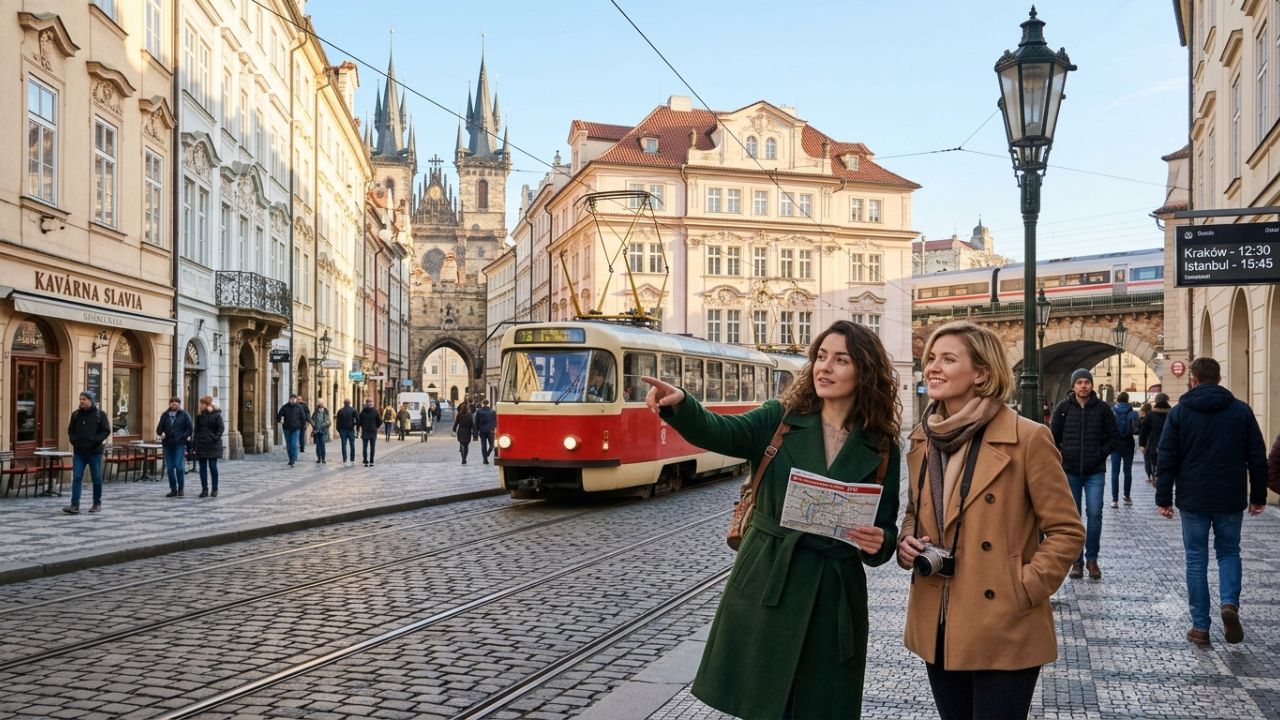
PRAGUE / KRAKÓW / ISTANBUL — Official municipal transit tariffs enacted across Central Europe and Turkey establish a clear financial roadmap for independent travellers heading into the 2026–2027 winter season. As soaring European accommodation prices and variable airline baggage charges squeeze personal holiday budgets, solo travellers are systematically prioritizing destinations where ground mobility is transparent, heavily subsidized, and seamlessly interconnected. On November 4, 2026, transport authorities in Prague, Kraków, and Istanbul confirmed their operational fare structures and intercity timetables, revealing how budget-conscious explorers can traverse three of the continent's most historically dense urban landscapes without absorbing the punitive single-supplement costs that frequently plague independent journeys.
Solo travel across Europe has undergone a structural transformation. Where independent backpackers once relied on fragmented regional buses and unpredictable airport transfers, the integration of contactless digital ticketing, synchronized suburban rail links, and cross-border train corridors has created an efficient travel triangle spanning the Czech capital, southern Poland, and the Bosphorus. By evaluating published adult public transport fares, winter rail timetables scheduled for implementation on December 13, 2026, and seasonal cultural initiatives, independent travellers can accurately forecast their day-to-day outlays before booking departure flights.
       CENTRAL EUROPE TO BOSPHORUS SOLO TRAVEL CORRIDOR (WINTER 2026–2027)
       ===================================================================

       [ PRAGUE (PRG) ]
             |
             |  Trolleybus 59 + Metro Line A (CZK 46–50 / 17 mins)
             |  PID Day Pass: CZK 140 (App) / CZK 150 (Paper)
             |
             +---- PKP Intercity / České Dráhy Direct Rail ----+
             |     (Daily Silesia / Cracovia Express: ~6h 40m) |
             |     (Advance Fares from €19–€29 / No Air Taxes)  |
             v                                                 v
       [ KRAKÓW (KRK) ]                                  [ ISTANBUL (IST/SAW) ]
             |                                                 |
             |  SKA1 Airport Train (PLN 20 / 17 mins)          |  M11 Metro Link /
             |  MPK 24-Hour Pass: PLN 17                       |  Şehir Hatları Ferry
             |  Wawel Castle "Free November" Access            |  Karaköy–Kadıköy: TRY 65.21
             |                                                 |  Marmaray Cross-Strait: TRY 27–59
             +------------------- Cross-Border Corridor -------+
                       (Schengen 90/180-Day Rule vs Turkish 150-Day Rule)
Prague Integrated Transport: PID Tariffs, Airport Links, and Day Pass Economics
Prague maintains one of the most reliable and heavily utilized public transit networks on the European continent, managed by Pražská integrovaná doprava (PID) and operated by Dopravní podnik hl. m. Prahy (DPP). For independent travellers arriving in the Czech capital, the municipal tariff framework enacted in 2026 provides substantial cost stability. The standard adult single-transfer paper ticket valid for 90 minutes across all metro lines, trams, city buses, and municipal ferries costs CZK 50. Travellers who purchase their tickets digitally through the official PID Lítačka mobile smartphone application pay a discounted rate of CZK 46 for the same 90-minute validity window. A shorter 30-minute non-transfer ticket is available for CZK 30 via the app and CZK 35 on paper, suited for direct point-to-point hops within the historic city core.
The financial calculation shifts dramatically when evaluating extended daily sightseeing. A 24-hour network day pass costs CZK 140 when activated within the PID Lítačka mobile app and CZK 150 when bought as a physical paper ticket from platform vending machines. A multi-day 72-hour tourist pass is priced at CZK 330 in the mobile app and CZK 350 for paper format. Mathematical break-even analysis demonstrates that an active solo traveller undertaking four separate journeys over a 24-hour period spends CZK 184 to CZK 200 on individual 90-minute tickets. Consequently, purchasing a 24-hour pass generates immediate net savings starting on the fourth journey, while granting absolute flexibility to jump aboard historic trams like Line 22 or cross the Vltava river without recalculating remaining journey minutes.
PRAGUE INTEGRATED TRANSPORT (PID) TARIFF MATRIX 2026
| Entity / Facility | Delays | Cancellations | Details |
|---|---|---|---|
| Ticket Category | Digital App Price | Paper Ticket Price | Validity & Inclusions |
| 30-Minute Ticket | CZK 30 (~€1.20) | CZK 35 (~€1.40) | Short hops, zones P,0,B |
| 90-Minute Ticket | CZK 46 (~€1.85) | CZK 50 (~€2.00) | Full transfers, metro |
| 24-Hour Day Pass | CZK 140 (~€5.60) | CZK 150 (~€6.00) | Break-even: 4 journeys |
| 72-Hour Pass | CZK 330 (~€13.20) | CZK 350 (~€14.00) | Unlimited 3-day access |
| Trolleybus 59 to PRG | CZK 46 (~€1.85) | CZK 50 (~€2.00) | Standard PID ticket |
| Airport Express (AE) | CZK 200 (~€8.00) | CZK 200 (~€8.00) | Direct to Hlavní Nádraží |
Airport transit logistics reinforce Prague's position as a budget-friendly solo hub. Arriving passengers at Václav Havel Airport Prague (PRG) can bypass private minivans and taxis by using the high-capacity, zero-emission articulated trolleybus Line 59. This service connects Terminals 1 and 2 directly to the Nádraží Veleslavín station on Metro Line A (green line) in approximately 17 minutes. Because Line 59 operates entirely within the unified PID tariff, an arriving traveller requires only a standard CZK 46 app ticket or CZK 50 paper ticket to complete both the trolleybus leg and the subsequent underground metro journey into the historic centre at Můstek or Staroměstská. Alternatively, bus route 100 links the airport terminals to Zličín station on Metro Line B (yellow line) in 18 minutes under identical ticket pricing. The dedicated Airport Express (AE) coach service runs directly from airport arrival bays to Prague Main Railway Station (Praha hlavní nádraží), but charges an isolated, non-integrated tariff of CZK 200. Independent travellers mindful of daily expenses routinely favor the Line 59 trolleybus and metro combination, saving CZK 150 on their arrival transfer alone.
Official tourism metrics from the Czech Statistical Office (Český statistický úřad - ČSÚ) underline Prague's enduring popularity and provide context for independent visitor flows. During the first half of 2026, collective accommodation establishments across Prague accommodated 3.83 million guests, representing a 1.2 percent expansion compared to the equivalent period in 2025. These visitors accounted for 8.76 million overnight stays, reflecting a 2.9 percent annual growth rate. The data indicates an average length of stay of 2.3 nights per visitor. Because solo travellers do not split accommodation bills with companions, keeping ground transit costs under CZK 140 per day enables them to absorb higher single-occupancy hotel rates or extend their total stay without breaking their budget.
Physical inspection standards on the Prague transport network remain exceptionally strict. Plainclothes ticket inspectors equipped with official metal badges and electronic card readers conduct frequent random checks throughout the underground metro concourses and aboard moving trams. Travellers using paper tickets must validate them immediately upon entering the metro station lobby or stepping onto a tram by inserting the slip into the small yellow stamping machines. Digital app tickets purchased on PID Lítačka require an intentional two-minute activation countdown before boarding to prevent fraudulent purchases when an inspector steps into the carriage. Carrying an active, correctly validated ticket eliminates the risk of an on-the-spot CZK 1,000 penalty fare, which increases to CZK 1,500 if unpaid within fifteen days.
Kraków Transit Economics: Direct Airport Rail and Seasonal Cultural Access
Across the border in southern Poland, Kraków provides another masterclass in low-cost, pedestrian-friendly urban exploration. The historic capital of the Lesser Poland (Małopolska) voivodeship pairs a compact, walkable medieval core with a modern public transport network run by Miejskie Przedsiębiorstwo Komunikacyjne (MPK Kraków) and high-speed suburban rail managed by Koleje Małopolskie. For solo travellers arriving by air, ground logistics are remarkably simple and economical.
The direct airport train service operating along suburban line SKA1 connects Kraków John Paul II International Airport (Kraków-Balice) directly to Kraków Główny, the central railway station situated immediately adjacent to the Old Town (Stare Miasto). The one-way adult fare costs PLN 20, roughly €4.60. Trains depart every 30 minutes throughout the day, completing the journey in 17 minutes. Passengers exit the terminal directly onto a covered, heated pedestrian footbridge that leads straight to the train platform, eliminating the need to wait in cold weather or pay winter taxi surcharges. Unlike low-cost airlines that penalize luggage volume, the SKA1 airport train permits standard passenger baggage at zero additional surcharge and features onboard ticket machines with multi-language touchscreens accepting contactless credit and debit cards.
KRAKÓW PUBLIC TRANSIT (MPK) TARIFF STRUCTURE 2026
| Entity / Facility | Delays | Cancellations | Details |
|---|---|---|---|
| Ticket Category | Price in PLN | Approx. EUR Value | Coverage & Conditions |
| 20-Minute Ticket | PLN 4.00 | €0.92 | Short hops, Zone I |
| 60-Minute / 1-Ride | PLN 6.00 | €1.38 | Valid 1 journey or 60m |
| 90-Minute Transfer | PLN 8.00 | €1.84 | Unlimited transfers |
| 24-Hour Day Pass | PLN 17.00 | €3.91 | Unlimited 24h, Zone I |
| 7-Day Network Pass | PLN 56.00 | €12.88 | Extended solo stay |
| Airport Train (SKA1) | PLN 20.00 | €4.60 | Direct to Główny station |
Within the city boundaries, MPK Kraków operates a comprehensive tram and bus network centered on Zone I, which covers the entire municipal area including all principal historic districts. The base 20-minute single ticket costs PLN 4.00, ideal for quick journeys from the central railway hub to peripheral residential neighbourhoods or the Jewish quarter of Kazimierz. A 60-minute or single-ride ticket costs PLN 6.00, while a 90-minute transfer ticket costs PLN 8.00. For an independent traveller planning an ambitious itinerary, the 24-hour Zone I network pass costs PLN 17.00 (under €4.00). Solo visitors planning an extended stay can purchase a 7-day city pass for PLN 56.00 (roughly €12.90), which drives daily transport expenditure down to approximately €1.84 per day.
Cultural savings in Kraków peak during the late autumn and early winter through the Polish Ministry of Culture and National Heritage's flagship initiative known as "Free November" (Darmowy Listopad w Rezydencjach Królewskich). Throughout the month of November, Wawel Royal Castle (Zamek Królewski na Wawelu) throws open its historic doors to the public with free admission to selected permanent exhibitions. These typically include the Crown Treasury, the Armoury, and the opulent State Rooms. While admission fees are waived, visitors must secure timed entry passes, which are distributed in batches online weekly and in limited allocations at the castle ticket windows on the day of the visit. For a solo traveller, this seasonal program saves between PLN 40 and PLN 90 in standard museum admission fees, offsetting ground transportation expenses for several days.
Statistical assessments published by the Kraków Tourism Board and the Municipality of Kraków indicate that the city welcomed 16.25 million total visitors over the course of 2025. Significantly, 8.79 million of these visitors stayed overnight in registered accommodation facilities, reflecting an overnight stay ratio of approximately 54 percent. The city's concentric layout, surrounded by the green belt of Planty Park where medieval ramparts once stood, means that solo visitors rarely need motorized transport once settled in the central core. Walking between Rynek Główny (Main Market Square), Kazimierz, and Podgórze is fast and safe, allowing travellers to preserve their 24-hour passes for outbound excursions such as visiting the Nowa Huta architectural district or the Kościuszko Mound.
Istanbul's Maritime Arteries: Şehir Hatları Ferries and Istanbulkart Dynamics
Where Central European hubs rely on steel rails and electric trolleybuses, Istanbul delivers one of the world's most spectacular and cost-effective maritime transit networks. Crossing between Europe and Asia across the Bosphorus Strait is not merely an iconic sightseeing activity; it is an essential public utility operated by Şehir Hatları, the municipal ferry directorate overseen by the Istanbul Metropolitan Municipality (İstanbul Büyükşehir Belediyesi - İBB).
On September 7, 2026, Şehir Hatları introduced its winter sailing schedule, which remains active through June 27, 2027. The winter timetable maintains an intensive operating tempo, executing an average of 826 scheduled sailings every day across the Bosphorus, the Golden Horn, and the Princes' Islands. For solo travellers seeking affordable transit that doubles as a scenic cruise, these public commuter ferries offer unmatched value. The classic cross-strait sailing between Karaköy or Eminönü on the European shore and Kadıköy on the Asian shore costs TRY 65.21 one-way when paid using an anonymous or personalized Istanbulkart. A complete intercontinental round trip totals TRY 130.42, translating to approximately €3.50 based on prevailing autumn 2026 exchange rates. Private tourist boats departing from the same docks frequently charge between €15 and €25 for equivalent views of Topkapı Palace, the Maiden's Tower, and the Dolmabahçe shoreline.
ISTANBUL METROPOLITAN COMMUTER TARIFF SUMMARY 2026
| Entity / Facility | Delays | Cancellations | Details |
|---|---|---|---|
| Transit Service | Fare in TRY | Approx. EUR Value | Operational Notes |
| Bosphorus Ferry | TRY 65.21 | €1.75 | Karaköy to Kadıköy |
| Ferry Round Trip | TRY 130.42 | €3.50 | Intercontinental route |
| Marmaray Sub-Sea | TRY 27.00–59.00 | €0.72–€1.58 | Distance-based refund |
| M11 Airport Metro | TRY 34.00–46.00 | €0.91–€1.23 | IST Airport to city |
| Base Metro / Tram | TRY 20.00–25.00 | €0.54–€0.67 | Single board, Istanbulkart |
| Physical Card Fee | TRY 130.00 | €3.48 | One-time purchase fee |
The key to unlocking Istanbul's transit network is the Istanbulkart, a contactless smart card valid across all municipal ferries, metro lines, modern trams, historic funiculars, Marmaray trains, and Metrobus lanes. Purchasing an anonymous physical card costs TRY 130 at yellow Biletmatik ticket vending machines situated outside major transit interchanges. Once loaded with cash, the card grants discounted transfer rates when changing between transit modes within a two-hour window. Solo travellers who purchase individual electronic paper tickets or rely on open-loop bank card taps pay substantial surcharges, making the acquisition of an Istanbulkart financially justifiable within the first three rides.
Beyond the water, Istanbul provides high-speed subterranean connectivity. The Marmaray commuter rail line runs through a deep-level railway tunnel bored beneath the seabed of the Bosphorus Strait, connecting European stations like Yenikapı and Sirkeci to Asian stations like Üsküdar, Ayrılık Çeşmesi, and Bostancı in less than 15 minutes. The Marmaray operates on an automated distance-based tariff spanning from TRY 27 to TRY 59. When passing through the entry turnstiles, the system debits the maximum line fare from the passenger's Istanbulkart; upon exiting at the destination station, the passenger taps their card on refund turnstiles (İade Makinesi) positioned along the exit concourse to receive an instant electronic credit for untravelled station segments.
Arriving in Istanbul has become significantly cheaper following the expansion of the driverless M11 metro line connecting Istanbul Airport (IST) on the northern Black Sea coast directly into the municipal transit grid at Kağıthane and Gayrettepe. Rather than spending TRY 250 to TRY 350 on Havaist express buses or negotiating unpredictable taxi meters that can exceed TRY 1,200, independent travellers can board the M11 metro using their Istanbulkart. From Gayrettepe, a fast underground transfer to the M2 green line takes travellers straight to Taksim Square or Şişhane (Galata) in under 45 minutes for a combined transit outlay of less than TRY 75.
The December 13 Winter Timetable: Direct Rail Between Prague and Kraków
While local transit cards optimize urban mobility, international cross-border connections determine the total logistical feasibility of multi-city itineraries. The annual European railway timetable revision, coordinated by the International Union of Railways (UIC) and taking effect across the continent on Sunday, December 13, 2026, significantly improves rail connections between Prague and Kraków.
The national rail carriers České Dráhy (ČD) and PKP Intercity have confirmed the continuation and timing optimization of their direct daily international passenger services. The established Silesia and Cracovia EuroCity and InterCity services link Warszawa Wschodnia, Kraków Główny, and Praha hlavní nádraží without requiring travellers to negotiate stressful intermediate train transfers at cross-border junctions like Bohumín or Katowice. The complete daytime rail journey between Kraków Główny and Prague Main Railway Station takes approximately 6 hours and 40 minutes, winding through the industrial heritage of Upper Silesia, crossing the Polish-Czech frontier, and traversing eastern Bohemia before arriving in central Prague.
DECEMBER 13, 2026 RAIL TIMETABLE MATRIX: PRAGUE <-> KRAKÓW
| Entity / Facility | Delays | Cancellations | Details |
|---|---|---|---|
| Train Service | Departure Station | Arrival Station | Duration & Frequency |
| IC/EC "Cracovia" | Kraków Gł. 10:14 | Praha hl. n. 16:54 | 6h 40m, Daily direct |
| IC/EC "Silesia" | Praha hl. n. 09:06 | Kraków Gł. 15:46 | 6h 40m, Daily direct |
| EN "Chopin" / Sleeper | Kraków Gł. 23:18 | Praha hl. n. 07:38 | 8h 20m, Couchette/Bed |
| Regional Option | Kraków Gł. (Ties) | Bohumín (Transfer) | Variable, 7h 15m |
For solo travellers, rail travel delivers several structural advantages over low-cost regional airlines. Flying between Kraków Balice (KRK) and Prague Václav Havel (PRG) typically requires booking seasonal indirect flights via Vienna, Warsaw, or Frankfurt, or paying steep premiums on infrequent regional charters. When including the time needed for airport security screening, gate arrivals two hours before departure, baggage fees, and suburban transit at both ends, air travel often consumes six to seven hours door-to-door. By contrast, PKP Intercity and České Dráhy operate dynamic advance-purchase ticket schemes—branded as SuperPromo International in Poland and Včasná jízdenka Evropa in the Czech Republic. Second-class tickets booked three to four weeks in advance start from €19 to €29 one-way.
Onboard the direct EuroCity trains, passengers enjoy standard European amenities that cater directly to solo remote workers and independent travellers: free high-speed Wi-Fi across Czech and Polish national networks, individual 230V electrical power outlets, fold-out worktables, and a full-service dining car (Wagon Wars on PKP sets, ČD Restaurant on Czech formations) serving traditional local dishes at railway prices far below airport concessions. In addition, the overnight EuroNight Chopin service offers solo travellers the option to book a single-berth sleeper compartment or a shared couchette berth, effectively combining transport and lodging into a single overnight fare while arriving directly in the destination city at breakfast time.
Connecting the Central European rail corridor to Istanbul requires traversing the Balkan rail spine via Budapest, Belgrade, and Sofia, or taking the seasonal Bosphorus Express from Bucharest. Because winter maintenance across south-eastern European rail networks can introduce extended detours, solo travellers moving between Kraków or Prague and Istanbul frequently combine direct rail across Poland and Czechia with a budget flight link across the Black Sea, using carriers such as Pegasus Airlines, AJet, or Wizz Air to complete the triangle efficiently.
Cross-Border Visa Rules: Schengen Limitations and Turkish Passport Mandates
Managing a multi-country itinerary across the Czech Republic, Poland, and Turkey demands strict compliance with two separate legal and immigration frameworks. Both Czechia and Poland are full Member States of the European Union and integral components of the Schengen Border-Free Zone, whereas the Republic of Turkey functions as a sovereign non-Schengen nation with its own entry laws.
For citizens of third countries that enjoy visa-exempt status within the European Union—including the United Kingdom, the United States, Canada, Australia, and New Zealand—entry into Prague or Kraków is governed by the standard Schengen 90/180-day limitation. Under Regulation (EU) 2016/399 (the Schengen Borders Code), travellers may stay within the entire Schengen Area for a maximum cumulative period of 90 days within any rolling 180-day window. Time spent in Poland immediately counts toward the same 90-day pool as time spent in the Czech Republic. Crossing the land border aboard the direct Cracovia EuroCity train between Poland and Czechia generally involves no systematic immigration checks, though both Polish Border Guard (Straż Graniczna) and Czech Police (Policie ČR) reserve the right to perform spot identity inspections on international rail services.
CROSS-BORDER IMMIGRATION AND PASSPORT VALIDITY RULES
| Entity / Facility | Delays | Cancellations | Details |
|---|---|---|---|
| Destination | Legal Framework | Allowed Stay Period | Passport Validity Rule |
| Czech Republic | Schengen Zone (EU) | 90 days / 180 days | 3 months beyond exit |
| Poland | Schengen Zone (EU) | 90 days / 180 days | 3 months beyond exit |
| Republic of Turkey | Sovereign Non-EU | 90 days / 180 days | 60 days past stay |
| Total Minimum Turkey | Bilateral Exemption | Max 90-day stay | 150 days (5 months) min |
When an independent traveller departs the Schengen Zone from Prague or Kraków to continue onward to Istanbul, a distinct set of immigration regulations takes effect. Turkey grants visa exemptions or electronic visa (e-Visa) facilities to numerous nationalities, including UK and European Union passport holders who can enter for tourism purposes for up to 90 days within a 180-day period without paying an entry fee. However, travellers must pay close attention to the strict Turkish statutory passport validity mandate.
Under Article 7.1b of the Turkish Law on Foreigners and International Protection (Law No. 6458), all foreign visitors entering the country must hold a passport or travel document with an expiration date extending at least 60 days beyond the "duration of stay" permitted by their visa, e-Visa, visa exemption, or residence permit. For tourists eligible for a standard 90-day visa-free stay, their passport must remain valid for a minimum of 150 days (approximately five full months) starting from the exact calendar day they arrive in Istanbul. Travellers carrying passports with less than 150 days of remaining validity will be denied boarding by airline personnel at European departure gates or turned away by Turkish Directorate General of Migration Management officers at Istanbul Airport (IST) or Sabiha Gökçen Airport (SAW).
Additionally, solo travellers must ensure their passports bear sufficient blank pages for entry and exit stamps. Turkish border control applies large physical ink stamps upon arrival and departure. Travellers arriving with heavily stamped booklets lacking at least one full blank page risk procedural delays. Moving between the Schengen Area and Turkey resets the physical presence counter for Schengen days only if the traveller remains outside the Schengen Zone; it does not erase previous days accumulated toward the 90-day Schengen ceiling upon their eventual return to an EU airport.
Comparative Budget Analysis: Multi-City Mobility Cost Breakdown
To evaluate the relative financial commitment required across this three-city network, independent travellers must analyze not only individual single-ticket costs but also the cumulative daily spend on ground transport, airport links, and essential daily logistics. The following comparative data brings together the key financial metrics governing transit in Prague, Kraków, and Istanbul during November 2026.
COMPREHENSIVE THREE-CITY SOLO MOBILITY COST MATRIX 2026
| Metric | Prague (Czechia) | Kraków (Poland) | Istanbul (Turkey) |
|---|---|---|---|
| Standard Single Fare | CZK 46–50 (~€1.85–€2.00) | PLN 4.00–6.00 (~€0.92) | TRY 65.21 (~€1.75) |
| 24-Hour Day Pass | CZK 140–150 (~€5.60) | PLN 17.00 (~€3.91) | Pay-as-you-go card |
| Primary Airport Link | Trolleybus 59: CZK 46 | Train SKA1: PLN 20.00 | M11 Metro: ~TRY 40 |
| Premium Airport Option | AE Coach: CZK 200 | Taxi / App: PLN 90–120 | Havaist: TRY 250–350 |
| High-Value Experience | Tram 22 to Castle (CZK46) | Historic Planty (Free) | Ferry Bosphorus (TRY65) |
| Penalty Fare Level | CZK 1,000 on-the-spot | PLN 150–280 on-the-spot | TRY 500+ administrative |
| Transit App Eco-system | PID Lítačka | Jakdojade / iMKa | Istanbulkart Mobile |
| Payment Integration | Contactless & App | Contactless & App | RFID Card Required |
When calculating a realistic four-day solo travel budget in each city, transport differences become apparent. In Kraków, a solo visitor who spends PLN 20 on the airport train, purchases two 24-hour passes at PLN 17 each, and walks through the central core on remaining days incurs a total ground transport expenditure of PLN 54 (approximately €12.40). Adding seasonal free entry to Wawel Castle during November keeps the total cultural and mobility outlay under €15.
In Prague, an independent traveller spending CZK 92 round-trip on Trolleybus Line 59 and purchasing a 72-hour pass at CZK 330 spends CZK 422 (approximately €16.90). This investment grants unlimited access to the entire transit network, including the scenic funicular railway ascending Petřín Hill (when open for service) and all suburban trams. In Istanbul, an initial card fee of TRY 130 combined with five cross-strait ferry crossings (TRY 326.05), four metro legs (TRY 100), and round-trip airport metro transfers (TRY 80) brings the total ground transit outlay to approximately TRY 636 (around €17.10).
In all three destinations, total mobility expenditure remains well below €20 for a four-day stay. This predictability allows independent solo travellers to maintain firm control over their finances while experiencing the architectural, historic, and geographic highlights of Central Europe and the Eurasian borderlands.
Practical Advice for Independent Winter Travellers
Operating successfully across multiple distinct transit systems during the European winter requires preparation and attention to operational rules. Cold weather, shifting daylight hours, and localized transit regulations can present challenges to unprepared visitors.
First, independent travellers should download and configure the official smartphone transport applications for each city before crossing national borders:
- For Prague, install the PID Lítačka application. It enables travellers to register payment cards, look up direct routes, and purchase tickets in advance. Ensure background cellular data is active upon boarding so that tickets can be properly validated without delay.
- For Kraków, install Jakdojade, the definitive public transit routing and ticketing app utilized across Poland. It provides live GPS tracking of approaching trams and buses, alerting travellers to winter service delays or platform relocations.
- For Istanbul, ensure you acquire a physical plastic Istanbulkart immediately upon arrival at Istanbul Airport or Sabiha Gökçen Airport. While the digital Istanbulkart QR system works well for Turkish residents with domestic bank accounts, foreign credit cards frequently encounter authentication issues at automated transit turnstiles. Carrying a loaded physical card guarantees smooth boarding at all ferry terminals and metro gates.
Second, respect local ticketing validation rituals. In both the Czech Republic and Poland, merely possessing a physical paper ticket does not constitute a valid transit fare. Tickets must be inserted into the mechanical validation punches upon entering the station or stepping inside the vehicle. In Prague's metro stations, these yellow validator pillars are located at the top of the escalators before the platform concourse; crossing the white demarcation line without a validated ticket is treated by inspectors as fare evasion. In Kraków, ticket stamping boxes are located on board the trams and buses near the passenger doors. Ensure the machine stamps the date, time, and vehicle number legibly on the ticket edge.
Finally, dress for winter transit waiting times. While Prague and Kraków run high-frequency tram networks with electronic departure boards displaying real-time countdowns at key stops, winter temperatures in Central Europe frequently drop below freezing in December and January. Taking advantage of heated direct transit links—such as the enclosed pedestrian skybridge at Kraków Airport or the direct underground connection between Prague Main Station and the Metro Line C platform—helps minimize cold exposure when carrying heavy luggage.
By taking advantage of official public transit tariffs, direct cross-border rail connections like the December 13 PKP and České Dráhy winter schedules, and seasonal cultural initiatives, solo travellers can experience Prague, Kraków, and Istanbul as a cohesive, deeply enriching, and affordable European circuit.
Related Travel Guides
- Venice Simplon-Orient-Express Expands Luxury Rail Network with Historic Paris to Monaco Route for 2027
- Angola Expands 102 Visa-Free Access Regimes Alongside New Luanda International Airport Hub
- UK Strengthens Aviation Alliances with Oman as Sultanate Targets 10 Percent Tourism Expansion
- Germany and UK Drive Greece Tourism Growth as Mykonos Enforces Infrastructure Planning Measures
- Costa Rica Ecotourism Resurgence: How Community Alliances Are Redefining Sustainable Travel
This article is for informational purposes. Flight routes, passenger regulations, visa rules, and transit advisories are subject to change by airlines and aviation authorities. Readers are advised to verify schedules and travel documentation with relevant carriers and border agencies before departure.
Related Stories

Singapore Tourism Board and Visa Launch Visa Destinations Program for Exclusive Visitor Perks in 2026

European Mass Protests Disrupt Travel Across France, Italy, Belgium, and Turkey in 2026