
Uganda Travel Under Attention As Australia Issues New Advisory Amid Border Threats And Security Risks
Uganda Travel Under Attention As Australia Issues New Advisory Amid Border Threats And Security Risks

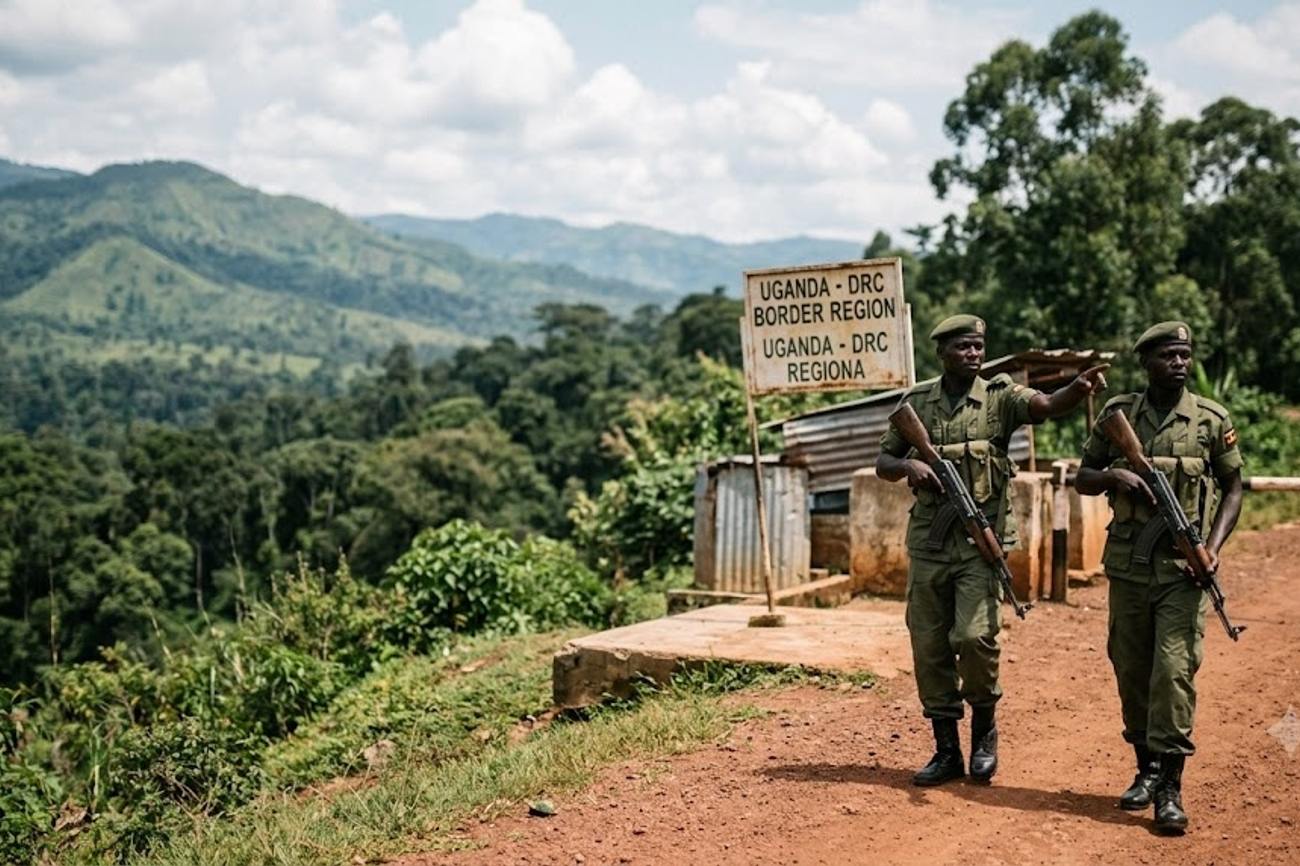
Image generated by AI
50 kilometers is the critical distance marker established by the Australian government as the "danger zone" for travelers approaching Uganda's borders with South Sudan and the Democratic Republic of the Congo (DRC). This specific spatial restriction signals a shift from general caution to a targeted avoidance strategy for international visitors, reflecting a volatile security environment where state control diminishes as one nears the frontier. While the Uganda Tourism Board continues to promote the nation's wildlife and landscapes, the updated Australian travel advisory underscores a stark reality: the geography of risk in Uganda is now defined by its proximity to neighboring instability.
The Geography of Border Volatility
The updated advisory identifies two primary corridors of high risk, both defined by a 50-kilometer buffer zone from the national boundary. These areas are not merely "cautionary" but are flagged for serious security threats that could jeopardize the safety of foreign nationals.
The northern frontier, bordering South Sudan, is currently plagued by the spillover of regional instability. The Australian government warns that this zone is susceptible to armed banditry and the movements of rebel groups. For the traveler, this means that northern excursions must be meticulously planned to avoid restricted zones where cross-border violence is a recurring threat.
Simultaneously, the western border with the DRC presents a different but equally severe set of risks. Specifically, the regions north and south of Lake Albert are highlighted as danger zones. The threats here are more diversified, ranging from organized kidnapping to attacks by armed groups originating from the eastern DRC. This regional volatility has a direct impact on one of Uganda's primary tourism draws: gorilla trekking. While the activity remains a cornerstone of the local economy, the advisory explicitly warns against any trekking tours that cross the border into DRC territory.
Security Infrastructure and Public Risk
Beyond the border zones, the advisory addresses the pervasive threat of terrorism and the resulting militarization of public spaces. The risk is not confined to remote jungles but extends to the urban centers and tourist hubs where foreign visitors congregate.
The security response to these threats has led to a visible increase in surveillance and screening. Travelers should anticipate a high-friction environment at the following locations:
- International and domestic hotels
- High-traffic restaurants
- Major tourist attractions
- Public transport hubs and government buildings
These measures manifest as mandatory body checks, vehicle inspections, and rigorous luggage screening. The advisory suggests that the target for these threats often includes large-scale gatherings, specifically naming religious events, music festivals, and cultural celebrations as high-risk environments.
| Risk Category | Specific Threat | High-Risk Location/Context | Recommended Action |
|---|---|---|---|
| Border Security | Kidnapping/Banditry | Within 50km of DRC & South Sudan borders | Total avoidance of restricted zones |
| Terrorism | Targeted Attacks | Large crowds, festivals, religious events | Avoid large gatherings; expect screenings |
| Political | Movement Restrictions | Urban centers during political tension | Monitor local media; avoid protests |
| Criminal | Theft/Methanol Poisoning | Nightlife venues, isolated areas | Use trusted businesses; avoid walking alone |
| Health | Residual Ebola Protocols | International transit points | Check airline requirements for quarantine |
Expert Analysis: The Friction Between Tourism and State Security
For the modern nomad or high-net-worth traveler, the Australian advisory reveals a widening gap between the "tourism product" and the "security reality." Uganda is marketing a pristine wilderness experience, yet the operational reality for travelers is one of checkpoints, border buffers, and restricted movement.
The direct consequence of these 50-kilometer exclusion zones is the effective shrinking of the accessible map. For those booking bespoke wildlife tours, this means a reliance on a very narrow corridor of "safe" operators. The pricing pressure this creates is significant; as the pool of authorized, secure operators shrinks, the cost of "safe" tourism increases. Travelers who attempt to bypass these costs by using unverified local guides risk entering the aforementioned danger zones, where the Australian government notes that emergency assistance is severely limited.
Furthermore, the mention of political tensions leading to internet and telecommunications shutdowns is a critical logistical warning. In an era where travelers rely on real-time GPS and digital communication for safety, a state-mandated blackout transforms a manageable risk into a crisis. This creates a dependency on satellite communication or offline navigation—tools that the average tourist rarely carries.
Finally, the intersection of health and security is evident in the post-Ebola transition. While the World Health Organization (WHO) declared the end of the outbreak on August 27, the "administrative shadow" of the virus persists. The fact that travelers may still face quarantine or screening despite the official end of the outbreak shows that diplomatic and health-related "red flags" linger long after the biological threat has subsided.
Key Takeaways
- Border Buffers: Maintain a minimum distance of 50 kilometers from the borders of South Sudan and the DRC to avoid kidnapping and armed attacks.
- Trekking Limits: Ensure all gorilla trekking activities remain strictly within Ugandan territory; do not cross into the DRC regardless of operator claims.
- Urban Vigilance: Expect intrusive security screenings at hotels and transport hubs; avoid large public festivals or religious gatherings.
- Digital Contingency: Be prepared for sudden internet or telecommunications outages during periods of political instability.
- Health Residuals: Verify transit requirements with airlines, as some nations maintain health screenings for travelers departing Uganda post-Ebola.
FAQ: Uganda Travel Safety 2024
Is it safe to go gorilla trekking in Uganda? Yes, provided you use authorized operators and remain within Ugandan borders. The primary risk involves tours that cross into the DRC, which the Australian government explicitly advises against due to armed group activity.
What should I do if the government imposes a curfew or internet blackout? Avoid all demonstrations, stay in your hotel or a secure location, and maintain a flexible itinerary. It is recommended to have a pre-arranged communication plan with your embassy or emergency contacts.
Are the border warnings applicable to all tourists? Yes. The 50km danger zone applies to all travelers, regardless of their purpose of visit, due to the high risk of banditry and cross-border violence.
Do I still need Ebola vaccinations or screenings? While the outbreak officially ended on August 27, some countries may still require health screenings or quarantine for arrivals from Uganda. Check with your airline and the International Air Transport Association (IATA) for current rules.
The distance between a luxury safari and a security crisis in Uganda is often measured in exactly 50 kilometers.
Tags: Uganda-Travel-Advisory-2024, DRC-Border-Security, South-Sudan-Border-Risk, Gorilla-Trekking-Safety, Australian-Government-Travel-Alert
Related Travel Guides
- Fiji Declares National HIV Emergency After Record Cases Surge, Prompting Fresh Travel Health Focus
- New York City West Nile Virus Cases Climb Sharply as Record Mosquito Activity Shadows Autumn Tourism
- Wisconsin Moves With Michigan as US Flooding Forecast Raises Flash-Flood Risks Across Key Travel Regions
Disclaimer
This article is for informational and educational purposes only. It does not constitute legal, financial, or professional advice. While we strive to provide accurate and up-to-date information, travel policies, regulations, and conditions change rapidly. Always verify information with official sources before making travel decisions. Nomad Lawyer makes no representations about the accuracy, reliability, completeness, or suitability of the information provided. Readers should consult qualified professionals for advice specific to their circumstances. The views expressed in this article are those of the author and do not necessarily reflect the views of Nomad Lawyer.
Raushan Kumar
Founder & Lead Developer
Full-stack developer with 11+ years of experience and a passionate traveller. Raushan built Nomad Lawyer from the ground up with a vision to create the best travel and law experience on the web.
Learn more about our team →