
New York City West Nile Virus Cases Climb Sharply as Record Mosquito Activity Shadows Autumn Tourism
New York City reports 30 human West Nile virus cases and over 1,700 positive mosquito pools across all five boroughs, prompting autumn travel health precautions.

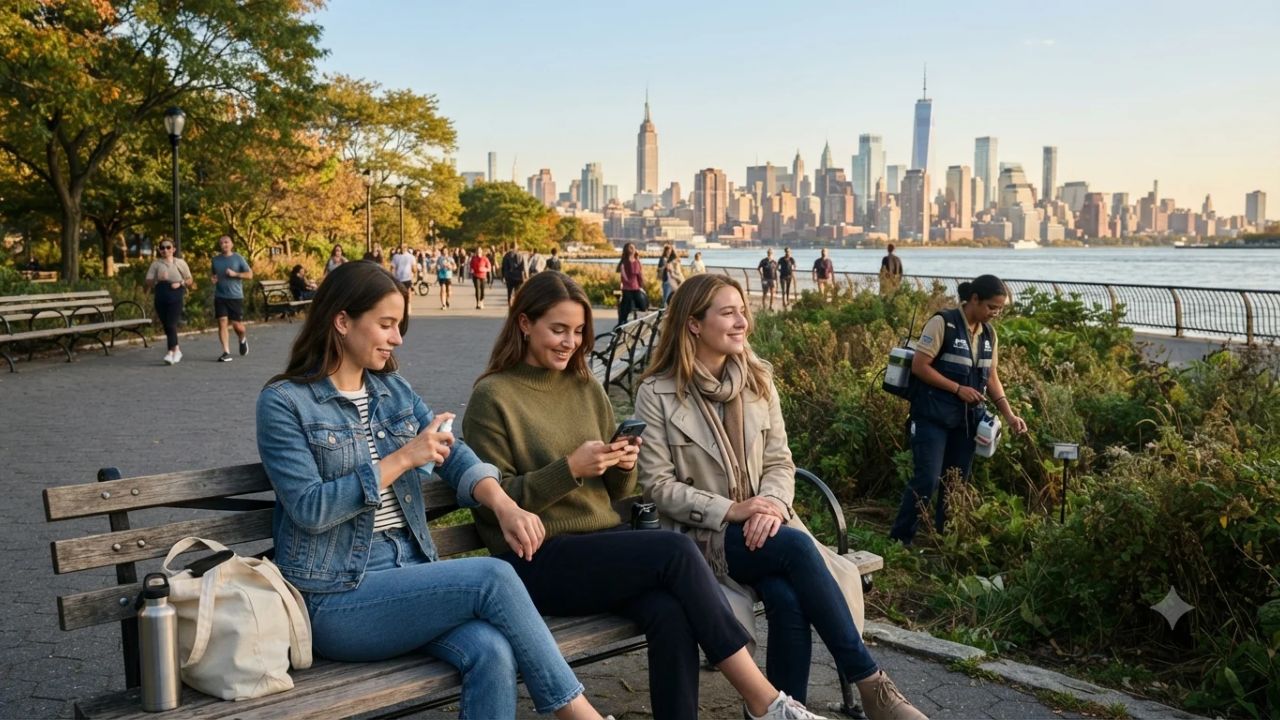
Image generated by AI
A 67% year-over-year surge in human infections and an all-time record exceeding 1,700 positive mosquito pools have propelled New York City into its most acute West Nile virus season in recent years. Confirmed across all five boroughs by municipal health authorities, the tally reached at least 30 clinical diagnoses by mid-September, comfortably eclipsing the 18 cases recorded during the entirety of 2025. With 24 of the 30 documented patients suffering from life-threatening neuroinvasive disease—including encephalitis, meningitis, and acute flaccid paralysis—the escalating outbreak coincides directly with the onset of peak autumn tourism. Millions of leisure and business travelers attending Broadway shows, United Nations General Assembly sessions, marathon training events, and outdoor rooftop dining venues face elevated vector exposure in urban parks and waterfront esplanades during the seasonal peak of mosquito activity.
Five-Borough Transmission and Vector Ecology: Behind the 1,700-Pool Benchmark
The acceleration of New York City's 2026 arboviral season represents a dramatic shift from early-summer baselines. While the first human infection was verified in August, environmental surveillance had already detected intense viral circulation among local mosquito colonies weeks earlier, surpassing 1,000 positive mosquito pools by August 19. By mid-September, total positive samples exceeded 1,700, representing a 23% expansion over the 1,378 positive pools logged during the full 2025 season.
Human infection totals illustrate widespread geographical dispersal across the metropolitan area. Brooklyn accounts for the highest single share with 11 confirmed cases (36.7%), followed by Queens and Staten Island with seven cases each (23.3%). The Bronx has recorded three cases (10.0%), while Manhattan has documented two (6.7%). However, epidemiologists at the New York City Department of Health and Mental Hygiene (NYC Health) caution travelers against viewing these metrics as an isolated neighborhood hazard map. Borough assignments reflect the residential addresses of patients rather than verified points of transmission, meaning an individual residing in Brooklyn may have sustained an infectious bite while walking through Central Park, dining along the Hudson River, or traveling outside the city.
Environmental specialists attribute the intense transmission cycle to persistent late-summer heat, elevated humidity, and intermittent rain showers. Warm ambient temperatures dramatically shorten the extrinsic incubation period of the virus within the vector, enabling Culex mosquitoes to reproduce faster and transmit pathogens earlier in their lifespans. In response, municipal authorities have deployed aggressive vector management programs, conducting aerial larvicide applications across uninhabited marshlands alongside targeted truck-mounted spraying across residential sectors of Manhattan, Brooklyn, and Queens scheduled through late September.
Clinical Severity and Historical Context: The 1999–2026 Epidemiological Trajectory
The most alarming metric in the 2026 surveillance report is the high proportion of neuroinvasive illness. Of the 30 confirmed human cases, 24 (80%) manifested as severe neurological conditions, while only six were categorized as uncomplicated West Nile fever. To clinical observers, this disparity highlights the inherent testing and reporting biases of vector-borne surveillance.
According to baseline epidemiological modeling established by the Centers for Disease Control and Prevention (CDC), approximately 80% of individuals infected with West Nile virus remain entirely asymptomatic, while roughly 20% experience mild febrile symptoms including fever, headache, body aches, joint pain, nausea, and rash. Fewer than 1% of all infected people progress to severe neuroinvasive disease affecting the central nervous system. Because asymptomatic and mildly ill individuals rarely seek medical testing, the 24 neuroinvasive hospitalizations indicate that hundreds of unrecorded, self-limiting infections have circulated silently among residents and visitors.
The long-term historical record underscores that West Nile virus is an entrenched environmental reality in New York. Since the pathogen was first detected in the Western Hemisphere in New York City in 1999, the five boroughs have recorded a cumulative total of 486 neuroinvasive cases and 64 fatalities through 2025. Annual totals demonstrate wide cyclical volatility, from a recent high of 46 cases in 2022 to 18 cases in 2025. Coordination with the New York State Department of Health ensures that regional blood banks and hospitals maintain enhanced screening to prevent secondary transmission through medical procedures.
| NYC Borough Jurisdiction | Confirmed 2026 Human Cases | Share of Total Caseload | Primary Urban Vector Habitat | Municipal Surveillance Focus |
|---|---|---|---|---|
| Brooklyn | 11 cases | 36.7% | Prospect Park, Green-Wood, waterfront piers | Regular ground adulticiding and catch-basin larvicide |
| Queens | 7 cases | 23.3% | Flushing Meadows, coastal marshland perimeters | Aerial marsh treatments and residential truck spraying |
| Staten Island | 7 cases | 23.3% | Greenbelt parklands and freshwater drainage corridors | Extensive trap surveillance and localized spraying |
| The Bronx | 3 cases | 10.0% | Pelham Bay Park and Van Cortlandt wetlands | Barrier applications and drainage monitoring |
| Manhattan | 2 cases | 6.7% | Central Park water features and riverfront promenades | Targeted evening adulticiding and basin treatments |
| Total Citywide | 30 cases | 100% | Integrated five-borough urban ecosystem | Over 1,700 positive mosquito pools detected |
| Surveillance Year | Total Confirmed Human Cases | Neuroinvasive Manifestations | Mild West Nile Fever Cases | Documented Fatalities |
|---|---|---|---|---|
| 2022 | 46 cases | 36 cases | 10 cases | 2 deaths |
| 2023 | 32 cases | 31 cases | 1 case | 2 deaths |
| 2024 | 36 cases | 26 cases | 10 cases | 3 deaths |
| 2025 | 18 cases | 16 cases | 2 cases | 1 death |
| 2026 (Through Mid-Sept.) | 30 cases | 24 cases | 6 cases | Evaluation ongoing |
Expert Analysis: Urban Microclimates, Outdoor Dwell Times, and Hotel Duty of Care
For travelers booking autumn itineraries into New York City, the direct consequence is that urban walking routines require proactive personal defense measures. Unlike car-dependent travel destinations where tourists move seamlessly between air-conditioned vehicles and enclosed attractions, New York is fundamentally a pedestrian city. Visitors routinely log 15,000 steps daily traversing park pathways, bridge crossings, and open-air shopping corridors. Peak feeding activity for Culex mosquitoes coincides exactly with dawn and dusk—the precise hours when tourists stroll through Central Park, walk the High Line, or convene at outdoor rooftop lounges and sidewalk cafes.
The pricing pressure this creates means hospitality operators must manage guest safety without undermining consumer confidence. Hotels across the five boroughs face operational duties to ensure that courtyard dining spaces, rooftop terraces, and historic garden suites are free from standing water. Furthermore, properties operating historic brownstones or boutique boutique accommodations must verify that window screens are intact, as Culex mosquitoes readily enter guest rooms through cracked casements during mild autumn evenings.
Older travelers face particularly serious health risks. CDC epidemiological data confirms that individuals aged 65 and older are three times more likely to develop severe neuroinvasive complications than younger cohorts, facing elevated risks of long-term cognitive impairment, tremors, or fatal encephalitis. Because symptoms can take between two and 14 days to emerge, travelers returning home who experience sudden high fevers, stiff necks, disorientation, or severe muscle weakness must immediately inform their local physicians of recent New York City travel to ensure rapid diagnostic blood testing.
Key Takeaways
- Sharply Rising Infection Counts: New York City has recorded 30 human West Nile virus cases in 2026, representing a 66.7% surge over the 18 cases reported during all of 2025.
- Record Mosquito Contamination: Surveillance teams identified over 1,700 West Nile-positive mosquito pools across the city, outpacing full-year 2025 totals by more than 23%.
- Disproportionate Neuroinvasive Toll: 24 of the 30 diagnosed patients (80%) suffered from severe central nervous system infections, demonstrating that hospital-based testing captures only the most critical clinical cases.
- Citywide Five-Borough Footprint: Human cases span Brooklyn (11), Queens (7), Staten Island (7), The Bronx (3), and Manhattan (2), proving transmission is widespread rather than confined to one zone.
- Traveler Protection Essentials: Visitors should apply EPA-registered insect repellents (DEET, picaridin, or oil of lemon eucalyptus), wear long sleeves at dawn and dusk, and choose accommodations with functioning screens or air conditioning.
FAQ: New York City West Nile Virus 2026
How serious is the West Nile virus outbreak in New York City in 2026?
The city has recorded 30 human cases—a 67% increase over 2025—and more than 1,700 positive mosquito pools, with 24 patients suffering from severe neuroinvasive disease.
Which New York City borough has the highest number of West Nile cases?
Brooklyn leads with 11 confirmed cases, followed by Queens and Staten Island with seven each, the Bronx with three, and Manhattan with two.
What are the main symptoms of West Nile virus that travelers should monitor?
While 80% of infections are asymptomatic, mild cases cause fever, headache, body aches, and rash. Severe disease causes high fever, neck stiffness, confusion, tremors, and muscle weakness.
What precautions should tourists take when visiting New York City this autumn?
Travelers should apply EPA-registered insect repellent, wear protective long clothing around dawn and dusk, and ensure hotel accommodations have functioning window screens or sealed air conditioning.
[As millions of travelers arrive to experience the cultural vibrancy of a New York autumn, personal protection at dawn and dusk remains the simplest safeguard against a record-breaking mosquito season.]
Related Travel Guides
The 10 Best Airline Lounges at New York JFK Airport, According to Reddit (2026 Guide)
The 10 Best Hotels in Las Vegas, According to Reddit (2026 Guide)
The 10 Best Boutique Hotels in New York City, According to Reddit
Disclaimer
This article is for informational and educational purposes only. It does not constitute legal, financial, or professional advice. While we strive to provide accurate and up-to-date information, travel policies, regulations, and conditions change rapidly. Always verify information with official sources before making travel decisions. Nomad Lawyer makes no representations about the accuracy, reliability, completeness, or suitability of the information provided. Readers should consult qualified professionals for advice specific to their circumstances. The views expressed in this article are those of the author and do not necessarily reflect the views of Nomad Lawyer.
Raushan Kumar
Founder & Lead Developer
Full-stack developer with 11+ years of experience and a passionate traveller. Raushan built Nomad Lawyer from the ground up with a vision to create the best travel and law experience on the web.
Learn more about our team →