
Thailand Eco Escapes, Floating On Cheow Lan Lake Before Hitting Railay Beach Is The Ultimate Way To Travel
Thailand Eco Escapes, Floating On Cheow Lan Lake Before Hitting Railay Beach Is The Ultimate Way To Travel

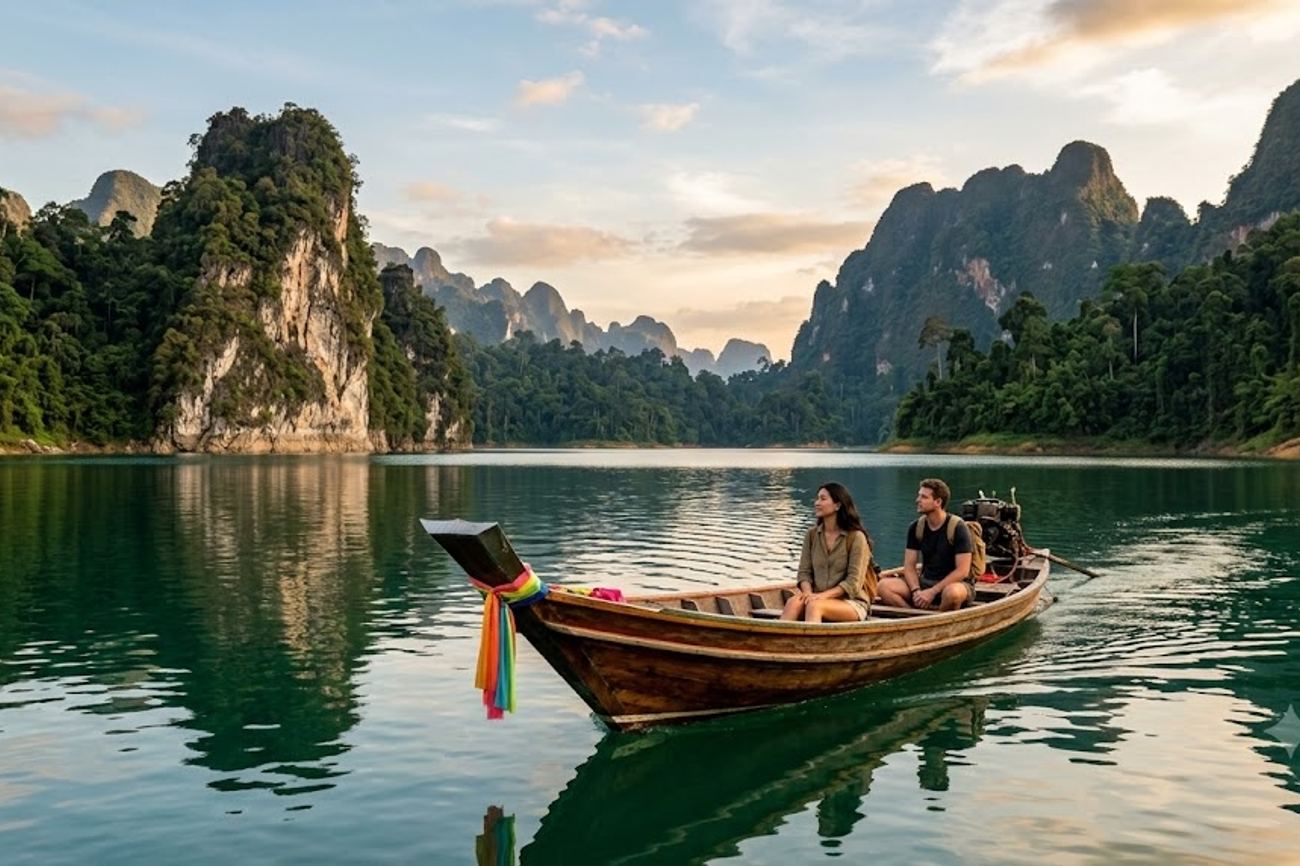
Image generated by AI
0% of modern high-value travelers now settle for single-resort retreats, as a systemic shift toward multi-destination itineraries fundamentally alters the economic distribution of tourism spend across Southeast Asia. This transition from isolated luxury enclaves to comprehensive regional exploration signals a maturation of the global travel market, where the "all-inclusive" model is being replaced by a demand for geographic and cultural diversity. By linking disparate ecosystems—from the limestone karsts of the south to the highland borders of the north—travelers are effectively decentralizing the financial benefits of tourism, moving capital away from centralized hubs and into regional community economies.
The Architecture of Multi-Region Itineraries
The current evolution in travel behavior is characterized by a rejection of the "resort bubble." Where previous decades saw international visitors remain confined to a single hotel complex for the duration of their stay, the contemporary traveler now constructs journeys that mirror the ecological and cultural breadth of the destination. This shift is not merely a preference for sightseeing but a strategic move toward "complete understanding," where the traveler seeks to synthesize the experience of a nation's urban centers, ancient forests, and maritime heritage into a single cohesive narrative.
This behavioral change creates a ripple effect across the hospitality sector. Traditional hotel chains are facing pressure to integrate with local boutique operators and regional transport networks to facilitate these complex movements. The movement toward comprehensive itineraries forces a redesign of tour creation, moving away from static packages toward fluid, multi-stop journeys that prioritize authentic engagement over curated convenience.
Regional Distribution: From Coastal Sanctuaries to Highland Borders
The logistical execution of these multi-region journeys is best illustrated by the contrast between Thailand's southern maritime zones and its northern cultural frontiers. The diversity of these locations requires a sophisticated approach to transport and timing to maintain the quality of the traveler's experience.
| Region | Key Destination | Primary Appeal | Access Method | Ecological/Cultural Focus |
|---|---|---|---|---|
| Southern Maritime | Koh Yao Noi | Tranquility & Limestone Views | Boat/Water Transport | Eco-conscious coastal living |
| Southern Mainland | Railay Beach | Rock Climbing & Cliffs | Boat Only | High-adrenaline adventure |
| Southern Interior | Khao Sok National Park | Ancient Jungles & Floating Lodges | Land/Water Hybrid | Immersive biodiversity |
| Northern Border | Chiang Rai | Contemporary Temples & Highlands | Land/Air | Spiritual & Artistic Heritage |
In the south, the focus remains on maritime heritage and environmental preservation. Koh Yao Noi, situated between Phuket and Krabi, serves as a critical case study in balancing growth with conservation. By offering an alternative to the dense urban centers of the region, it attracts a demographic of eco-conscious visitors who prioritize a minimal ecological footprint. Similarly, Railay Beach utilizes its physical isolation—accessible only by boat—to maintain a sense of expedition and exclusivity, catering to the global demand for adventure-focused coastal destinations.
Conversely, the northern territories, specifically Chiang Rai, provide the necessary cultural counterbalance to the southern beaches. As a gateway to the Golden Triangle, this region integrates rugged mountain landscapes with a fusion of spiritual heritage and modern artistic innovation. The inclusion of the north in a travel itinerary is no longer optional for the "complete" traveler; it is the primary mechanism for understanding the regional variations that define the national identity.
Expert Analysis: The Economics of Ecological Immersion
For travelers booking these expanded routes, the direct consequence is a shift in how "value" is calculated. Value is no longer measured by the luxury of the room, but by the diversity of the environment. The rise of floating accommodations on Cheow Lan Lake within Khao Sok National Park exemplifies this trend. By moving the lodging into the ecosystem itself, the industry is commodifying immersion.
The pricing pressure this creates means that traditional luxury hotels must now compete with "experience-based" lodging. A floating lodge in a rainforest often commands a premium price point not because of its amenities, but because of its proximity to wildlife and ancient forest trails. This represents a pivot in the World Tourism Organization (UNWTO) framework toward sustainable development goals, where tourism is used as a tool to improve local lives and protect biodiversity.
From a regulatory perspective, the reliance on boat-only access for destinations like Railay Beach and Koh Yao Noi creates a natural bottleneck that prevents the over-tourism seen in mainland hubs. However, this also places a heavy burden on maritime safety and environmental regulations. As these sites become more integrated into multi-stop journeys, the International Maritime Organization (IMO) standards for small-vessel transport become critical to ensuring traveler safety without destroying the "pristine" nature that attracts the visitors in the first place.
The strategic value of geographic diversity also impacts the macroeconomic stability of the host country. When travelers move from the beaches of the south to the temples of Chiang Rai, they distribute their spending across different provincial governments and local vendors. This reduces the economic vulnerability of the nation by ensuring that a downturn in one sector (e.g., coastal tourism) can be offset by growth in another (e.g., cultural or adventure tourism).
Key Takeaways
- Shift in Consumption: International travelers are abandoning single-resort stays in favor of multi-destination itineraries that combine diverse landscapes.
- Eco-Centric Lodging: There is a growing market for immersive accommodations, such as floating lodges in Khao Sok National Park, which prioritize nature over traditional luxury.
- Strategic Diversity: Linking northern cultural hubs like Chiang Rai with southern coastal areas like Koh Yao Noi is now the standard for high-value, comprehensive travel.
- Access as a Feature: Physical isolation (boat-only access to Railay Beach) is being marketed as a "sense of expedition" rather than a logistical hurdle.
- Economic Decentralization: Multi-region travel distributes tourism revenue more equitably across regional economies and supports Sustainable Development Goals.
FAQ: Southeast Asian Multi-Region Travel 2024
Is it better to visit a single resort or do a multi-stop tour in Thailand? Multi-stop itineraries provide significantly more value for those seeking cultural depth and ecological variety. While resorts offer relaxation, combining destinations like Chiang Rai and Khao Sok allows for a complete understanding of the region's diverse environments.
How do I reach Railay Beach if there are no roads? Railay Beach is accessible exclusively by boat. This isolation preserves its dramatic limestone cliff scenery and creates an exclusive atmosphere for rock climbers and beachgoers.
What makes Koh Yao Noi different from Phuket or Krabi? Unlike the dense urban centers of Phuket or Krabi, Koh Yao Noi offers a tranquil, slow-paced environment focused on traditional coastal living and undisturbed shorelines.
What are floating lodges in Khao Sok National Park? These are unique accommodations situated directly on Cheow Lan Lake. They provide immediate access to the surrounding rainforest and limestone karsts, allowing for total immersion in the wilderness.
The era of the static vacation is over; the age of the integrated expedition has arrived.
Tags: Chiang Rai, Khao Sok National Park, Railay Beach, Koh Yao Noi, Southeast Asia Tourism 2024, Sustainable Development Goals
Related Travel Guides
Disclaimer
This article is for informational and educational purposes only. It does not constitute legal, financial, or professional advice. While we strive to provide accurate and up-to-date information, travel policies, regulations, and conditions change rapidly. Always verify information with official sources before making travel decisions. Nomad Lawyer makes no representations about the accuracy, reliability, completeness, or suitability of the information provided. Readers should consult qualified professionals for advice specific to their circumstances. The views expressed in this article are those of the author and do not necessarily reflect the views of Nomad Lawyer.
Preeti Gunjan
Contributor & Community Manager
A passionate traveller and community builder. Preeti helps grow the Nomad Lawyer community, fostering engagement and bringing the reader experience to life.
Learn more about our team →