
Italy Unites With France and Others Through Paganini Route as Genoa and Nice Unlock Cultural Travel
Italy Unites With France and Others Through Paganini Route as Genoa and Nice Unlock Cultural Travel

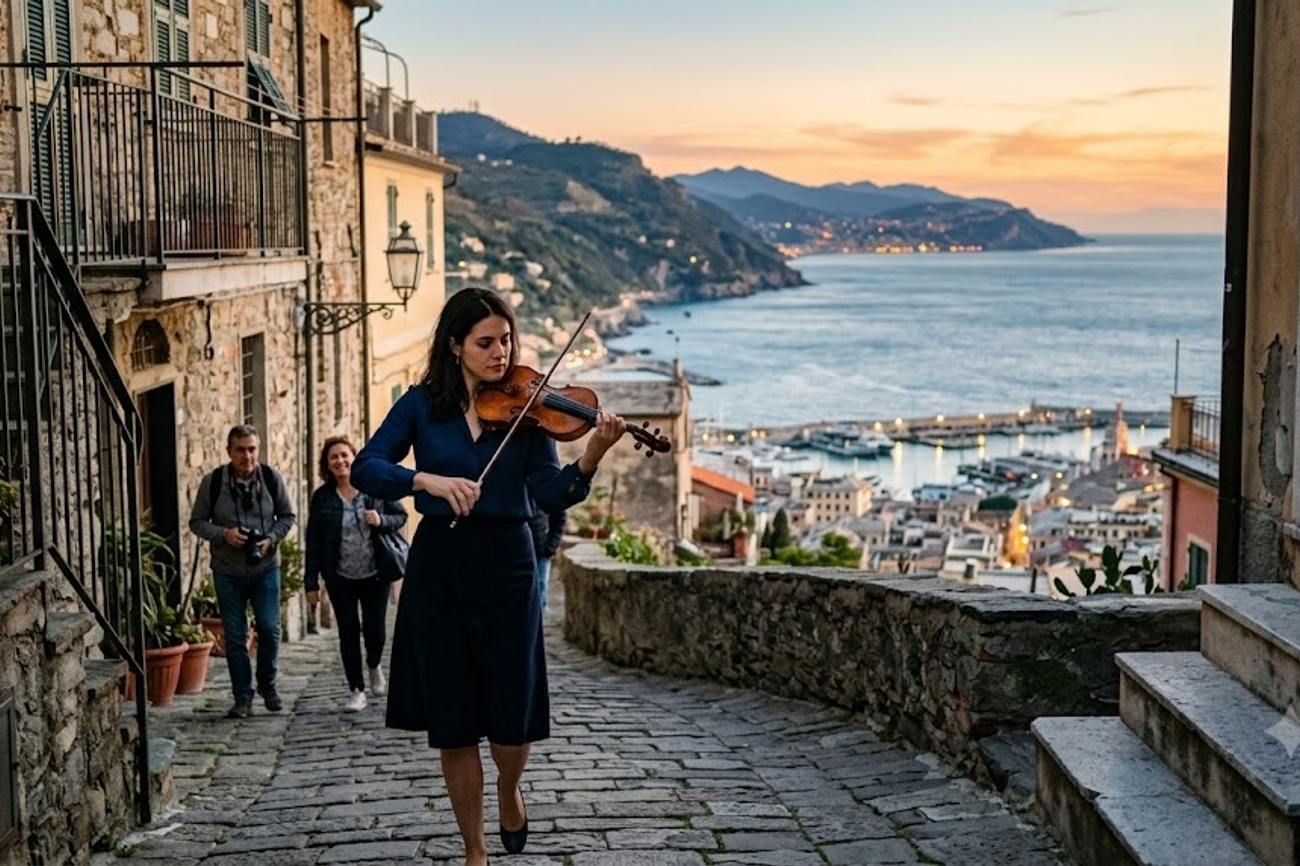
Image generated by AI
Cultural tourism growth in Europe has shifted from general sightseeing to "hyper-niche" thematic routing, with the European Paganini Route now transitioning from a static Council of Europe certification in May 2026 to a commercial travel product. This evolution mirrors a broader industry trend where heritage labels are being converted into monetizable itineraries, moving away from abstract recognition toward structured, multi-city consumer experiences.
The Paganini Network in Numbers: From Heritage to Product
The conversion of the European Paganini Route into a usable travel product is grounded in specific historical and contemporary data. According to Council of Europe documentation, the foundation of this route is Niccolò Paganini’s primary European tour conducted between 1828 and 1834. This historical benchmark provides the scale for current tourism development: a journey exceeding 20,000 kilometres, spanning nine countries, and encompassing more than 400 concerts.
For the modern traveler, this historical data has been distilled into a manageable network. As of May 2026, the certified network comprises 10 countries: Italy, Albania, Austria, Belgium, Bulgaria, Croatia, France, Hungary, Spain, and the United Kingdom. However, the operational footprint is larger, with the route's digital presence identifying partners across 13 countries and 20 cities. This discrepancy highlights the difference between "certified" status and "partner" collaborations, a distinction that is vital for tour operators designing authentic itineraries.
The most immediate commercial application is seen in Genoa, where the municipality has launched "Ottobre Paganini." Running from 2 October to 8 November 2026, this month-long program transforms the city's heritage into a time-bound event. The itinerary extends from the historic center to western districts, including Sestri Ponente, integrating free activities with paid institutional programs at the Giovine Orchestra Genovese and Teatro Carlo Felice.
Comparative Context: Thematic Routing vs. General Tourism
The European Paganini Route represents a strategic shift in how European destinations compete for high-value cultural tourists. Rather than competing on general "city break" metrics, these cities are leveraging specific biographical nodes to create a cohesive narrative.
The relationship between Genoa and Nice provides a primary example of this regional synergy. While Genoa represents the origin (Paganini was born there in 1782), Nice represents the conclusion (Paganini died there on 27 May 1840). This creates a "biographical bookend" that allows travel agencies to sell short, thematic trips rather than requiring a full trans-European expedition.
The following table delineates the shift from the historical tour to the current commercialized travel framework:
| Metric | Historical Tour (1828–1834) | Certified Route (2026) | Expanded Partner Network |
|---|---|---|---|
| Country Count | 9 Countries | 10 Countries | 13 Countries |
| City Focus | 400+ Concert Locations | Core Urban Nodes | 20 Partner Cities |
| Primary Driver | Performance/Touring | Cultural Certification | Tourism Productization |
| Distance/Scale | 20,000+ Kilometres | Multi-city Itineraries | Specialized City Breaks |
| Key Anchor | Concert Halls | Certified Heritage Sites | Audio Guides/Tour Packages |
This movement toward "certified routes" is a documented strategy by the Council of Europe, which requires that certified routes move beyond labels to create actual tourism products developed with professional agencies. This aligns with global trends reported by the World Tourism Organization (UNWTO), where sustainable territorial development and the enhancement of lesser-known heritage sites are used to decentralize tourism away from over-saturated hubs.
What This Means for Travelers
The transition of the Paganini Route from a "label" to a "product" changes how travelers should approach booking and planning. The availability of the official thematic publication, In the Footsteps of Paganini, narrows the vast 10-country network into five primary urban nodes: Genoa, Vienna, London, Nice, and Parma.
For those planning a trip in late 2026, the following data-driven advice applies:
- The October Window: If visiting Genoa, the period between 2 October and 8 November 2026 is the optimal window. Because the "Ottobre Paganini" program includes free guided visits and gastronomic experiences via the "Gusto Paganini" initiative, hotel demand in the historic center and western districts (Sestri Ponente) is expected to spike. Booking accommodation 3-4 months in advance is recommended.
- The Bi-City Pivot: Travelers seeking a high-density cultural experience without the logistics of a 10-country tour should pair Genoa and Nice. The existence of a dedicated walking audio guide in Nice and established guided tours in Genoa makes this a low-friction, high-reward itinerary.
- Niche Integration: For those visiting London or Vienna, the Paganini framework allows for "micro-itineraries." Instead of general sightseeing, travelers can now utilize the route's specific institutional partnerships to visit theaters and historic centers associated with the 1828–1834 tour.
Forward Projection: The Scale of Cultural Productization
Based on the current trajectory, the European Paganini Route is likely to serve as a blueprint for other biographical or artistic routes across the continent. The shift from "certification" to "experience" is the key metric for success. We can expect a further expansion of the "partner" network (currently at 20 cities) as more municipalities realize the value of being an "urban node" in a certified European route.
As reported by IATA, there is a growing trend in "purpose-driven travel," where passengers select destinations based on specific intellectual or cultural themes. The Paganini Route is perfectly positioned to capture this market. The integration of audio guides (as seen in Nice) and gastronomic programs (as seen in Genoa) suggests that the route will move toward a "lifestyle" offering, combining music, food, and history into a single package.
The next phase of growth will likely involve the formalization of "Paganini Packages" by major European tour operators, moving the route from a self-guided exploration to a curated, high-margin travel product. The focus will shift from the 20,000-kilometre historical scale to the efficiency of the five major city nodes, making the experience accessible to the average luxury traveler rather than just the music historian.
FAQ: European Paganini Route 2026
Will travel costs increase along the Paganini Route? While most "Ottobre Paganini" activities in Genoa are free, the increased demand for hotels in Sestri Ponente and the historic center during October and November 2026 will likely drive up short-term accommodation pricing.
Is it necessary to visit all 10 countries to experience the route? No. The route is designed for flexibility. Travelers can focus on the five primary nodes (Genoa, Vienna, London, Nice, and Parma) or a simple two-city pairing of Genoa and Nice for a more condensed experience.
Which cities offer the most developed infrastructure for this route? Genoa and Nice are currently the most developed. Genoa serves as the route's headquarters and birth-site hub, while Nice provides a specialized walking audio guide and a clear biographical conclusion to the journey.
How do I find the official itineraries? The official thematic publication, In the Footsteps of Paganini, and the route's official website provide the framework for the five major city nodes and the broader partner network of 20 cities.
The conversion of 19th-century musical history into 21st-century tourism assets proves that in the modern travel economy, a certified story is a sellable product.
#PaganiniRoute2026 #CulturalTourismGrowth #GenoaTourismData #EuropeanHeritageRoutes #NicheTravelTrends2026 #BiographicalTourism
Related Travel Guides
Disclaimer
This article is for informational and educational purposes only. It does not constitute legal, financial, or professional advice. While we strive to provide accurate and up-to-date information, travel policies, regulations, and conditions change rapidly. Always verify information with official sources before making travel decisions. Nomad Lawyer makes no representations about the accuracy, reliability, completeness, or suitability of the information provided. Readers should consult qualified professionals for advice specific to their circumstances. The views expressed in this article are those of the author and do not necessarily reflect the views of Nomad Lawyer.
Naina Thakur
Contributor & Travel Specialist
Travel enthusiast and legal writer covering visa regulations, responsible tourism, and cultural journeys across global destinations.
Learn more about our team →