Singapore Is Using the New Amap AI Guide to Unlock Better Travel Planning and More Local Adventures

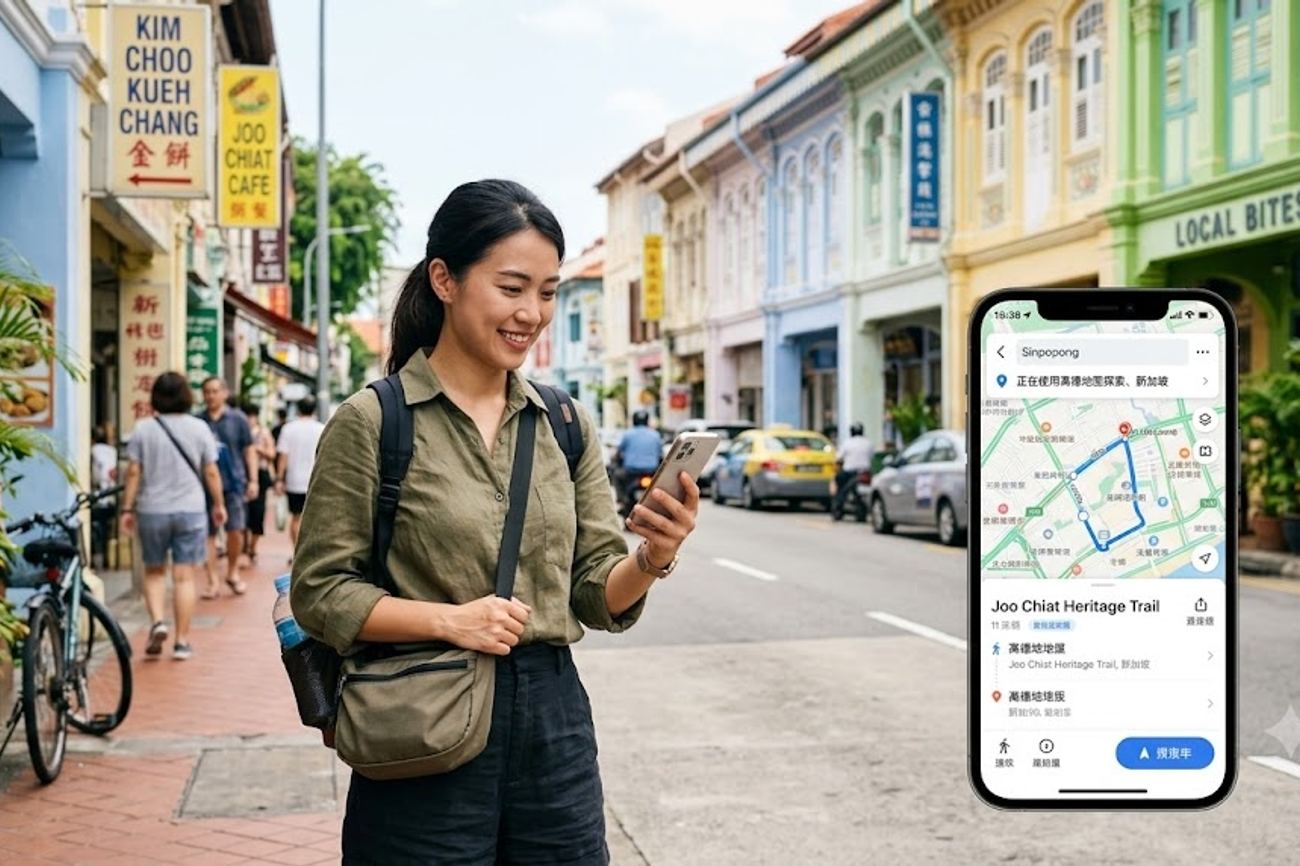
Image generated by AI
[Singapore, September 2026] — The Singapore government has launched an AI-powered tourism guide specifically designed to capture the growing market of independent Chinese travelers by integrating destination discovery with real-time logistics.
Developed through a strategic partnership between the national tourism authority and a prominent Chinese location-services platform, the service introduces a digital ecosystem that maps 104 specific locations across seven themed rankings. The initiative aims to pivot Chinese visitors away from rigid group itineraries toward a "free and independent" travel model, encouraging exploration of local neighborhoods and small businesses alongside traditional landmarks.
The Digital Infrastructure Shift
The launch follows a formal cooperation agreement signed in Beijing on June 2, 2026. The resulting tool, branded as Singapore Street Stars, represents the first time this specific digital ranking system has been deployed for an overseas destination. By categorizing 104 sites into themes—including nightlife, nature, photography, family activities, authentic local life, emerging favorites, and selected experiences—the platform attempts to decentralize tourism traffic.
While the system promotes global icons like the Gardens by the Bay and Sentosa Island, it places equal weight on community-centric hubs. High-traffic areas such as Haji Lane, Joo Chiat Road, Tiong Bahru Market, and Maxwell Food Centre are integrated into the same interface, allowing users to build a diversified itinerary that balances commercial attractions with residential culture.
Targeted Market Impact
The deployment of this AI tool is a direct response to the dominance of the Chinese travel market in Singapore's economy. According to 2025 data, Mainland China was the primary source of international arrivals, contributing 3.1 million visitors. This outperformed other key markets, including Indonesia (2.4 million), Australia (1.3 million), Malaysia (1.3 million), and India (1.2 million).
The financial incentives for this digital push are significant. In 2025, Singapore recorded a total of 16.9 million international visitors, a 2.3% increase over 2024, resulting in record tourism receipts of S$32.8 billion. The Chinese market's spending power is particularly acute; in the first nine months of 2025, visitors from Mainland China spent S$3.68 billion. During that period, their expenditure on food and beverages surged by 19% compared to 2024.
Practical Traveler Advisory and Strategic Insights
For the individual traveler, this is not a government portal for entry, but a comprehensive concierge app. It translates the "discovery" phase of travel into "actionable" logistics.
Direct Passenger Impacts:
- Integrated Logistics: Users can move from discovering a neighborhood to booking ground transport and airport transfers within a single digital environment.
- Language Barriers: The service includes driver-translation tools and Chinese-language search capabilities to reduce friction during transit.
- Financial Ease: The platform integrates familiar Chinese payment methods, removing the need for multiple currency conversions or local credit cards for basic services.
- Visual Validation: Through "Flying Street View," travelers can access panoramic virtual previews of selected sites to assess the environment before visiting.
- No Entry Shortcuts: Crucially, this tool provides zero visa entitlements. Travelers must still adhere to all Immigration & Checkpoints Authority (ICA) regulations, including passport validity and the submission of arrival cards.
The Role of Virtual Previews and Data
The "Flying Street View" component is currently in a trial phase. By utilizing panoramic imagery, the system allows first-time visitors and families to virtually scout locations. While this reduces the "uncertainty gap" regarding the aesthetic and layout of a destination, the system does not provide real-time data. Users cannot use the AI to monitor current crowd densities, weather conditions, ticket availability, or temporary closures.
Early data from the 2026 summer season indicates a massive spike in digital interest, though these figures reflect platform activity rather than confirmed bookings. Daily searches related to Singapore rose by 52.3% compared to June. Specifically, searches for attractions jumped 91.2%, shopping grew by 87.4%, and dining searches increased by 70.9%. These metrics suggest a high appetite for independent planning among the target demographic, though the Singapore Tourism Board has not yet released an official economic impact assessment linking these searches to actual revenue growth.
Future Trajectory and Constraints
The long-term goal of the Singapore AI Travel Planning service is to distribute visitor interest more evenly across the city-state, preventing the "over-tourism" of primary landmarks. By pushing users toward Tiong Bahru or Joo Chiat, the government aims to spread tourism dollars into local community businesses.
However, the system remains a marketing and discovery tool. It does not guarantee bookings or ensure that every listed business will see an increase in foot traffic. The responsibility for verifying fares, checking pick-up locations, and managing cancellation policies remains entirely with the traveler. As the trial of panoramic previews expands, the government may look to integrate live data feeds, but for now, the tool serves as a digital bridge between discovery and arrival.
FAQ: Singapore AI Tourism Guide 2026
Does the AI guide help me get a visa for Singapore? No. The AI Travel Planning service is strictly for tourism discovery and logistics. It does not change immigration laws, provide visa entitlements, or bypass the standard arrival-card requirements mandated by the Singapore government.
Can I book my hotel and flights through the Singapore Street Stars system? The platform focuses on destination discovery, ground transport, and driver translation. While it helps you plan your itinerary and book local movement, it is not a comprehensive flight or hotel booking engine.
Is the "Flying Street View" real-time? No. The panoramic previews are pre-recorded imagery used for visual orientation. They do not show live crowds, current weather, or real-time availability of tickets and restaurant tables.
Who is the primary target audience for this AI tool? The service is specifically designed for free and independent travelers (FITs) from Mainland China who prefer to arrange their own journeys rather than following a fixed group tour itinerary.
Digital discovery is replacing the tour guide, but the passport remains the only key to the city.
Related Travel Guides
This article is for informational purposes. Flight routes, passenger regulations, visa rules, and transit advisories are subject to change by airlines and aviation authorities. Readers are advised to verify schedules and travel documentation with relevant carriers and border agencies before departure.
Related Stories

SITA Leads New Aviation Era as Smart AI, Biometrics, and Data Exchange Remove Barriers Across Global Air Travel
Singapore Unleashes Digital Tourism Revolution to Transform Travel Experiences and Local Business Growth