UK Eases UAE Travel Restrictions for Winter 2026 Amid Persistent Gulf Aviation Security Threats

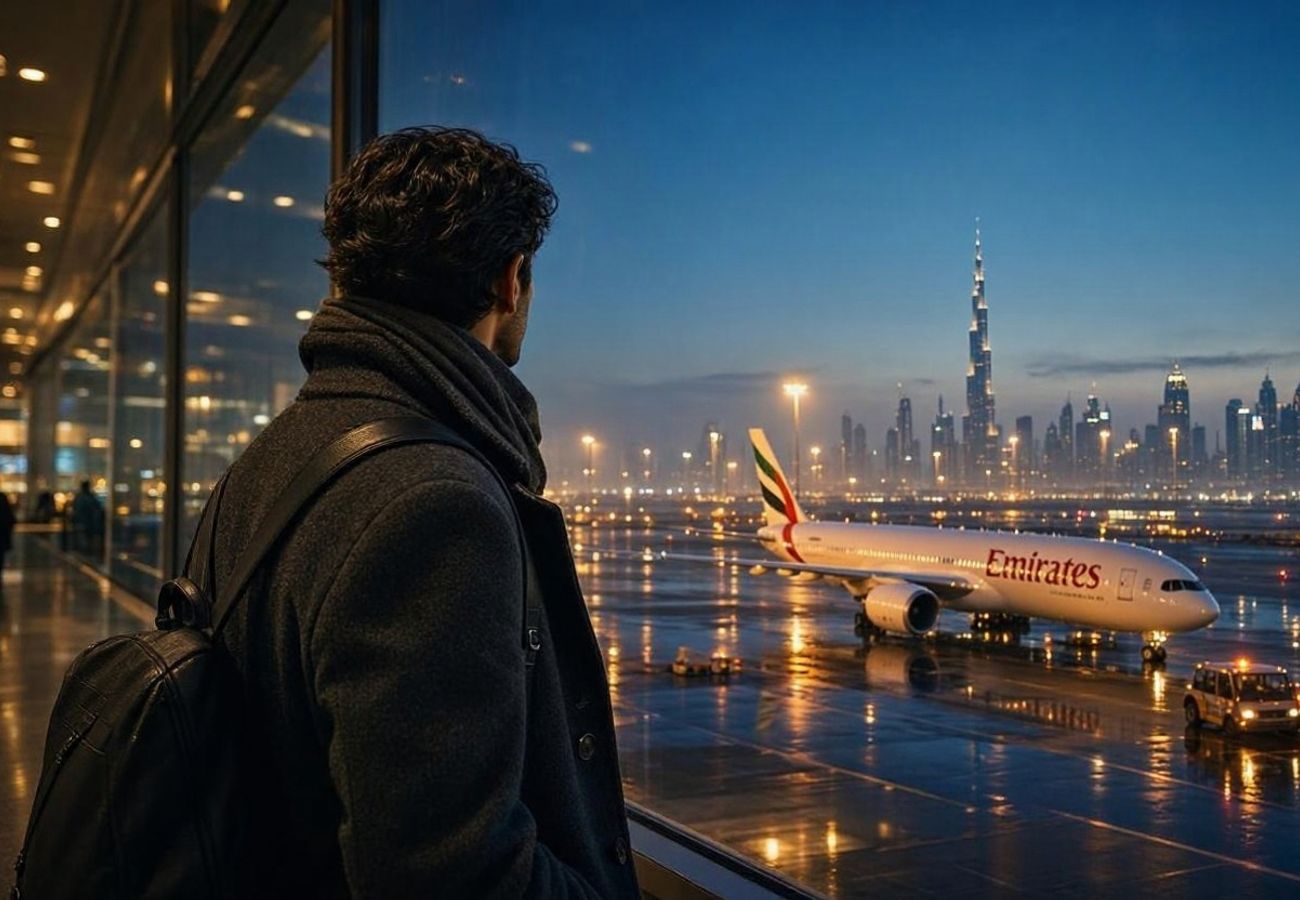
Image generated by AI
[Dubai, November 21, 2026] — The United Kingdom has officially eased travel restrictions for the United Arab Emirates, signaling a shift in the security outlook for British tourists planning winter holidays in Dubai and Abu Dhabi. While the government no longer advises against all but essential travel, aviation authorities maintain strict warnings regarding the volatility of Gulf airspace.
The updated guidance from the Foreign, Commonwealth and Development Office (FCDO), issued November 18, 2026, acknowledges a reduction in short-term tensions compared to earlier in the year. However, the move is not a guarantee of total stability. Travelers are cautioned that regional conflicts remain unpredictable and could trigger sudden flight cancellations or airspace closures.
Conflict Escalation and Airspace Risks
The easing of destination-specific advice contrasts with ongoing operational warnings from aviation regulators. The European Union Aviation Safety Agency (EASA) extended its security bulletin for the Persian Gulf and Gulf of Oman on November 16, 2026. This warning remains active until January 31, 2027.
EASA identifies several critical threats to flight safety, including:
- Deployment of missiles and drones.
- Falling debris from intercepted projectiles.
- Potential misidentification of civilian aircraft by air-defense systems.
While these warnings do not close airports in the UAE, they force airlines to implement rigorous risk assessments and contingency routing, which can lead to unexpected delays.
Regional Aviation Impact Data
The impact of regional instability is uneven across the Gulf's primary hubs. While Abu Dhabi shows growth, Dubai has faced a significant contraction in passenger volume during the first three quarters of 2026.
Gulf Aviation Traffic & Operational Status (2026)
| Entity | Metric | Figure/Status | Comparison/Detail |
|---|---|---|---|
| Dubai International | Jan-Sept Pax Volume | 50.4 Million | $\downarrow$ 28.1% vs 2025 |
| Dubai International | Q3 Traffic | 18.8 Million | $\downarrow$ 22.1% year-on-year |
| Dubai International | Sept Connecting Pax | 51% of total | High network dependency |
| Zayed Intl (Abu Dhabi) | Q3 Traffic | 8.45 Million | $\uparrow$ 1.2% year-on-year |
| Abu Dhabi Airports | Q3 Total Pax | 8.61 Million | $\uparrow$ 1.4% year-on-year |
| Abu Dhabi Airports | Destinations | 124 | Increased from 112 |
| Etihad Airways | Riyadh/Dammam Routes | Cancelled | Through Nov 30, 2026 |
| British Airways | Dubai Services | Resumed | Confirmed November 2026 |
What This Means for Travelers
For passengers booking flights or hotels for the December holiday period, the "easing" of advice does not mean a return to business-as-usual. The gap between destination safety (FCDO) and airspace safety (EASA) creates a specific set of risks.
Flight Reliability: Your destination may be "safe," but the path to get there is not. Airlines may reroute flights to avoid sensitive zones, increasing flight times and fuel consumption. This can lead to crew timing out or aircraft being displaced, causing secondary delays on unrelated routes.
Connecting Risks: With 51% of Dubai's September traffic consisting of connecting passengers, any regional disruption has a multiplier effect. A flight from London to Dubai may operate, but a connecting leg to Saudi Arabia or beyond could be cancelled without notice.
On-the-Ground Safety: Travelers in Dubai and Abu Dhabi should remain vigilant in crowded areas and avoid military installations. The FCDO warns that falling debris from intercepted drones or missiles is a legitimate risk; passengers are advised to seek shelter indoors and stay away from windows during active alerts.
Security Volatility in Saudi Arabia
The security environment in Saudi Arabia remains significantly more precarious than in the UAE. On November 19, 2026, the Saudi General Directorate of Civil Defense reported a Houthi attack on a tower in Riyadh’s King Abdullah Financial District. While no injuries were reported, the incident—coupled with the interception of four ballistic missiles in the south—highlights the fragility of the region.
The FCDO continues to advise against all but essential travel to most of Saudi Arabia and prohibits all travel within 10 kilometers of the Yemen border. This disparity means travelers should not assume that a "green light" for Dubai applies to the wider Gulf region.
FAQ: UAE Winter Travel 2026
Is it safe to fly to Dubai and Abu Dhabi right now? The UK government has eased restrictions, meaning travel is permitted. However, EASA warns of airspace risks through January 31, 2027. Travelers should monitor airline notices for rerouting and remain alert to local security warnings.
Will my flight be cancelled due to the EASA warning? Not necessarily. The warning is for operators to avoid specific airspace over Gulf waters, not a ban on airport operations. However, sudden military activity can force temporary closures or rerouting.
Should I worry about the recent attacks in Riyadh? While the attacks did not shut down Riyadh airport on November 19, they indicate regional instability. If you have connecting flights through Saudi Arabia, verify your status frequently, as these routes are more volatile than UAE services.
What should I do if a missile alert is issued while I am in the UAE? Follow the instructions of local authorities immediately. Move inside a secure building, stay away from windows to avoid injury from falling debris, and avoid all military or security facilities.
Travelers are urged to prioritize flexible bookings as Gulf airspace remains a volatile variable.
Related Travel Guides
This article is for informational purposes. Flight routes, passenger regulations, visa rules, and transit advisories are subject to change by airlines and aviation authorities. Readers are advised to verify schedules and travel documentation with relevant carriers and border agencies before departure.
Related Stories

Dubai Travel Insurance Risks 2026: Regional Tensions and Policy Exclusions for UAE Visitors

Saudi Arabia Travel Warnings and GCC Flight Disruptions: Aviation Security Analysis 2026