JFK, LAX and SFO Reveal America’s Airport Access Costs as Rail, Rideshare and Parking Bills Diverge

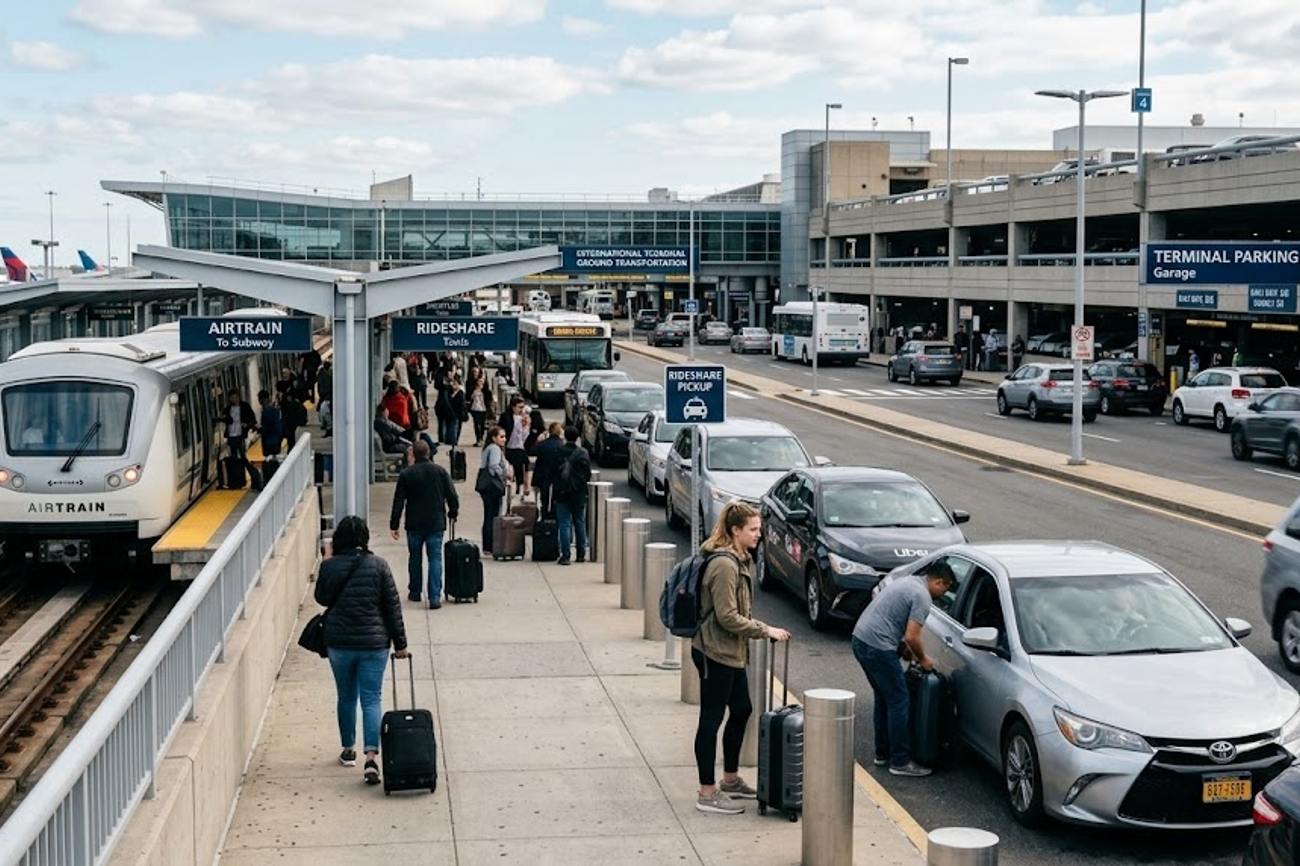
Image generated by AI
3,000,000 passengers navigate the logistical and financial hurdles of reaching US airports every single day, according to a January 2026 Government Accountability Office (GAO) review. While aviation discourse typically focuses on ticket pricing and fuel surcharges, this figure highlights a massive, overlooked expenditure: the "last mile" cost of airport access. For the modern traveler, the financial commitment to a journey begins long before the boarding pass is scanned, often involving a complex layering of municipal transit fares, airport-specific premiums, and regional rail supplements that can significantly inflate the total cost of travel.
The Infrastructure Gap in American Hubs
The disparity in airport accessibility across the United States is not merely a matter of convenience but a reflection of fragmented urban planning. The GAO review of 51 airports revealed that while 23 of the 31 large-hub airports provide rail service, the actual utilization of these services remains strikingly low. Public transport mode-share varies wildly, ranging from a negligible 4% to a modest 19%. This suggests that the mere existence of a train does not guarantee its viability for the average passenger.
When compared to international gateways like Singapore Changi or London Heathrow, US airports often lack a seamless, integrated fare structure. Travelers in the US are frequently subjected to "double-dipping" fares, where a city-center subway ticket does not cover the final leg of the journey. This creates a hidden tax on air travel that disproportionately affects solo travelers and those without private vehicles.
Dissecting the Cost of Access: Major US Hubs
The financial burden of airport transit is rarely a single line item. It is a composite of base fares, supplements, and time-value losses. The following data outlines the current state of connectivity and pricing across key American gateways.
| Airport | Primary Connection | Base Fare/Cost | Key Financial Nuance |
|---|---|---|---|
| JFK | Subway + AirTrain | $11.75 (Total) | $3 subway + $8.75 AirTrain supplement |
| Newark (EWR) | NJ Transit + AirTrain | $8.75 (Supplement) | AirTrain fee applies if no NJ Transit/Amtrak ticket |
| Boston Logan | Silver Line | Free | Free from airport to South Station |
| Miami (MIA) | Metrorail Orange Line | $2.25 | Free bus-to-rail transfers |
| Chicago O'Hare | CTA Blue Line | $5.00 | Airport premium added to standard CTA fare |
| LAX | Metro + Shuttle | Variable | Integration with free terminal shuttles |
| SFO | BART | Variable | Direct rail link to San Francisco |
| Sea-Tac | Link Light Rail | Variable | Direct rail link to Seattle |
| Dulles (IAD) | Silver Line | Variable | Direct rail link to Washington D.C. |
The complexity of these costs is most evident at New York's primary hubs. At JFK, the Port Authority of New York and New Jersey operates a tiered pricing model for the AirTrain. While a solo traveler pays $8.75, groups can leverage a structure where the first rider pays full price and subsequent riders pay $4.50, capped at $26.75 for five people. This creates a paradoxical situation where the per-person cost of airport access drops as the group size increases, yet the total "access tax" for a family of four still reaches $22.25 just for the AirTrain leg.
Newark Liberty (EWR) introduces further friction. The AirTrain connects terminals to the rail station, but the $8.75 charge is mandatory for those without an eligible Amtrak or NJ Transit ticket. Furthermore, the physical layout adds a "time cost"; while Terminal C is a seven-minute ride from the station, Terminal A may require a 15-minute walk or a separate shuttle, adding layers of logistical stress to the financial cost.
Expert Analysis: The "Hidden Tax" of US Aviation Logistics
For travelers booking flights, the direct consequence of these disparate access models is that the "cheapest flight" is often a mathematical illusion. A budget fare into JFK may be offset by the $11.75 rail cost and the time spent navigating multiple transfers, whereas a slightly more expensive flight into Boston Logan is subsidized by a free Silver Line connection to South Station.
The pricing pressure created by these supplements means that for short-haul or budget trips, the airport access cost can represent a significant percentage of the total trip expenditure. When we analyze the data from Massport, which saw 1.5 million passengers use the Silver Line SL1 and 2.2 million use the Blue Line in 2024, it becomes clear that free or low-cost transit drives higher adoption. In contrast, the "airport premium" seen at O'Hare ($5.00) or JFK ($8.75) acts as a deterrent, pushing passengers toward rideshares.
This shift toward rideshares creates a feedback loop of congestion. As passengers avoid "expensive" or "complex" rail links, airport road traffic increases, which in turn makes the rail option more attractive—but only if the pricing is competitive. The current US model, characterized by fragmented payments (Subway $\rightarrow$ AirTrain $\rightarrow$ Terminal), is a significant outlier compared to the integrated systems managed by the International Air Transport Association (IATA) standards seen in Asia and Europe.
Key Takeaways
- Transit Disparity: Boston Logan is a rare outlier in the US, offering free Silver Line service to South Station, whereas hubs like JFK and Newark impose dedicated AirTrain supplements of $8.75.
- The Group Discount Paradox: JFK's group fare structure reduces the per-person cost for families (down to $4.50 for additional riders), but the total cost for a small group still exceeds $20.
- Hidden Logistics Costs: At Newark, the cost of access is not just financial but physical; Terminal A lacks a direct AirTrain connection, requiring a 15-minute walk or shuttle.
- Mode-Share Struggle: Despite 23 of 31 large-hub airports having rail, actual usage is as low as 4% in some locations, driven by cost and complexity.
- Parking Volatility: Economy parking at Logan can hit $37 per day, proving that for multi-day trips, the "cheap" drive-in option is often the most expensive choice.
FAQ: US Airport Access 2026
Is the AirTrain at JFK free? No. The AirTrain costs $8.75 per person for solo travelers. If you are traveling in a group, the first person pays $8.75 and additional passengers pay $4.50, with a maximum cap of $26.75 for five people.
What is the cheapest way to get from Boston Logan to downtown? The Silver Line (SL1) is the most cost-effective option, as it provides free transportation from the airport to South Station.
Do I have to pay for the AirTrain at Newark (EWR)? Yes, unless you possess a valid NJ Transit or Amtrak ticket. Those without an eligible ticket must pay an $8.75 fee to use the AirTrain.
How much does it cost to take the train from O'Hare to Chicago? A single ride on the CTA Blue Line from O'Hare to the city costs $5.00, which includes a specific airport premium over the standard rail fare.
The true cost of a flight is never found on the checkout page; it is found in the gap between the city center and the boarding gate.
Tags: JFK Airport, Boston Logan, Newark Liberty, Chicago O'Hare, GAO Airport Review 2026, US Airport Transit Costs
Related Travel Guides
This article is for informational purposes. Flight routes, passenger regulations, visa rules, and transit advisories are subject to change by airlines and aviation authorities. Readers are advised to verify schedules and travel documentation with relevant carriers and border agencies before departure.
Related Stories
SITA Leads New Aviation Era as Smart AI, Biometrics, and Data Exchange Remove Barriers Across Global Air Travel
Italy Transforms Cycling Holidays With Easy Bike Access On National Train Routes