
New York Moves to Tighten AI Safety Rules as Hochul Targets Major Developers
New York Moves to Tighten AI Safety Rules as Hochul Targets Major Developers

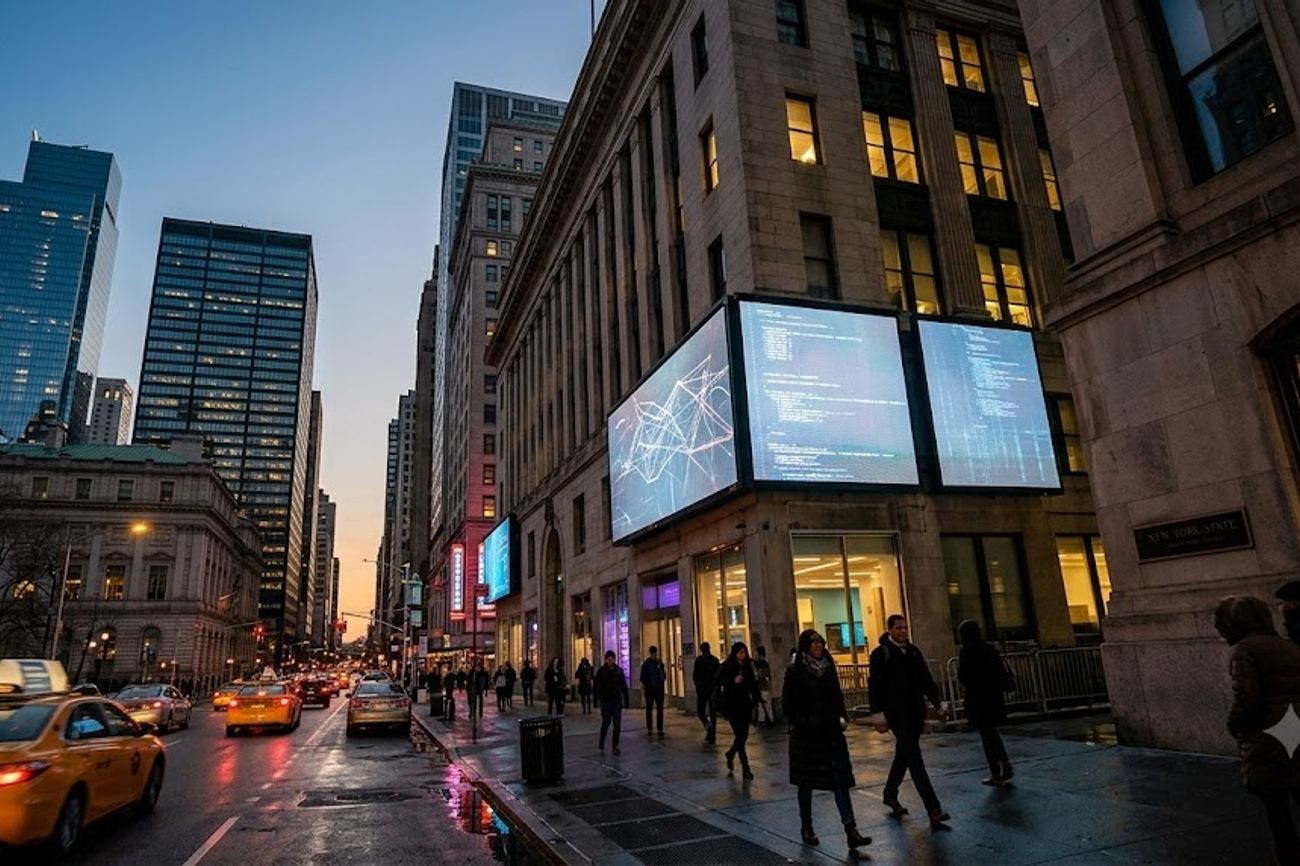
Image generated by AI
[Albany, September 21, 2026] — New York Governor Kathy Hochul has launched a sweeping regulatory offensive against major artificial intelligence developers, mandating strict registration and incident-reporting protocols to mitigate emerging technological risks. The initiative centers on the Responsible AI Safety and Education (RAISE) Act, a legislative framework designed to force transparency from the creators of "frontier" AI models operating within the state.
The new mandate requires large-scale AI developers to begin registering with the state this November. This registration serves as the precursor to a more aggressive compliance regime starting in January 2027, which will force companies to disclose safety frameworks and report critical failures to state authorities. The move signals New York's intent to lead on AI governance as federal oversight remains stagnant, positioning the state as a primary regulator for the tech industry's most powerful systems.
The RAISE Act Mandate
The immediate trigger for this regulatory shift is the operationalization of the RAISE Act, which shifts the burden of safety proof from the government to the developers. The law targets "frontier" AI—the most advanced, large-scale models capable of wide-ranging tasks—and imposes a set of non-negotiable transparency requirements.
Starting in November, eligible developers must register with the state of New York. This is not a mere formality; it is the entry point for a comprehensive oversight system. By January 2027, these registered entities must adhere to a strict reporting timeline: any "critical safety incident" must be reported to the state within 72 hours of discovery.
Beyond emergency reporting, the RAISE Act demands a continuous stream of data. Developers are required to:
- Establish and maintain public-facing safety and transparency frameworks on their official websites.
- Conduct and submit quarterly assessments specifically targeting "catastrophic risks."
- Issue periodic disclosure statements regarding model capabilities and safety guardrails.
- Pay mandatory assessments to fund the state's oversight infrastructure.
To ensure these rules are not bypassed, the state has created a public reporting mechanism. Any citizen who suspects a critical AI safety incident has occurred can submit a report directly to the state, which may then be forwarded to other law enforcement or government agencies.
Institutional Oversight via DIGIT
The enforcement of the RAISE Act falls under a newly created entity: the Office of Digital Innovation, Governance, Integrity and Trust, known as DIGIT. This office is housed within the New York State Department of Financial Services (DFS), leveraging the department's existing experience in regulating complex financial systems and cybersecurity.
DIGIT is tasked with the active monitoring of developer data, the assessment of emerging systemic risks, and the publication of an annual safety report. This report will serve as the official record of AI incidents in New York and will guide future legislative amendments to the RAISE Act.
In a significant move to build technical capacity, Governor Hochul has appointed Marc Gilman as the Deputy Director for the RAISE Act. Gilman is the first full-time hire for DIGIT, bringing a background as General Counsel and VP of Compliance at Theta Lake, as well as experience teaching technology law at Fordham University School of Law. His appointment suggests that New York is prioritizing a legalistic, compliance-heavy approach to AI oversight.
Infrastructure and Data Center Restrictions
The AI crackdown extends beyond software and into the physical infrastructure required to run these models. Governor Hochul has linked the RAISE Act to a broader strategy regarding hyperscale data centers, which consume massive amounts of electricity and water.
Earlier this year, the Governor signed an Executive Order imposing a temporary moratorium on the construction of new hyperscale data centers. This pause allows the state to evaluate the environmental and economic toll of these facilities. Specifically, regulators are examining:
- Total electricity demand and its impact on the state's power grid.
- Environmental degradation and water usage for cooling systems.
- The effect of high-energy demand on residential and commercial ratepayers.
- The social impact on local communities hosting these massive hubs.
To manage this, Empire State Development has launched the Host Community Investment Framework for Data Center Development. This framework provides a playbook for local governments, ensuring they have the leverage to negotiate favorable terms when tech giants seek to build in their jurisdictions.
What This Means for Travelers
While the RAISE Act targets software developers, the ripple effects extend to the travel, hospitality, and aviation sectors—industries that are increasingly reliant on AI for booking engines, dynamic pricing, and customer service.
For the Business Traveler and Digital Nomad: If you use AI-driven travel platforms or corporate booking tools developed by "frontier" firms, you may see changes in how these tools handle your data or report errors. The requirement for "transparency frameworks" means developers must be clearer about how their AI makes decisions. If an AI system causes a significant "incident"—such as a systemic failure in a booking API or a security breach involving passenger data—the 72-hour reporting rule ensures the state is notified quickly, potentially leading to faster public warnings.
For Regional Investment and Infrastructure: The moratorium on data centers directly impacts the "tech tourism" and regional development landscape. Communities that previously competed to attract big-tech hubs may see a slowdown in construction. However, the new Host Community Investment Framework means that future developments are more likely to include community benefits, potentially improving local infrastructure (roads, utilities, and broadband) that benefits both residents and visiting professionals.
For Aviation and Logistics: As airlines integrate AI into flight planning and crew scheduling, the RAISE Act’s focus on "catastrophic risk" assessments may force a higher standard of safety auditing for AI tools used in critical aviation infrastructure within New York state.
The Path to 2027
New York is currently in a "capacity-building" phase. Between November 2026 and January 2027, the state is focusing on recruiting specialized staff in cybersecurity and AI regulation to populate the DIGIT office. This window allows the New York State Government to establish the technical pipelines for receiving safety reports and reviewing complex developer disclosures.
Governor Hochul has explicitly stated that the RAISE Act is a floor, not a ceiling. As AI models evolve in capability, the administration intends to introduce further measures to strengthen safeguards. This suggests a dynamic regulatory environment where rules may change rapidly in response to new AI breakthroughs.
The global implications are significant. As New York prepares for the United Nations General Assembly, it is using its domestic AI policy to influence international discussions on AI governance. By creating a working model of state-level oversight, New York is challenging the notion that only federal or international bodies can effectively regulate frontier AI.
FAQ: New York AI Regulation 2026
Who is required to register under the RAISE Act? Large "frontier" AI developers—those creating the most advanced, high-capacity AI models—must register with the state of New York starting in November 2026.
What happens if an AI company fails to report a safety incident? While specific penalties are handled by DIGIT and the DFS, the law mandates a 72-hour reporting window for critical incidents starting in January 2027 to ensure state oversight and public safety.
How does the data center moratorium affect New York? It pauses the construction of new hyperscale data centers to evaluate their impact on the power grid, the environment, and local ratepayers before new permits are issued.
Can the public report AI failures? Yes. The RAISE Act establishes a formal mechanism for the general public to submit suspected critical AI safety incidents directly to the DIGIT office for investigation.
New York is drawing a line in the silicon, signaling that the era of unregulated AI expansion is over.
Tags: RAISE Act 2026, Governor Kathy Hochul, DIGIT New York, New York Department of Financial Services, Hyperscale Data Centers NY, AI Safety Regulation 2027
Related Travel Guides
- Costa Rica Brings Green Venues and Big Rainforest Experiences Into MICE Tourism
- Wales Food Tourism Rises As Autumn Festival Celebrates Local Flavours Among Europe’s Best Culinary Events: All You Need to Know
- Anantara Teams Up With Alfa Romeo For A Premium European Road Journey Across Iconic Landscapes
Disclaimer
This article is for informational and educational purposes only. It does not constitute legal, financial, or professional advice. While we strive to provide accurate and up-to-date information, travel policies, regulations, and conditions change rapidly. Always verify information with official sources before making travel decisions. Nomad Lawyer makes no representations about the accuracy, reliability, completeness, or suitability of the information provided. Readers should consult qualified professionals for advice specific to their circumstances. The views expressed in this article are those of the author and do not necessarily reflect the views of Nomad Lawyer.
Preeti Gunjan
Contributor & Community Manager
A passionate traveller and community builder. Preeti helps grow the Nomad Lawyer community, fostering engagement and bringing the reader experience to life.
Learn more about our team →