
Singapore Unleashes Digital Tourism Revolution to Transform Travel Experiences and Local Business Growth
Singapore Unleashes Digital Tourism Revolution to Transform Travel Experiences and Local Business Growth

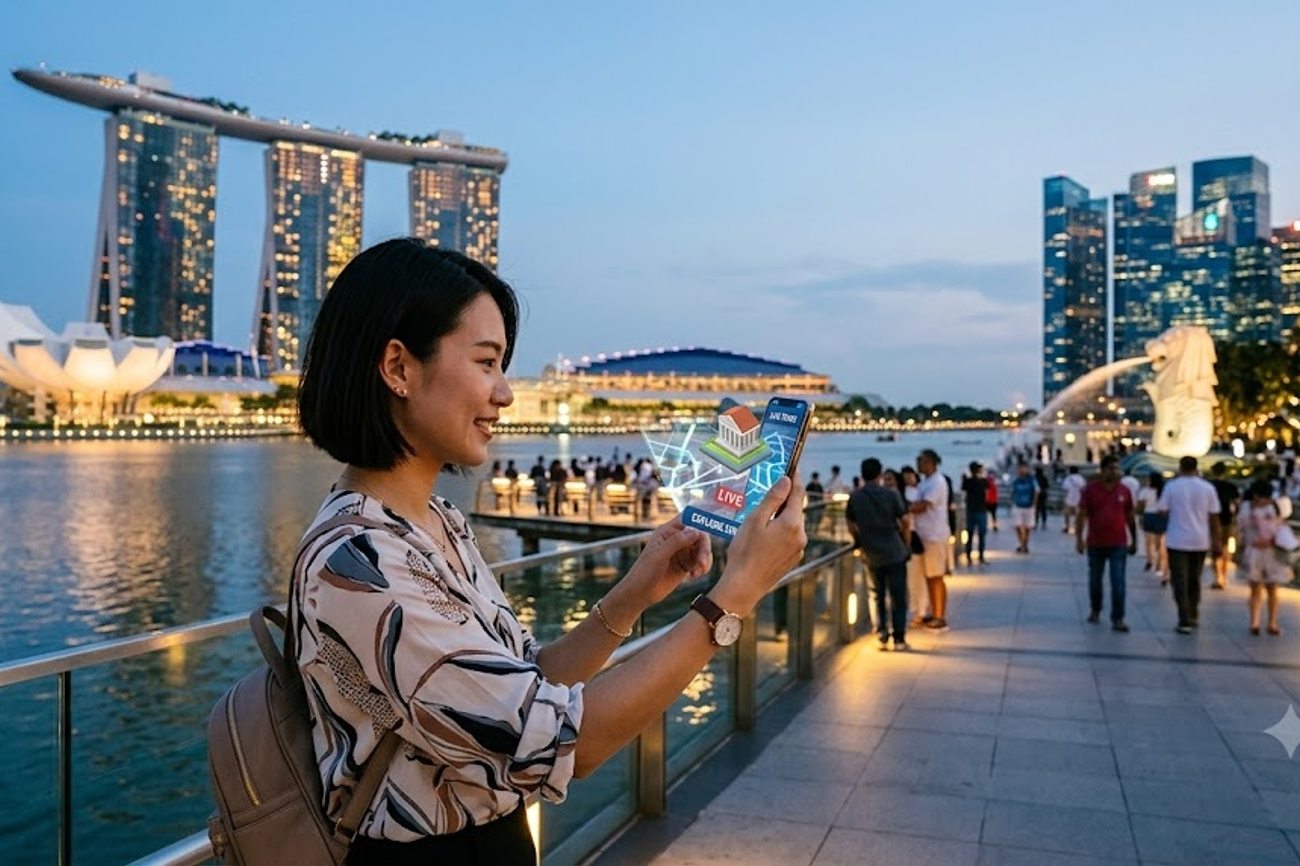
Image generated by AI
A three-month targeted campaign launched in August 2026 by the Singapore Tourism Board and Grab serves as a primary case study in how sovereign states are now using algorithmic nudges to combat "overtourism" in city centers. By integrating financial incentives directly into the ride-hailing interface, Singapore is attempting to decentralize visitor footprints, shifting the economic benefits of tourism from saturated hubs to heritage districts and nature reserves. This represents a pivot from passive promotion—such as brochures or websites—to active, real-time behavioral engineering.
The Algorithmic Redistribution of Tourism
The Singaporean model operates on the premise that travelers are primarily driven by convenience and perceived value. To break the cycle of congestion in the main tourist center, the Singapore Tourism Board has weaponized the Grab ecosystem through an enhanced Travel Pass. This is not merely a discount program; it is a strategic redistribution of human traffic.
By offering specific ride vouchers for trips to Katong–Joo Chiat, Mandai, and Sentosa, the state is effectively subsidizing the "last mile" of travel to under-visited areas. Katong–Joo Chiat provides a gateway to heritage shophouses and local cafes, while Mandai focuses on nature stays and wildlife parks. Simultaneously, the program addresses the "night economy" by incentivizing travel to Clarke Quay and Boat Quay between 7pm and 4am.
This approach solves a perennial problem for urban planners: the concentration of spending in a few high-density zones. When a travel app evolves from a utility for booking rides into a tool for destination management, it allows the government to steer the visitor journey in real-time. The use of pre-trip digital advertisements and post-arrival in-app messaging ensures that the incentive is presented exactly when the traveler is most likely to make a decision about their next destination.
Spain’s Infrastructure for Data Sovereignty
While Singapore focuses on the movement of people, Spain is focusing on the movement of information. In June 2026, SEGITTUR launched the LINX Tourism Data Space, a secure exchange framework designed to turn fragmented business data into a national asset. This initiative is a core component of Spain’s Intelligent Destination Platform and adheres to strict European data standards.
The LINX system addresses the "silo effect" that plagues the hospitality industry. Historically, a hotel knows its occupancy rates, a museum knows its peak entry hours, and a restaurant knows its dining surges, but this data rarely intersects. By creating a controlled environment where this information can be shared, Spain is attempting to move from reactive guessing to predictive planning.
For the traveler, this means a more seamless experience where city infrastructure—such as public transport and crowd control—can adapt to real-time demand. For the small business owner, it provides access to macro-level insights that were previously only available to global hotel chains or massive OTA (Online Travel Agency) platforms.
| Initiative | Primary Objective | Key Mechanism | Target Outcome |
|---|---|---|---|
| Singapore Grab Pass | Spatial Redistribution | Ride Vouchers | Increased spend in heritage/nature zones |
| LINX Data Space | Information Integration | Secure Data Exchange | Predictive destination management |
| Digital Activation Plan | Operational Efficiency | Tool Standardization | Reduced administrative friction for SMEs |
| Digital Sandboxes | Rapid Prototyping | Controlled Testing Environments | Validated AI/Automation solutions |
Expert Analysis: The War on Fragmented Tech
The most significant revelation from the June 2026 reports by SEGITTUR and Hostelería de España is the admission that "digital adoption" does not equal "digital efficiency." There is a widening gap between owning technology and utilizing it effectively.
For the average boutique hotel or family-run restaurant in Spain, the current digital experience is fragmented. A business might utilize four separate systems for bookings, payments, customer communications, and inventory management. This creates a "manual bridge" where staff must enter the same data multiple times, increasing the probability of human error and operational burnout.
The pricing pressure this creates is subtle but real. When a small business spends more man-hours managing disjointed software than serving guests, the cost of labor rises, which eventually trickles down to the consumer in the form of higher prices or diminished service quality. The Spanish government's push toward "practical technology"—focusing on reservation management and customer retention rather than flashy, unused AI—is a recognition that the industry is suffering from "software bloat."
Furthermore, the introduction of "digital sandboxes" by the Ministry of Industry and Tourism is a sophisticated regulatory move. By providing a controlled space for universities and tech centers to test AI and data processing tools before a wide-scale rollout, Spain is mitigating the risk of systemic failure. For the traveler, this means the "smart city" features they encounter in 2026 and beyond will have been vetted for real-world utility rather than being deployed as untested beta versions in live tourist zones.
Key Takeaways
- Behavioral Steering: Singapore is using the Grab Travel Pass to actively push tourists away from crowded centers toward areas like Katong–Joo Chiat and Mandai.
- Data Democratization: Spain's LINX Tourism Data Space aims to give small businesses the same data-driven insights previously reserved for industry giants.
- Efficiency Over Innovation: The Spanish hospitality sector is prioritizing the integration of existing tools (payments, bookings, CRM) over the adoption of new, fragmented software.
- Risk-Mitigated Tech: The creation of digital sandboxes allows for the testing of AI and automation in tourism without disrupting the actual visitor experience.
- Night Economy Focus: Targeted incentives for travel between 7pm and 4am indicate a strategic push to extend the daily spending window of international visitors.
FAQ: Digital Tourism 2026
How does the Singapore Grab Travel Pass benefit me as a tourist? It provides discounted ride vouchers to specific neighborhoods like Sentosa and Mandai, making it cheaper and easier to visit sites outside the main city center, including late-night trips to Clarke Quay.
What is the LINX Tourism Data Space in Spain? It is a secure platform where hotels, museums, and restaurants share data. This helps the government manage crowds better and helps small businesses understand visitor trends to improve their services.
Will these digital changes make travel more expensive? Generally, no. By improving operational efficiency for small businesses and reducing "software bloat," these initiatives aim to lower overhead costs, which can help stabilize pricing for travelers.
What are "digital sandboxes" in the context of Spanish tourism? They are controlled testing environments where new AI and travel apps are trialed by experts and universities before being released to the public, ensuring the technology actually works in real-world scenarios.
The era of the passive destination is over; the future of travel is an engineered experience.
Tags: Singapore Tourism Board, SEGITTUR, Grab Travel Pass, LINX Data Space, Intelligent Destination Platform 2026, Hostelería de España
Related Travel Guides
- UAE Ras Al Khaimah Accelerates Flying Vehicle Future With New Advanced Air Mobility Test Zone For Smart Travel
- Texas Steps Up With Florida And More US Places In Becoming Tourist Magnets Through AI Innovations And Smart Hospitality Systems
- Philippines Department of Tourism Launches Open Data Dashboard Tracking 4.41 Million International Arrivals and Economic Growth Metrics
Disclaimer
This article is for informational and educational purposes only. It does not constitute legal, financial, or professional advice. While we strive to provide accurate and up-to-date information, travel policies, regulations, and conditions change rapidly. Always verify information with official sources before making travel decisions. Nomad Lawyer makes no representations about the accuracy, reliability, completeness, or suitability of the information provided. Readers should consult qualified professionals for advice specific to their circumstances. The views expressed in this article are those of the author and do not necessarily reflect the views of Nomad Lawyer.
Naina Thakur
Contributor & Travel Specialist
Travel enthusiast and legal writer covering visa regulations, responsible tourism, and cultural journeys across global destinations.
Learn more about our team →