
Osaka Castle Draws Japan Tourists With Historic Wonders, Easy Access and Stunning Views
Osaka Castle Draws Japan Tourists With Historic Wonders, Easy Access and Stunning Views

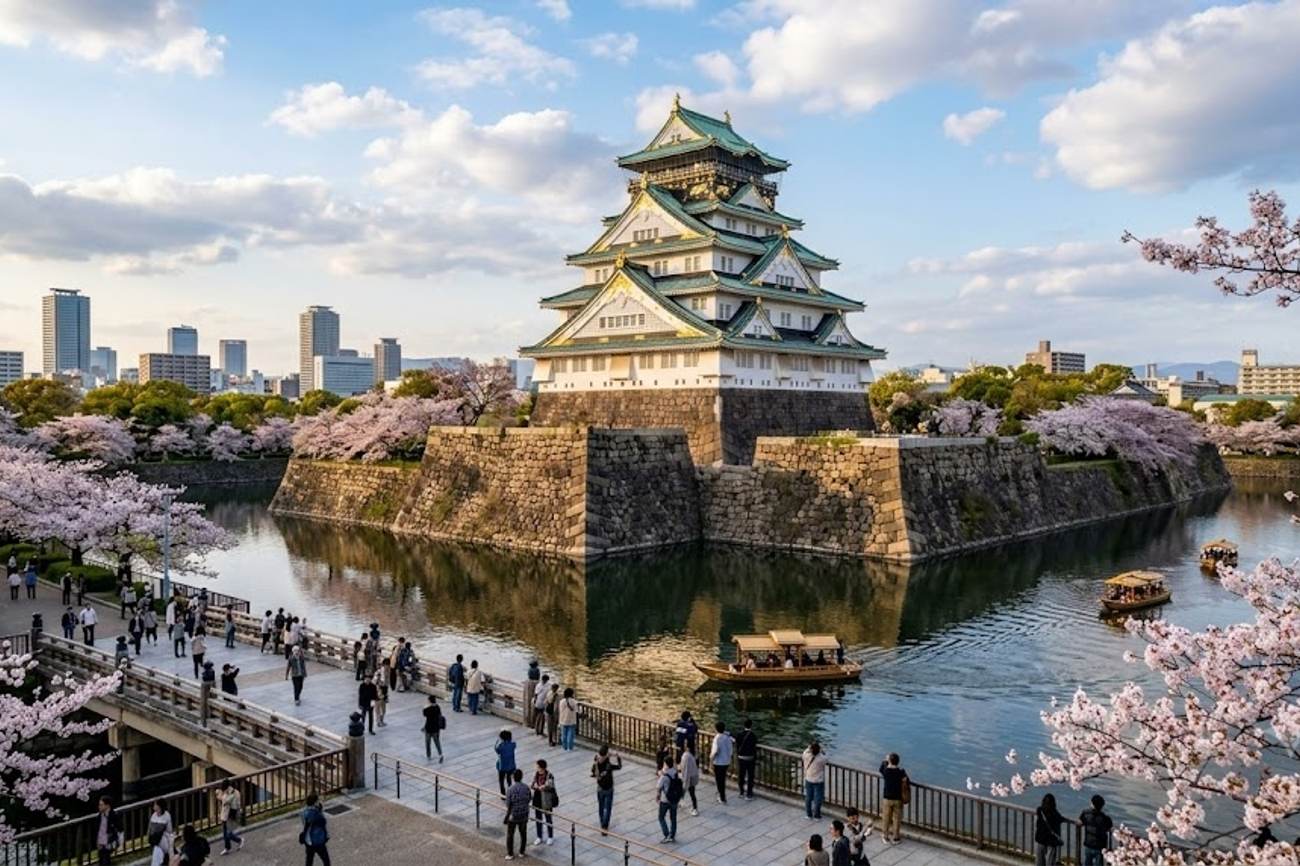
Image generated by AI
While Tokyo's primary landmarks have seen a surge in pricing to manage overtourism, Osaka continues to leverage high-volume, low-cost accessibility, maintaining a museum entry fee of ¥1,200—a price point that remains stable even as neighboring regional hubs increase costs. This pricing strategy, combined with the 105.6 hectares of free-access parkland, signals a deliberate effort by Osaka to capture a larger share of the "budget-conscious culturalist" segment of the international market.
The 2026 Osaka Castle Data Set: Value and Volume
The operational data for Osaka Castle in 2026 reveals a tiered monetization strategy designed to maximize visitor throughput while maintaining a low barrier to entry. The primary revenue driver is the Osaka Castle Museum, priced at ¥1,200 for adults. This figure is not a standalone cost but a bundled offering that includes access to the Toyotomi Stone Wall Museum, effectively increasing the "value per yen" for the visitor.
Beyond the paid museum, the site operates a massive free-access zone. The Osaka Castle Park, spanning 105.6 hectares, allows for zero-cost engagement with the site's exterior, moats, and gardens. This creates a dual-track visitor experience: a high-value historical immersion for paid guests and a low-friction urban park experience for the general public.
The 2026 calendar introduces a time-limited revenue stream through the special turret openings. Between 5 September and 29 November 2026, the Tamon-yagura and Senkan-yagura turrets will open on weekends and public holidays, with a concentrated daily opening from 19 to 27 September. These specialized experiences are priced at ¥900 for high-school-aged visitors and above, or a bundled ¥2,000 ticket that includes the main castle tower. This targeted pricing for "limited-access" events is a common industry tactic to drive repeat visits and create artificial scarcity during the autumn shoulder season.
Comparative Context: Osaka vs. Regional Benchmarks
When comparing Osaka Castle to other major Japanese heritage sites, the data suggests a focus on "integrated urban tourism." Unlike remote shrines or mountain temples, Osaka Castle is woven into the city's transit fabric, utilizing five distinct station access points (JR Osakajokoen, JR Morinomiya, Osaka Metro Tanimachi 4-chome, Osaka Metro Morinomiya, and Osaka Metro Osaka Business Park) plus Tenmabashi Station.
According to data patterns often tracked by the World Tourism Organization (UNWTO), the ability to integrate massive green spaces (105.6 hectares) within a dense urban core is a primary driver for "slow travel" trends. Osaka's approach differs from the high-density, high-cost model seen in some Kyoto districts, opting instead for a model that balances a small paid core with a massive free perimeter.
The following table illustrates the 2026 pricing and access structure for the site:
| Component | Access Cost (Adult) | Inclusion/Detail | Accessibility Status |
|---|---|---|---|
| Main Museum | ¥1,200 | Includes Toyotomi Stone Wall Museum | High (via Road Train) |
| Castle Park | Free | 105.6 hectares of grounds | Open Access |
| Special Turrets | ¥900 | Tamon/Senkan Turrets + Nishinomaru Garden | Limited Dates (2026) |
| Combined Ticket | ¥2,000 | Museum + Special Turrets | Limited Dates (2026) |
| Road Train | Varies | Morinomiya $\rightarrow$ Sakuramon Gate | Wheelchair Accessible |
What This Means for Travelers
For the individual traveler, the data suggests that Osaka Castle is best approached as a "modular" experience rather than a single ticket purchase. Because the 105.6-hectare park is free, visitors can maximize their budget by utilizing the grounds for photography and nature—specifically the 1,200 plum trees and 300 cherry trees in Nishinomaru Garden—without ever paying an admission fee.
If you are planning a visit in 2026, the window between 19 September and 27 September is the highest-value period. During this time, the daily opening of the turrets allows for a comprehensive historical experience (including the replica matchlock gun experience at Senkan Turret) that is otherwise unavailable.
From a logistics standpoint, the "20-minute walk" estimate from major stations is a critical data point. Travelers with mobility concerns should bypass the standard pedestrian routes and specifically utilize the Tanimachi 4-chome route through Otemon and Sakuramon Gates to minimize elevation changes, or utilize the wheelchair-accessible road train. For those tracking IATA trends regarding urban congestion, the diversity of rail options (JR, Metro, and Keihan) means that avoiding peak hour congestion at a single station is possible by diversifying the entry point.
Forward Projection: The Shift Toward Experiential Heritage
The introduction of the matchlock gun replica experience at Senkan Turret signals a shift in how Japanese heritage sites are evolving. We are moving away from "passive observation" (museums) toward "active participation" (experiential history). This aligns with broader global trends where travelers are willing to pay a premium for "tactile" history.
As Osaka prepares for increased international arrivals in 2026, expect the "bundled ticket" model to expand. The current ¥2,000 combined ticket is likely a pilot for more comprehensive "City Pass" integrations. Furthermore, the reliance on seasonal draws—such as the autumn turret openings—suggests that Osaka will continue to use "micro-seasons" to flatten the visitor curve, preventing the extreme overcrowding seen during the peak cherry blossom window.
The integration of the Toyotomi Stone Wall Museum into the standard ¥1,200 ticket indicates a move toward "deep-dive" storytelling. Rather than just showing the final structure (the 1931 tower), the site is now providing data on the engineering and foundations of the original 1583 construction, catering to a more sophisticated, research-driven traveler.
FAQ: Osaka Castle Trends 2026
Will admission prices increase for the 2026 season? Current data lists the museum at ¥1,200 and special turrets at ¥900. While prices are stable for now, the bundled ¥2,000 ticket offers the best value for those visiting during the September-November window.
Is the site accessible for those with limited mobility? Yes. The road train provides wheelchair-accessible transport between Morinomiya Fountain and Sakuramon Gate. Additionally, the route from Tanimachi 4-chome through Otemon Gate is noted for having minimal elevation changes.
When is the best time to visit for maximum value? The period from 19 to 27 September 2026 is optimal, as the historic turrets are open daily, providing access to experiences and gardens that are typically closed to the public.
Do I need to pay to see the castle exterior? No. The 105.6-hectare Osaka Castle Park, including the moats and the exterior of the main tower, is free to enter and open year-round.
Data-driven travel is the only way to navigate the shifting costs of the Japanese tourism recovery.
#OsakaCastle2026 #JapanTourismValue #OsakaMetroLogistics #ExperientialHeritageJapan #KansaiTravelData
Related Travel Guides
Disclaimer
This article is for informational and educational purposes only. It does not constitute legal, financial, or professional advice. While we strive to provide accurate and up-to-date information, travel policies, regulations, and conditions change rapidly. Always verify information with official sources before making travel decisions. Nomad Lawyer makes no representations about the accuracy, reliability, completeness, or suitability of the information provided. Readers should consult qualified professionals for advice specific to their circumstances. The views expressed in this article are those of the author and do not necessarily reflect the views of Nomad Lawyer.
Preeti Gunjan
Contributor & Community Manager
A passionate traveller and community builder. Preeti helps grow the Nomad Lawyer community, fostering engagement and bringing the reader experience to life.
Learn more about our team →