
Armenia Record Economic Expansion Guarantees Safe Travel Confidence For International Tourists, Find Out Now
Armenia Record Economic Expansion Guarantees Safe Travel Confidence For International Tourists, Find Out Now

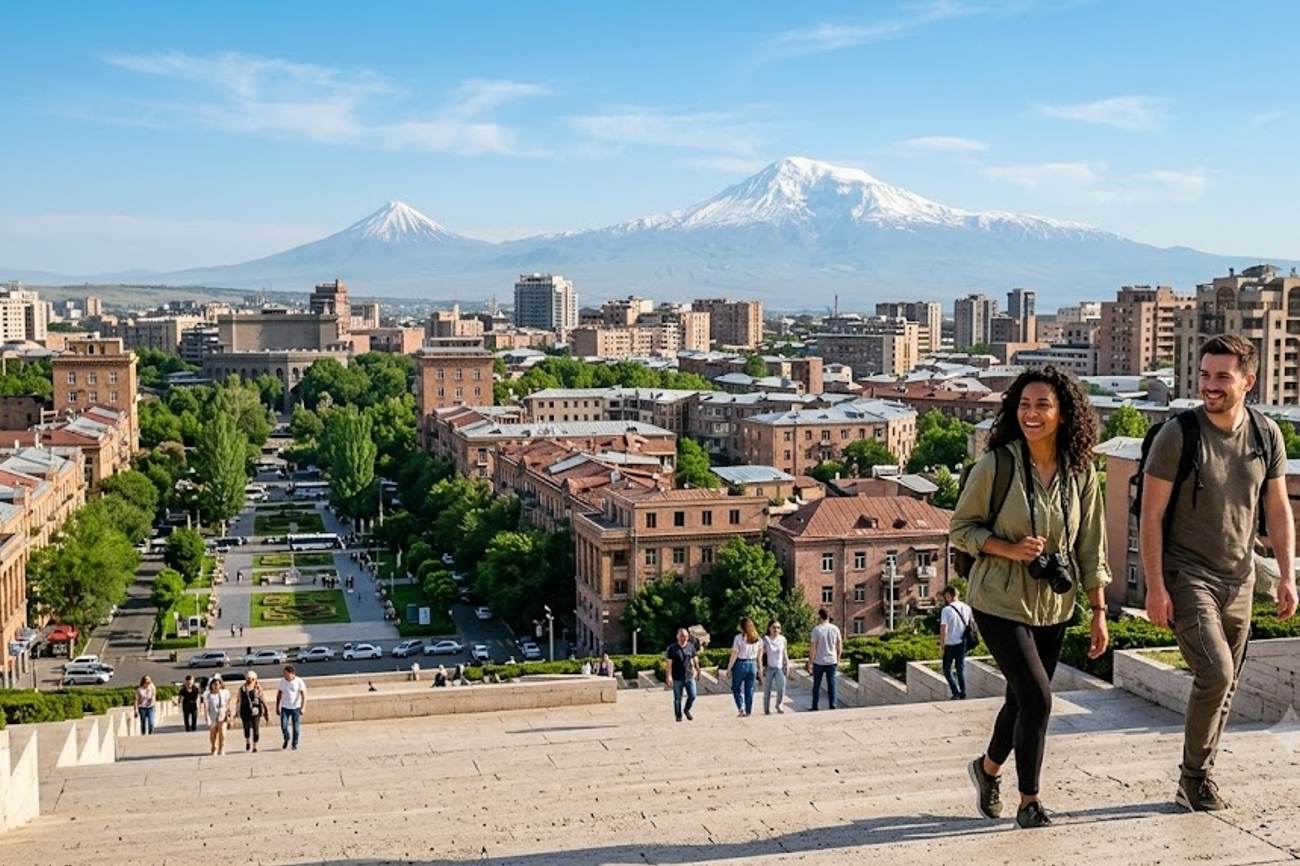
Image generated by AI
A 7.7% average GDP growth rate between 2010 and 2016 serves as the primary catalyst for a systemic overhaul of Armenia’s civil infrastructure and international accessibility. This macroeconomic surge has transitioned from a mere statistical achievement into a tangible driver of foreign direct investment, fundamentally altering how the nation positions itself within the global travel and business markets. By leveraging this growth, Armenia is moving beyond its traditional image, utilizing fiscal momentum to modernize the very conduits—highways, terminals, and digital networks—that dictate the quality of the visitor experience.
The Fiscal Engine of Infrastructure Modernization
The correlation between Armenia's macroeconomic health and its physical accessibility is direct. The sustained growth observed in the early to mid-2010s created a feedback loop where increased national revenue allowed for the aggressive funding of public assets. This is not merely about aesthetics; it is about the logistical capacity to handle high-volume international transit. The deployment of capital into modernized highways and upgraded terminal facilities has reduced the friction of movement between the capital, Yerevan, and regional hubs.
This systemic upgrade extends to the "invisible" infrastructure that modern travelers demand. The integration of advanced communication services and digital payment networks is a direct result of this fiscal expansion. For the traveler, this manifests as a seamless transition from international arrival to local consumption. The reinvestment of national revenues into civic modernization has effectively lowered the risk profile for global hotel chains and leisure conglomerates, who now view the Armenian market as a viable site for long-term capital expenditure.
Financial Stability and the Traveler’s Wallet
While infrastructure provides the physical means of travel, monetary stability provides the psychological confidence to book. Armenia has established a significant fiscal buffer with foreign reserves reaching a historic peak of $6.5 billion. In the volatile world of international travel, such a reserve acts as a shock absorber against currency fluctuations.
For the corporate traveler or the long-term digital nomad, this stability is critical. When a central monetary authority can maintain exchange rate predictability, it eliminates the "inflation shock" often associated with emerging markets. Travelers planning trips to destinations like Garni, Geghard, or Tsaghkadzor can budget with precision, knowing that the cost of accommodation and regional transport will not spike due to a sudden currency devaluation. This financial predictability transforms Armenia from a speculative destination into a dependable venue for high-volume seasonal travel and international conventions.
| Financial Metric | Value | Impact on Travel/Business |
|---|---|---|
| Avg. GDP Growth (2010-2016) | 7.7% | Accelerated infrastructure & terminal upgrades |
| National Foreign Reserves | $6.5 Billion | Currency stability; predictable travel costs |
| Capital Adequacy Ratio | 20.4% | Sustained funding for luxury resorts & hotels |
| Non-Performing Loans (NPL) | 1.4% | Reliable payment systems & POS transactions |
Expert Analysis: The Liquidity-Hospitality Nexus
The most overlooked aspect of Armenia's current trajectory is the relationship between banking resilience and the quality of the hospitality supply chain. A capital adequacy ratio of 20.4% is an exceptionally strong indicator of institutional health. For the average traveler, this number seems abstract, but the direct consequence is the quality of the bed they sleep in and the service they receive.
High capital ratios mean that local banks can provide consistent, low-risk credit to boutique hotel managers and resort developers in regions like Dilijan and Gyumri. When credit flows freely and reliably, the hospitality sector can invest in "world-class" standards—meaning better HVAC systems, modernized room layouts, and professional staff training.
Furthermore, the remarkably low non-performing loan (NPL) rate of 1.4% indicates a disciplined commercial environment. For the international visitor, this translates to operational reliability. A banking system with minimal bad debt is a system where international credit card processing and mobile payment gateways function without failure. The elimination of "payment friction" at artisanal markets or cultural venues is a direct byproduct of a healthy balance sheet at the national banking level. When the financial plumbing works, the tourist experience is seamless.
Aviation Expansion and Global Connectivity
The culmination of this macroeconomic success is most visible in the skies. The International Air Transport Association (IATA) often notes that air connectivity is a lagging indicator of economic health; as business activity and tourism demand rise, airlines follow. Armenia is currently experiencing this shift.
Increased foreign direct investment has signaled to international carriers that Yerevan is no longer just a regional destination but a viable transit hub. As more direct routes are established, the market sees a natural increase in competition, which typically drives down ticket prices and expands the demographic of visitors. This aviation growth does more than move people; it reinforces Armenia's geopolitical position as a crossroads for diplomacy and commerce, making it an increasingly attractive spot for the "work-from-anywhere" crowd who require reliable flights to major global hubs.
Key Takeaways
- Macroeconomic Stability: An average GDP growth of 7.7% (2010-2016) has funded the modernization of highways and airport terminals.
- Currency Protection: Foreign reserves of $6.5 billion protect travelers from sudden price inflation and currency volatility.
- Banking Health: A 20.4% capital adequacy ratio and a low 1.4% NPL rate ensure high-quality hotel development and seamless digital payments.
- Regional Growth: Economic benefits are extending beyond Yerevan into regional hubs including Gyumri, Dilijan, and Sevan.
- Aviation Upswing: Rising demand is incentivizing international airlines to add direct routes to Yerevan, increasing price competition.
FAQ: Armenia Travel & Economy 2024
Is the Armenian Dram stable for travelers? Yes. With foreign reserves at $6.5 billion, the central authorities can maintain exchange rate predictability, meaning travelers are unlikely to face sudden, drastic price increases during their stay.
How reliable are credit cards and digital payments in Armenia? Very reliable. Due to a low non-performing loan rate of 1.4% and a healthy banking sector, international credit cards and mobile payments work seamlessly in most hotels and markets.
Which cities outside Yerevan are seeing the most improvement? Gyumri, Dilijan, and Sevan are the primary regional hubs benefiting from infrastructure upgrades and increased hospitality investment.
Are flight options to Yerevan increasing? Yes. Sustained economic growth and higher tourism demand are encouraging international carriers to establish more direct routes, which helps lower overall ticket costs.
The blueprint for Armenia's growth proves that when a nation secures its balance sheet, it secures its welcome.
Tags: Yerevan Aviation, Armenia GDP 2016, Armenian Banking Sector, Dilijan Tourism, Armenia Foreign Reserves, Gyumri Infrastructure
Related Travel Guides
Disclaimer
This article is for informational and educational purposes only. It does not constitute legal, financial, or professional advice. While we strive to provide accurate and up-to-date information, travel policies, regulations, and conditions change rapidly. Always verify information with official sources before making travel decisions. Nomad Lawyer makes no representations about the accuracy, reliability, completeness, or suitability of the information provided. Readers should consult qualified professionals for advice specific to their circumstances. The views expressed in this article are those of the author and do not necessarily reflect the views of Nomad Lawyer.
Raushan Kumar
Founder & Lead Developer
Full-stack developer with 11+ years of experience and a passionate traveller. Raushan built Nomad Lawyer from the ground up with a vision to create the best travel and law experience on the web.
Learn more about our team →