
Minnesota Rallies Alongside Georgia and More as 100 Million-Plus Passenger Hubs Enter a New Airline Cost Battle
Minnesota Rallies Alongside Georgia and More as 100 Million-Plus Passenger Hubs Enter a New Airline Cost Battle

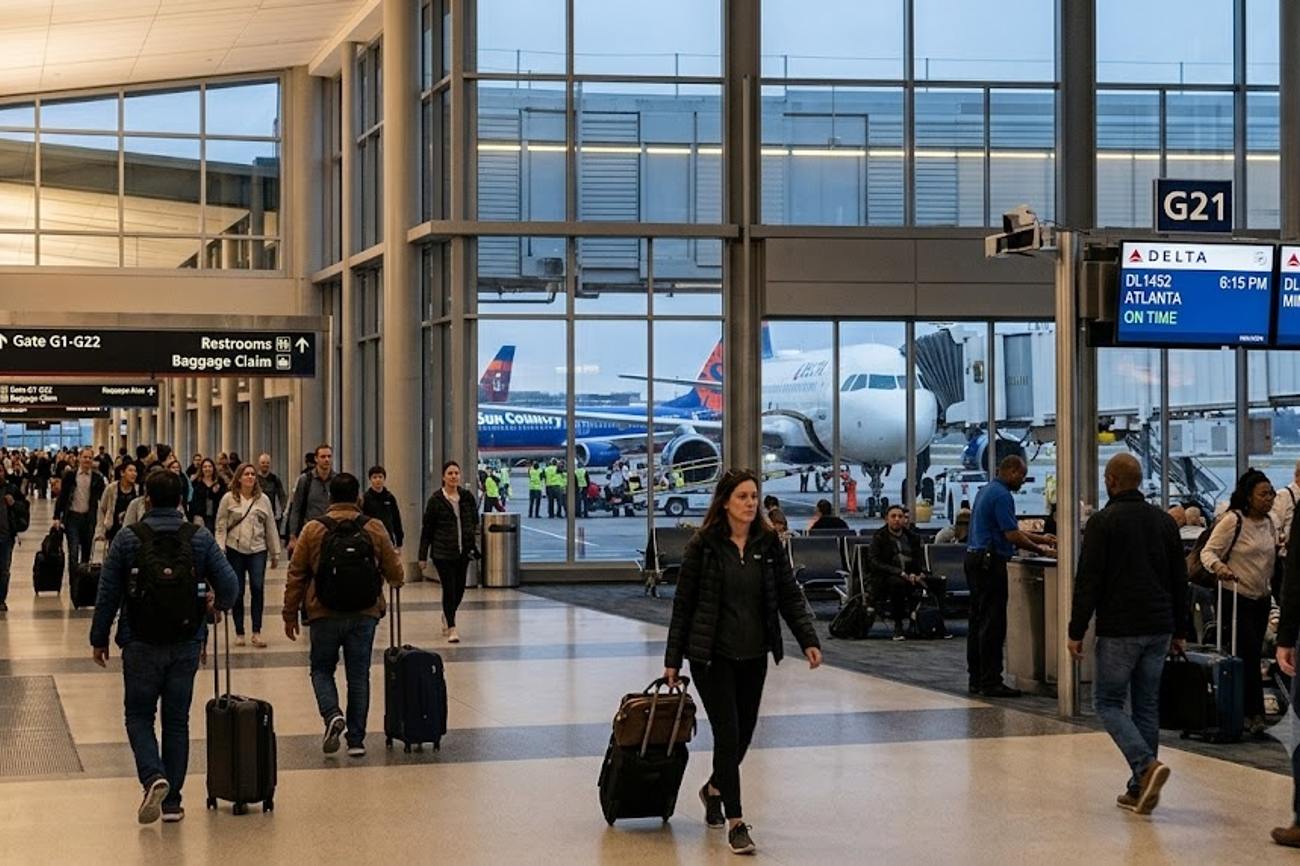
Image generated by AI
36 million passengers flowed through Minneapolis–Saint Paul International Airport (MSP) in 2025, placing Minnesota in a precarious position as US aviation hubs grapple with a volatile combination of fuel price surges and capacity constraints. This volume underscores a broader national trend where "100 million-plus" passenger ecosystems—those states housing airports that anchor global travel—are entering a high-stakes cost battle. For the traveler, this is not merely a matter of airport crowds; it is a fundamental shift in how airlines allocate aircraft, price seats, and manage the fragile logistics of hub-and-spoke networks.
The Hub-and-Spoke Cost Crisis
The current pressure on MSP is not an isolated regional phenomenon but a symptom of systemic operational stress. As a primary fortress hub for Delta Air Lines and a strategic base for Sun Country Airlines, MSP functions as a critical valve for the Upper Midwest. When fuel costs rise, the financial burden is magnified at these massive hubs because the sheer volume of departures makes fuel the single most volatile variable in the profit-and-loss statement.
Airlines are currently transitioning from a growth-at-all-costs mindset to a "smart capacity" model. This means carriers are no longer simply adding flights to meet demand; they are surgically reviewing route profitability. In Georgia, the epicenter of this struggle, Hartsfield-Jackson Atlanta International Airport (ATL) manages a staggering 106.3 million passengers, making it the global leader in traffic but also the most exposed to the risks of fuel price spikes and air traffic congestion. Minnesota is now mirroring these Georgia-style pressures, where the necessity of maintaining connectivity clashes with the need to slash operating expenses.
Quantifying the Pressure: US Aviation Hub Metrics
The scale of the challenge becomes clear when comparing MSP to other high-traffic states. The following data highlights the passenger volumes and the specific pressures facing the most critical US aviation centers in 2025.
| State | Primary Airport(s) | 2025 Passenger Volume | Primary Pressure Drivers |
|---|---|---|---|
| Georgia | Hartsfield-Jackson (ATL) | 106.3 Million | Volume saturation, fuel costs, Delta hub density |
| Texas | Dallas/Fort Worth (DFW) | 85.7 Million | Network scale, capacity management, weather |
| Illinois | Chicago O'Hare (ORD) | 84.9 Million | Hub congestion, winter operations, schedule shifts |
| Colorado | Denver (DEN) | 82.4 Million | High demand, mountain weather volatility |
| California | Los Angeles (LAX) | 73.7 Million | International flow, urban congestion |
| Minnesota | Minneapolis-St. Paul (MSP) | 36.0 Million | Regional connectivity, fuel costs, winter weather |
Expert Analysis: The Hidden Cost of "Efficiency"
From a journalistic and logistical perspective, the move toward "improving efficiency" and "prioritizing stronger routes" is often industry shorthand for a reduction in consumer choice. When airlines "review operations" to combat fuel costs, the first casualties are typically the "thin" routes—those flights that connect smaller cities to hubs like MSP but don't maintain high load factors.
For the traveler booking through Minnesota, the direct consequence is a narrowing of options. We are seeing a shift where airlines protect high-yield business routes while trimming frequency on leisure-heavy paths. This creates a pricing pressure: as capacity is reduced on certain routes, the remaining seats often command a premium, effectively passing the fuel cost directly to the passenger.
Furthermore, the reliance on a few massive hubs creates a "domino effect" vulnerability. Because MSP serves as a primary connecting point, a localized disruption—such as a heavy snowfall event requiring extensive aircraft de-icing—does not stay in Minnesota. It ripples across the International Air Transport Association (IATA) network, delaying crews and aircraft scheduled for flights in Texas or Georgia. The "cost battle" is therefore not just about fuel, but about the cost of inefficiency. Every minute an aircraft sits on a tarmac in MSP due to air traffic management (ATM) failures or weather is a loss of revenue that airlines are now less willing to absorb.
The intersection of controller availability and network congestion means that even if an airline has the aircraft and the fuel, the "invisible infrastructure" of US air traffic control is struggling to keep pace with the 2025 passenger volumes. This creates a ceiling on how much an airport like MSP can actually grow, regardless of the demand.
Key Takeaways
- Capacity Contraction: Airlines are shifting toward "stronger-performing routes," which likely means fewer flight options and potentially higher fares for less-traveled destinations.
- Hub Vulnerability: With 36 million passengers in 2025, MSP is highly susceptible to "ripple effect" delays where national air traffic management issues cause local bottlenecks.
- Fuel-Driven Strategy: Rising fuel prices are forcing a move away from aggressive expansion toward operational flexibility and strict expense management.
- Weather Risk: Winter operations in Minnesota remain a primary operational threat, with de-icing and runway management creating systemic delays during peak travel windows.
- Operational Bottlenecks: Increased pressure is most visible at check-in, security, and baggage systems during high-demand weekends, requiring earlier arrival times.
FAQ: MSP Aviation Logistics 2025
Why are flight prices increasing at MSP despite more airlines operating? While passenger volume is high, rising fuel costs and "capacity adjustments" mean airlines are removing less profitable flights. This decrease in available seats on specific routes drives up prices for the remaining inventory.
How does Minnesota weather specifically impact my connection time? Winter conditions necessitate aircraft de-icing and slower runway management. Because MSP is a major hub, a 30-minute weather delay can cause a missed connection for thousands of passengers across the US network.
What is "capacity planning" and how does it affect my ticket? Capacity planning is how airlines decide how many seats to offer on a route. When airlines "optimize" this for cost, they may reduce the number of daily flights, leading to fuller planes and less flexibility for rescheduling.
Are the delays at MSP caused by the airport or the airlines? It is usually a combination. While airport infrastructure (security, parking) handles the volume, delays are typically driven by airline crew scheduling, fuel-related route changes, or national air traffic control restrictions.
The battle for aviation profitability is no longer fought on the runway, but in the data sheets of capacity management.
Tags: Minneapolis-Saint Paul International Airport, Delta Air Lines, Sun Country Airlines, US Aviation Cost Crisis 2025, MSP Airport Operations, Hartsfield-Jackson Atlanta International Airport
Related Travel Guides
Disclaimer
This article is for informational and educational purposes only. It does not constitute legal, financial, or professional advice. While we strive to provide accurate and up-to-date information, travel policies, regulations, and conditions change rapidly. Always verify information with official sources before making travel decisions. Nomad Lawyer makes no representations about the accuracy, reliability, completeness, or suitability of the information provided. Readers should consult qualified professionals for advice specific to their circumstances. The views expressed in this article are those of the author and do not necessarily reflect the views of Nomad Lawyer.
Raushan Kumar
Founder & Lead Developer
Full-stack developer with 11+ years of experience and a passionate traveller. Raushan built Nomad Lawyer from the ground up with a vision to create the best travel and law experience on the web.
Learn more about our team →