
Japan Airlines Deploys Ultra-Luxury Boeing 787-9 Business Class Suites on Long-Haul Routes
As international premium travel demand surges, Japan Airlines is radically overhauling its widebody fleet with enclosed, high-privacy suites designed to dominate trans-Pacific and European corridors.

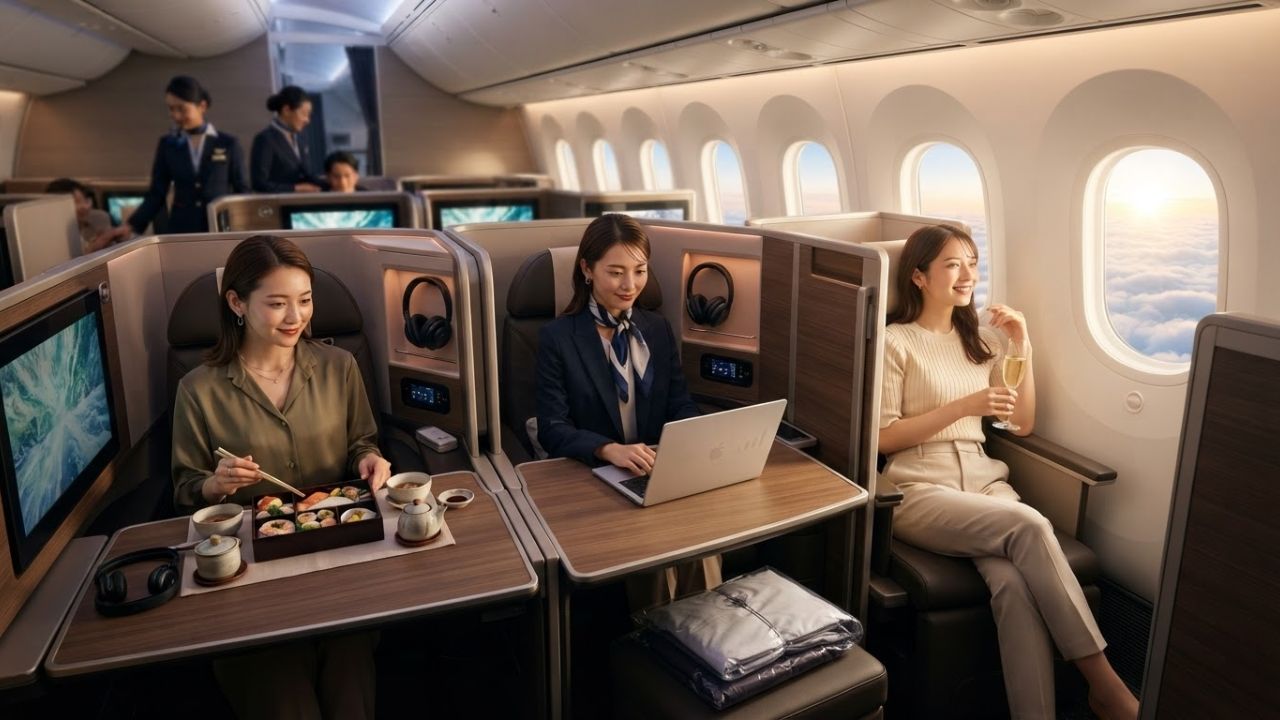
Image generated by AI
Japan Airlines Deploys Ultra-Luxury Boeing 787-9 Business Class Suites on Long-Haul Routes
The Japanese flag carrier is aggressively targeting high-yield corporate travelers by introducing fully enclosed, highly ergonomic cabin environments designed to maximize inflight productivity and privacy.
Article
[Tokyo, July 3] — The highly competitive global premium aviation sector is bracing for a massive structural shift as Japan Airlines officially confirms the rollout of next-generation business class suites across its widebody fleet. The Japanese flag carrier is executing a strategic, high-value upgrade specifically targeted at its Boeing 787-9 aircraft, aiming to completely redefine the long-haul passenger experience. This aggressive hardware modernization prioritizes absolute passenger privacy, advanced seating ergonomics, and seamless digital connectivity, directly answering the surging international demand for elevated, enclosed travel environments. By dramatically upgrading its premium hardware, the airline is executing a deliberate competitive maneuver to lure high-yield international travelers away from rival trans-Pacific and European carriers.
This multi-million dollar cabin modernization strategy utilizes the Boeing 787-9 as the primary platform for transformation. Airline executives are seamlessly integrating these new ultra-luxury suites into their broader intercontinental operational strategy, forcing a joint prioritization of spatial efficiency and elite passenger comfort.
Modernizing the Cabin for the Post-Pandemic Traveler
The upgraded physical architecture has been meticulously engineered to satisfy the rapidly evolving expectations of international corporate flyers and premium leisure demographics. Industry analysts note that post-pandemic travel behaviors have permanently altered the premium market, with passengers now placing unprecedented value on extreme personal space, hygiene-conscious enclosed environments, and uninterrupted digital productivity.
To address these highly specific demands, the new Boeing 787-9 layout features fully enclosed seating environments shielded by privacy doors, alongside highly advanced ergonomic seating structures that convert into fully flat beds. The overarching design philosophy emphasizes an experience-driven approach, utilizing the physical cabin infrastructure as a primary brand differentiator. Consequently, Japan Airlines is aggressively aligning itself with the global shift toward hyper-personalized flight environments, cementing its leadership position within the lucrative Asia-Pacific premium aviation sector.
Enhancing Passenger Flow and Inflight Service Delivery
Beyond the immediate passenger-facing luxury, this redesign heavily factors in vital operational efficiencies. The complete optimization of the cabin footprint fundamentally improves passenger flow during boarding and disembarkation sequences, significantly reducing costly turnaround friction at the gate.
Furthermore, inflight service delivery protocols are being comprehensively overhauled to match the elevated physical environment. This ensures that the airline's renowned hospitality standards operate in perfect synergy with the new hardware. The upgrades include highly refined ambient cabin lighting systems to mitigate jet lag, improved spatial ergonomics that allow cabin crew to serve meals without disrupting passenger rest, and enhanced individual controls over seating micro-climates and entertainment configurations.
Key Facts Breakdown
- The Upgrade: Japan Airlines is launching fully enclosed, next-generation business class suites.
- The Aircraft: The new premium hardware is specifically designed for the Boeing 787-9 fleet.
- Target Corridors: The airline will deploy the suites on highly lucrative long-haul routes connecting Asia with North America and Europe.
- Cabin Features: The redesign includes enclosed privacy structures, advanced seating ergonomics, and upgraded digital connectivity.
- Strategic Goal: The upgrade aims to capture high-yield corporate and premium leisure travelers demanding post-pandemic hygiene and spatial isolation.
Why This Matters
Our analysis of the global aviation market indicates that the era of open-aisle, non-enclosed business class seating is officially dead on long-haul routes. By introducing fully enclosed suites to the Boeing 787-9, Japan Airlines is forcing a massive hardware arms race across the Pacific and European corridors. High-yield corporate clients now treat the aircraft cabin as a secure, flying office; they demand absolute privacy doors and seamless Wi-Fi as baseline requirements, not optional luxuries. Carriers operating older, 2-2-2 or open 1-2-1 configurations will inevitably suffer severe brain-drain of their most lucrative executive clients. This strategic fleet investment proves that airlines cannot simply rely on soft product excellence—like polite service and quality catering—to win market share. To survive in the elite tier of global aviation, airlines must continuously pour massive capital into cutting-edge physical hardware.
Industry Outlook
Market trends suggest that this rollout will immediately trigger retaliatory cabin upgrades from major rival carriers operating out of North America and the Middle East. As Japan Airlines gradually integrates these upgraded Boeing 787-9s onto critical international routes, expect competing airlines to aggressively accelerate their own fleet modernization programs to prevent a collapse in premium revenue streams. Over the next 24 months, the baseline industry standard for long-haul business class will permanently shift to mandate sliding privacy doors and independent climate controls. Furthermore, as cabin innovation becomes the singular driver of airline differentiation, original equipment manufacturers (OEMs) and bespoke seat designers will experience a massive surge in corporate contracts, driving highly lucrative supply chain growth across the aerospace interiors sector.
Related Travel Guides
- Minneapolis Airport Meltdown: 205 Delays Sever Routes to France, Mexico, and Major U.S. Hubs
- Miami Airport Paralyzed as Severe Storms Trigger 304 Flight Delays Across Major Airlines
- Ryanair Demands Immediate Suspension of EU Biometric Border Checks Amid Summer Travel Meltdown Fears
- Global Aviation Suffers 2.2% Passenger Collapse as Middle East Conflicts Fracture Key Flight Routes
- DFW Airport Faces 1.75 Million Passenger Meltdown as July 4th Collides With FIFA World Cup
Disclaimer
This article is for informational and educational purposes only. It does not constitute legal, financial, or professional advice. While we strive to provide accurate and up-to-date information, travel policies, regulations, and conditions change rapidly. Always verify information with official sources before making travel decisions. Nomad Lawyer makes no representations about the accuracy, reliability, completeness, or suitability of the information provided. Readers should consult qualified professionals for advice specific to their circumstances. The views expressed in this article are those of the author and do not necessarily reflect the views of Nomad Lawyer.
Kunal K Choudhary
Co-Founder & Contributor
A passionate traveller and tech enthusiast. Kunal contributes to the vision and growth of Nomad Lawyer, bringing fresh perspectives and driving the community forward.
Learn more about our team →