Avoiding Major Hubs: Using Portsmouth and Regional US Airports for Winter Travel 2026-27


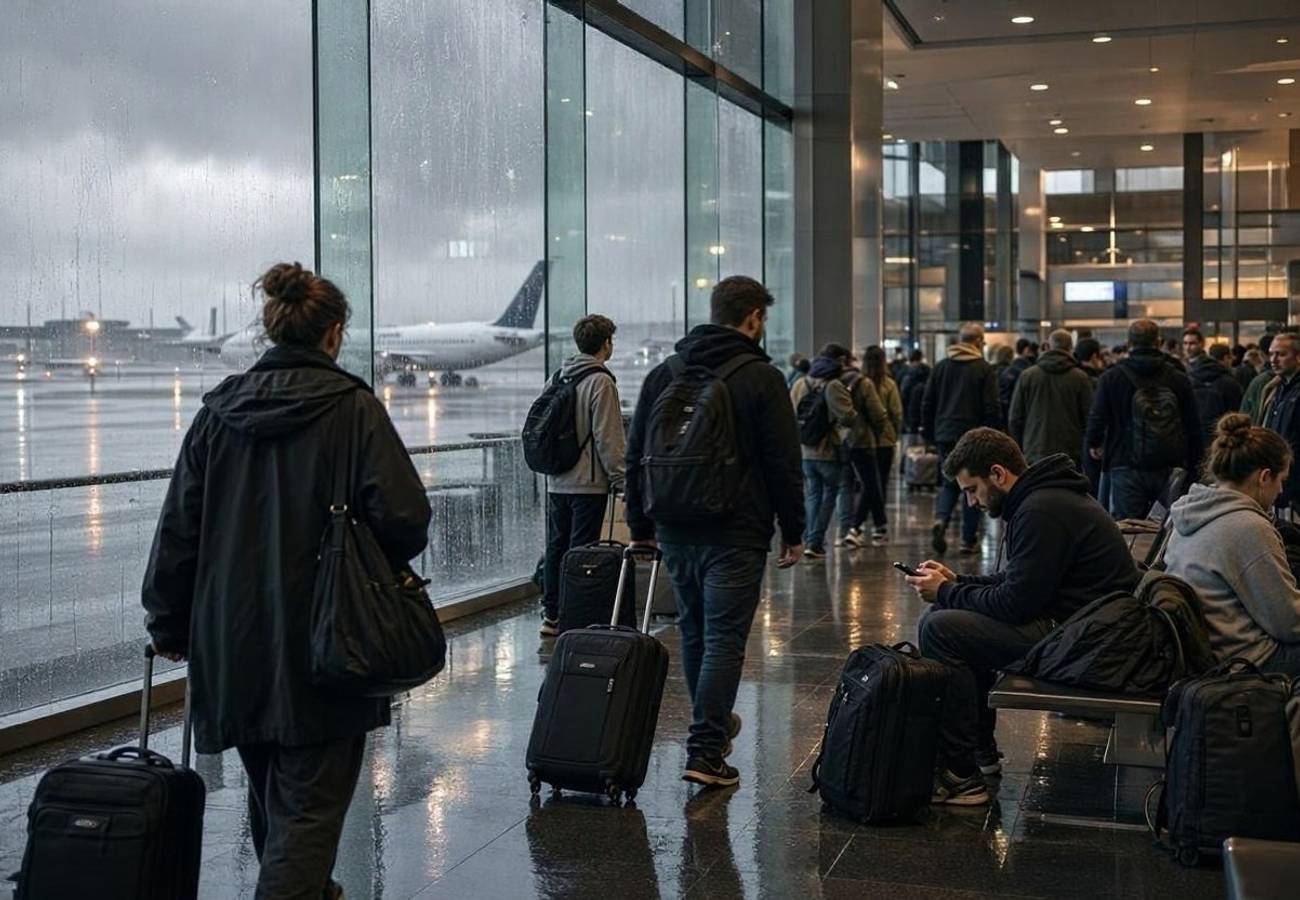
Image generated by AI
Are you dreading the massive security queues and terminal congestion typical of US holiday travel? If you are planning a trip for the 2026-27 winter season, switching your departure or arrival point from a major hub to a regional gateway could significantly reduce your transit stress.
Strategic Alternatives to Congested Hubs
For the upcoming winter season, the disparity between primary aviation hubs and regional airports is stark. While giants like Hartsfield-Jackson Atlanta International handle roughly 51.46 million boardings annually, smaller facilities offer a starkly different pace. For travelers in the Northeast, airports such as Portsmouth International and Worcester Regional provide a low-volume alternative to the chaos of Boston Logan.
The advantage of these smaller terminals is a reduced passenger footprint. However, the trade-off is a more restricted flight network. You are trading the convenience of endless flight options for a faster walk to your gate and shorter check-in lines. To make this work, you must be precise with your scheduling, as a missed flight at a regional airport often means a much longer wait for the next available departure compared to a major hub.
Regional Airport Volume and Winter Outlook
The following data, based on Federal Aviation Administration (FAA) boardings, identifies airports that typically maintain lower traffic volumes, making them viable alternatives for avoiding crowds.
| Airport and Location | 2025 Boardings | Annual Change | Winter 2026–27 Assessment |
|---|---|---|---|
| Portsmouth International (PSM), NH | 90,771 | −9.5% | Very low traffic; minimal route options |
| Kalamazoo/Battle Creek (AZO), MI | 88,713 | −4.1% | Low volume; high snow risk |
| Manhattan Regional (MHK), KS | 88,640 | +3.2% | Low traffic; infrequent flights |
| Central Wisconsin (CWA), WI | 87,834 | −2.5% | Low volume; ice/snow risk |
| Grand Forks International (GFK), ND | 94,416 | +2.1% | Low volume; severe winter weather risk |
| Lake Charles Regional (LCH), LA | 91,944 | +1.3% | Low volume; Gulf Coast alternative |
| Helena Regional (HLN), MT | 101,803 | +0.2% | Low volume; connection risks |
| Casper–Natrona County (CPR), WY | 102,638 | +3.0% | Low volume; wind/snow exposure |
| Rochester International (RST), MN | 105,117 | +6.7% | Regional gateway; snow disruption likely |
| Worcester Regional (ORH), MA | 106,229 | −5.9% | Low-volume central MA alternative |
| Columbia Metropolitan (CAE), SC | 662,756 | +1.3% | Small hub; higher volume than others |
| Manchester–Boston Regional (MHT), NH | 685,594 | +8.3% | Practical small-hub for New England |
Traveler Logistics Guide
If you decide to bypass a major hub in favor of one of these regional options, follow these logistics steps to ensure your trip remains efficient.
1. Audit Your Route and Connection Window Regional airports often have only one or two flights per day to specific hubs. If you are booking a connecting flight, do not rely on the "minimum connection time" listed by the airline. Because these airports have fewer flights, a delay on your first leg could leave you stranded for 24 hours. I recommend a minimum 4-hour buffer for any connection involving a regional gateway during winter.
2. Ground Transport Planning Unlike major hubs, regional airports may have limited ride-share availability (Uber/Lyft) during off-peak hours. If you are landing at a place like Helena Regional or Casper-Natrona County, pre-book your ground transport or rent a car in advance. Check the Department of Transportation guidelines for regional transit accessibility if you are relying on public shuttles.
3. Weather Contingency Mapping Many of the quietest airports—specifically those in North Dakota, Minnesota, and Wisconsin—are in high-risk snow zones. While the terminal is empty, the runway may be closed. Always have a "Plan B" airport identified. For example, if you are flying into Rochester (RST), know the distance and transit time to the nearest larger hub that may have better snow-clearing infrastructure.
4. Digital Check-in and Documentation To maximize the "quiet" experience, complete all check-ins via the airline's mobile app. At smaller airports, staffing can be lean; having your boarding pass and baggage tags digitally prepared prevents bottlenecks at the few available counters.
Regional Connectivity Impact
The shift toward regional airports changes the geography of US travel. In New England, the use of Manchester-Boston Regional (MHT) allows travelers to avoid the congestion of Boston Logan while still accessing the broader region. With 685,594 boardings in 2025, MHT acts as a middle-ground: it offers more stability than a tiny airfield but lacks the crushing volume of a primary hub.
Similarly, the seasonal nature of airports like Martha’s Vineyard or Nantucket means they are nearly dormant in winter. While this makes them "quiet," it also means flight schedules are slashed. Travelers should not expect the same frequency of service in December as they did in July.
The Thanksgiving 2026 forecast reinforces the need for this strategy. With AAA projecting 81.5 million Americans traveling between November 24 and November 30, 2026, and 5.96 million of those using air travel, the pressure on major hubs will be immense. Even a 0.2% dip in domestic air travel compared to the previous year does not eliminate the "peak hour" crush. Using a regional airport allows you to step outside that concentrated demand curve.
FAQ: US Regional Transit 2026
Do I need a special permit or visa for regional airports? No. If you have the legal documentation required to enter the US or travel domestically, regional airports follow the same customs and immigration laws as major hubs.
Will my bags be transferred automatically at regional airports? Yes, provided your flights are on a single ticket. However, because regional flights often use smaller aircraft, verify your baggage size limits to avoid expensive gate-check fees.
How much earlier should I arrive at a regional airport? While security is faster, arrive 2 hours early. Small airports often have fewer staff; if a system goes down or a document is missing, there are fewer people available to resolve the issue.
Trade the terminal crowds for a shorter walk and a calmer start to your holiday.
Related Travel Guides
This article is for informational purposes. Flight routes, passenger regulations, visa rules, and transit advisories are subject to change by airlines and aviation authorities. Readers are advised to verify schedules and travel documentation with relevant carriers and border agencies before departure.
Related Stories
India Launches International Digi Yatra Biometric Trials at 7 Major Airports for 2027 Expansion

Africa Air Connectivity Crisis 2026: How Visa Barriers and Flight Gaps Impact Travelers