
Is Sargassum Ruining Belize Vacations? What Travellers Need to Know Before Booking
Is Sargassum Ruining Belize Vacations? What Travellers Need to Know Before Booking

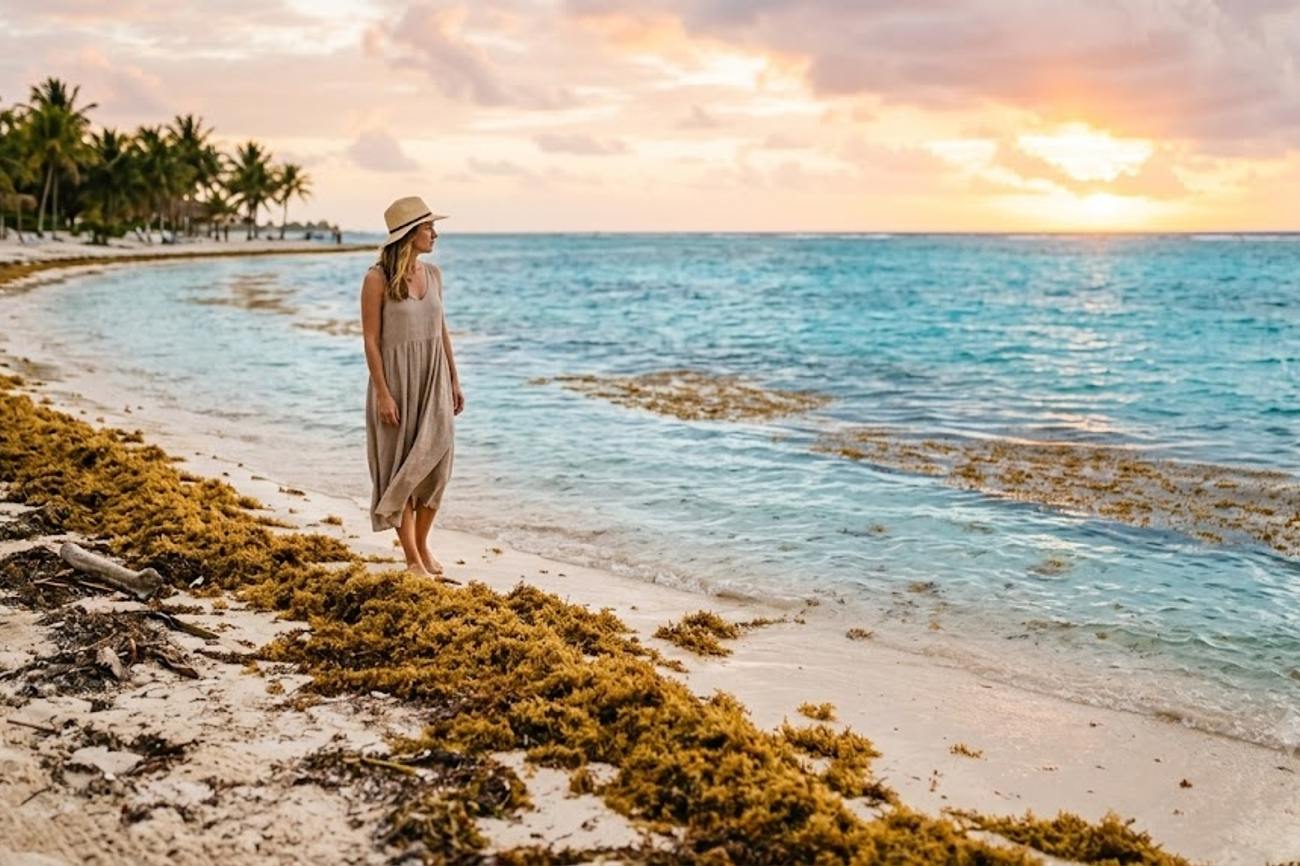
Image generated by AI
Millions of metric tonnes of decaying biomass are now challenging the operational viability of Belize’s coastal tourism sector, transforming the nation's white-sand shores into sites of intensive industrial cleanup. What was once a seasonal curiosity has evolved into a permanent ecological pressure, forcing the hospitality industry to pivot from luxury leisure management to large-scale waste mitigation.
The Mechanics of the Golden-Brown Tide
The current crisis is not a localized failure of beach maintenance but a systemic oceanic shift. Pelagic sargassum, originating from the Sargasso Sea and the Central Atlantic Belt, is being propelled toward the Belizean coastline by prevailing trade winds and ocean currents. This influx is particularly acute along the barrier reef—a UNESCO World Heritage site known for its marine biodiversity—where the seaweed accumulates in unprecedented densities.
The surge is driven by a volatile cocktail of anthropogenic and climatic factors. Rising ocean surface temperatures have created a thermal incubator for macroalgae, while nutrient enrichment—fueled by deforestation and agricultural runoff from the Amazon and Orinoco river systems—has provided the chemical fuel for exponential growth. For the traveler, this means the "postcard" version of the Caribbean is increasingly subject to the whims of Atlantic nutrient cycles and shifting wind patterns.
Operational Fallout in San Pedro and Placencia
The impact is most visible in high-traffic hubs like San Pedro on Ambergris Caye and Placencia in the Stann Creek District. In these municipalities, the deposition cycle is daily. The result is the formation of towering windrows of decomposing algae that blanket the shoreline.
Beyond the visual degradation, the biological decomposition of sargassum under intense tropical sunlight releases hydrogen sulphide gas. This creates a potent, sulfurous odor that penetrates resort properties, directly impacting the guest experience and leading to documented itinerary alterations and booking cancellations.
| Impact Category | Primary Driver | Result for Traveler/Operator |
|---|---|---|
| Aesthetic | Macroalgae accumulation | Loss of "pristine" white sand vistas |
| Olfactory | Hydrogen sulphide emission | Pungent odor across beachfront properties |
| Logistical | Biomass volume | Heavy mechanical removal operations on beaches |
| Financial | Maintenance costs | Investment in barrier booms and skimmer vessels |
| Accessibility | Physical seaweed mats | Blocked shoreline access and swimming restrictions |
Expert Analysis: The Shift to "Defensive Tourism"
For travelers booking trips to Belize, the direct consequence of this ecological shift is the transition toward "defensive tourism." We are seeing a market where the value of a resort is no longer judged solely by its amenities, but by its mitigation infrastructure. The presence of offshore barrier booms and the employment of dedicated manual raking teams have become primary competitive advantages.
The pricing pressure created by these overheads is significant. When a resort must invest in specialized skimmer vessels and daily labor to maintain a swimming corridor, those costs are inevitably baked into the room rate. Furthermore, the reliance on mechanical removal creates a paradoxical guest experience: visitors pay a premium for a "natural paradise" only to spend their vacation watching industrial cleanup crews operate on the sand.
However, there is a critical geographic nuance that many travelers miss. Because sargassum is a floating surface phenomenon, the impact is heavily weighted toward the shoreline. High-value marine activities—specifically those centered around the Blue Hole, Lighthouse Reef, and the Turneffe Atolls—remain largely insulated. The "danger zone" is the beach; the "safe zone" is the deep reef. This creates a strategic opportunity for tour operators to pivot their marketing away from "beach lounging" and toward "atoll exploration."
While sargassum blooms are a seasonal natural occurrence, the Belize Tourism Board provides updated guidance to help visitors choose the best destinations and timing for their trip. Travelers are encouraged to coordinate with local resorts that employ active beach cleaning strategies to ensure a seamless vacation experience.
The long-term viability of the region now depends on the success of circular-economy initiatives. The Belize Tourism Board (BTB) and the Department of the Environment are attempting to move away from landfill disposal, which is risky due to the heavy metal content of the seaweed. If Belize can successfully scale the conversion of sargassum into organic fertilizers or bioplastics, it transforms a logistical liability into a commercial asset. Until then, the burden of management remains a daily struggle for the private sector.
Key Takeaways
- Seasonal Peak: While unpredictable waves can bring seaweed year-round, the highest concentrations typically occur between April and August.
- Geographic Safe Havens: Offshore sites, including the Blue Hole and Turneffe Atolls, generally remain clear of sargassum, making them the most reliable options for snorkeling and diving.
- Infrastructure Check: Prospective visitors should specifically inquire if a property utilizes private barrier deployment systems or offshore booms before booking.
- Diversification Strategy: To mitigate the risk of beach closures, itineraries should balance coastal stays with inland activities in the Cayo District, such as Maya ruin exploration and cave tubing.
- Environmental Risk: The decomposition of sargassum releases hydrogen sulphide gas, which can significantly impact the air quality of beachfront resorts.
FAQ: Belize Sargassum 2024-2025
Can I still snorkel in Belize during a sargassum bloom? Yes. Sargassum primarily affects the shoreline and shallow beaches. Deep-water sites and distant atolls like the Blue Hole typically remain unaffected, allowing diving and snorkeling to continue as normal.
When is the best time to visit Belize to avoid seaweed? Statistically, the period outside of April through August is less prone to heavy influxes, though shifting currents make real-time monitoring essential for any trip.
Is sargassum dangerous to touch or swim in? While the seaweed itself is a natural algae, the decomposing mats on the beach can be unpleasant due to the smell of hydrogen sulphide. It is generally advised to use designated swimming corridors.
How can I tell if a resort is managing the seaweed well? Look for mentions of "offshore barrier booms" or "daily mechanical cleanup." Avoid properties that rely solely on manual raking during peak months (April-August).
The Caribbean dream is not disappearing, but it is requiring a more calculated, data-driven approach to itinerary planning.
Tags: Belize Tourism Board, Ambergris Caye, San Pedro Belize, Placencia Stann Creek, Sargassum Mitigation 2025, Belize Barrier Reef
Related Travel Guides
Disclaimer
This article is for informational and educational purposes only. It does not constitute legal, financial, or professional advice. While we strive to provide accurate and up-to-date information, travel policies, regulations, and conditions change rapidly. Always verify information with official sources before making travel decisions. Nomad Lawyer makes no representations about the accuracy, reliability, completeness, or suitability of the information provided. Readers should consult qualified professionals for advice specific to their circumstances. The views expressed in this article are those of the author and do not necessarily reflect the views of Nomad Lawyer.
Naina Thakur
Contributor & Travel Specialist
Travel enthusiast and legal writer covering visa regulations, responsible tourism, and cultural journeys across global destinations.
Learn more about our team →