
Williamsburg Virginia Creates a Multi Faceted Tourism Future Beyond Its Famous Past
Williamsburg Virginia Creates a Multi Faceted Tourism Future Beyond Its Famous Past

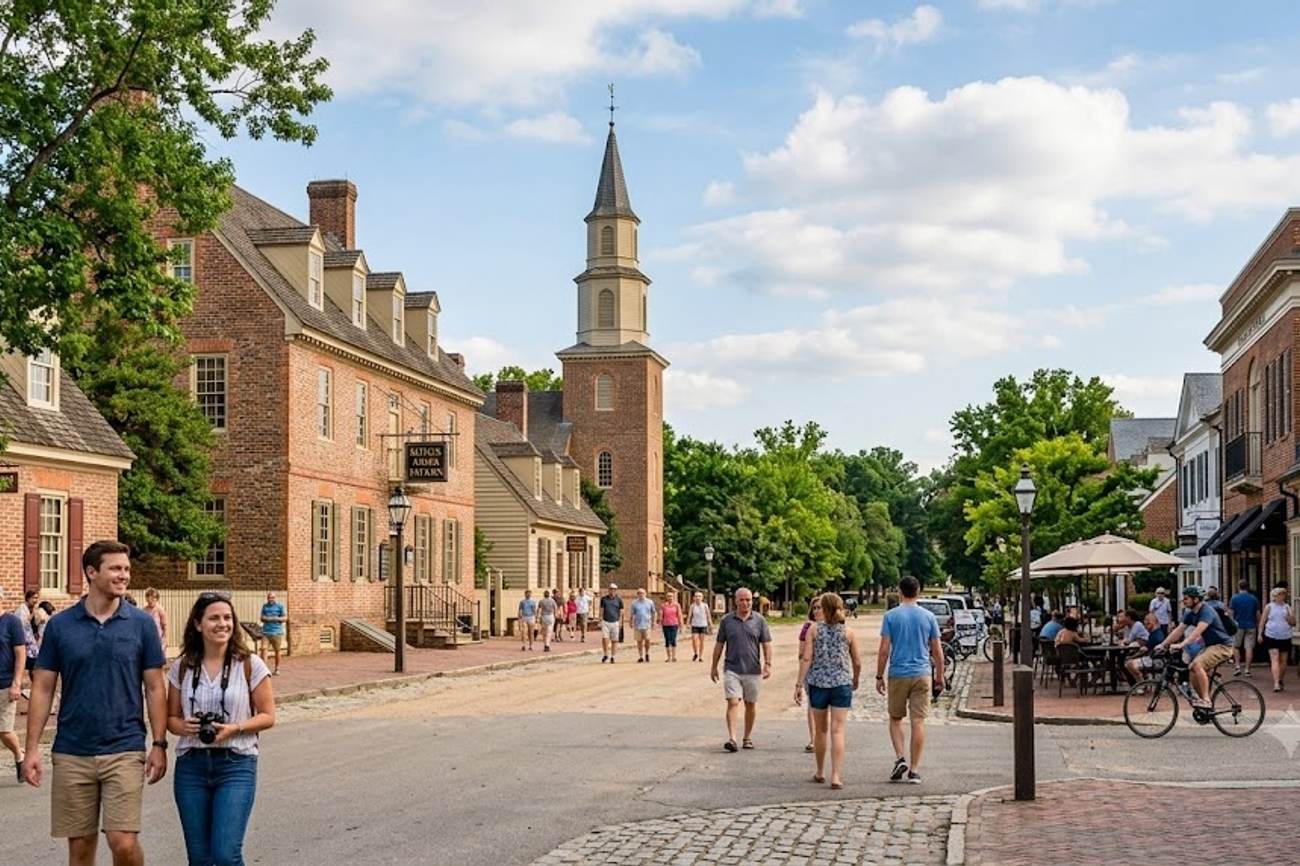
Image generated by AI
[Williamsburg, Virginia] — Visit Williamsburg is projecting a surge of 2.1 million visitors by 2026 as the region pivots from a purely historical destination to a diversified leisure and sports hub.
The growth strategy, detailed by Greg Kavanagh, Vice President of Business Development at Visit Williamsburg, leverages the United States' 250th anniversary of independence to attract a broader demographic. While the "Historic Triangle"—comprising Williamsburg, Jamestown, and Yorktown—remains the primary draw, the region is aggressively marketing its championship golf courses, wineries, and a new 200,000-square-foot sports and events center to extend visitor stays and reduce seasonal volatility.
The 250th Anniversary Catalyst
The upcoming semiquincentennial of American independence is serving as the primary engine for increased demand. Because Williamsburg, Jamestown, and Yorktown are central to the founding narrative of the U.S., the region is experiencing a spike in interest well ahead of the official July 4 anniversary period.
According to regional data, Virginia is currently outperforming the broader U.S. tourism market in terms of visitation rates. A significant portion of this growth is driven by "drive-market" travelers from the Mid-Atlantic corridor, specifically those originating from Washington DC and Baltimore. This proximity allows for high-frequency, short-duration trips, including weekend getaways for couples and short breaks for families.
By spreading historical programming over several years rather than focusing on a single anniversary date, Visit Williamsburg aims to avoid a "peak-and-crash" tourism cycle, instead establishing a sustainable, multi-year stream of arrivals.
Diversified Market Impact
The region is moving away from a reliance on "costumed interpreters" and historic streets to capture several distinct traveler segments. The following sectors are seeing targeted expansion:
- Sports & Events: The introduction of a 200,000-square-foot sports and events center is designed to attract youth and amateur tournaments. These events bring high-volume cohorts of athletes, coaches, and parents who require significant hotel and dining capacity.
- Luxury Leisure: The region is promoting its seven championship golf courses to attract high-spend sports tourists who typically combine golf with visits to local wineries and upscale dining.
- Family Entertainment: Busch Gardens Williamsburg continues to serve as a critical anchor, balancing the educational nature of the museums with high-intensity leisure attractions.
- Cultural Arts: The Muscarelle Museum of Art at William & Mary is utilizing high-profile exhibitions—such as Michelangelo drawings and Outlander-related displays—to attract art enthusiasts who may not be primarily interested in colonial history.
Practical Traveler Advisory and Strategic Insights
For those planning a trip to Virginia, the shift in strategy means a significant increase in the variety of available experiences, but also a likely increase in crowds and pricing as the 2026 milestone approaches.
Booking and Availability: With a forecast of 2.1 million visitors, hotel availability in the Historic Triangle will likely tighten during peak anniversary windows. Travelers should expect higher demand for accommodations in Williamsburg and surrounding areas.
Itinerary Flexibility: The "history-only" trip is being replaced by a multi-modal experience. Visitors can now realistically pair a morning at the Jamestown Settlement with an afternoon of championship golf or a visit to a regional winery.
Transportation: Given the heavy reliance on drive-market travelers from the Mid-Atlantic, road congestion into Williamsburg is expected to increase. Those traveling from DC or Baltimore should plan for higher traffic volumes during holiday weekends.
Expanding the Heritage Narrative
To ensure the destination remains relevant to a modern, global audience, Visit Williamsburg is broadening its storytelling. The region is moving beyond the Revolutionary War to integrate narratives regarding Indigenous heritage, African American history, and the Civil War.
This inclusive approach is designed to create "return-visit" value. A traveler who has already visited the colonial sites may return to explore the specific heritage trails or attend a specialized museum exhibition. This strategy is supported by the American Revolution Museum at Yorktown and the Jamestown Settlement, which are updating their exhibits and live demonstrations to provide a more comprehensive view of early American society.
Furthermore, the integration of local gastronomy and water-based activities on the peninsula is being used to convert short-term visitors into long-term guests. By promoting boating and paddling alongside historic tours, the region is positioning itself as a comprehensive outdoor destination.
Future Growth and Infrastructure
The immediate focus for the region is the operationalization of the new sports and events center. This facility is expected to stabilize the local economy by bringing in business during "shoulder seasons"—the quieter periods between the primary summer and autumn peaks.
The convergence of the 250th anniversary, the expansion of the MICE (Meetings, Incentives, Conferences, and Exhibitions) sector, and the promotion of sports tourism suggests that Williamsburg is transitioning into a year-round destination. The long-term goal is to create a self-sustaining ecosystem where business travelers extend their stays for leisure, and leisure travelers return for sports or arts programming.
FAQ: Williamsburg Tourism 2026
When is the best time to visit Williamsburg for the 250th anniversary? While the peak will be around July 4, 2026, the region is spreading events over several years. Visiting during the shoulder seasons (spring and autumn) will allow you to avoid the heaviest crowds while still accessing anniversary programming.
Is Williamsburg only for history buffs? No. The region now heavily promotes seven championship golf courses, the Busch Gardens theme park, and various wineries and outdoor water activities, making it a viable destination for sports and family vacations.
What is the "Historic Triangle"? The Historic Triangle refers to the three interconnected heritage sites of Williamsburg, Jamestown, and Yorktown. Together, they provide a comprehensive look at early English settlement and the American Revolutionary War.
Will there be more to do than museums in 2026? Yes. With the opening of a new 200,000-square-foot sports and events center and an increase in art exhibitions at the Muscarelle Museum, the region is diversifying into sports and contemporary culture.
Virginia's colonial heart is beating faster as it trades the history book for a playbook.
Related Travel Guides
Disclaimer
This article is for informational and educational purposes only. It does not constitute legal, financial, or professional advice. While we strive to provide accurate and up-to-date information, travel policies, regulations, and conditions change rapidly. Always verify information with official sources before making travel decisions. Nomad Lawyer makes no representations about the accuracy, reliability, completeness, or suitability of the information provided. Readers should consult qualified professionals for advice specific to their circumstances. The views expressed in this article are those of the author and do not necessarily reflect the views of Nomad Lawyer.
Raushan Kumar
Founder & Lead Developer
Full-stack developer with 11+ years of experience and a passionate traveller. Raushan built Nomad Lawyer from the ground up with a vision to create the best travel and law experience on the web.
Learn more about our team →