
Asia's First Desert Night Safari Approved in Gujarat: A ₹542 Crore Conservation Landmark
The Central Zoo Authority approves Asia's first desert-themed drive-through Night Safari in Juna Deesa, Gujarat, investing ₹542.14 crore.

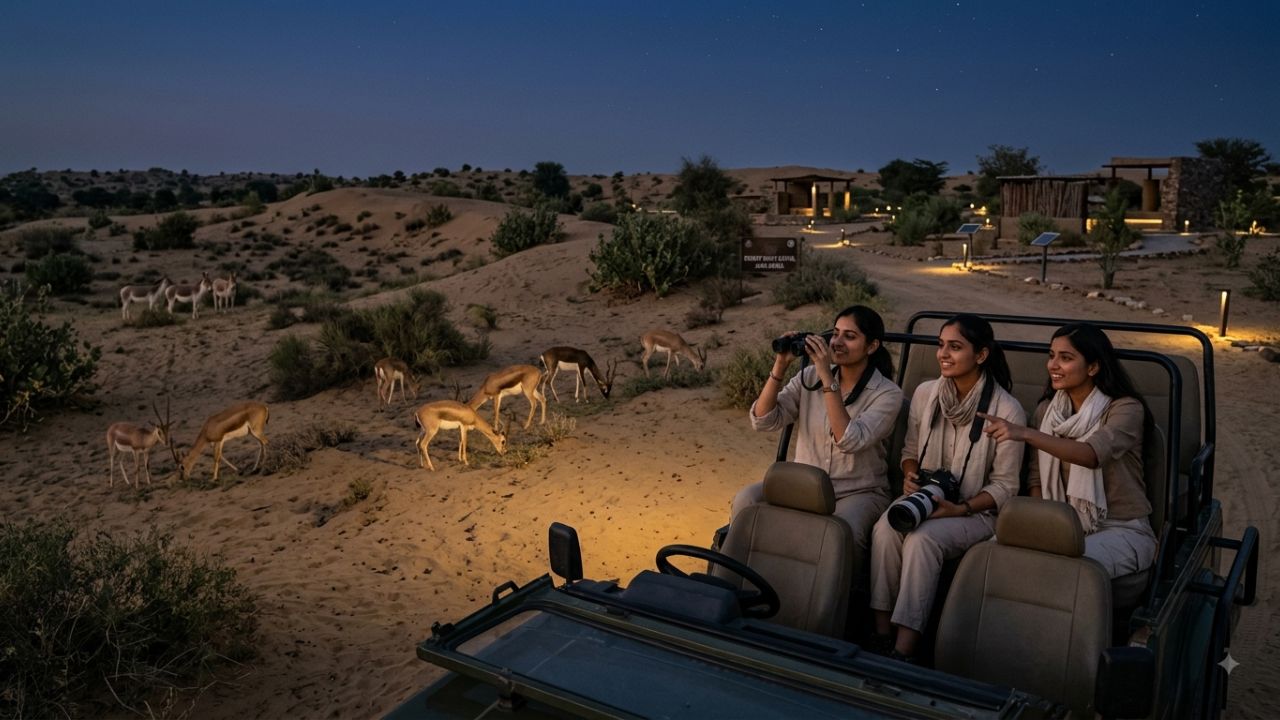
Image generated by AI
The Central Zoo Authority has approved a monumental ₹542.14 crore desert-themed drive-through Night Safari and zoological park in Juna Deesa, Gujarat. Slated to become the first of its kind in Asia, this eco-tourism landmark will leverage Banaskantha's natural arid topography to offer an immersive, conservation-first experience.
The wildlife tourism sector in India is experiencing a significant transformation, driven by an international shift toward nocturnal observation and experience-first conservation travel. Rather than relying on traditional zoological models that utilize simple cages and static enclosures, modern developments are shifting toward dynamic, species-appropriate environments that integrate visitors directly into natural habitats. A primary milestone in this effort is the approval of the Banaskantha project, which will be constructed on approximately 103 hectares of government land in the Juna Deesa region. The proposal was officially approved on August 12, 2026, structured in accordance with strict national conservation guidelines under the leadership of the Gujarat Forest Department.
For the traveler, the real impact of this project is the opportunity to observe nocturnal wildlife under naturalistic conditions. The drive-through design eliminates traditional physical barriers, allowing visitors to travel through carefully constructed ecosystems in low-impact transport. The facility will house approximately 2,700 animals representing 83 diverse species, including both native Indian fauna and exotic international species. Visitors can explore a dedicated day zoo and five specialized Night Safari enclosures that utilize controlled, non-disruptive lighting to showcase animal activity. This model provides an educational experience that highlights the ecological role of nocturnal species.
Realigning Regional Tourism Circuits: Northern Gujarat's Rising Appeal
The ₹542.14 crore capital investment is designed to position Juna Deesa as a flagship destination for domestic and international travelers. The location was selected for its natural sand dunes and immediate proximity to the Banas River, which provides an ideal geological foundation for a desert biome. The site also benefits from established road and rail networks, ensuring convenient connectivity from major regional cities. This accessibility is essential for integrating the park into northern Gujarat's existing travel routes, which include historic sites like Vadnagar—famous for its ancient Buddhist monastery excavations—the temple town of Ambaji, recognized as one of the fifty-one sacred Shakti Peethas, and the border tourism destination of Nadabet, which offers military heritage exhibitions and daily parades.
Additionally, the Banas River itself plays an important role in the local ecosystem. The river's seasonal water flows support diverse riparian vegetation and attract native bird species, making the Juna Deesa site a hot spot for birdwatching and nature photography. Visitors can explore the riverbanks and sand dunes, learning about the complex interactions between soil, water, and desert life under the guidance of expert naturalists.
By establishing a major attraction in Banaskantha, tourism planners aim to encourage longer stays in the region rather than using the area simply as a transit corridor. The facility is expected to serve as a catalyst for economic development, supporting local hospitality providers, transportation networks, and independent retail businesses. The park will feature native Indian species such as the chinkara (Indian gazelle) and the blackbuck, which are physically adapted to survive in Gujarat's arid climates, alongside the Asiatic lion, leopard, Indian wild ass (khur), Indian porcupine, Indian hare, hedgehog, desert hare, sloth bear, Indian caracal, Indian wolf, golden jackal, striped hyena, and Indian desert fox.
Exotic fauna from Africa and Australia will also be featured, including the black rhinoceros, African cheetahs, African lions, Angolan giraffes, springboks, ostriches, kangaroos, emus, and wallabies. This diverse collection provides travelers with a comprehensive wildlife experience while generating essential revenue for local communities.
Environmental Stewardship and Community-First Eco-Tourism
Sustainable design is central to the project's framework, with an emphasis on low-impact technology and habitat restoration. For the visitor, the real impact is a travel experience that actively minimizes its environmental footprint. The park is being developed with advanced rainwater harvesting systems, solid waste management facilities, and grid-interactive solar energy systems. Because Banaskantha receives high solar radiation year-round, the park will run on ground-mounted solar panels, producing enough clean energy to operate nocturnal lighting systems, administrative facilities, water pumps, and charging stations for electric golf carts, making it a carbon-neutral facility. Water security is highly critical in arid zones. The rainwater harvesting infrastructure is designed to collect and store millions of liters of water during the brief monsoon season. This water is then purified and used for animal drinking, irrigation of native plantations, and general utility purposes. This system, combined with zero-liquid discharge sewage treatment, ensures that the park remains completely self-sufficient and does not place any pressure on local groundwater reserves. To preserve the ecological integrity of the desert and prevent soil erosion, the Forest Department is establishing green buffer zones and large-scale plantations of native flora. These vegetation bands serve to prevent desertification, stabilize local sand dunes, and protect the hydrology of the Banas River basin.
This ecological focus extends to local community support. The park will function as a center for scientific research, conservation education, and wildlife rehabilitation, employing local veterinary professionals, forest wardens, and educational guides. By hiring from surrounding villages in Banaskantha and establishing dedicated stalls for local craftspeople to sell traditional handloom and embroidery products, the project ensures that the economic benefits of tourism flow directly to the residents. This community-first model builds local support for conservation, showing how responsible travel can successfully balance recreation, animal welfare, and regional development.
Complete Visitor Experience and Habitat Management
The proposed Desert Zoological Park is designed to provide visitors with a comprehensive tourism experience. Plans include a reptile safari, a rainforest biome, an aquarium, an aviary, a reptile house, and a butterfly park. These facilities increase opportunities for wildlife learning and public engagement.
To ensure appropriate animal care and visitor safety, the park design features separate areas for herbivores and carnivores. These dedicated zones support better conservation breeding programs and provide support for wildlife rescue and rehabilitation initiatives. Visitor facilities within the park include an interpretation centre, food court, souvenir shop, and electric golf cart services. These amenities make the attraction convenient for families, tourists, and educational groups who want to experience a slower, more educational style of wildlife observation.
Destination Specialist Local Insider Tips
To help you explore the historical terrains, temples, and wildlife parks of northern Gujarat safely and responsibly, local destination specialists recommend these insider tips:
- Target the Cool Winter Months: Plan your visit to Banaskantha between November and February, when temperatures range between 12°C and 28°C. Avoid the summer months (April to June), as desert temperatures regularly exceed 45°C, making outdoor sightseeing uncomfortable.
- Explore Patan's Rani Ki Vav: Combine your safari trip with a visit to the nearby city of Patan to see Rani Ki Vav (Queen's Stepwell), a UNESCO World Heritage site featuring intricate carvings of Hindu deities.
- Respect Temple Etiquette at Ambaji: If visiting the sacred Ambaji Temple in the Aravalli hills, dress modestly with covered shoulders and knees. Remember to remove shoes and leather items before entering the temple complex.
- Savor Local Kutchi Dabeli and Dal Vada: Stop in Palanpur to sample regional street food, including Kutchi dabeli (spiced potato patty in a bun with pomegranate seeds) and fresh, crispy dal vada (lentil fritters) served with green chilies.
- Verify State Alcohol Regulations: Gujarat is a dry state with strict regulations regarding alcohol consumption. Out-of-state and international visitors must obtain official tourist permits through authorized channels before purchasing or consuming alcohol.
Long-Term Outlook for Indian Wildlife Tourism
The long-term outlook for wildlife tourism in Gujarat is positive, supported by the state's focus on conservation-led development and green infrastructure. By establishing Asia's first desert-themed Night Safari, regional authorities are setting a new standard for how zoological parks operate, moving away from simple entertainment toward active habitat preservation.
As the Juna Deesa park prepares to welcome visitors, it will serve as a model for future eco-tourism projects across the country. Continued investment in solar energy, public education, and community-based hospitality will ensure that the region remains a clean, ecologically responsible, and culturally rich destination. This transition ensures the preservation of regional heritage while offering global travelers a deeper understanding of India's environments.
Related Travel Guides
Disclaimer
This article is for informational and educational purposes only. It does not constitute legal, financial, or professional advice. While we strive to provide accurate and up-to-date information, travel policies, regulations, and conditions change rapidly. Always verify information with official sources before making travel decisions. Nomad Lawyer makes no representations about the accuracy, reliability, completeness, or suitability of the information provided. Readers should consult qualified professionals for advice specific to their circumstances. The views expressed in this article are those of the author and do not necessarily reflect the views of Nomad Lawyer.
Kunal K Choudhary
Co-Founder & Contributor
A passionate traveller and tech enthusiast. Kunal contributes to the vision and growth of Nomad Lawyer, bringing fresh perspectives and driving the community forward.
Learn more about our team →