
Canada's Tourism Map Flips: Calgary, Halifax, and Quebec City Race into the Global Spotlight
Calgary, Halifax, and Quebec City emerge as major international gateways in 2026, challenging traditional giants Toronto, Vancouver, and Montreal.

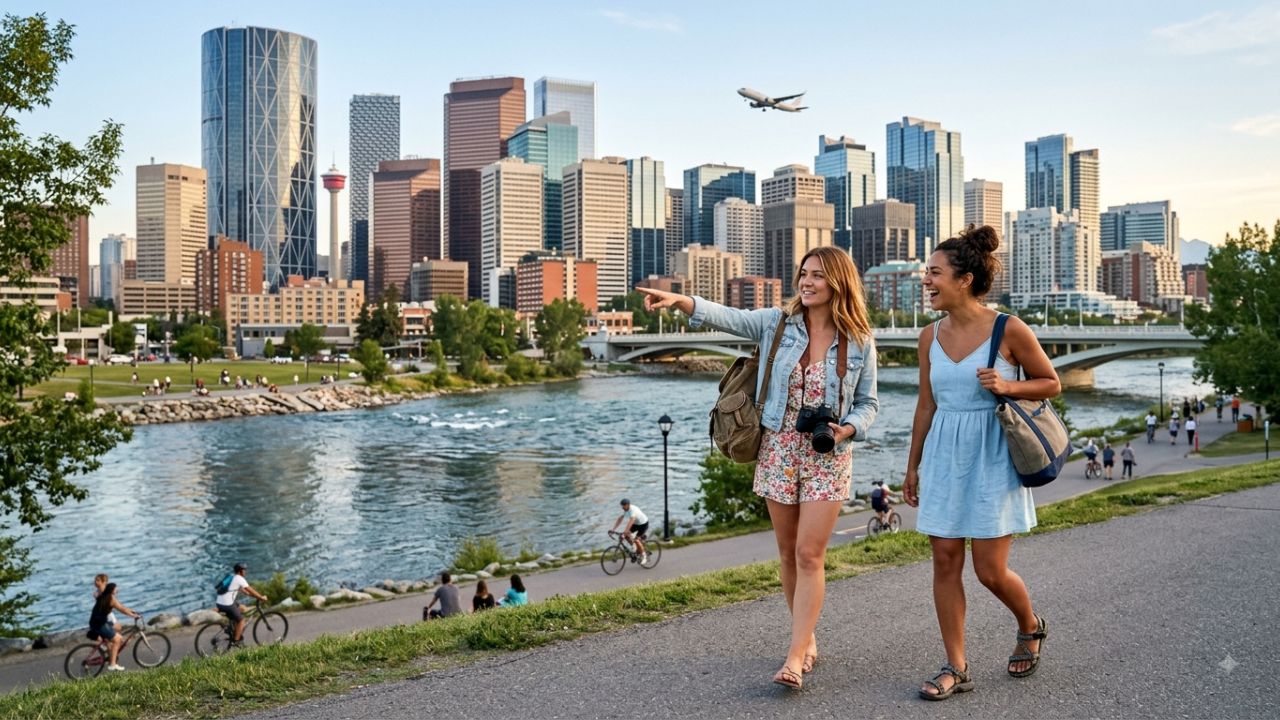
Image generated by AI
A dramatic realignment is reshaping Canada’s tourism sector in 2026 as Calgary, Halifax, and Quebec City challenge traditional gateways like Toronto, Vancouver, and Montreal. Driven by record flight capacity growth, new international routes, and surging hotel transactions, these emerging hubs are transforming how global travelers experience the country.
The travel geography of Canada is undergoing a major shift. While Toronto, Vancouver, and Montreal remain the primary gateways for international arrivals, a new group of cities is capturing the attention of airlines, travelers, and hospitality investors. This expansion of aviation links and regional infrastructure is distributing visitor numbers more evenly across the country, offering travelers viable alternatives to overcrowded tourist corridors. By establishing direct routes to secondary cities, the aviation sector is opening up new regions for slow, community-first travel.
For the traveler, the real impact of this trend is the convenience of arriving directly in regional capitals without the hassle of connecting through major national hubs. International visitors can explore local cultures, regional cuisines, and historical sites at a more relaxed pace. This shift supports local businesses, transport providers, and independent hotel operators, building economic resilience in communities that once served mainly as brief transit points.
Realigning Canada's Gateways: Air Capacity and Route Growth
Calgary has established one of the strongest cases for growth. YYC Calgary International Airport expects around 6.1 million travellers during summer 2026, placing it on track for another busy season following a record-setting summer in 2025, when more than six million passengers were recorded. The city already welcomes more than 10 million visitors annually, and visitor spending contributes more than C$3.3 billion to the local economy. While Calgary has historically been viewed as a transit point to Banff and the Rocky Mountains, the city is building an urban identity of its own through festivals, food culture, sports, and business events, encouraging travelers to extend their stays.
Halifax is quietly emerging as a transatlantic gateway, offering international travelers direct access to Atlantic Canada. For summer 2026, the Nova Scotia capital has secured an extensive European network, with nonstop connections to nine European destinations. New services include Lisbon, Madrid, and Copenhagen, with flights operating up to four times each week. These connect with existing summer routes to Amsterdam, Barcelona, Dublin, Edinburgh, London Gatwick, and Paris. This allows travelers to land directly on the Atlantic coast, enjoying Halifax's compact waterfront, maritime history, and local seafood before exploring wider Nova Scotia.
Quebec City has recorded the most dramatic aviation capacity increase. Flight capacity at Quebec City Jean Lesage International Airport in 2026 is 15% higher than in 2025, with growth reaching nearly 25% during the summer months. This represents 376,456 additional seats, bringing the total available capacity to 2,965,889 seats. The airport has added five new destinations compared to summer 2025, including Nantes and Marseille in France, and Washington in the United States. Compared to 2019, YQB's total seat supply has increased by 27%, cross-border capacity is up 44%, and international capacity has surged by 111%. This provides a direct route for travelers eager to experience the city's historic center, French heritage, and culinary culture.
Secondary Cities to Watch: Edmonton and Winnipeg
Edmonton and Winnipeg are also positioning themselves to capture slow-travel audiences. While Edmonton does not yet show the same rapid international capacity growth in 2026 as Halifax or Quebec City, the Alberta capital remains an important city to monitor. With diverse festivals, museums, and sports tourism, the city offers travelers an authentic gateway to Alberta's wider northern parks. The city's main goal is to convert its regional connectivity into greater global visibility, convincing visitors that the city itself deserves dedicated time on their itineraries.
Winnipeg's primary strength lies in its geographic location and transit connectivity. Winnipeg Richardson International Airport handles around 3.4 million passengers annually and operates more than 120 flights per day. The city offers nonstop connections to major United States markets, including Chicago, Denver, Las Vegas, Minneapolis/St. Paul, and Phoenix. Located near the geographic center of the country, Winnipeg provides travelers with access to indigenous culture, historic architecture at The Forks, and regional museums, serving as an attractive stop for visitors looking for unique, uncrowded city breaks.
Investment Realignments and Regional Ecotourism
This growth in air connectivity is happening alongside strong investment in the Canadian hotel market. Colliers reports that hotel transactions exceeded C$2.2 billion in 2025, representing an 11% year-on-year increase. This investment momentum has continued into 2026, with first-quarter transaction volumes in Western Canada reaching approximately C$500 million. Investors are increasingly strategic, placing capital in secondary markets where flight expansions are driving long-term tourism demand.
This investment loop supports sustainable, regional tourism. For the traveler, the real impact is the availability of high-quality local accommodations that support low-impact travel. Staying longer in secondary cities reduces the carbon emissions associated with frequent regional flights and highway travel. Visitors can support regional farmers and fishers by dining at farm-to-table restaurants in Calgary, purchasing seafood directly from harbors in Nova Scotia, or exploring local markets in Quebec. This ensures that tourism revenue remains in the regional economy, helping to preserve heritage sites and natural spaces.
Destination Specialist Local Insider Tips
To help you plan a slow-travel itinerary across Canada's emerging gateways safely and responsibly, regional specialists recommend these insider tips:
- Avoid Calgary's Stampede Crowds: If you prefer quiet exploration, visit Calgary in late May or September. This avoids the high accommodation rates and dense crowds associated with the annual Calgary Stampede in July.
- Explore Fisherman's Cove in Halifax: Travel to Eastern Passage to visit Fisherman's Cove, a 200-year-old restored fishing village that offers local craft shops, boardwalk walks, and fresh lobster rolls away from the downtown core.
- Savor Traditional Poutine in Old Quebec: Try authentic French-Canadian poutine (fries, fresh cheese curds, and brown gravy) or traditional meat pie (tourtière) in local diners outside the main tourist gates to experience authentic regional recipes.
- Use Public Transit to Explore Winnipeg's The Forks: Access The Forks, a historic meeting place at the confluence of the Red and Assiniboine rivers, using Winnipeg's transit system. This historic site offers local food stalls and artisan markets without requiring parking fees.
- Verify Regional Baggage Rules on Connections: Since reaching secondary gateways from Europe or Asia often requires transfers through major hubs, verify baggage allowances and connection times carefully to avoid fees on regional carriers.
Long-Term Outlook for Canadian Travel Patterns
The long-term outlook for Canadian tourism is defined by the decentralization of visitor patterns. As flight connections and hotel investments continue to expand beyond Toronto, Vancouver, and Montreal, secondary cities will play an increasingly important role in the national tourism economy.
This transition to a more diverse gateway system helps protect delicate environments in major national parks from overtourism. By offering travelers direct access to regional cultures, historic corridors, and community-based activities, Canada's emerging cities are building a sustainable, balanced travel model that preserves the country's natural and cultural resources for years to come. This transition ensures the preservation of regional heritage while offering global travelers a deeper understanding of Canada's environments.
Related Travel Guides
Disclaimer
This article is for informational and educational purposes only. It does not constitute legal, financial, or professional advice. While we strive to provide accurate and up-to-date information, travel policies, regulations, and conditions change rapidly. Always verify information with official sources before making travel decisions. Nomad Lawyer makes no representations about the accuracy, reliability, completeness, or suitability of the information provided. Readers should consult qualified professionals for advice specific to their circumstances. The views expressed in this article are those of the author and do not necessarily reflect the views of Nomad Lawyer.
Kunal K Choudhary
Co-Founder & Contributor
A passionate traveller and tech enthusiast. Kunal contributes to the vision and growth of Nomad Lawyer, bringing fresh perspectives and driving the community forward.
Learn more about our team →