
Ecuador Agritourism Will Forever Transform How You Travel Through Magical Highland Harvests And Jungle Homestays, Here’s The Latest Trend
Ecuador Agritourism Will Forever Transform How You Travel Through Magical Highland Harvests And Jungle Homestays, Here’s The Latest Trend

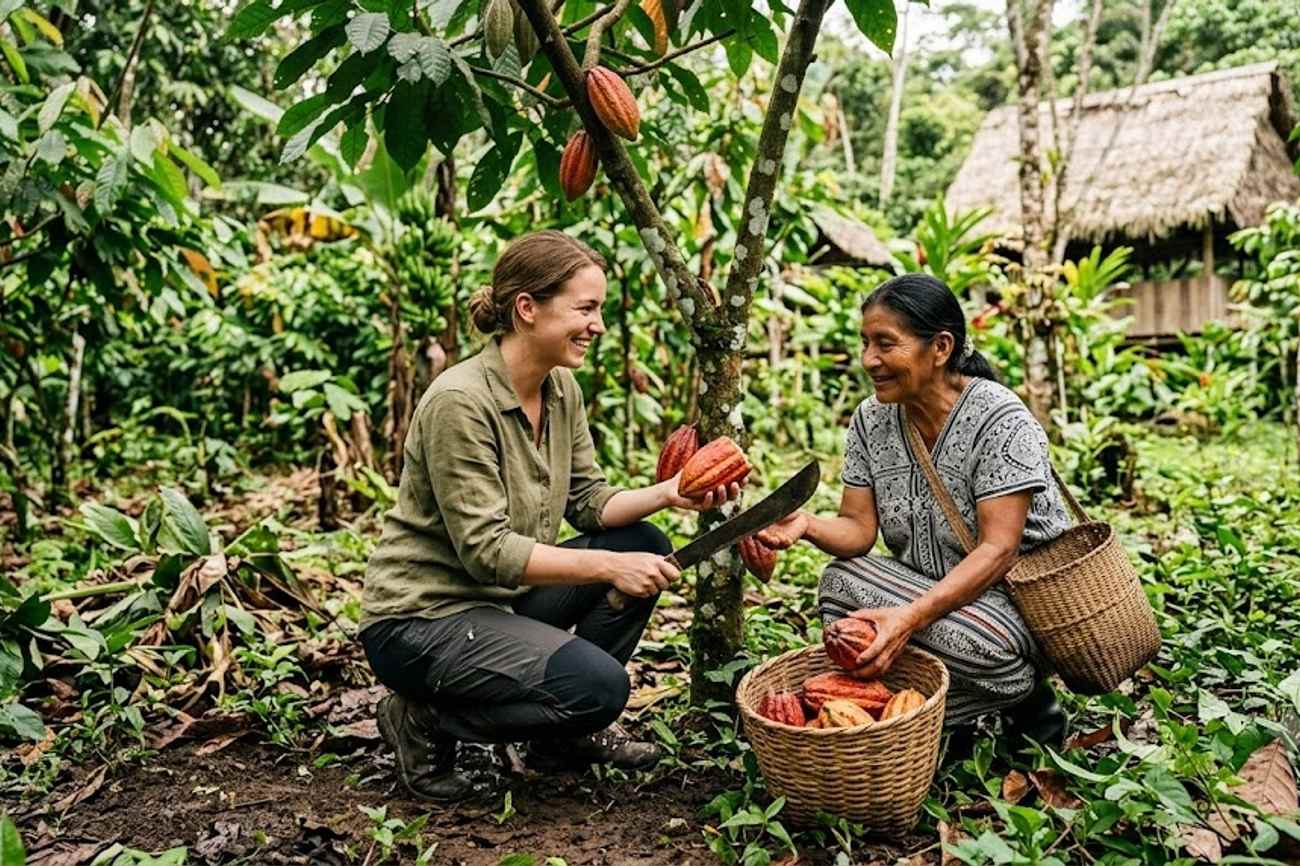
Image generated by AI
[Quito, October 2023] — Ecuador is aggressively pivoting its national tourism strategy toward "Agritourism and Rural Living," moving away from corporate resorts to integrate international travelers directly into the labor and daily routines of Andean and Amazonian farmsteads.
The shift is being driven by a coordinated institutional framework between the Ministry of Tourism (MINTUR) and the Ministry of Agriculture and Livestock (MAG). By formalizing "Fincas Turísticas" (Tourist Farms) and "Turismo Comunitario" (Community Tourism), the Ecuadorian government is now legally structuring a system where visitors pay to participate in manual agricultural labor, from milking cows in the highlands to harvesting cacao on the coast.
The Institutional Framework of Rural Stays
The transition from passive sightseeing to active agricultural participation is not accidental but is governed by a strict state-managed system. To operate as a registered Finca Turística, farm owners must adhere to national guidelines that balance authentic agricultural production with rigorous guest safety and hygiene standards.
Central to this effort is the Catastro Nacional Turístico, a national registry that provides small-scale landowners with official recognition. This designation allows rural farmers to market their experiences to a global audience while receiving technical government support to build eco-friendly infrastructure.
Furthermore, the legal structure of Turismo Comunitario allows indigenous comunas and rural cooperatives to manage homestays collectively. This model is designed to ensure that revenue remains within the village, directly funding essential public services including healthcare, clean water initiatives, and local schools, thereby bypassing corporate intermediaries.
Regional Impact and Labor Integration
The agritourism rollout is divided across three primary ecological zones, each offering distinct manual labor experiences for travelers:
- The Coast (Manabí, Los Ríos, Guayas): In areas such as Calceta, Chone, and Milagro, travelers engage in the production of Cacao Nacional. This involves using podaderas (curved blades) to harvest pods and managing the four-to-six-day fermentation process in wooden aging boxes.
- The Highlands (Pichincha, Imbabura, Chimborazo): In Cayambe and Cotacachi, the focus is on volcanic soil staples. Visitors participate in the harvest of quinoa, chocho (lupine beans), native potatoes, and mortiño berries.
- The Amazon (Napo, Pastaza): Centered around Tena and Archidona, the experience focuses on the Ilex guayusa leaf. Travelers participate in 04:00 AM brewing ceremonies and the subsequent hand-harvesting and pan-firing of leaves over wood embers.
What This Means for Travelers
For the modern traveler, this represents a total departure from the traditional hotel experience. Booking a rural stay in Ecuador now means opting into a "working vacation" where the guest is an active contributor rather than a spectator.
Practical changes for those booking now include:
- Accommodation Shifts: Travelers will stay in structures built from adobe bricks, woven bamboo, and thatched palm. These buildings rely on natural thermal regulation, meaning guests should expect an absence of energy-intensive HVAC systems.
- Schedule Adjustments: Daily routines are dictated by agricultural needs. This includes pre-dawn wake-up calls (specifically for Guayusa rituals in the Amazon) and physical labor such as hand-milking dairy cows and feeding livestock.
- Dietary Integration: Meals are "zero-kilometer," meaning ingredients are harvested from the immediate garden plot hours before consumption and cooked over traditional wood fires.
- Skill Acquisition: Beyond leisure, these stays function as workshops. Travelers can learn permaculture, biochar production, and greywater bio-filtration, particularly at centers in the Imbabura region.
Conservation and the Chakra System
A critical component of the Amazonian experience is the immersion into the Chakra system. Practiced by Kichwa and Shuar communities in Napo and Pastaza, the Chakra is a sophisticated forest-farm design that mimics the natural rainforest structure.
This system is so ecologically significant that it is recognized by the Food and Agriculture Organization of the United Nations (FAO) as a Globally Important Agricultural Heritage System (GIAHS). A single Chakra can integrate up to 150 different plant species, blending high timber trees, fruit canopies, and medicinal shrubs. By participating in this system, travelers are taught how to maintain food production without compromising the integrity of the rainforest canopy.
In the highlands, this conservationist approach manifests as soil restoration. Training centers in Imbabura utilize ancient andenes (terracing) to prevent erosion on steep Andean slopes. Visitors are taught to use organic composting and effective microorganism (EM) fermentations to build fertile topsoil without the use of synthetic chemical fertilizers.
FAQ: Ecuador Agritourism 2023
Do I need special equipment for agricultural stays? Most farms provide the necessary tools, such as podaderas for cacao harvesting. However, travelers should bring rugged, weather-appropriate clothing and sturdy boots suitable for volcanic soil or rainforest mud.
Are these homestays safe for solo travelers? Yes. Because these farms are registered under the Catastro Nacional Turístico and MINTUR guidelines, they must meet specific safety and hygiene standards to maintain their legal status.
How does the "Community Tourism" model benefit the locals? Unlike corporate resorts, the Turismo Comunitario model ensures profits are managed by cooperatives. This money is reinvested into the village for public schools and healthcare rather than leaving the region.
What is the typical daily schedule on a rural finca? Routines typically begin at daybreak. Activities include livestock care, harvesting crops, and preparing artisan cheeses, followed by communal meals cooked over wood-fired ovens.
From the volcanic peaks of Cayambe to the depths of the Napo basin, Ecuador is redefining the tourist as a laborer.
#EcuadorAgritourism #MINTUR #CacaoNacional #AmazonianChakra #AndeanPermaculture #NapoTourism
Related Travel Guides
- France Aligns With Portugal And More As EES Changes Ease European Travel Delays
- Italy Aligns With Spain And France As Tourism Demand Surges To New Summer Records
- Bolivia Stands Alongside Colombia and More as South American Places Issues New Travel Chaos Situations Due To Identification, Security and Entry Risks
Disclaimer
This article is for informational and educational purposes only. It does not constitute legal, financial, or professional advice. While we strive to provide accurate and up-to-date information, travel policies, regulations, and conditions change rapidly. Always verify information with official sources before making travel decisions. Nomad Lawyer makes no representations about the accuracy, reliability, completeness, or suitability of the information provided. Readers should consult qualified professionals for advice specific to their circumstances. The views expressed in this article are those of the author and do not necessarily reflect the views of Nomad Lawyer.
Kunal K Choudhary
Co-Founder & Contributor
A passionate traveller and tech enthusiast. Kunal contributes to the vision and growth of Nomad Lawyer, bringing fresh perspectives and driving the community forward.
Learn more about our team →