
France Aligns With Portugal And More As EES Changes Ease European Travel Delays
France Aligns With Portugal And More As EES Changes Ease European Travel Delays

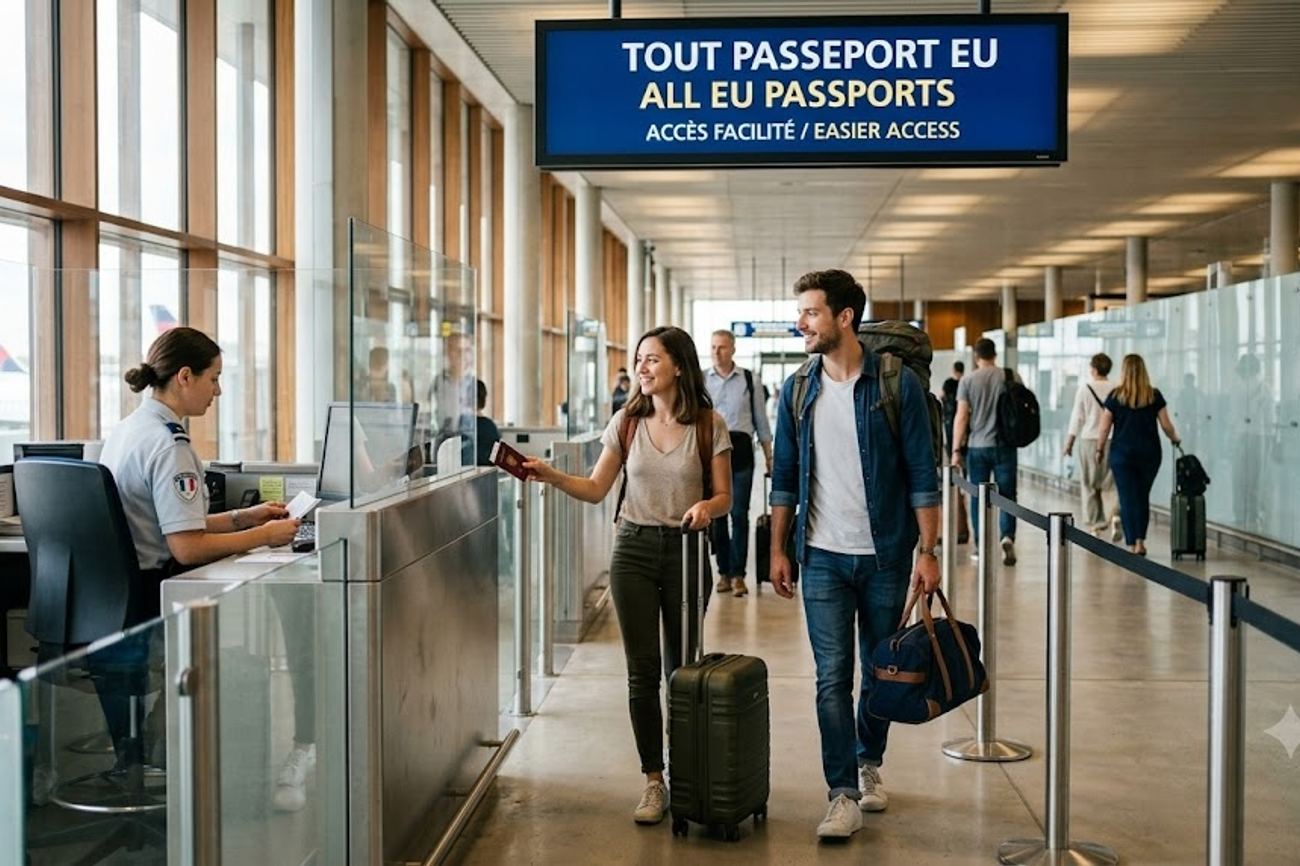
Image generated by AI
Are you planning a trip to the Schengen Area and wondering if you will be stuck in a multi-hour biometric queue upon arrival? The rollout of the Entry Exit System (EES) is fundamentally changing how non-EU citizens, particularly British nationals, enter Europe, but a recent shift in implementation strategy across nine key nations means your experience will vary wildly depending on where you land.
The Shift in Biometric Border Implementation
The Entry Exit System (EES) is a digital overhaul of the Schengen Area’s external borders. Its primary purpose is to replace the manual ink-stamping of passports with a centralized digital record. For the traveler, this means your entry and exit dates are tracked electronically, and your identity is verified via biometric data.
However, the transition has been volatile. To prevent total gridlock at major gateways, nine European nations—France, Portugal, Belgium, the Netherlands, Germany, Greece, Malta, Italy, and Switzerland—have reportedly opted to delay full implementation. These countries are pausing the complete rollout to ensure their technological infrastructure and staffing levels can handle the surge of biometric registrations without causing systemic failure.
For the traveler, this creates a fragmented border experience. You may encounter the full EES biometric process in one country, only to find traditional passport stamping still in use in another. This inconsistency is particularly risky for those on multi-country itineraries involving flights, trains, and ferries.
Border Processing Status by Country
The following table outlines the reported status of EES implementation across the primary gateways used by non-EU travelers.
| Country | Travel Relevance | Reported EES Position | Status |
|---|---|---|---|
| France | Major gateway for UK visitors | Delaying full implementation | Transitional |
| Portugal | Popular leisure destination | Delaying full implementation | Transitional |
| Spain | Major holiday market | Implementation ongoing | Active/Congested |
| Greece | Summer tourism destination | Delaying full implementation | Transitional |
| Italy | Cultural and city-break market | Delaying full implementation | Transitional |
| Germany | Aviation and rail hub | Delaying full implementation | Transitional |
| Netherlands | Key European gateway | Delaying full implementation | Transitional |
| Belgium | International transport hub | Delaying full implementation | Transitional |
| Malta | Mediterranean destination | Delaying full implementation | Transitional |
| Switzerland | Tourism and transport market | Delaying full implementation | Transitional |
Traveler Logistics Guide
Navigating a fragmented border system requires a shift in how you plan your arrival and transit. Follow these steps to minimize the risk of missing connections or spending hours in queue.
1. Initial Biometric Registration If you land in a country where EES is fully active, be prepared for the "first-time" registration. This involves providing a digital facial image and fingerprints. Once this is in the system, subsequent entries into the Schengen Area are intended to be faster. If you have the option, entering through a smaller airport or a country currently delaying full implementation may reduce your initial wait time.
2. Optimizing Layover and Connection Windows The most critical logistics failure currently occurring is the "connection collapse." Reports from airports like Athens indicate that passengers have missed onward flights due to biometric processing bottlenecks.
- Minimum Connection Time (MCT): Do not rely on the airline's suggested MCT. If you are clearing a Schengen border for the first time under EES, add a minimum of 2 to 3 hours to your planned layover.
- Separate Tickets: If you have booked a separate flight or an international train (such as via Eurostar) immediately after arrival, treat the border as a high-risk zone. Build in a significant buffer.
3. Ground Transport and Cruise Connections For those heading to cruise terminals or rail hubs, the unpredictability of passport control is a liability. If your cruise departs from a port in Spain or Italy, ensure you arrive in the city at least 24 hours prior to sailing. A four-hour delay at passport control can easily result in a missed ship.
4. Documentation and Digital Readiness While EES is a digital system, always carry a physical copy of your return flight and accommodation bookings. In the event of a system glitch or a manual override by border agents, having your itinerary readily available can expedite your questioning. For those traveling through Germany or the Netherlands, check the official European Union Migration and Home Affairs portal for the most current biometric requirements.
Regional Connectivity Impact
The staggered rollout of EES is reshaping how travelers choose their entry points into Europe. Historically, travelers chose gateways based on flight cost or convenience. Now, the "border friction" factor is becoming a primary decision driver.
Spain and Greece have already seen the effects of high-volume biometric processing, with reports of substantial queues and passenger distress. This creates a strategic advantage for travelers who enter via countries like France or Germany, where the reported delays in full implementation may result in a more traditional, and currently faster, passport control experience.
Furthermore, the lack of uniformity means that a "Schengen-wide" experience no longer exists during this transition. A traveler flying into Madrid (Active EES), taking a train to Paris (Delayed EES), and departing via Rome (Delayed EES) will face three different operational environments. This inconsistency puts the burden of logistics on the traveler to monitor the status of each specific border crossing.
FAQ: Schengen EES Logistics 2026
Do I need a transit visa for EES registration? EES is a border management system, not a visa system. If you previously did not need a visa for short stays (like British citizens), you still do not. You simply need to provide biometric data upon entry.
How long does the biometric registration take? The actual scanning of fingerprints and facial images takes minutes, but the queue to reach the kiosk can last several hours during peak arrival windows at major airports.
Can I skip the queue with a digital passport? While e-gates are designed to integrate with EES, first-time users often require manual registration. Do not assume e-gates will be available or functional for your first entry under the new system.
Will my passport still be stamped? The goal of EES is to eliminate manual stamps. In countries where EES is fully active, the digital record replaces the stamp. In countries delaying implementation, you may still receive a physical stamp.
Plan for the bottleneck, not the brochure.
#SchengenEES2026 #EUBorderControl #BiometricTravel #UKtoEuropeTransit #SchengenAreaLogistics
Related Travel Guides
- Italy Aligns With Spain And France As Tourism Demand Surges To New Summer Records
- Bolivia Stands Alongside Colombia and More as South American Places Issues New Travel Chaos Situations Due To Identification, Security and Entry Risks
- Italy Is Now On Alert Again As Mount Etna Ash Disruption Hits Catania Airport And Travellers See More Delays
Disclaimer
This article is for informational and educational purposes only. It does not constitute legal, financial, or professional advice. While we strive to provide accurate and up-to-date information, travel policies, regulations, and conditions change rapidly. Always verify information with official sources before making travel decisions. Nomad Lawyer makes no representations about the accuracy, reliability, completeness, or suitability of the information provided. Readers should consult qualified professionals for advice specific to their circumstances. The views expressed in this article are those of the author and do not necessarily reflect the views of Nomad Lawyer.
Preeti Gunjan
Contributor & Community Manager
A passionate traveller and community builder. Preeti helps grow the Nomad Lawyer community, fostering engagement and bringing the reader experience to life.
Learn more about our team →