
Albania, Montenegro, Slovenia, and Romania: The New European Value Map
Albania, Montenegro, Slovenia, and Romania: The New European Value Map

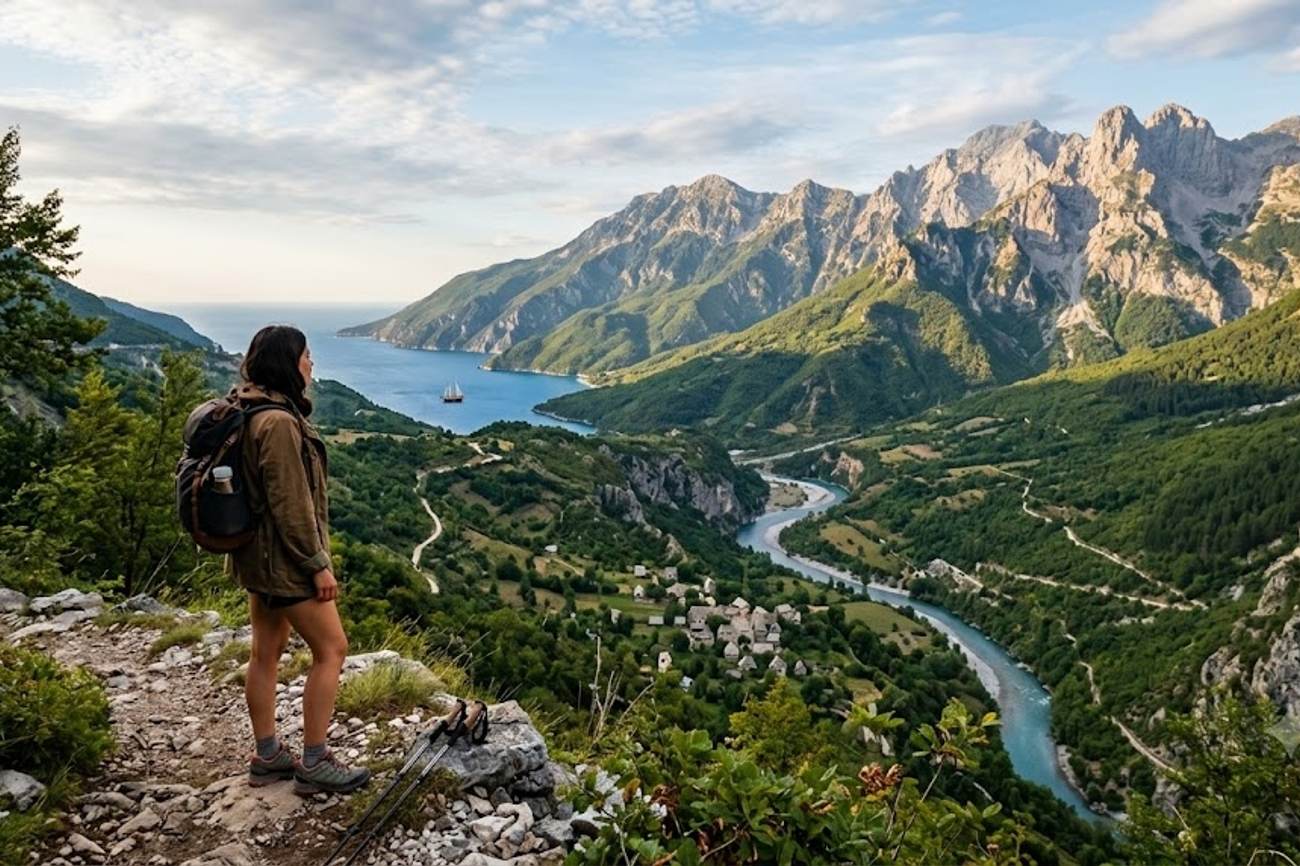
Image generated by AI
While most travelers associate budget European trips with Eastern Europe, Albania’s restaurant and accommodation price index sits at a staggering 53.3 compared to the EU average of 100. This means that in the right spots, dining and staying in Albania costs nearly half of what it does in the rest of the union, creating a massive draw for those fleeing the inflation of the Mediterranean coast.
The Shift Toward Balkan Value
The traditional European tourism map is being redrawn. Travelers are no longer just searching for the cheapest destination; they are calculating a "value equation" that balances flight availability, local congestion, and the actual cost of daily existence. In 2025, this shift became evident as four specific markets—Albania, Slovenia, Montenegro, and Romania—emerged as the primary alternatives to the overpriced hubs of Western Europe.
Romania led the pack in sheer volume, recording 13.9 million arrivals at tourist accommodation establishments. Meanwhile, Albania welcomed 12,466,038 foreign visitors in 2025, marking a 6.6% increase over the previous year. However, the real story isn't just the number of people arriving, but how much they are spending. Albania’s tourism revenue surged to over €5.7 billion, a 15% year-on-year increase, proving that the country is successfully converting high visitor volumes into significant economic growth.
The accessibility of these regions has transformed. Tirana International Airport now handles roughly 67,000 flights annually, averaging about 185 flights every single day. With connections to 106 destinations and 11.6 million scheduled and charter passengers in 2025, Albania is no longer a remote outpost but a highly connected hub for travelers from London, Rome, and Milan.
What Makes These Destinations Different
Each of these four nations offers a distinct version of "value." Montenegro, for instance, is the ultimate Adriatic alternative, but it suffers from extreme geographic concentration. In 2025, the country saw 2,728,564 tourist arrivals and 15,367,166 overnight stays. The catch? A massive 92.6% of those overnight stays happened in seaside resorts. Only 2.8% occurred in the mountains and 2.7% in the capital, Podgorica. For the traveler, this means that while Montenegro is stunning, the "value" disappears in July and August when the coast becomes a premium-priced bottleneck.
Slovenia operates on a completely different logic. It isn't a budget destination in the way Albania is; instead, it offers "value-through-experience." In 2025, Slovenia recorded 6,993,930 arrivals and 17,843,311 overnight stays. The spending patterns here are higher: in April and May 2025, foreign hotel guests spent an average of €214 per person per day. Of that, €122 went toward accommodation, while €92 covered food, transport, and leisure.
The Slovenian experience is diversified. While Ljubljana recorded 2.84 million overnight stays, mountain resorts generated 5.5 million. This distribution prevents the kind of coastal congestion seen in Montenegro and allows for a more stable price environment across the year.
Romania remains the sleeper hit of the group, combining a vast air network with some of the lowest consumer prices in the region. According to Eurostat comparative price-level data, Romania’s overall household-consumption price level was 65.1 in 2025, the lowest of the four analyzed markets.
Visitor Insider Tips
To navigate these regions like a local rather than a tourist, you need to understand the timing and the geography.
Albania: Beyond the Beach While the "Albanian Riviera" is the main draw, the real value is found in the interior. Base yourself in Tirana for a few days to experience the cafe culture, then head north toward the Accursed Mountains. To avoid the crowds, visit in May or September. Use local furgons (minibuses) for transport; they are the lifeblood of the country and far cheaper than private transfers.
Travelers exploring the Balkans should note that while Slovenia is part of the Schengen Area, Albania and Montenegro maintain separate entry requirements. For the most current visa regulations and entry permits, visitors should consult the official Ministry of Foreign Affairs of Albania.
Montenegro: The Mountain Pivot Avoid the coast in August. Instead, head to the Durmitor region. Since only 2.8% of overnight stays happen in the mountains, you will find a completely different, more authentic Montenegro with lower prices and empty trails. If you must visit the coast, use Tivat or Podgorica airports—which combined handled 3.09 million passengers in 2025—but book your seaside stays for June or September to avoid the peak pricing spikes.
Slovenia: The Seasonal Strategy Slovenia is a prime example of how timing affects your wallet. In September and October, the average daily spend drops to €197. If you are on a budget, avoid the high-end hotels in Ljubljana (where daily spends can reach €283) and instead look for "tourist farms" in the Julian Alps. For official travel requirements and regional guides, visit Slovenia.info.
Romania: The Air Network Hack Romania's value is tied to its connectivity. Use the extensive domestic flight and rail network to move from Bucharest into Transylvania. Because the household consumption index is so low (65.1), eating at local markets and using regional trains will keep your daily spend significantly lower than in any other EU destination.
Cultural and Environmental Context
The rapid growth of tourism in the Balkans is a double-edged sword. In Albania, the 15% jump in tourism revenue is a boon for the economy, but the sheer volume of 12.47 million visitors puts pressure on infrastructure that was not designed for such scale. There is a growing tension between the desire for foreign investment and the preservation of traditional village life.
Montenegro faces a different challenge: over-dependence. With 95.8% of overnight stays coming from foreign visitors and the vast majority of those concentrated on the coast, the economy is highly vulnerable to international market fluctuations. This has led to a push for "mountain tourism" to redistribute the economic benefits and reduce the environmental strain on the Adriatic shoreline.
Slovenia has taken a more measured approach, focusing on high-value, low-impact tourism. By positioning itself as a premium experience rather than a budget destination, Slovenia manages its visitor flow more effectively. Their commitment to the UNESCO World Heritage sites and national parks ensures that the increase in overnight stays (17.8 million in 2025) does not lead to the degradation of their alpine ecosystems.
FAQ: Visiting the Balkans 2026
What is the best time to visit these regions? For Albania and Montenegro, May, June, and September offer the best balance of weather and price. Slovenia is excellent in early autumn (September/October) when daily spending averages drop to around €197.
How do I get around these countries? In Albania, furgons are the local standard. In Slovenia and Romania, trains and buses are reliable. For regional flights, Tirana International Airport is the primary gateway for Albania, while Podgorica and Tivat serve Montenegro.
Is it safe for solo travelers? Yes, all four destinations are generally very safe for solo travelers. Local hospitality is a point of pride in the Balkans, though standard urban precautions apply in larger cities like Bucharest or Tirana.
Which destination is the most affordable? Romania has the lowest overall household consumption index (65.1), but Albania offers the most dramatic savings on restaurants and hotels, with an index of only 53.3.
Stop chasing the same three cities in Western Europe and start calculating your own value equation in the East.
Tags: AlbaniaTravel2026, MontenegroAdriatic, SloveniaTourism, RomaniaValueTravel, BalkanBudgetTrips
Related Travel Guides
Disclaimer
This article is for informational and educational purposes only. It does not constitute legal, financial, or professional advice. While we strive to provide accurate and up-to-date information, travel policies, regulations, and conditions change rapidly. Always verify information with official sources before making travel decisions. Nomad Lawyer makes no representations about the accuracy, reliability, completeness, or suitability of the information provided. Readers should consult qualified professionals for advice specific to their circumstances. The views expressed in this article are those of the author and do not necessarily reflect the views of Nomad Lawyer.
Raushan Kumar
Founder & Lead Developer
Full-stack developer with 11+ years of experience and a passionate traveller. Raushan built Nomad Lawyer from the ground up with a vision to create the best travel and law experience on the web.
Learn more about our team →