
Adelaide Airport Deploys Amadeus Cloud and Hybrid Self-Service Bag Drops to Streamline Passenger Journeys: New Travel Alert
Adelaide Airport installs Amadeus cloud passenger processing, self-service kiosks, and S7 hybrid bag drops to reduce queues and improve airline flexibility.

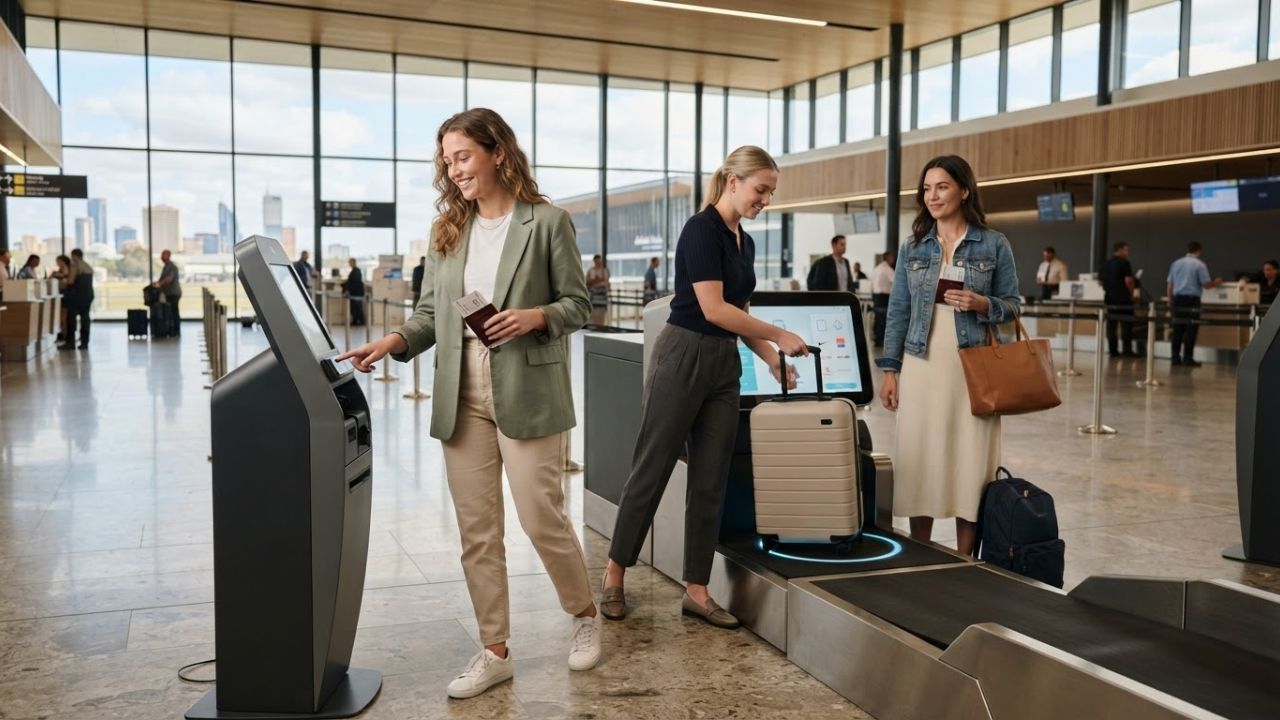
Image generated by AI
Adelaide Airport has partnered with Amadeus to deploy cloud passenger processing, self-service kiosks, and hybrid bag drop units. This modernization initiative aims to reduce terminal waiting times, simplify baggage handling, and provide airlines with greater operational flexibility.
Adelaide Airport is deploying advanced cloud passenger processing and self-service baggage systems to significantly reduce terminal check-in queues. Introducing next-generation smart airport technology Australia airports are using to keep pace with global efficiency benchmarks, the terminal upgrade integrates automated bag drops and cloud services from Amadeus. These tools give airlines greater operational flexibility, allowing passenger processing systems to adapt dynamically to changing flight schedules and future growth. Travelers can expect a faster path through check-in and security checkpoints immediately upon deployment.
Next-Generation Self-Service Infrastructure Enhances Terminal Flow
Adelaide Airport, Australia's fifth busiest airport, is preparing for a major passenger experience transformation through Amadeus technology. The upgrade focuses on removing traditional airport frustrations such as long queues, fixed service counters, and slow baggage processes.
The airport will introduce more than 50 Amadeus Seamless Bag Drop S7 Air and S7 Air Hybrid units. These machines allow passengers to check in their luggage independently while also supporting staff-assisted operations when required. This hybrid approach gives the airport a significant operational advantage. Travelers who prefer self-service can complete the process quickly, while passengers needing additional support can still receive assistance from airport teams.
The new bag drop technology also includes a side-loading design. This configuration makes it easier for passengers to handle larger luggage items, wheelchairs, pushchairs, and trolleys. The design improves movement around the machines and helps reduce congestion in busy terminal check-in areas.
Alongside automated baggage solutions, Adelaide Airport will install around 80 Amadeus Seamless Kiosks. These kiosks will provide passengers with a quicker way to complete check-in procedures before reaching security and boarding areas. This development follows a global airport trend where passengers increasingly expect more control over their journey. Modern travelers want simple digital solutions that allow them to check in, drop bags, and move through terminals with fewer delays.
Cloud-Based Processing Empowers Airlines with Dynamic Operations
A major part of Adelaide Airport's transformation is the move towards cloud-based passenger processing through Amadeus ACUS (Airport Cloud Use Service). This technology allows airlines to access required systems from different check-in and boarding locations instead of depending only on fixed counters.
This creates a more flexible airport environment. During busy periods, airlines can adjust passenger service locations more easily. Airport teams can also provide support from different areas of the terminal. The cloud system can help airlines when launching new routes because it reduces dependence on traditional IT infrastructure. This gives airports greater flexibility when working with new airline partners and expanding connectivity.
Compared with major international hubs, Adelaide is not competing on passenger volume. Airports such as Singapore's Changi Airport, London Heathrow, and JFK handle significantly larger numbers of travelers and operate more advanced digital ecosystems. However, Adelaide is adopting the same direction by creating a flexible, technology-driven airport foundation.
Technology Deployment and Global Airport Comparisons
To understand how Adelaide Airport compares to other domestic and international travel hubs in deploying passenger processing systems, the key elements of the upgrade are detailed in the table below:
| Airport Facility Upgrade Component | Equipment and Software Deployed | Primary Function & Traveler Benefit | Comparison and Scale details |
|---|---|---|---|
| Seamless Kiosks | ~80 Amadeus Seamless Kiosks | Speeds up initial passenger check-in and boarding pass printing | Similar to setups in Singapore's Changi Airport and London Heathrow |
| Seamless Bag Drops | >50 units (S7 Air & S7 Air Hybrid) | Hybrid manual/self-service side-loading units for standard and oversized bags | Melbourne Airport has deployed over 70 similar units |
| Cloud Passenger Processing | Amadeus ACUS (Airport Cloud Use Service) | Removes fixed service counter limits, enabling check-in from any terminal point | Used in major hubs like JFK Terminal 4 to improve airline flexibility |
| Airline Integration | Dynamic cloud infrastructure | Simplifies new route launches and cuts traditional IT infrastructure requirements | Facilitates airline partnerships and route expansion at Adelaide Airport |
The biggest difference between Adelaide and major global airports is scale. Changi Airport remains one of the world's strongest examples of automated passenger processing, using extensive self-service systems and digital solutions across its terminals. Heathrow focuses on managing millions of international passengers through advanced airport operations, and JFK's Terminal 4 has used cloud-based passenger processing solutions to improve operational flexibility.
Adelaide's upgrade is smaller in size but significant in strategy. The airport is investing in technology that improves efficiency without requiring massive terminal expansion. The focus is not only automation; it is about creating a smoother journey where passengers experience fewer obstacles from check-in to boarding. Melbourne Airport provides the closest comparison within Australia, introducing more than 70 Amadeus Seamless Bag Drop S7 Air and S7 Air Hybrid units. Adelaide's difference is the combination of bag drop technology, self-service kiosks, and cloud-based passenger processing in one wider transformation.
Modern Infrastructure Supports Tourism Growth in South Australia
The Adelaide Airport transformation is mainly a travel technology development, but it can also support tourism growth in South Australia. A better airport experience can improve visitor satisfaction. International travelers often judge a destination from their first airport interaction. Faster check-in, smoother baggage handling, and easier passenger movement can create a stronger first impression.
The upgrade can also support future airline expansion. When airports offer flexible digital infrastructure, airlines may find it easier to introduce new services or adjust operations. The project does not change visa rules, passport requirements, or border procedures. Instead, it improves the airport journey after passengers have completed travel documentation.
Adelaide Airport's Amadeus technology transformation shows how mid-sized airports are becoming smarter and more competitive. The airport may not match the scale of global aviation giants, but it is adopting the same future-focused approach. By combining automated bag drops, self-service kiosks, and cloud-powered passenger systems, Adelaide is building a more flexible travel environment.
Why This Matters: Cloud Operations Redefine the Airport Journey
For the traveler, this means that passing through Adelaide Airport will require significantly less time spent in queues, allowing for a more relaxed departure experience. The introduction of hybrid bag drops is particularly beneficial for families traveling with oversized items like strollers, or passengers requiring mobility assistance, as they can bypass standard self-service lines without losing staff support. However, travelers should still check their airline's specific baggage size limits on the hybrid side-loaders to ensure a smooth transition.
From a logistical standpoint, the shift to Amadeus cloud passenger processing allows airlines to open temporary check-in desks anywhere in the terminal during seasonal travel surges. This agility prevents bottlenecks at traditional check-in areas. Additionally, for regional airlines operating short-haul flights in Australia, the cloud infrastructure reduces the cost of launching new services, potentially increasing flight frequencies and destinations available to regional travelers.
Related Travel Guides
- Alaska Airlines Flight SKW3362 Operating as United Express Diverts to Salt Lake City Due to Mechanical Issue: Latest Update
- American Airlines Flight AA2293 Operating as Regional Jet Diverts to Las Vegas After System Alert: New Travel Alert
- Delta Air Lines Flight DL2911 Operating as Boeing 737 Diverts to Omaha Following Cabin Depressurization: New Travel Alert
Disclaimer
This article is for informational and educational purposes only. It does not constitute legal, financial, or professional advice. While we strive to provide accurate and up-to-date information, travel policies, regulations, and conditions change rapidly. Always verify information with official sources before making travel decisions. Nomad Lawyer makes no representations about the accuracy, reliability, completeness, or suitability of the information provided. Readers should consult qualified professionals for advice specific to their circumstances. The views expressed in this article are those of the author and do not necessarily reflect the views of Nomad Lawyer.
Preeti Gunjan
Contributor & Community Manager
A passionate traveller and community builder. Preeti helps grow the Nomad Lawyer community, fostering engagement and bringing the reader experience to life.
Learn more about our team →