
Delta Air Lines Flight DL2911 Diverts to Omaha Eppley Airfield Due to Severe Weather on August 5
Delta Air Lines Flight DL2911, traveling from Atlanta to Kansas City, executed an operational diversion to Omaha on August 5 due to severe convective weather systems.

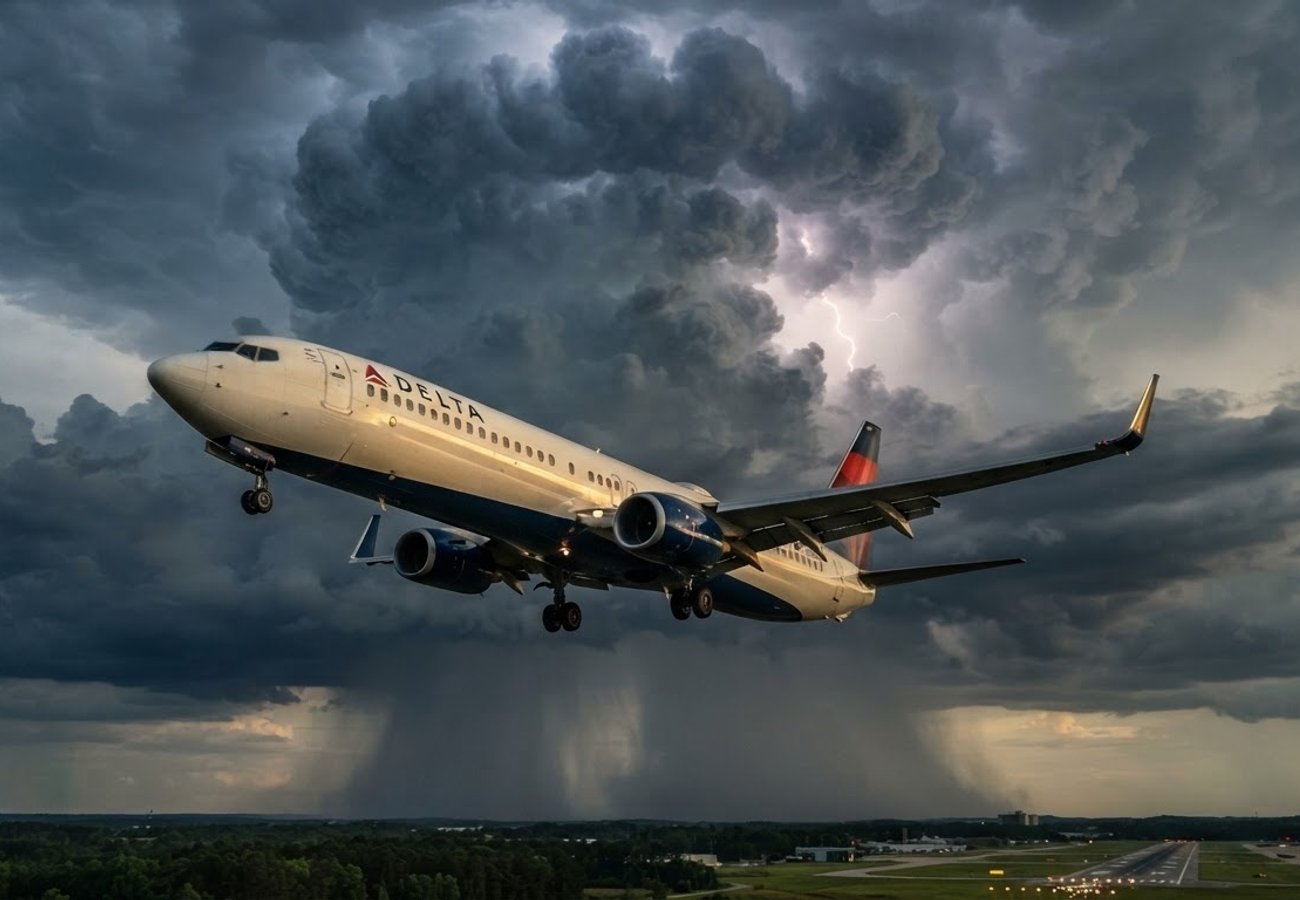
Image generated by AI
Delta Air Lines Flight DL2911 was diverted to Eppley Airfield in Omaha on August 5, prioritizing passenger safety over schedule adherence during severe Midwestern weather.
On August 5, 2026, Delta Air Lines Flight DL2911, a scheduled service from Hartsfield–Jackson Atlanta International Airport (ATL) to Kansas City International Airport (MCI), was forced to alter its flight path. The aircraft, a Boeing 737-900ER with registration N956DZ, executed an operational diversion to Eppley Airfield in Omaha.
The decision to divert is a joint calculation between the aircraft captain and airline flight dispatchers. In this instance, severe convective weather systems sweeping across Missouri created intense thunderstorm activity, which restricted low-altitude visibility and hindered ground operations at Kansas City International. When landing approaches become unsafe or ground stops prevent aircraft from reaching terminal gates, established divert protocols are initiated to ensure the aircraft does not enter a high-risk environment.
Flight Diversion Technical Specifications
The following table outlines the specific parameters of the diverted flight:
| Parameter | Detail |
|---|---|
| Flight Number | DL2911 |
| Date of Incident | August 5, 2026 |
| Aircraft Model | Boeing 737-900ER |
| Registration Number | N956DZ |
| Origin Airport | Hartsfield–Jackson Atlanta International (ATL) |
| Intended Destination | Kansas City International (MCI) |
| Diversion Airport | Eppley Airfield, Omaha (OMA) |
| Primary Cause | Severe Convective Weather/Thunderstorms |
The Mechanics of Aviation Diversions
Diversions are not failures of technology but are the result of a rigid safety framework. Weather anomalies—including microbursts, thick fog, and severe turbulence—remain the primary drivers. However, air traffic control (ATC) constraints also play a significant role. When destination airports experience ground delays that force aircraft into holding patterns for extended periods, the risk profile changes.
A critical factor in these decisions is the "bingo fuel" limit. Federal aviation guidelines require commercial aircraft to carry mandatory fuel reserves. This includes fuel to reach the destination, execute an aborted landing approach, fly to a designated alternate airport, and maintain a final 45-minute emergency reserve.
Once the onboard fuel reaches the precise amount required to reach the alternate airport, the captain must divert immediately. Waiting longer would consume the 45-minute emergency reserve, which is a regulatory violation and a significant safety hazard.
Infrastructure and Fleet Compatibility
The choice of Omaha as a diversion point was influenced by the physical requirements of the Boeing 737-900ER. Not every airfield can accommodate a narrow-body jet of this size. The diversion airport must provide:
- Adequate Runway Length: Sufficient distance for a safe landing and takeoff.
- Ground Support: Compatible jet bridges and refueling equipment.
- Maintenance Capacity: Access to technicians who can inspect the airframe if the diversion was caused by a technical anomaly.
By utilizing secondary line-station airports like Omaha, Delta Air Lines ensures that ground handling and maintenance support are available to return the aircraft to commercial service efficiently.
Traveler Logistics Guide: Navigating Unexpected Diversions
From a ground-level perspective, the best way to navigate a flight diversion is to remain proactive with digital communication and understand your rights.
1. Managing the Connection If you are diverted to an alternate airport, your first priority is to locate the airline's ground representative. In the case of Delta, they utilize line-station support at airports like Omaha to manage passenger re-accommodation. If you have a tight connection, do not wait for an announcement; use the airline's mobile app to check for automatic re-bookings.
2. Digital Transit Policies Ensure your travel documents are digitized. When diverted, you may be moved to a different terminal or required to take ground transport to a different hub. Having a digital copy of your passport and boarding pass prevents delays during unexpected security screenings at alternate airfields.
3. Optimal Layover Planning To mitigate the impact of weather-related diversions in the Midwest, avoid booking "tight" connections (under 2 hours) during peak thunderstorm seasons. Building in a 3-to-4-hour buffer at major hubs provides a safety net if your incoming flight is diverted or held in a pattern.
Regional Connectivity Impact
This incident highlights the reliance of the Midwestern aviation corridor on a network of alternate airfields. The ability to seamlessly shift traffic from Kansas City to Omaha prevents total gridlock in the regional airspace during weather events. It demonstrates a robust redundancy system where secondary airports act as critical safety valves for primary hubs.
Safety margins in aviation always supersede punctuality.
Related Travel Guides
Disclaimer
This article is for informational and educational purposes only. It does not constitute legal, financial, or professional advice. While we strive to provide accurate and up-to-date information, travel policies, regulations, and conditions change rapidly. Always verify information with official sources before making travel decisions. Nomad Lawyer makes no representations about the accuracy, reliability, completeness, or suitability of the information provided. Readers should consult qualified professionals for advice specific to their circumstances. The views expressed in this article are those of the author and do not necessarily reflect the views of Nomad Lawyer.
Preeti Gunjan
Contributor & Community Manager
A passionate traveller and community builder. Preeti helps grow the Nomad Lawyer community, fostering engagement and bringing the reader experience to life.
Learn more about our team →