
Alaska Airlines Flight SKW3362 Seattle to Jackson Diverted to Salt Lake City on August 4 2026
Alaska Airlines Flight SKW3362, an Embraer E175LR, diverted from its Seattle-Jackson route to Salt Lake City on August 4, 2026, citing safety protocols and operational necessity.

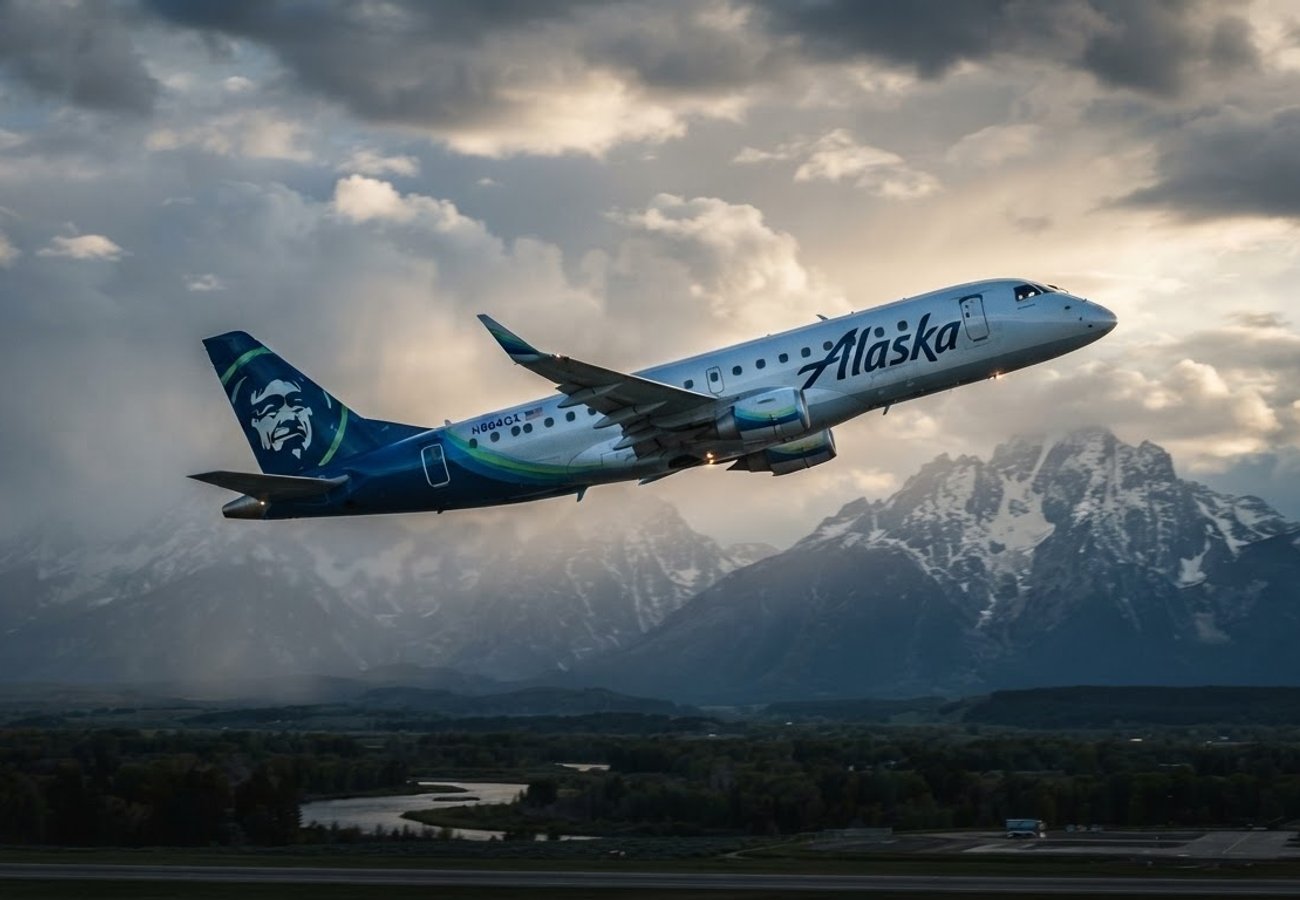
Image generated by AI
Flight SKW3362, an Embraer E175LR regional jet, was forced to divert to Salt Lake City International Airport on August 4, 2026, during its scheduled flight from Seattle to Jackson, Wyoming. The diversion was executed as a proactive safety measure to mitigate operational risks.
Operational Details of the Diversion
On August 4, 2026, Alaska Airlines Flight SKW3362 departed Seattle bound for Jackson Hole Airport (JAC). During the transit, the flight crew initiated a diversion to Salt Lake City International Airport (SLC).
The decision to divert was based on standard aviation safety protocols. While the specific trigger—whether mechanical telemetry warnings, sudden atmospheric shifts, or a medical emergency—was not explicitly detailed in the cockpit manifest, the choice of Salt Lake City as the alternate was strategic. SLC provides superior runway infrastructure, comprehensive SkyWest maintenance support, and refueling facilities that exceed the capabilities of smaller alpine airports like Jackson Hole.
Flight and Airport Impact Breakdown
- Flight Number: SKW3362
- Aircraft Model: Embraer E175LR
- Route: Seattle (SEA) $\rightarrow$ Jackson (JAC)
- Diversion Point: Salt Lake City International Airport (SLC)
- Primary Reason: Safety protocol adherence and operational flexibility.
- Secondary Incident: A separate regional flight, DL4444 (operated by SkyWest for Delta Connection, registration N294SY), also experienced a diversion to Boise Airport (BOI) during a Salt Lake City to Spokane (GEG) leg, highlighting regional volatility in the mountain corridors.
Passenger Rights & Advisory
For the affected passengers on Flight SKW3362, a diversion creates a legal shift in the carrier's obligations. Our analysis of aviation policy suggests the following implications:
Duty of Care When a flight is diverted, the airline is responsible for "Duty of Care." For passengers stranded at Salt Lake City, this means Alaska Airlines must provide food, refreshments, and, if an overnight stay is required, hotel accommodations and transport.
Rebooking and Compensation Since this diversion was categorized as a "proactive safety measure," it may be classified as an "extraordinary circumstance" (similar to EU261/2004 standards), which often exempts airlines from paying cash compensation. However, for the affected passenger, this means the airline must still:
- Rebook you on the next available flight to Jackson at no additional cost.
- Provide a full refund if you choose not to travel after a significant delay.
Documentation Tip Passengers should retain all receipts for "reasonable" expenses incurred during the diversion (meals, water, taxis) to submit for reimbursement, as these are covered regardless of whether the diversion was caused by a technical fault or weather.
Industry Analyst View
The use of the Embraer E175LR on these routes is a strategic choice for regional connectivity, though it often leads to passenger confusion with larger Airbus airframes due to similar winglet designs and livery. From an operational standpoint, the diversion to Salt Lake City underscores the inherent risks of "alpine landing conditions" at Jackson Hole, where sudden crosswinds and low visibility can render a runway unusable.
The rapid coordination between the flight crew and Air Traffic Control (ATC) to secure a low-conflict corridor demonstrates the efficiency of modern regional safety nets. By prioritizing a high-infrastructure hub like SLC over the original destination, the crew ensured that technical diagnostics could be performed by certified engineers without risking a "fuel-critical" state in a remote area.
Safety protocols in aviation are designed to be conservative; a diversion is not a failure of the aircraft, but a success of the safety system.
Related Travel Guides
Disclaimer
This article is for informational and educational purposes only. It does not constitute legal, financial, or professional advice. While we strive to provide accurate and up-to-date information, travel policies, regulations, and conditions change rapidly. Always verify information with official sources before making travel decisions. Nomad Lawyer makes no representations about the accuracy, reliability, completeness, or suitability of the information provided. Readers should consult qualified professionals for advice specific to their circumstances. The views expressed in this article are those of the author and do not necessarily reflect the views of Nomad Lawyer.
Preeti Gunjan
Contributor & Community Manager
A passionate traveller and community builder. Preeti helps grow the Nomad Lawyer community, fostering engagement and bringing the reader experience to life.
Learn more about our team →