
American Airlines Flight AA2293 Diverts to Las Vegas Harry Reid International Airport in August 2026
American Airlines Flight AA2293 from Los Angeles to Phoenix was diverted to Las Vegas on August 3, 2026, resulting in a two-hour delay for passengers.

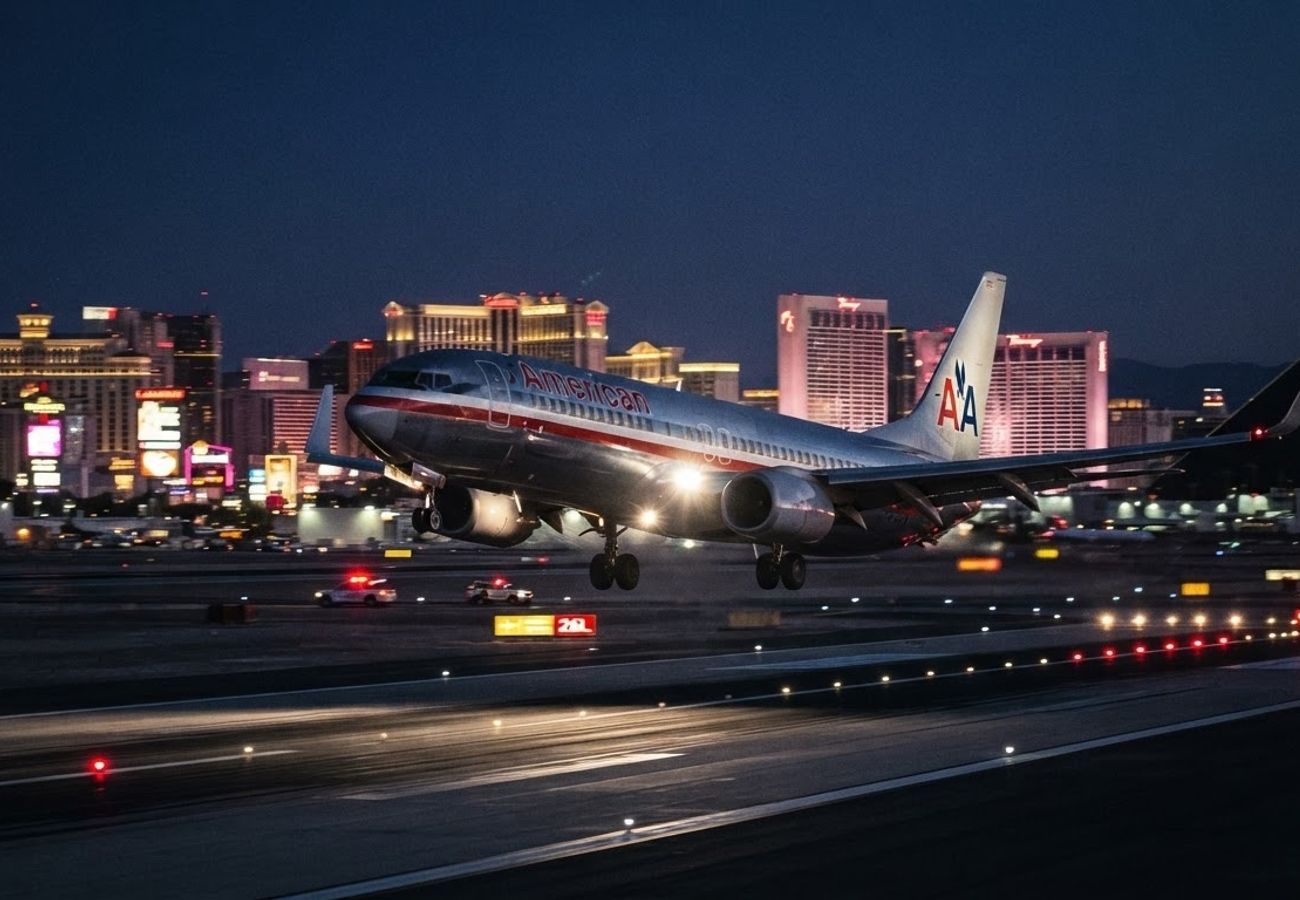
Image generated by AI
American Airlines Flight AA2293, traveling from Los Angeles to Phoenix, was diverted to Harry Reid International Airport in Las Vegas on August 3, 2026. The diversion resulted in a delay of over two hours for passengers aboard the Boeing 737-800.
On Monday, August 3, 2026, American Airlines Flight AA2293 (also identified by flight code AAL2293) experienced an unplanned route change during its transit from Los Angeles International Airport (LAX) to Phoenix Sky Harbor International Airport (PHX). The aircraft, a Boeing 737-800 with registration N901AN, departed from Gate 48B at LAX at approximately 9:33 PM PDT.
Rather than proceeding to its destination in Arizona, the flight was redirected to Harry Reid International Airport (LAS) in Las Vegas, Nevada. The aircraft touched down safely at 11:50 PM PDT.
While the specific operational cause for the diversion was not immediately disclosed by the carrier, aviation protocols dictate that such redirections occur due to weather anomalies, technical aircraft requirements, airport congestion, or medical emergencies. The selection of Harry Reid International Airport as the alternate site is consistent with regional safety standards, as the facility provides the necessary infrastructure to support large-scale commercial diversions in the southwestern United States.
Flight Operational Specifications
The following data outlines the specific parameters of the disrupted flight:
| Parameter | Flight Detail |
|---|---|
| Flight Number | AA2293 / AAL2293 |
| Aircraft Model | Boeing 737-800 |
| Aircraft Registration | N901AN |
| Departure Point | Los Angeles International (LAX) - Gate 48B |
| Intended Destination | Phoenix Sky Harbor (PHX) |
| Diversion Airport | Harry Reid International (LAS) |
| Departure Time | 9:33 PM PDT (August 3, 2026) |
| Diversion Arrival Time | 11:50 PM PDT (August 3, 2026) |
| Total Delay | 2+ Hours |
Traveler Logistics Guide: Navigating Flight Diversions
From a ground-level perspective, the best way to navigate a diversion is to immediately pivot to the airline's mobile application rather than queuing at a physical service desk, which often becomes congested during unplanned landings.
Managing Connections and Onward Travel When a flight is diverted to an airport like Las Vegas (LAS), passengers often face a "broken" itinerary. If you have a connecting flight from Phoenix, the diversion effectively voids your original connection. In these instances, request a "re-accommodation" via the app or agent. Under US Department of Transportation (DOT) guidelines, airlines are responsible for getting you to your destination, but they are not always required to provide hotel vouchers for diversions unless the delay is within their controllable operational power.
Customs and Digital Transit Policies For those traveling on international passports or using digital transit IDs (such as Digi Yatra in India or ETIAS in Europe), remember that a diversion to a different city may trigger different security screenings. Always keep your physical passport accessible, as digital checkpoints may not be fully synced across different airport jurisdictions during an emergency diversion.
Optimal Recovery Strategy
- Verify Status: Check the aircraft registration (in this case, N901AN) via flight tracking software to see if the plane is staying grounded for maintenance or if it is cleared for a "ferry flight" to the original destination.
- Documentation: Document the time of arrival and any communication from the crew regarding the reason for the diversion. This is essential for travel insurance claims.
- Ground Transport: If the airline cannot provide immediate transport to Phoenix, check for regional shuttle services or short-haul "hop" flights from LAS to PHX.
Infrastructure Impact Assessment
The diversion of AA2293 underscores the critical role of "hub-and-spoke" redundancy in the US aviation network. Harry Reid International Airport serves as a primary safety valve for the Southwestern corridor. When primary destinations like Phoenix Sky Harbor experience operational constraints or when an aircraft requires an immediate landing, the ability to seamlessly transition to a high-capacity facility in Las Vegas prevents catastrophic delays and ensures passenger safety. This incident highlights the high level of coordination required between the FAA, air traffic controllers, and airline dispatch teams to manage airspace in real-time.
Safety protocols in aviation prioritize the integrity of the aircraft over the punctuality of the schedule.
Related Travel Guides
Disclaimer
This article is for informational and educational purposes only. It does not constitute legal, financial, or professional advice. While we strive to provide accurate and up-to-date information, travel policies, regulations, and conditions change rapidly. Always verify information with official sources before making travel decisions. Nomad Lawyer makes no representations about the accuracy, reliability, completeness, or suitability of the information provided. Readers should consult qualified professionals for advice specific to their circumstances. The views expressed in this article are those of the author and do not necessarily reflect the views of Nomad Lawyer.
Kunal K Choudhary
Co-Founder & Contributor
A passionate traveller and tech enthusiast. Kunal contributes to the vision and growth of Nomad Lawyer, bringing fresh perspectives and driving the community forward.
Learn more about our team →