
Abu Dhabi Leads UAE Dry City Study with the Lowest Long Term Rainfall Average
Abu Dhabi Leads UAE Dry City Study with the Lowest Long Term Rainfall Average

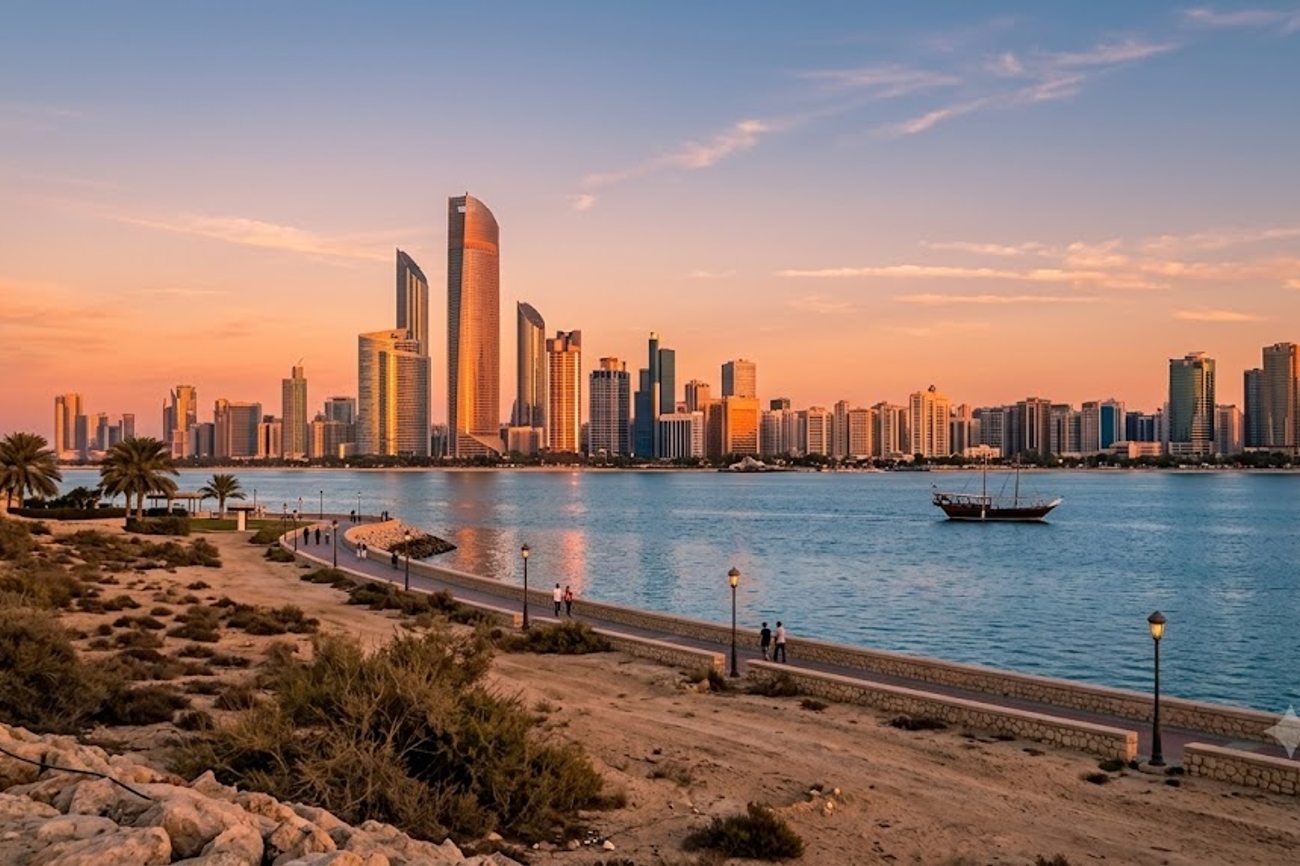
Image generated by AI
A traveler landing at Abu Dhabi International Airport during a rare storm may find their connection to London or New York suddenly severed, as the region's infrastructure is designed for the extreme dryness documented in recent climate data. While the UAE is renowned for its arid climate, the volatility of its rare weather events creates significant logistical risks for passengers who are often unprepared for the legal protections available during such disruptions.
Rainfall Volatility and Infrastructure Stress in the UAE
Recent analysis of urban weather stations from 2016 to 2023 reveals a stark contrast in precipitation levels across the Emirates, with Abu Dhabi emerging as the driest urban center over the long term. Data from the eight analyzed stations indicates that Abu Dhabi Airport maintains the lowest annual average rainfall, recording approximately 46.1 millimetres per year across the seven shared years of the study. This extreme dryness defines the operational baseline for the capital's transport hubs, yet the data also highlights a dangerous trend of yearly variability.
While Abu Dhabi holds the long-term title for dryness, the year 2023 provided a sharp deviation, with the airport recording 74.4 millimetres of rain. This fluctuation is mirrored across the country; for instance, Dubai Airport recorded 149.3 millimetres in 2023, the highest of all eight stations for that specific year, despite typically sitting in the middle of the historical ranking with an average of 80.0 millimetres.
The most significant precipitation is found in Fujairah, which recorded the highest average annual rainfall at 150.8 millimetres—more than triple the average seen in Abu Dhabi. This discrepancy is attributed to Fujairah's eastern coastal position and proximity to the Hajar Mountains. Other stations, including Sharjah (average 77.9 millimetres), Al Ain (average 62.0 millimetres), and Ajman (average 62.8 millimetres), further illustrate the uneven distribution of rain. In 2023, Al Ain actually became the driest location, recording only 43.0 millimetres.
For the aviation sector, these "burst" patterns are more disruptive than consistent rain. When a city like Dubai or Abu Dhabi experiences a spike—such as Dubai's 149.3 millimetres in a single year—the resulting flash floods can paralyze ground transport and lead to cascading flight cancellations.
Affected Routes and Hubs
While the dryness data is regional, the impact is felt most acutely at the following primary transit points:
- Abu Dhabi (AUH): The primary hub for Etihad Airways; most susceptible to long-term dryness but vulnerable to sudden spikes (74.4mm in 2023).
- Dubai (DXB/DWC): The global transit nexus; experienced the highest 2023 rainfall (149.3mm), leading to significant operational volatility.
- Sharjah (SHJ): A key regional hub with a historical average of 77.9 millimetres.
- Fujairah: While not a primary passenger hub, its high rainfall (150.8mm average) affects regional logistics and road access to other cities.
- Al Ain: Inland transit point; the driest in 2023 with 43.0 millimetres.
Your Rights as a Passenger
When extreme weather in the UAE leads to flight cancellations or significant delays, passengers often find themselves in a legal gray area. The rights you hold depend entirely on the airline's nationality and the airport of departure.
EU261/2004 and UK261 Regulations If you are flying from an airport within the EU or UK, or flying into the EU/UK on an EU/UK-based carrier (e.g., British Airways or Air France), you are protected by EU261/2004 or the UK equivalent. Under these rules, if your flight is cancelled or delayed by more than three hours, you may be entitled to compensation ranging from €250 to €600. However, airlines frequently cite "extraordinary circumstances"—such as the flash floods seen in Dubai—to avoid payment. To challenge this, you must prove that the weather was not the sole cause or that the airline failed to take all reasonable measures to avoid the disruption. You can verify your rights through the UK Civil Aviation Authority.
US Department of Transportation (DOT) Rules For passengers on flights to or from the United States, the DOT does not mandate compensation for delays. However, if your flight is cancelled for any reason—including weather—you are entitled to a full refund of the ticket price if you choose not to travel. This is a mandatory requirement regardless of the "non-refundable" status of the ticket. Detailed guidelines are available at the US DOT Air Consumer portal.
DGCA India Regulations For passengers on flights involving Indian carriers (like Air India or Indigo) operating in the UAE, the DGCA provides guidelines for "flight delays and cancellations." While less stringent than EU261, passengers are generally entitled to meals, refreshments, and hotel accommodation if the delay is significant and the airline is at fault.
Duty of Care Regardless of the cause of the delay (even "Acts of God" like unprecedented UAE rainfall), almost all international carriers owe you a "Duty of Care." This includes:
- Food and drink vouchers.
- Two phone calls or emails.
- Hotel accommodation and transport if an overnight stay is required.
Rebooking Strategy and Alternatives
When the UAE's infrastructure fails due to sudden precipitation, the rush for rebooking creates a bottleneck. Do not rely solely on the airline's mobile app, which often crashes during mass disruptions.
1. Diversify Your Search If Dubai (DXB) is paralyzed, check for availability at Al Maktoum International (DWC) or Sharjah (SHJ). While these airports are separate, some airlines have bilateral agreements to shift operations. Use FlightRadar24 to see if other carriers are still successfully departing from alternative hubs.
2. The "Interline" Request If your original carrier cannot get you out within 24 hours, request an "interline" rebooking. This is where your airline books you on a competitor (e.g., switching from Etihad to Emirates or Qatar Airways). While airlines resist this due to cost, you have stronger leverage if you are a high-tier loyalty member or if the delay exceeds 48 hours.
3. Refund vs. Voucher Airlines will offer vouchers as a first resort. Avoid these unless they are valued at 120% or more of your original ticket. In the US, always insist on a cash refund via the original payment method if the flight is cancelled.
4. Ground Transport Alternatives If the airport is operational but roads are flooded (a common occurrence in Dubai and Abu Dhabi), avoid taxis and ride-shares. Use the Dubai Metro or Abu Dhabi's public transit networks, which are often more resilient to surface-level flooding than road traffic.
FAQ: UAE Weather Disruptions 2024
Am I entitled to compensation if my flight was cancelled due to UAE rain? If flying an EU/UK carrier or departing from the EU/UK, yes, unless the airline proves the rain was an "extraordinary circumstance." For US or UAE-based carriers, you are generally not entitled to cash compensation for weather, but you are entitled to a full refund if you don't fly.
Can I get a full refund for a non-refundable ticket? Yes, if the airline cancels the flight or makes a significant schedule change, the "non-refundable" clause is voided. In the US, this is a DOT mandate. In the UAE, most carriers will provide a refund or a travel credit.
What should I do if the airline refuses to provide a hotel during a storm? Document everything. Keep receipts for your hotel and meals. Under the "Duty of Care" principle, you can claim these expenses back later. If the airline refuses on-site, file a formal claim via AirHelp or the relevant national aviation authority.
Which UAE city is the safest to fly into during rainy seasons? Statistically, Abu Dhabi has the lowest long-term rainfall (46.1mm average), but 2023 showed that Al Ain (43.0mm) was drier. However, for international travel, the stability of the hub's drainage infrastructure is more important than the rainfall total.
When the desert floods, the fine print of your ticket becomes your most valuable asset.
Related Travel Guides
Disclaimer
This article is for informational and educational purposes only. It does not constitute legal, financial, or professional advice. While we strive to provide accurate and up-to-date information, travel policies, regulations, and conditions change rapidly. Always verify information with official sources before making travel decisions. Nomad Lawyer makes no representations about the accuracy, reliability, completeness, or suitability of the information provided. Readers should consult qualified professionals for advice specific to their circumstances. The views expressed in this article are those of the author and do not necessarily reflect the views of Nomad Lawyer.
Kunal K Choudhary
Co-Founder & Contributor
A passionate traveller and tech enthusiast. Kunal contributes to the vision and growth of Nomad Lawyer, bringing fresh perspectives and driving the community forward.
Learn more about our team →